








Process Introduction:
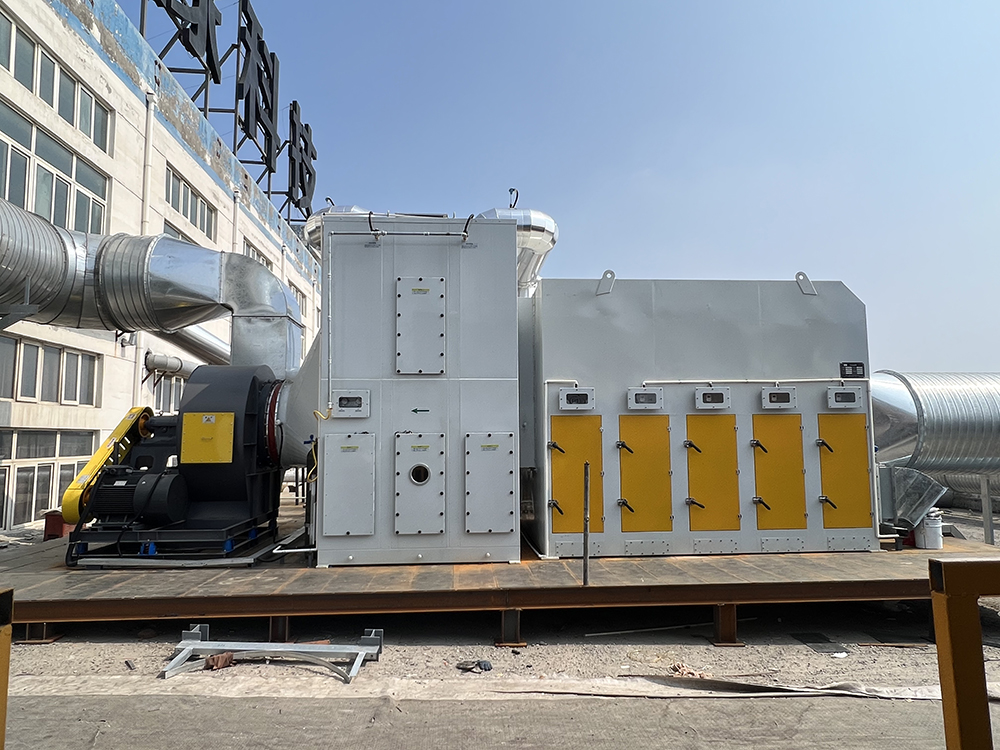
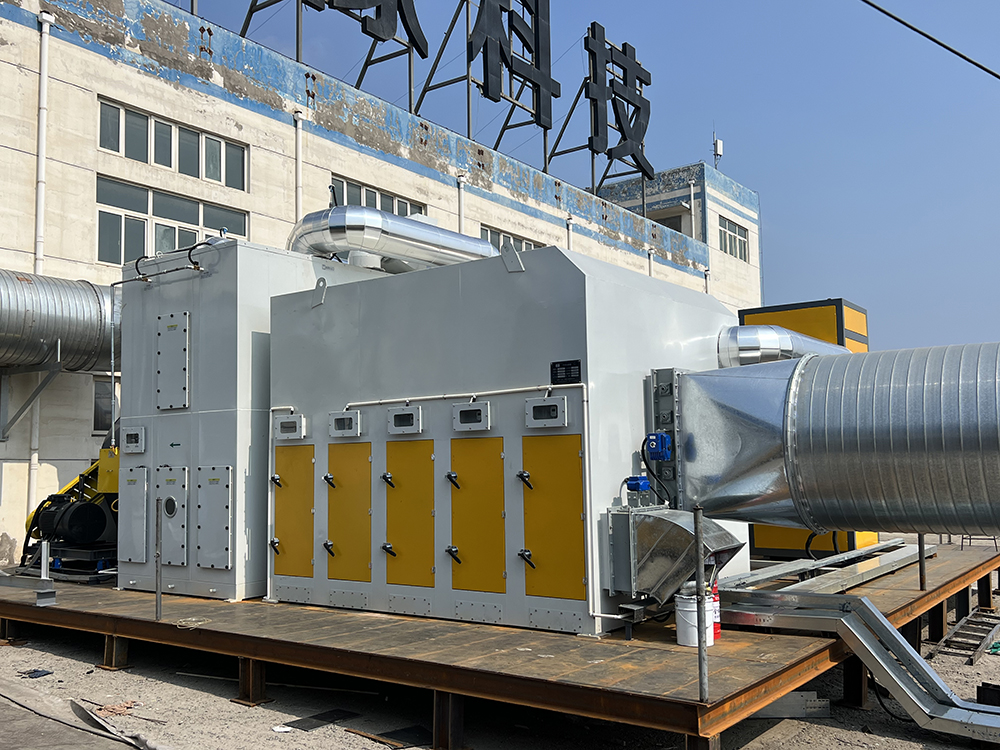
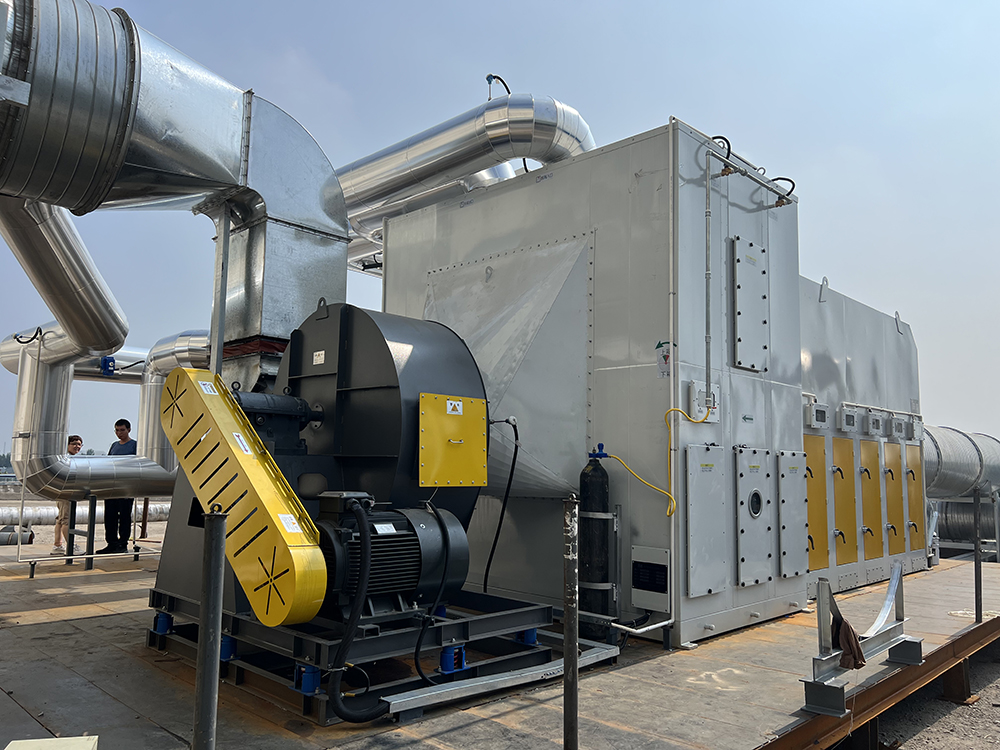
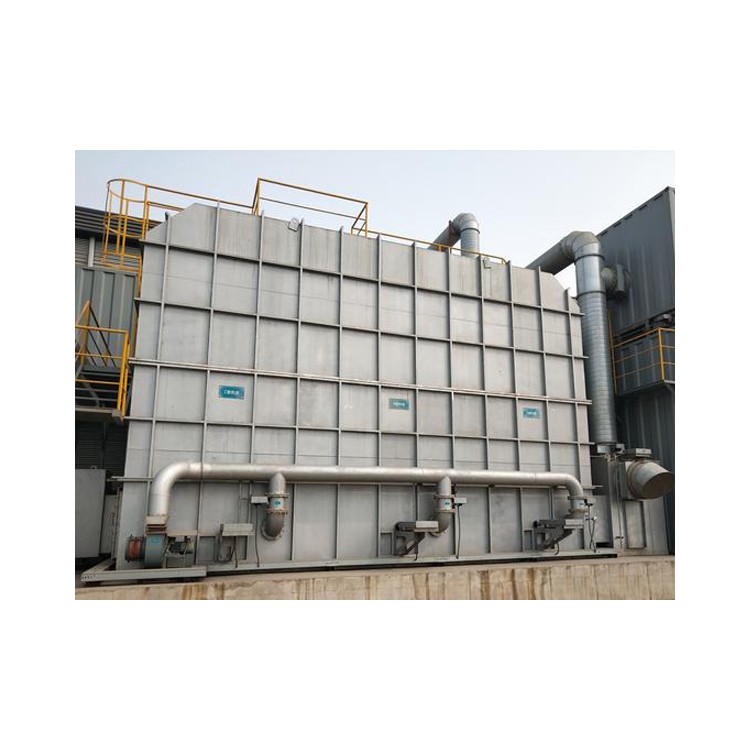
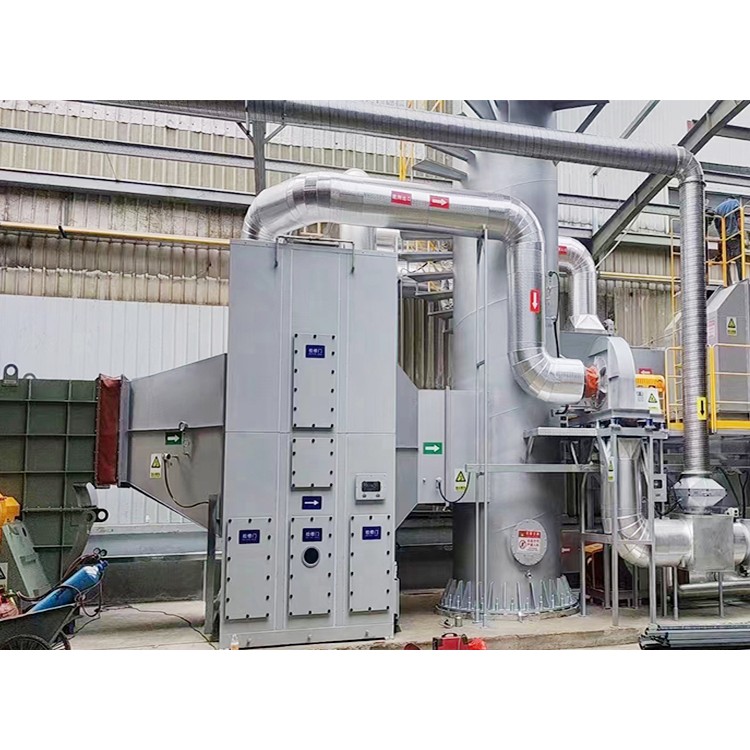
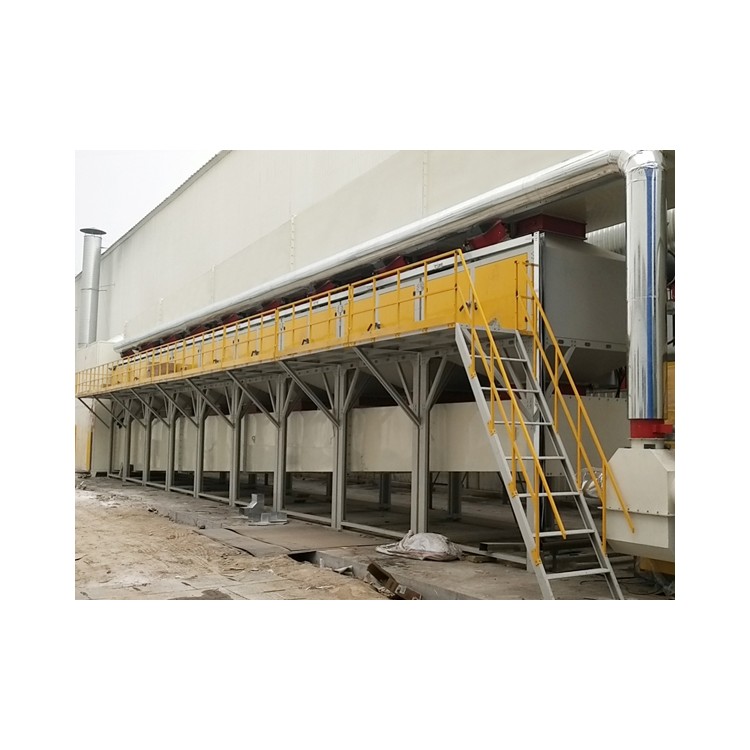
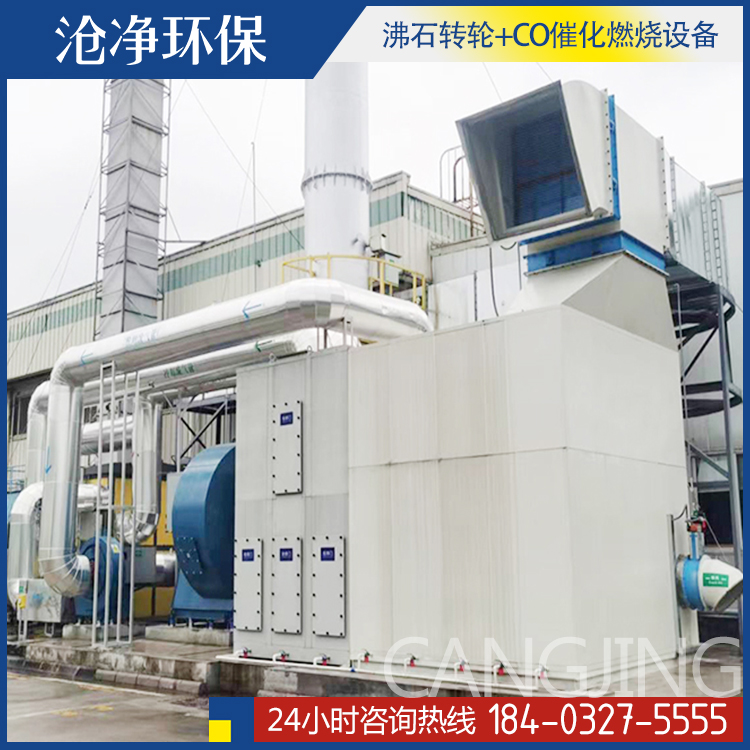
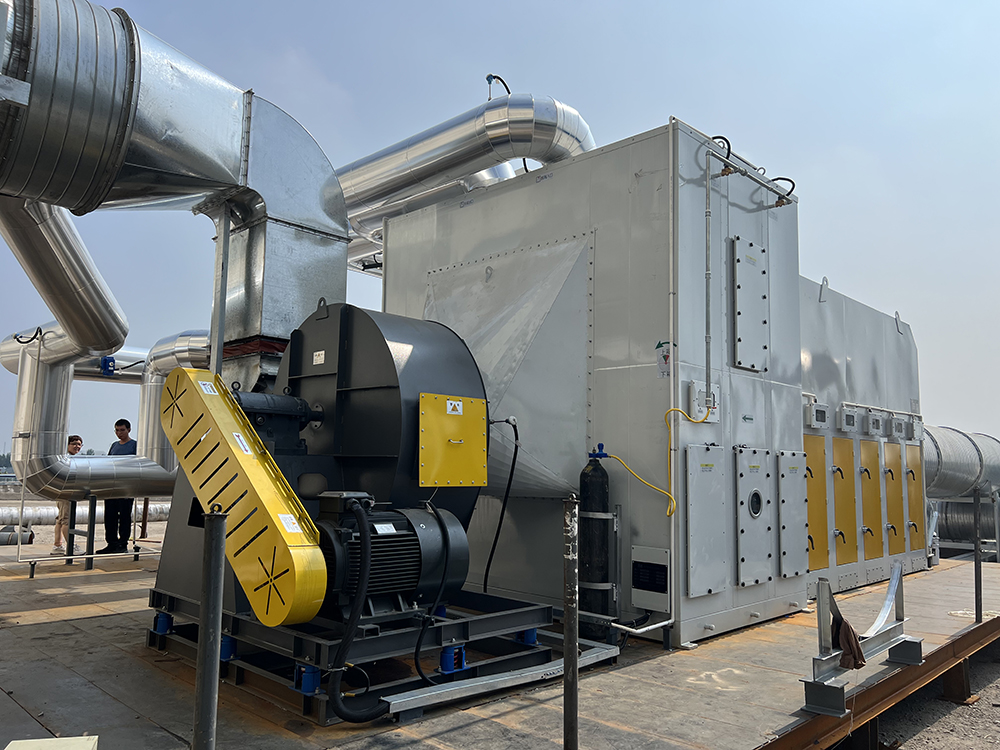
This waste gas purification equipment utilizes a "multi-stage dry filtration + rotary adsorption concentration + catalytic combustion" process, designed based on the principle that zeolite has a large specific surface area and different intermolecular forces under various temperature conditions. Under low temperatures, high-volume organic waste gases pass through the zeolite molecular sieve wheel, with VOC molecules adsorbing on its surface. The purified waste gases from the zeolite wheel can be directly discharged. The zeolite wheel section with a large amount of adsorbed VOC enters the high-temperature desorption zone, where low-volume high-temperature waste gases remove the VOC molecules from the zeolite wheel, forming high-concentration waste gases. These gases are then sent to the downstream regenerative thermal catalytic oxidation system, where, under the action of catalysts, they are oxidized to CO2 and H2O at low temperatures, and the purified waste gases can be directly discharged.
Four-stage Dry Filtration: Due to the presence of dust and other solid particles in the exhaust gas, the zeolite molecular sieve has strict requirements for the content and particle size of the particles in the exhaust gas. Therefore, a four-stage filter system is set up before the zeolite molecular sieve adsorption: initial, medium, sub-high, and high-efficiency filters. The filter material is composed of four stages of high-efficiency filters, achieving a dust purification rate of ≧99% for particles 0.5um and above. Our company's designed and produced filters feature modular design for easy assembly and disassembly, ensuring excellent operational feasibility for the equipment.
Zeolite Wheel Concentration Unit: After passing through four stages of filtration and relative humidity reduction, the waste gas enters the zeolite wheel adsorption and concentration unit. The zeolite wheel is divided into three zones: an adsorption zone, occupying 5/6 of the total area, where organic gases are adsorbed in the honeycomb zeolite and clean gas is discharged. The 1/12th of the wheel is the desorption zone, heated at high temperatures to volatilize VOCs from the gas; another 1/12th is the cooling zone, where the ambient waste gas is cooled by passing through the high-temperature zone, and the resulting gas is mixed with high-temperature flue gas to preheat to 200°C before entering the desorption zone, forming desorption gas, which is then processed by CO catalytic oxidation.
CO Catalytic Oxidation Unit: After desorption and concentration, the gas is a high-concentration organic gas, which is then transported into the CO unit by the CO blower. VOCs are oxidized into carbon dioxide and water through the CO system, achieving compliant emissions. Meanwhile, the heat generated by thermal oxidation is used to preheat the waste gas entering the CO unit, reducing the consumption of auxiliary fuel for the system. When the concentration reaches a certain level, the heat released by thermal oxidation not only meets the operational needs of the CO unit but also provides heat for temperature and humidity control, as well as desorption air.
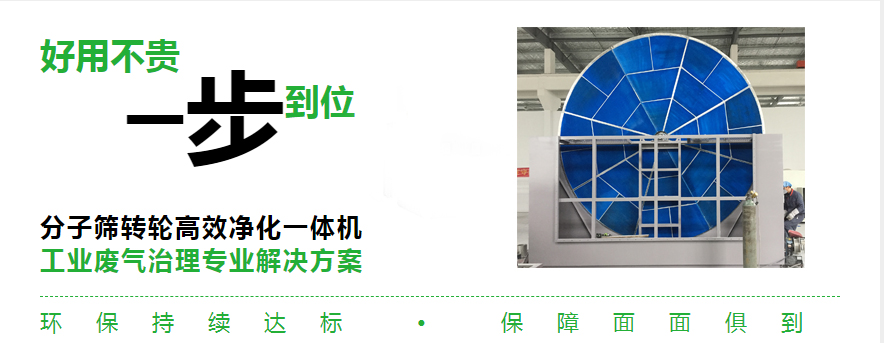
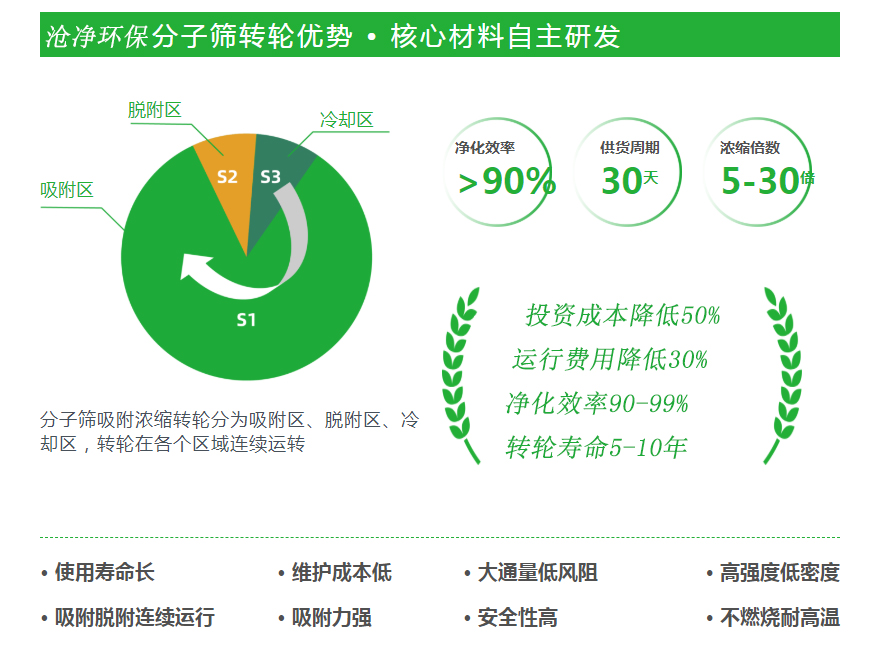
Zeolite molecular sieve wheel features:
Utilizing hydrophobic molecular sieves with high adsorption properties as an adsorbent ensures sufficient performance across a wide range of VOC types and various operating conditions.
High-boiling solvent treatment: Utilizing hydrophobic zeolite molecular sieve, with its non-flammable and high-heat-resistant properties, it can be regenerated under high-temperature conditions, with regeneration temperatures reaching up to 300°C. Therefore, it can also treat high-boiling VOCs that cannot be processed due to the regeneration temperature limitation when using activated carbon.
Washing and Activation: Zeolite molecular sieve wheels are entirely inorganic aggregates, sintered at high temperatures. In case of clogging in the honeycomb pathways, they can be washed with water. Additionally, the zeolite molecular sieve wheels can be activated at high temperatures through thermal treatment based on actual conditions.
Equipped with lifting lugs and support bases for easy crane transportation, installation, and maintenance operations.
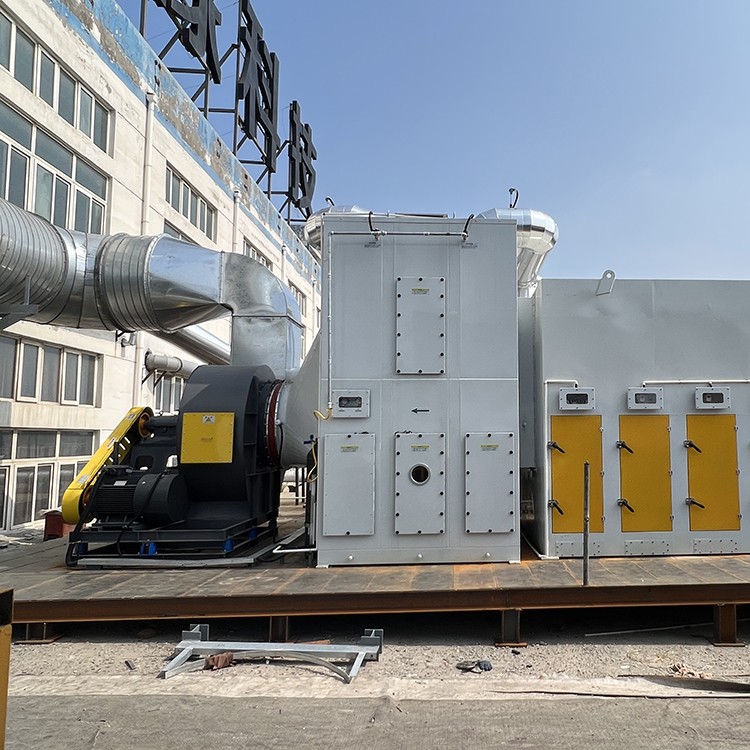
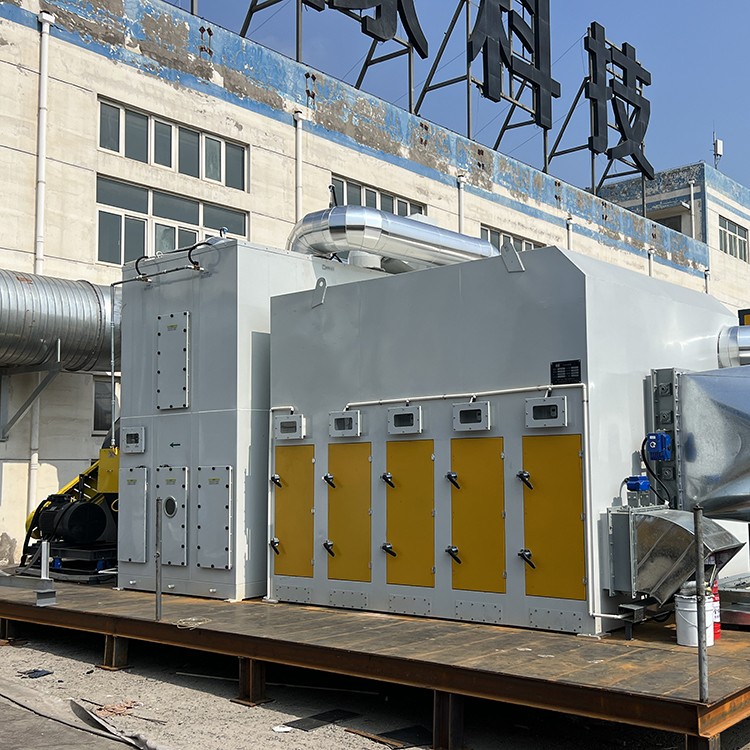
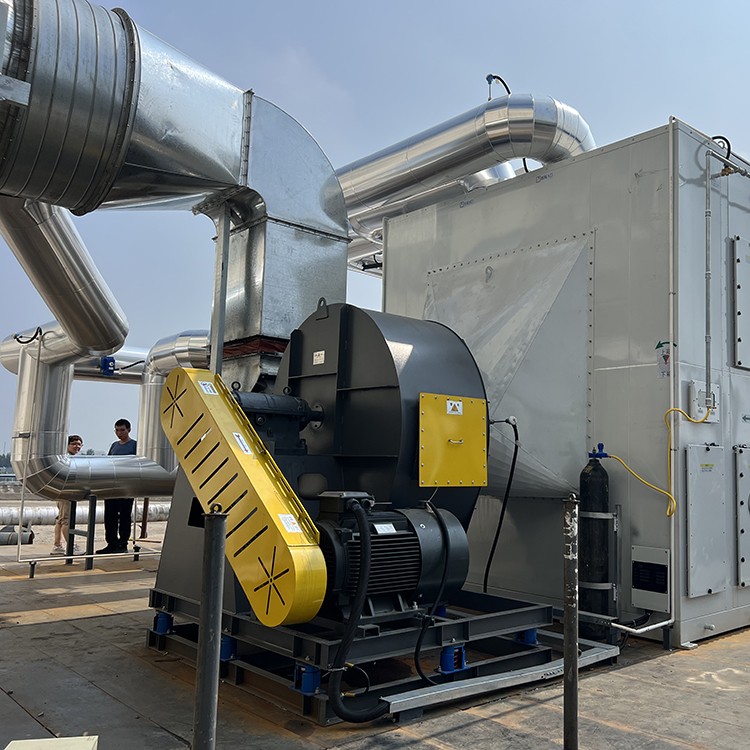
The equipment delivered to the site is qualified and can be modularly installed to minimize the installation and commissioning work on-site.
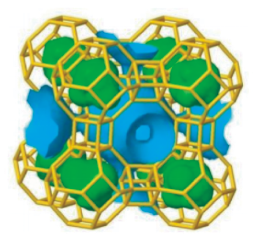
The green and blue parts show VOC molecules locked into molecular bonds by zeolite molecules.