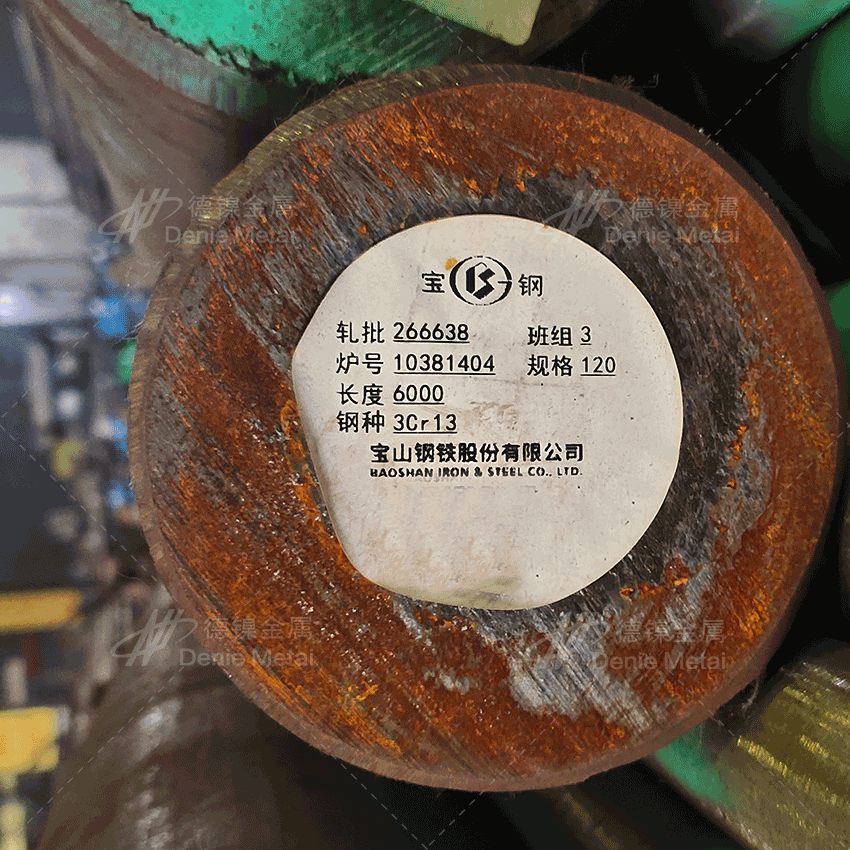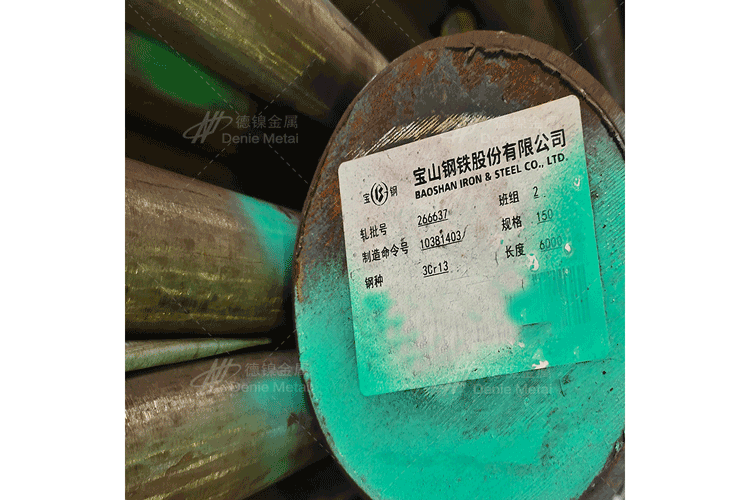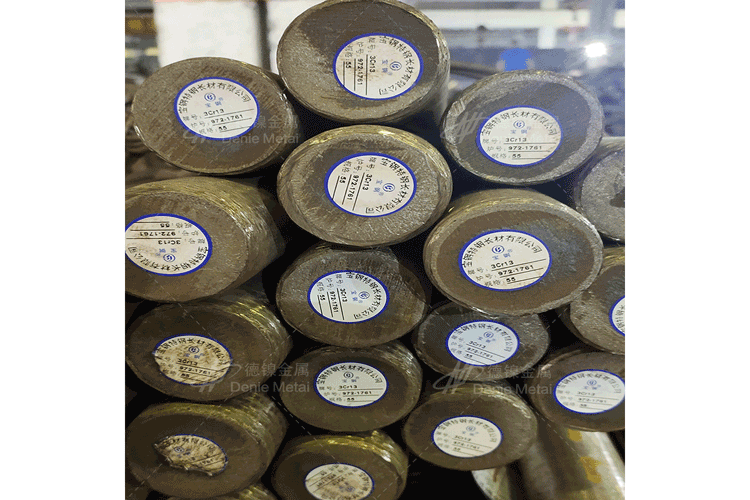

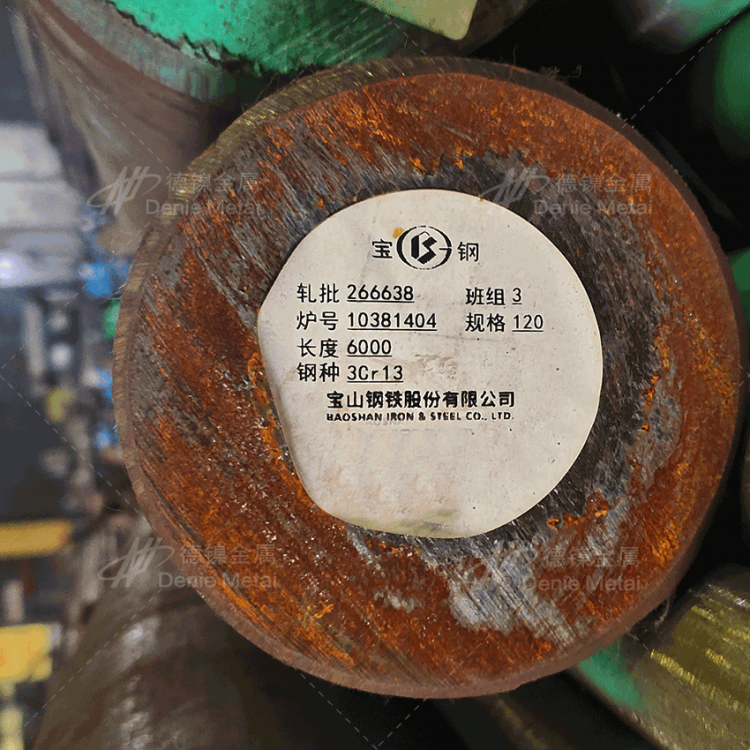


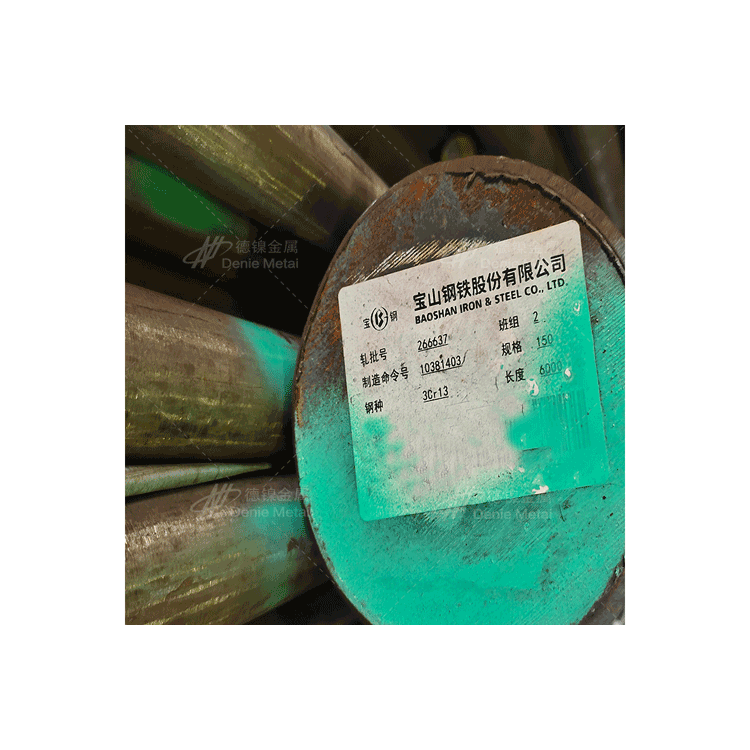
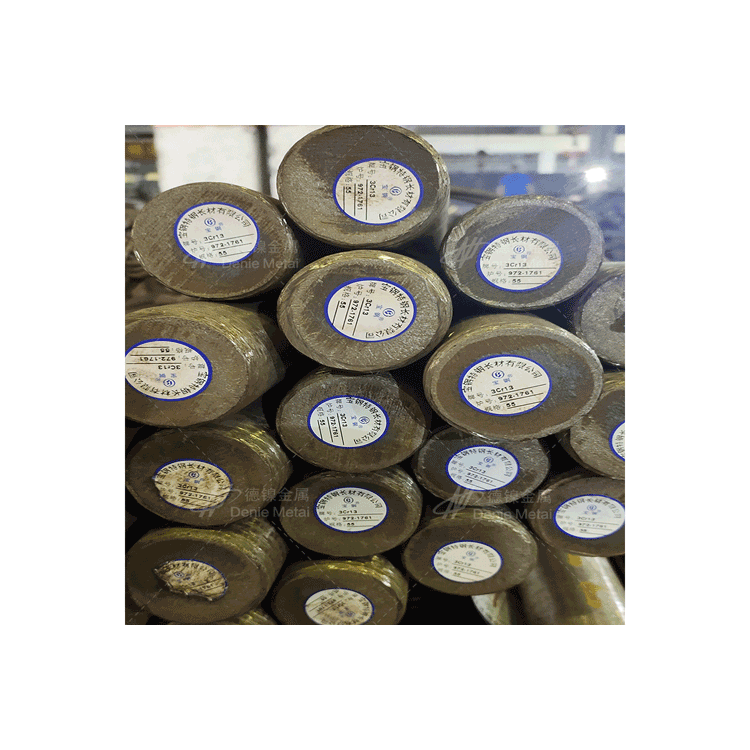













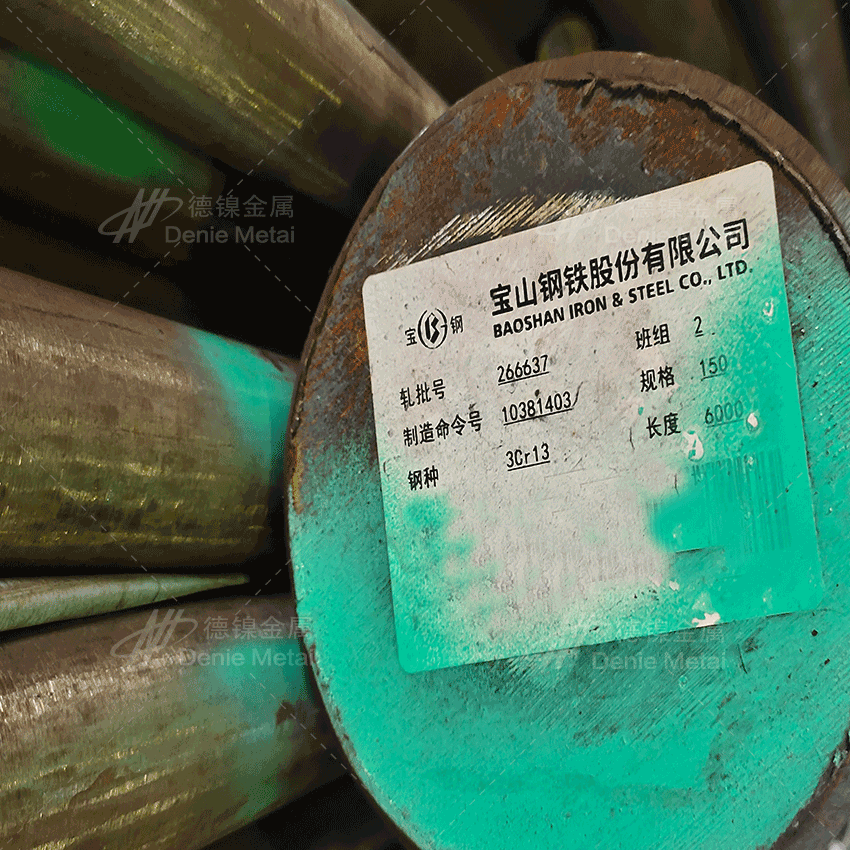
Baosteel 3Cr13

Product Introduction
Stainless steel that can be adjusted for its mechanical properties through heat treatment, in layman's terms, is a type of hardenable stainless steel. Typical grades include the Cr13 series, such as 2Cr13, 3Cr13, 4Cr13, etc. After quenching, it has high hardness, and different tempering temperatures offer different combinations of strength and toughness, mainly used for steam turbine blades, tableware, and more. Based on the differences in chemical composition, martensitic stainless steel can be divided into two types: martensitic chromium steel and martensitic chromium-nickel steel. Depending on the microstructure and strengthening mechanisms, it can also be categorized into martensitic stainless steel, martensite, and semi-austenitic (or semi-martensitic) precipitation-hardening stainless steel, as well as martensitic age-hardening stainless steel.
Product Performance
3Cr13 stainless steel can be welded in the annealed, hardened, and tempered states, regardless of the original condition of the steel. After welding, a hardened martensite area will form near the weld. The hardness of the heat-affected zone primarily depends on the carbon content of the base metal. As hardness increases, toughness decreases, and this area becomes more prone to cracking. Preheating and controlling the interlayer temperature are effective methods to prevent cracking. To achieve good properties, heat treatment after welding is required.
3Cr13 stainless steel is a type of stainless steel that can be adjusted for its properties through heat treatment (quenching and tempering), in layman's terms, it is a type of hardenable stainless steel. This characteristic dictates that two basic conditions must be met: one, there must be an austenite phase region in the equilibrium phase diagram, where prolonged heating within this temperature range dissolves carbides into the steel, followed by quenching to form martensite, which means the chemical composition must be controlled within the γ or γ+α phase regions; two, to form an alloy with a corrosion and oxidation-resistant passivation film, the chromium content must be above 10.5%. According to the difference in alloying elements, it can be classified into martensitic chromium stainless steel and martensitic chromium-nickel stainless steel.
The primary alloying elements of 3Cr13 stainless steel are iron, chromium, and carbon. Figure 1-4 depicts the iron-rich portion of the Fe-Cr phase diagram. When chromium exceeds 13%, γ phase does not exist, and these alloys are single-phase ferritic, unable to produce martensite under any heat treatment. Therefore, it is necessary to add austenite-forming elements to the Fe-Cr binary alloy. To broaden this, carbon and nitrogen are effective elements; the addition of carbon and nitrogen allows for higher chromium content. In martensitic chromium stainless steels, aside from chromium, carbon is another crucial essential element. In fact, martensitic chromium heat-resistant stainless steel is a ternary alloy of iron, chromium, and carbon. Of course, there are other elements as well. Using these elements, one can determine the approximate microstructure based on the Schaeffler diagram.