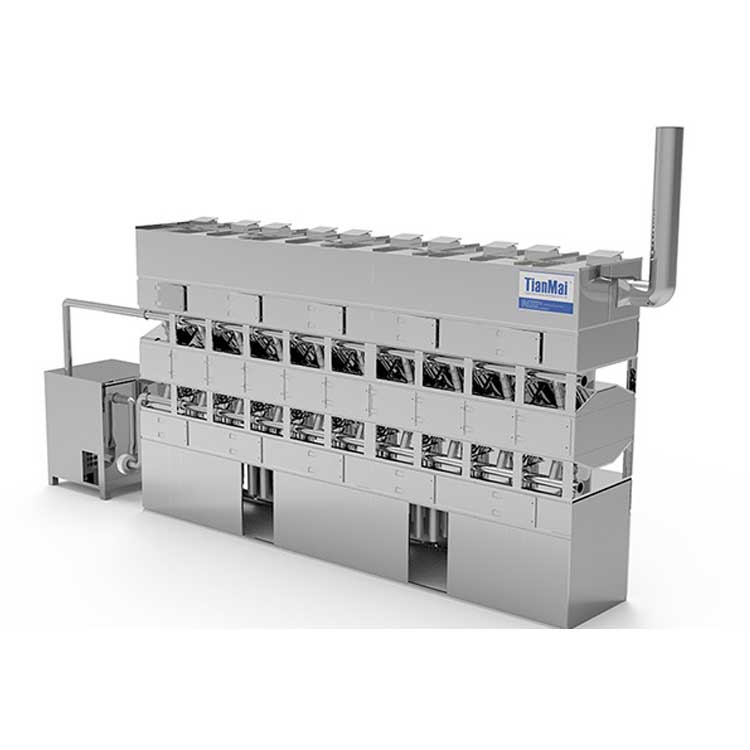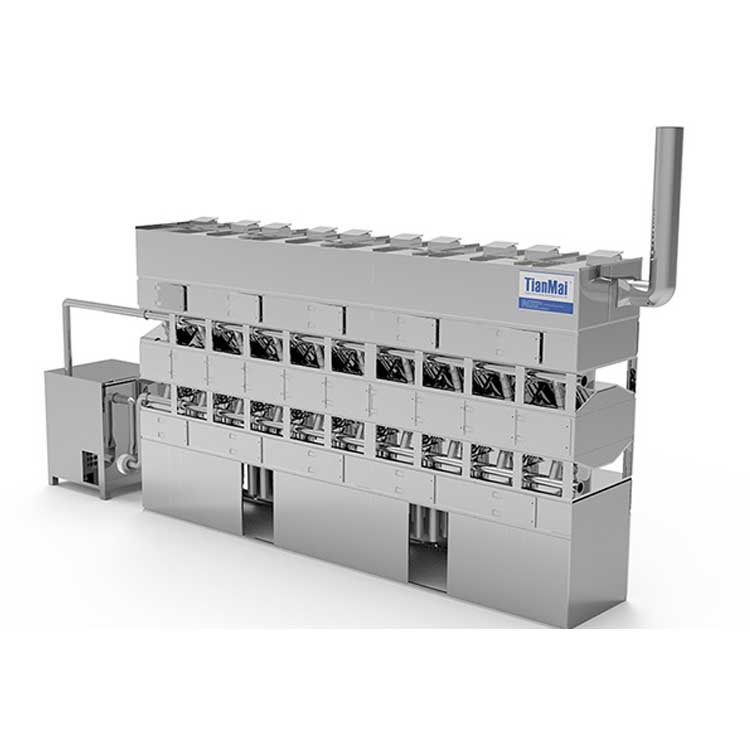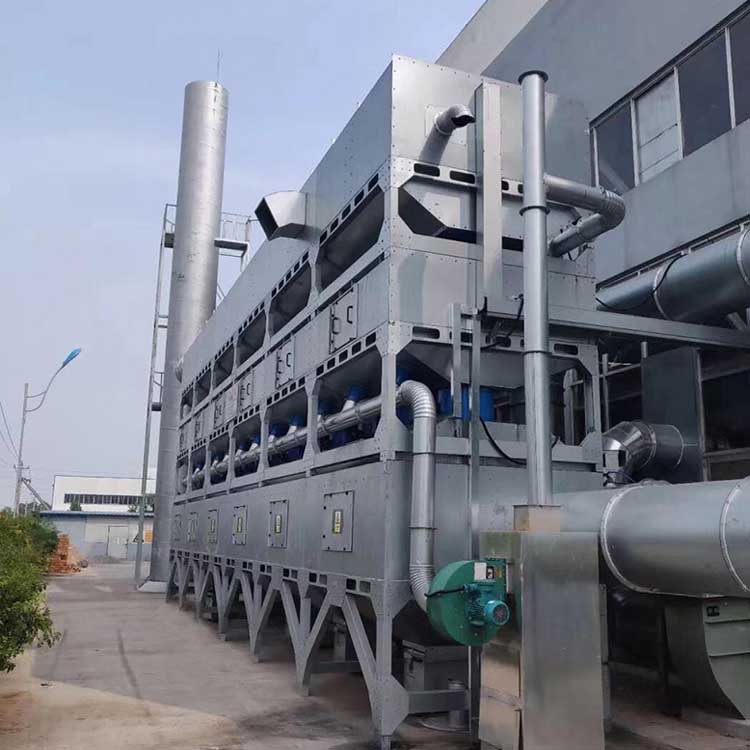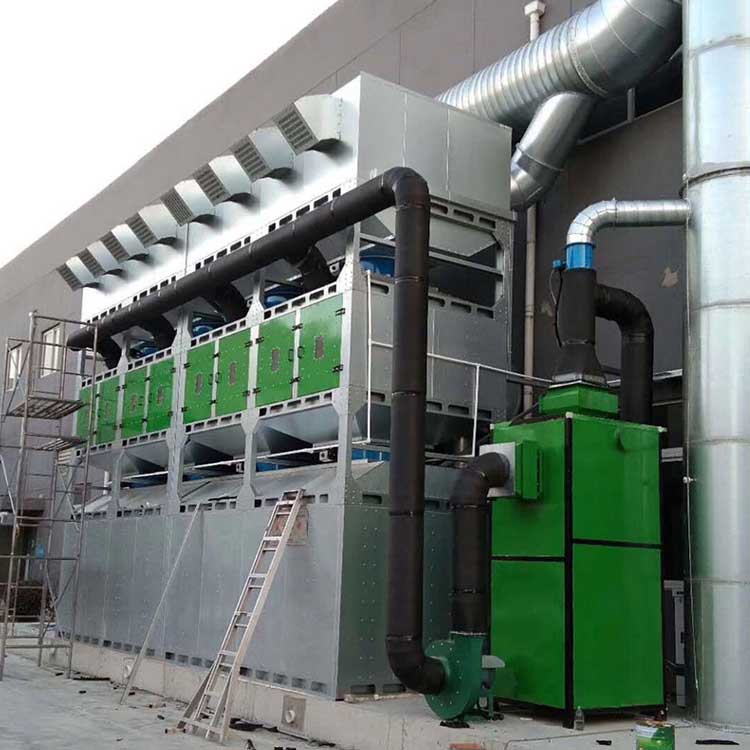


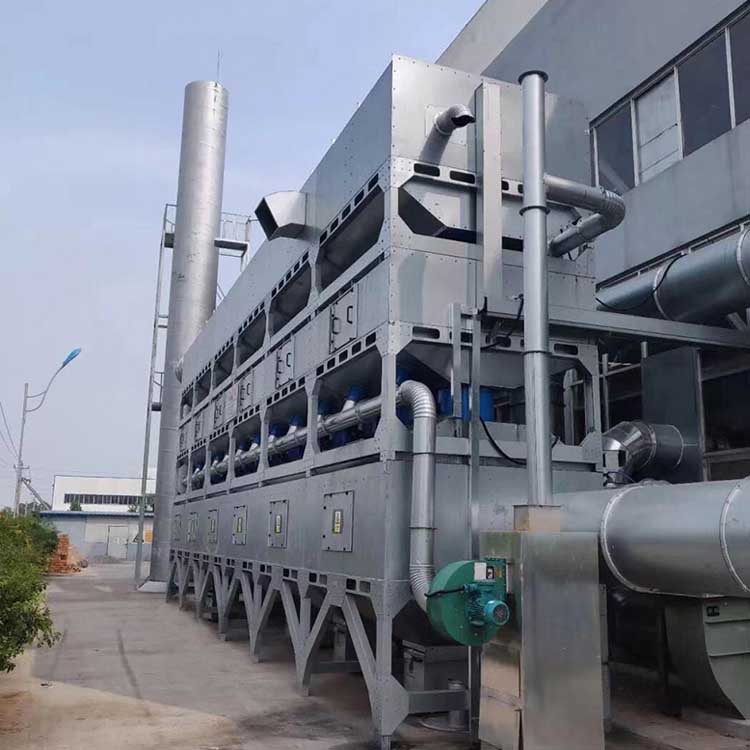
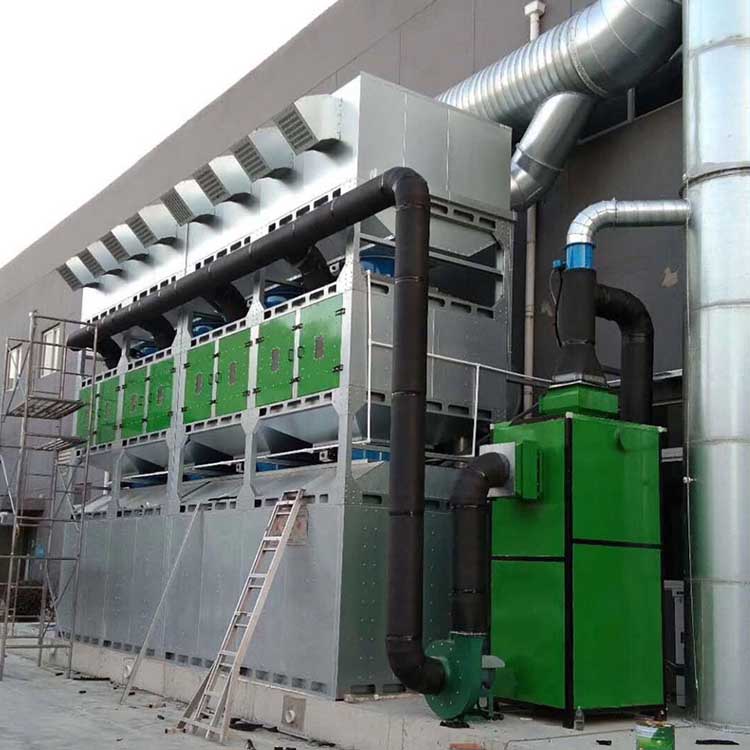











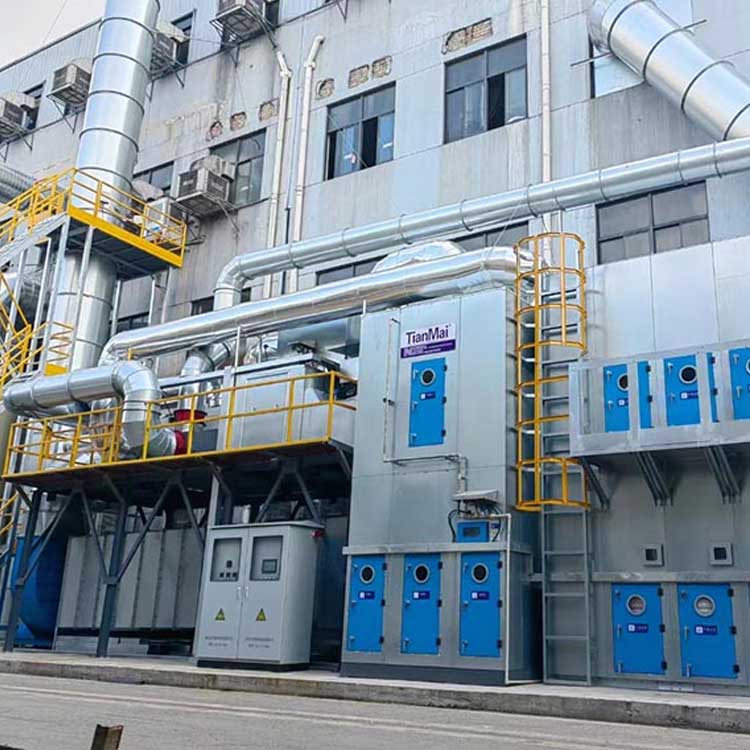
Principle of Operation
The principle of RCO regenerative catalytic combustion is as follows: Step one involves the adsorption of VOC molecules by the catalyst, which increases the concentration of the reactants. Step two is the catalytic oxidation phase, which reduces the activation energy of the reaction, thereby enhancing the reaction rate. With the help of a catalyst, organic waste gases can undergo anaerobic combustion at a lower ignition temperature, decomposing into CO2 and H2O and releasing a significant amount of heat. Compared to direct combustion, it features a lower ignition temperature and reduced energy consumption. In some cases, once the ignition temperature is reached, no external heating is required. The reaction temperature ranges from 250 to 400°C.
Equipment Advantages
· Smart Control Operation: The equipment employs a modular multi-unit design concept, which can automatically adjust the number of fan units based on the actual number of devices in operation on the production line, ensuring the equipment is always in an energy-saving state.
· Core Energy Saving: Equipment reaches ignition temperature in just 15-30 minutes upon startup, and can recover excess heat for a thermal cycle. With multi-unit energy-saving control, it achieves 83% energy savings.
· Purification Rate: Membrane filtration efficiency ≥ 90%, equipment uses activated carbon/zirconium silicate materials, deep filtration efficiency ≥ 95%, catalytic combustion efficiency ≥ 95%, overall efficiency reaches above 98%.
· Reliable Performance: Equipped with fire-retardant dust removal system, explosion-proof pressure relief system, over-temperature alarm system, and advanced automatic control system.
· Long service life: Catalysts typically need to be replaced after 8,000 hours, and the carrier is recyclable.
Process Principle
The RCO regenerative catalytic combustion process operates on the principle that: Step one involves the catalyst adsorbing VOC molecules, which increases the concentration of the reactants. Step two is the catalytic oxidation phase, which reduces the activation energy of the reaction, thereby increasing the reaction rate. With the help of a catalyst, organic waste gases can undergo anaerobic combustion at a lower ignition temperature, decompose into CO2 and H2O, and release a large amount of heat. Compared to direct combustion, this method has the advantages of a lower ignition temperature and smaller energy consumption. In some cases, after reaching the ignition temperature, external heating is not required, and the reaction temperature ranges from 250-400°C.
Equipment Advantages
· Smart Control Operation: The equipment employs a modular multi-unit design concept, automatically adjusting the number of fans operating based on the actual number of devices running on the production line, ensuring the equipment remains in an energy-saving state at all times.
· Core Energy Saving: Equipment reaches ignition temperature in just 15-30 minutes upon startup, recovers excess heat for thermal recycling, and, with multi-unit energy-saving control, achieves up to 83% energy savings.
· Purification Rate: Membrane filtration efficiency ≥ 90%, equipment uses activated carbon/zirconium silicate materials, deep filtration efficiency ≥ 95%, catalytic combustion efficiency ≥ 95%, overall efficiency exceeds 98%;
· Reliable Performance: Equipped with fire-retardant dust removal system, explosion-proof pressure relief system, over-temperature alarm system, and advanced automatic control system.
· Long lifespan: Catalysts typically need to be replaced after 8,000 hours, and the carrier is recyclable.