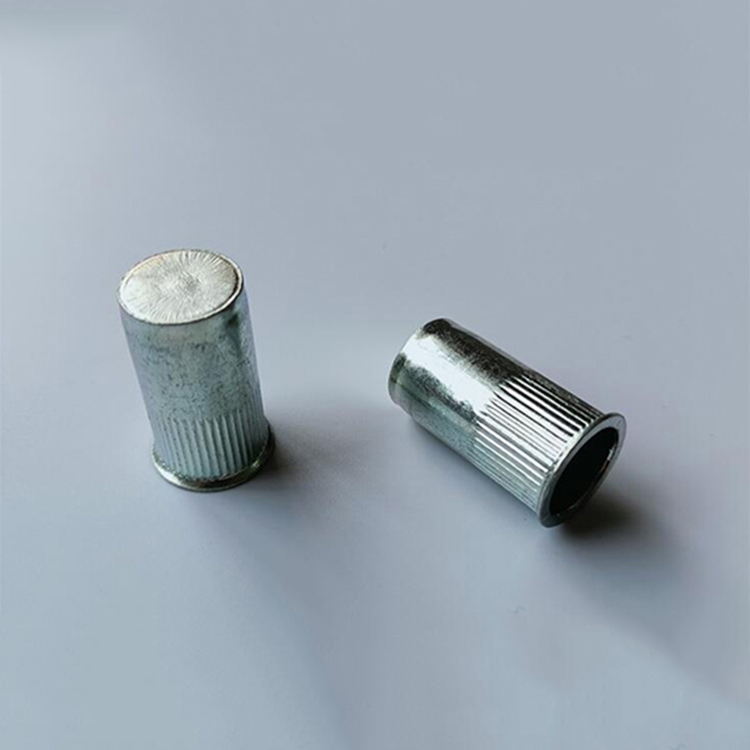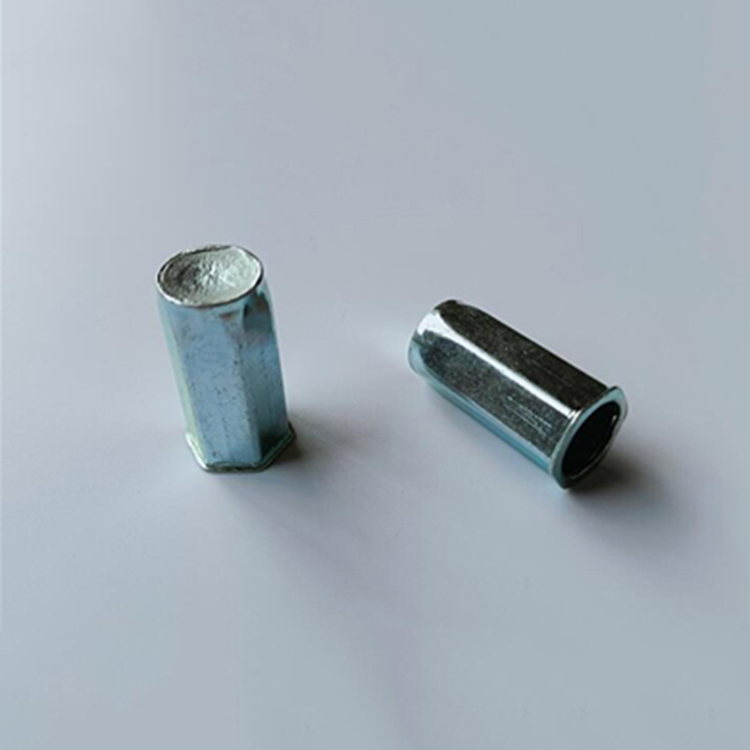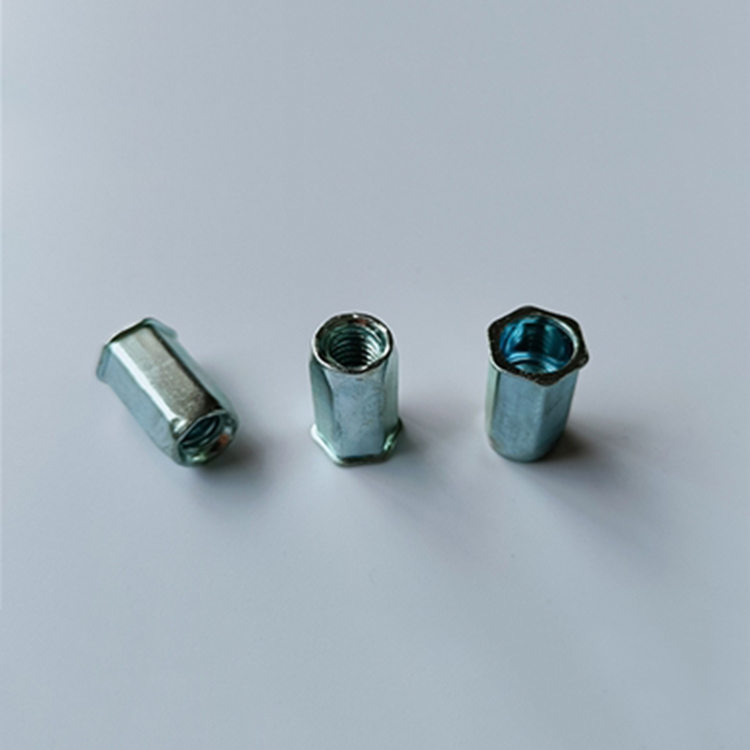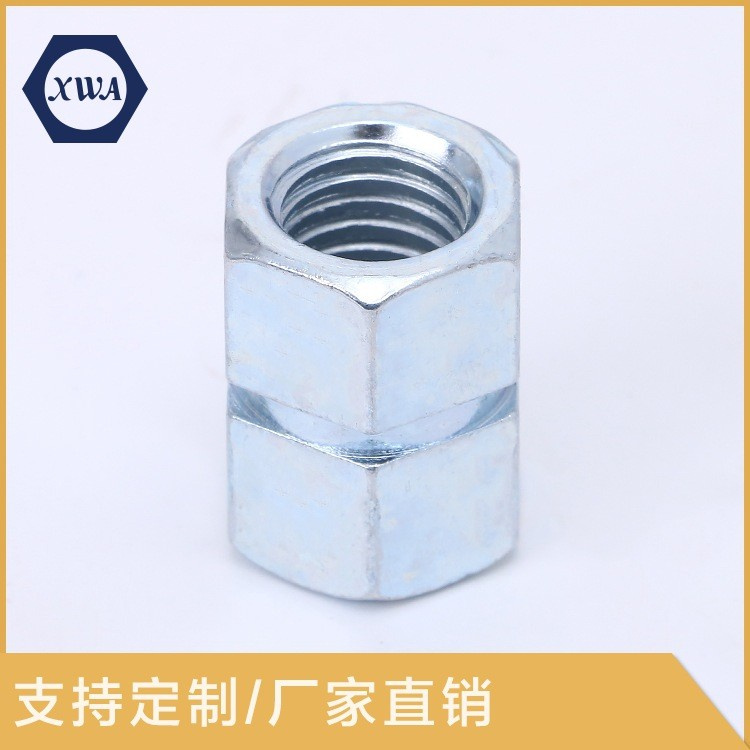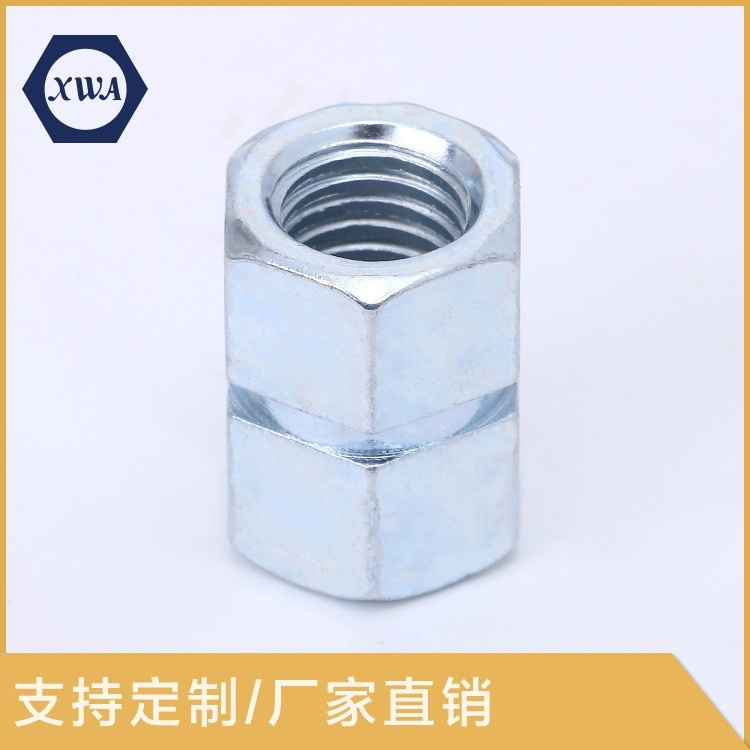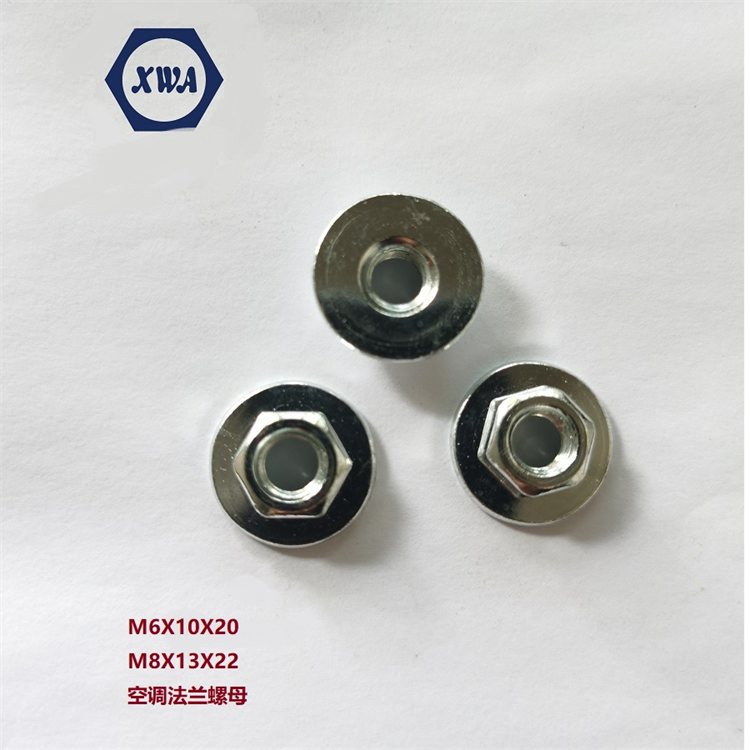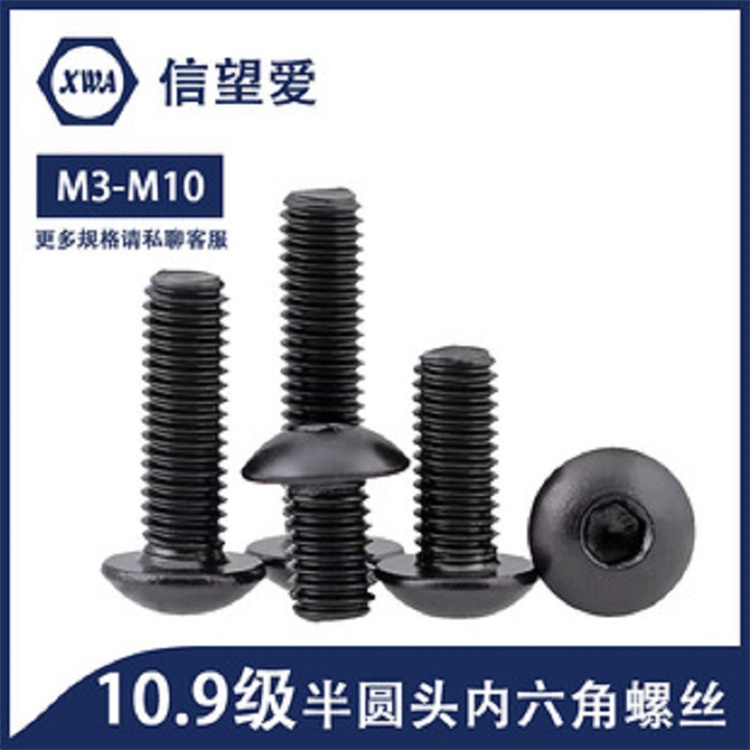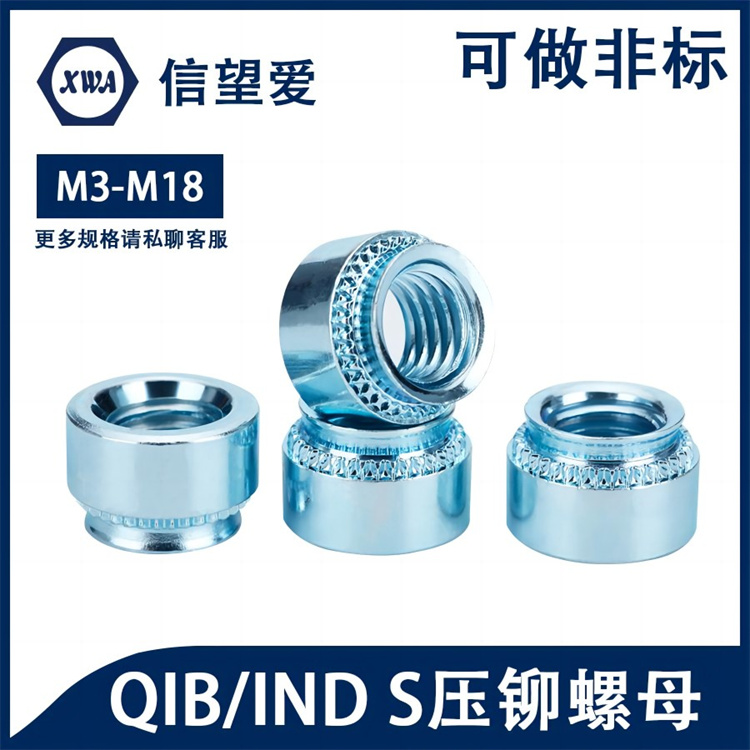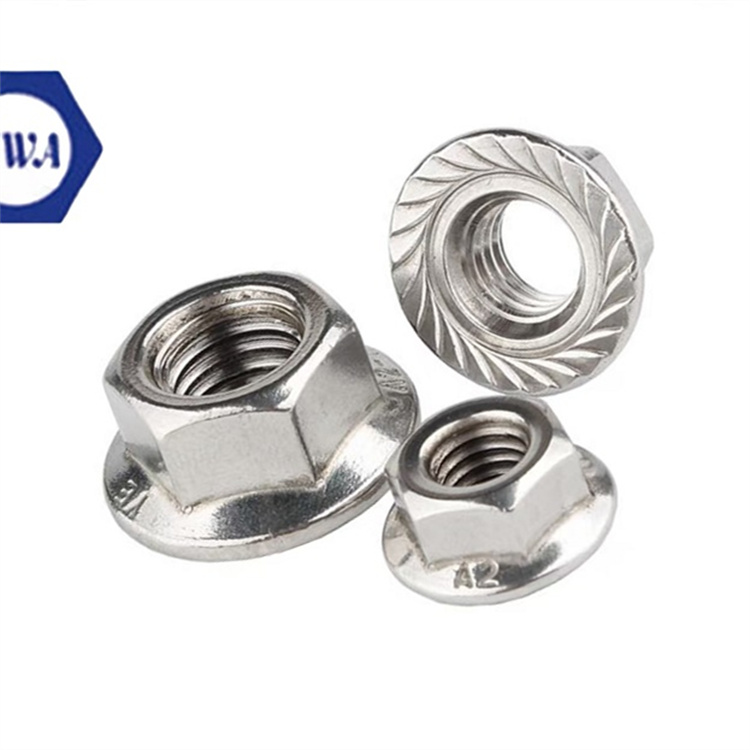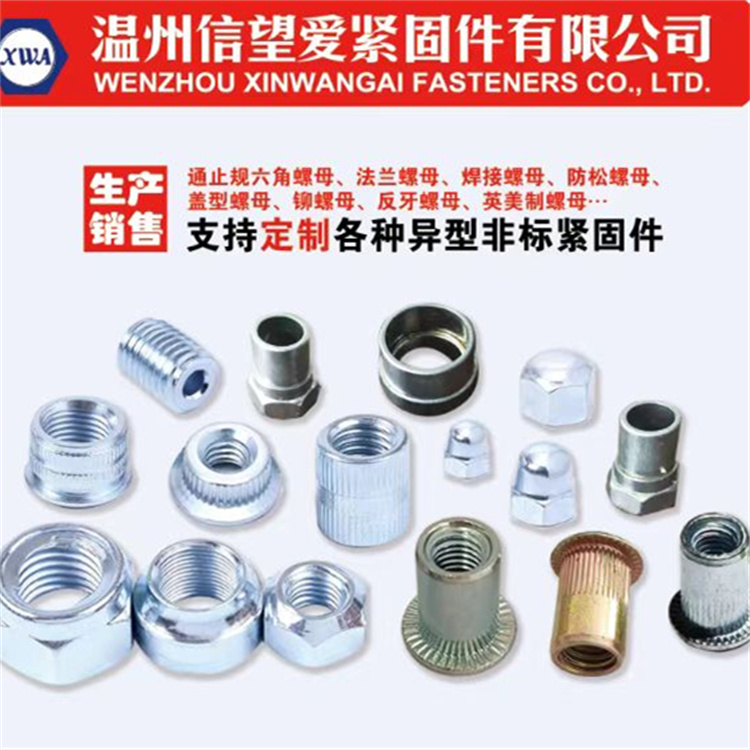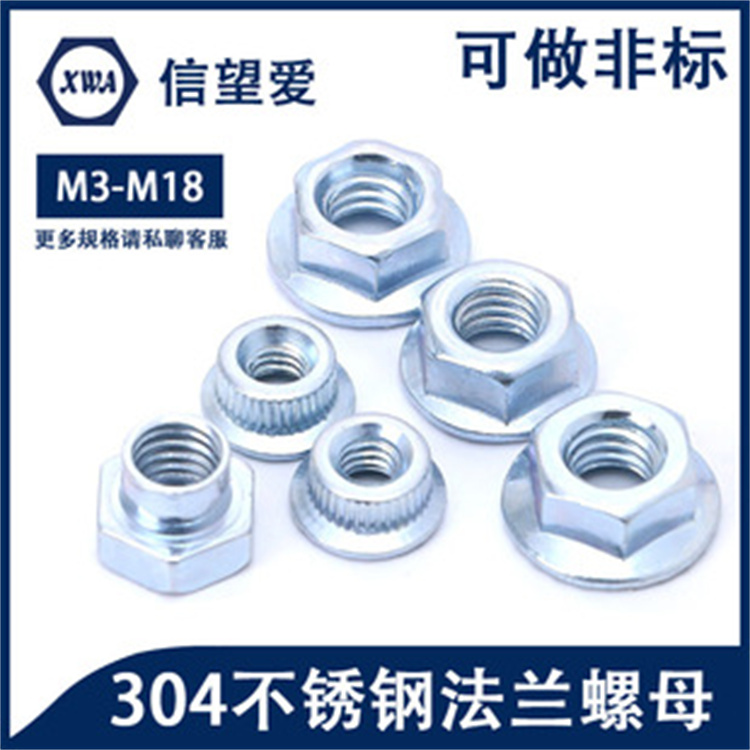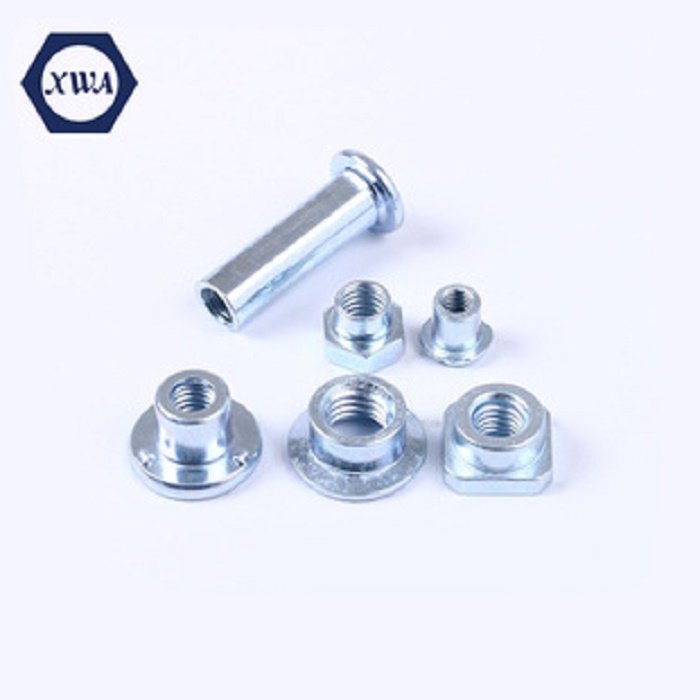








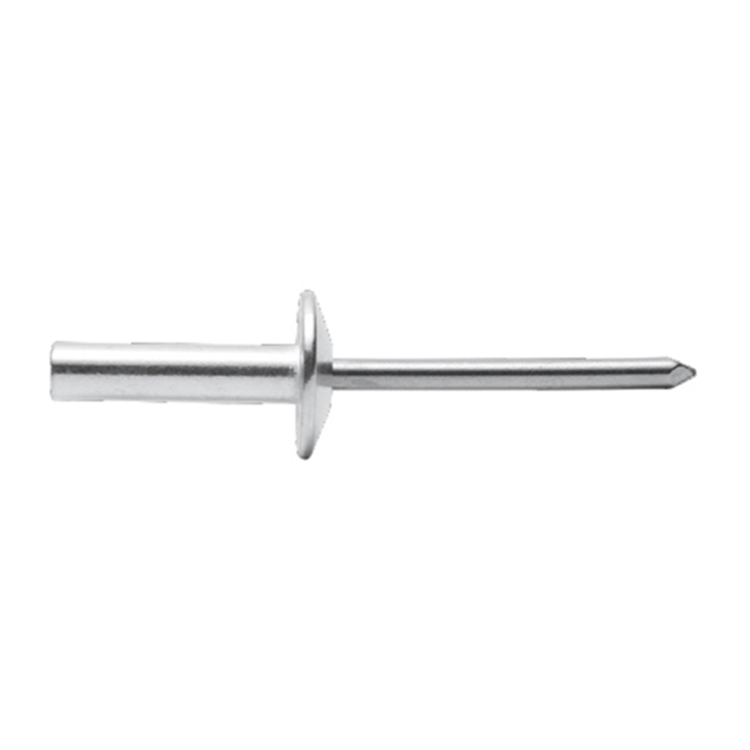
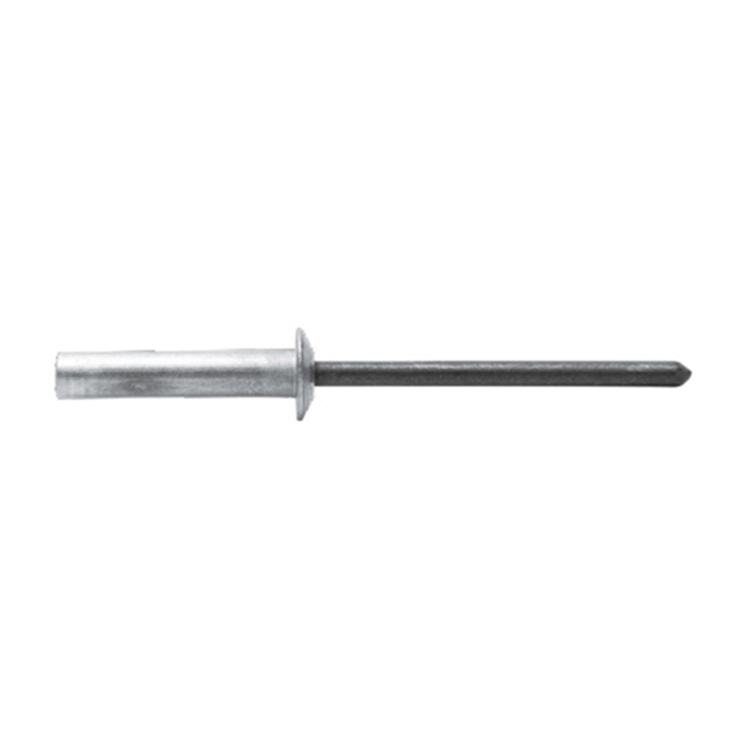

Boltnuts, also known as pull-boltnuts or pull-hats, are developed to address the drawbacks of welding nuts on thin metal plates and tubes, such as easy melting, base material deformation during welding, and easy thread stripping when tapping internal threads. They do not require tapping internal threads, do not need welding nuts, offer high bolting efficiency, and are easy to use.
Application: Primarily used in the fastening field for various metal sheets, pipes, and other manufacturing industries, widely employed in the assembly of automotive, aviation, railway, refrigeration, elevator, switchgear, instruments, furniture, and decorative electro-mechanical and light industrial products.
The materials for rivet nuts primarily include low-carbon steel, stainless steel, alloy aluminum, copper, etc.
Flat head, countersunk, hex, semi-hex rivet nuts, available with through holes, blind holes, with knurling and smooth shank.
Molly bolts are primarily used in non-structural load-bearing bolt connections, such as the assembly of interior components in rail, road, and marine vehicles. The improved anti-rotational molly bolts are superior to aircraft deck bolts, offering advantages like lighter weight, no need for pre-bolting the deck bolt, and usability even without an operational space on the base material's back.