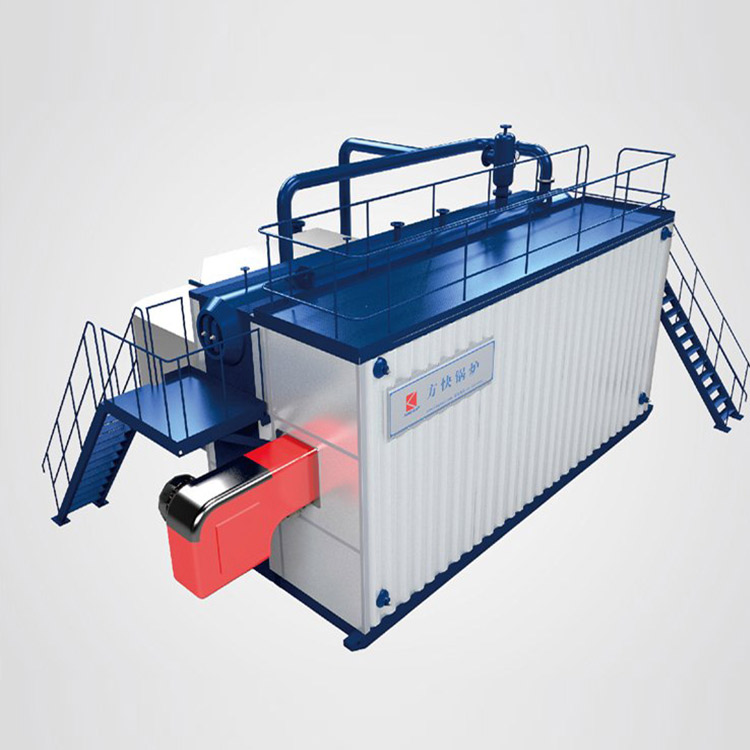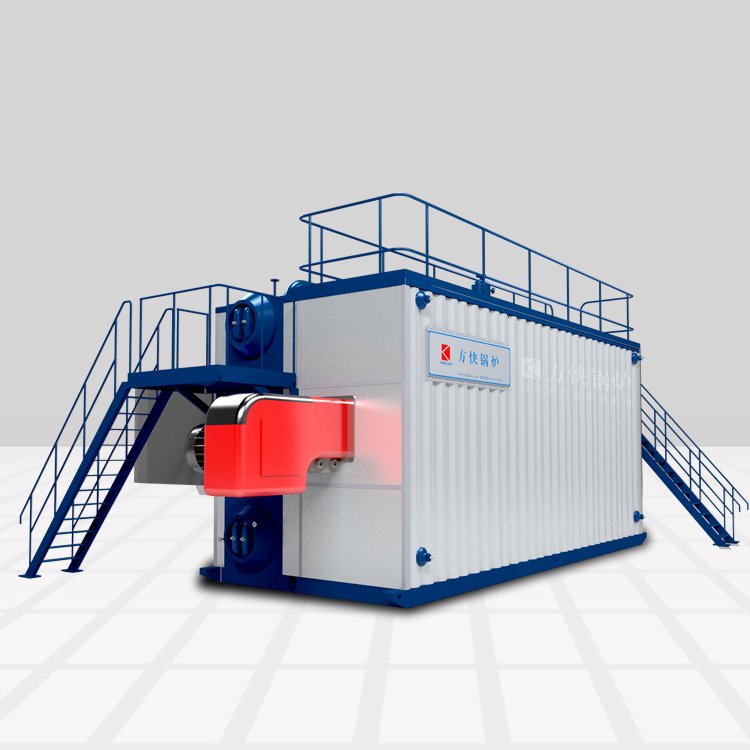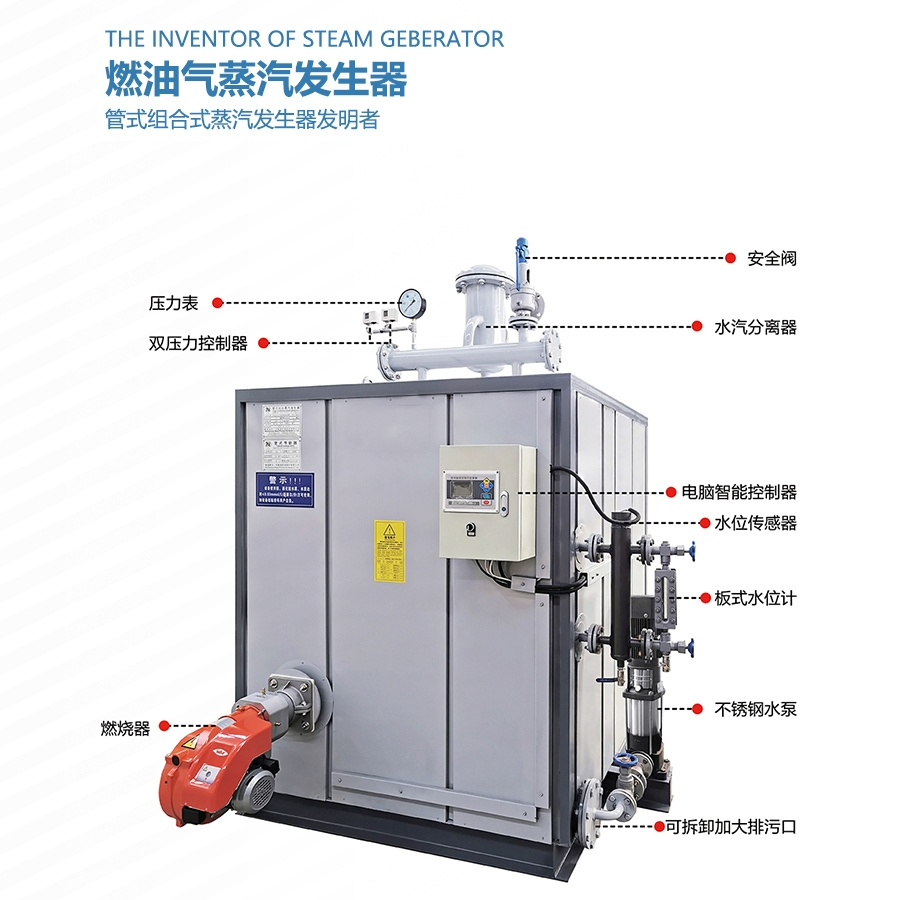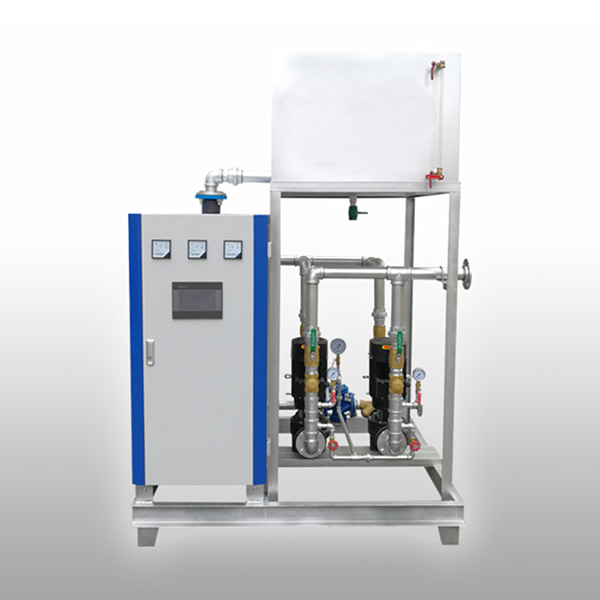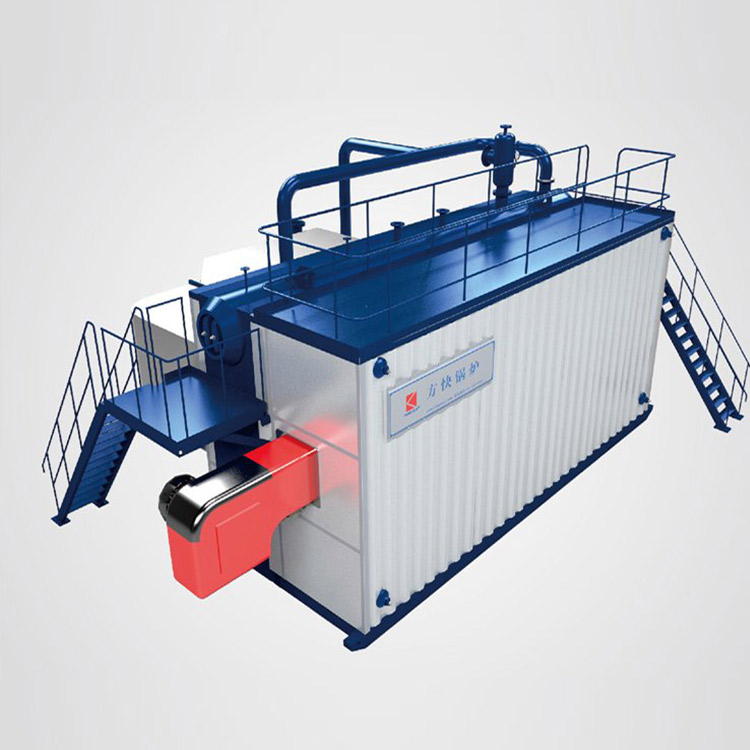

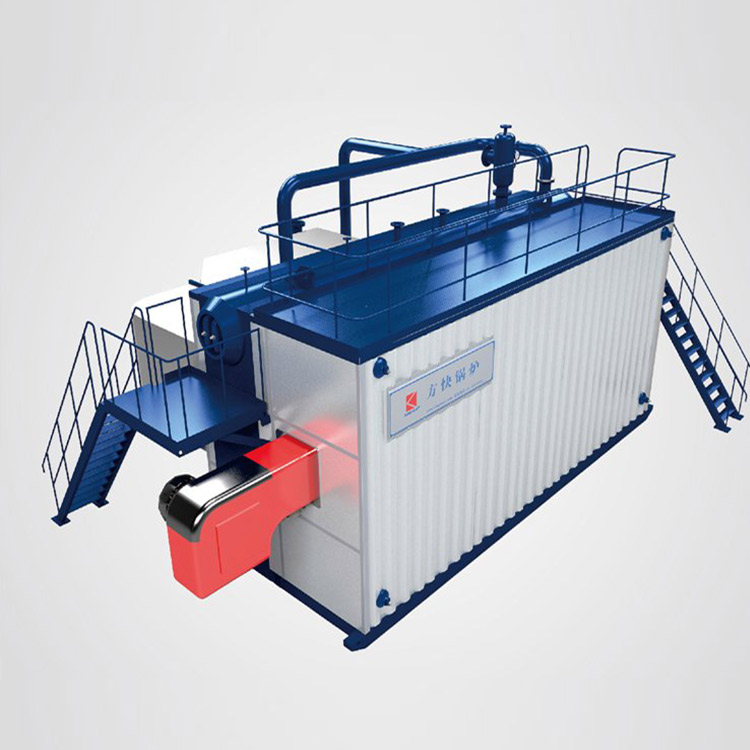
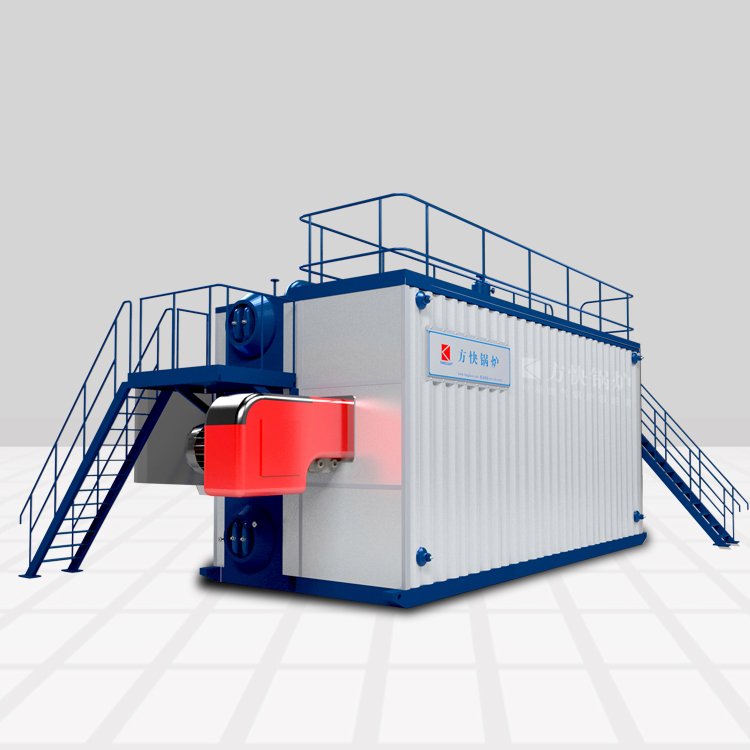
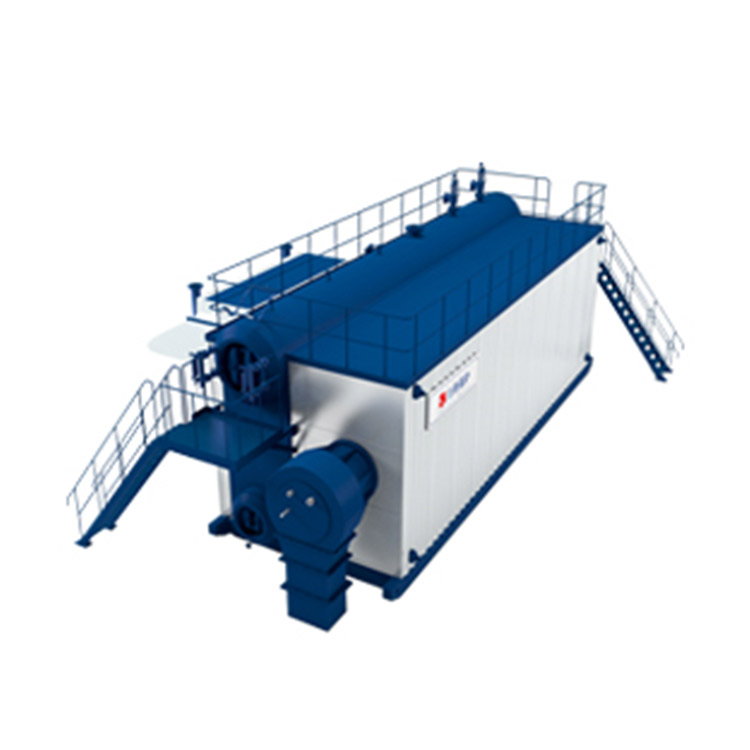


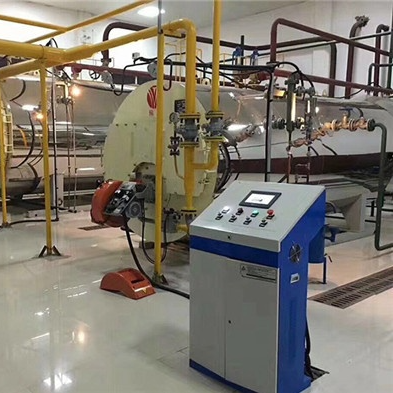
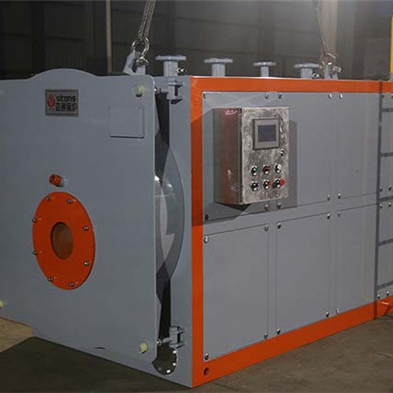
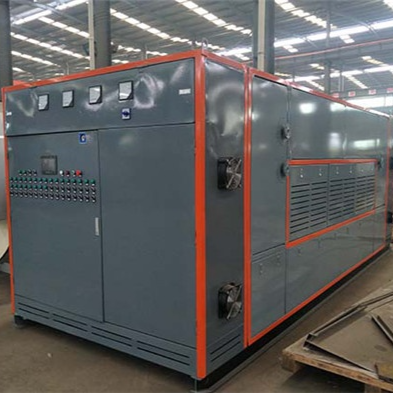
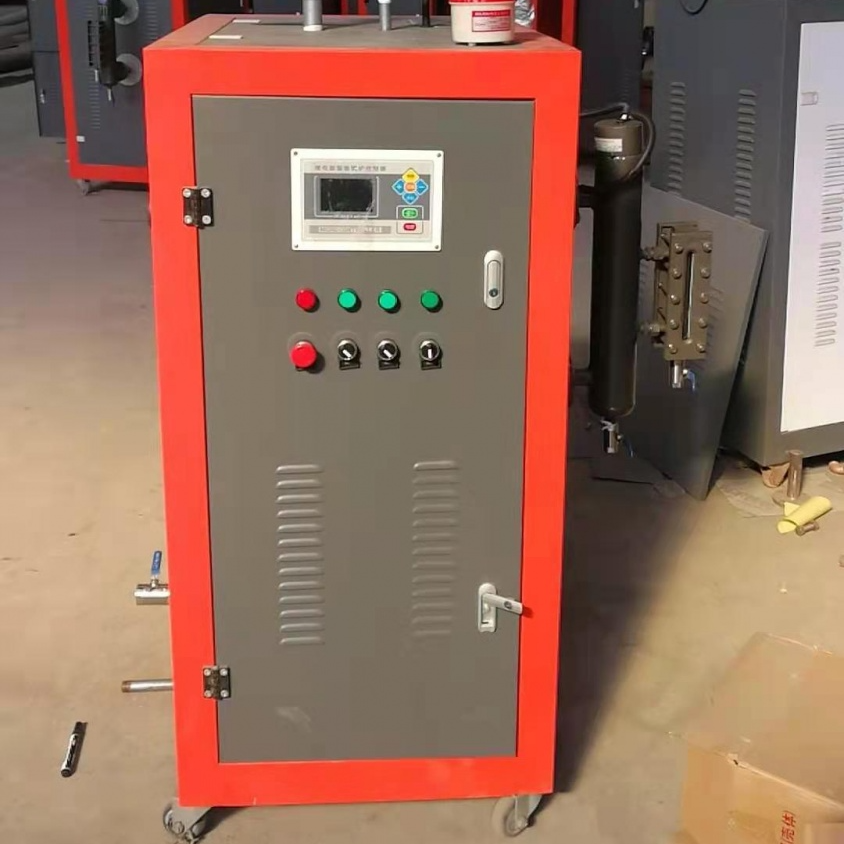





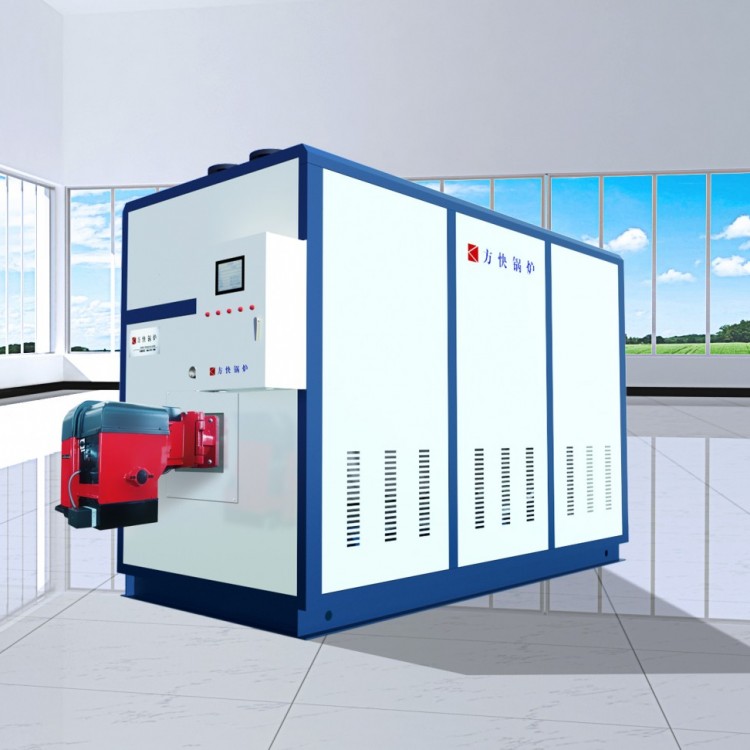
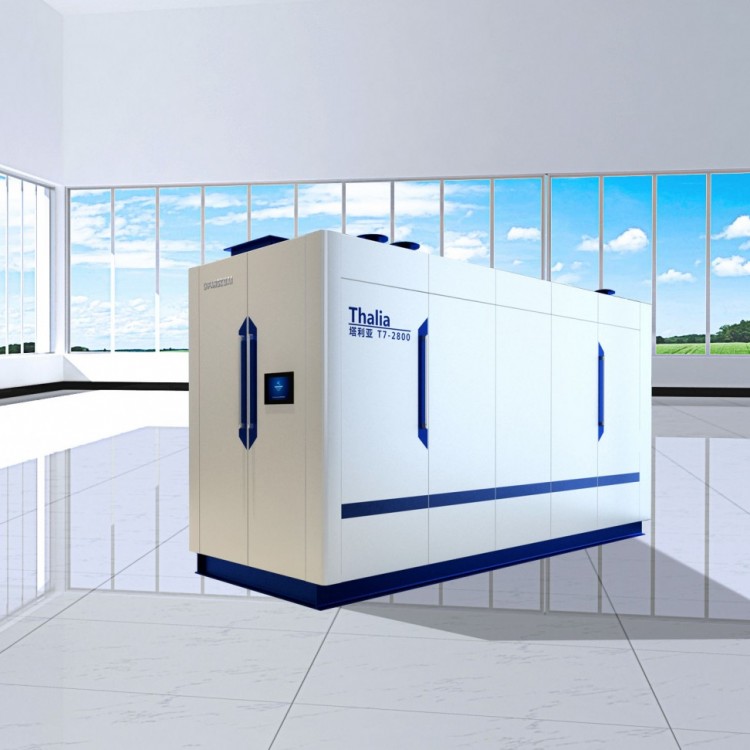
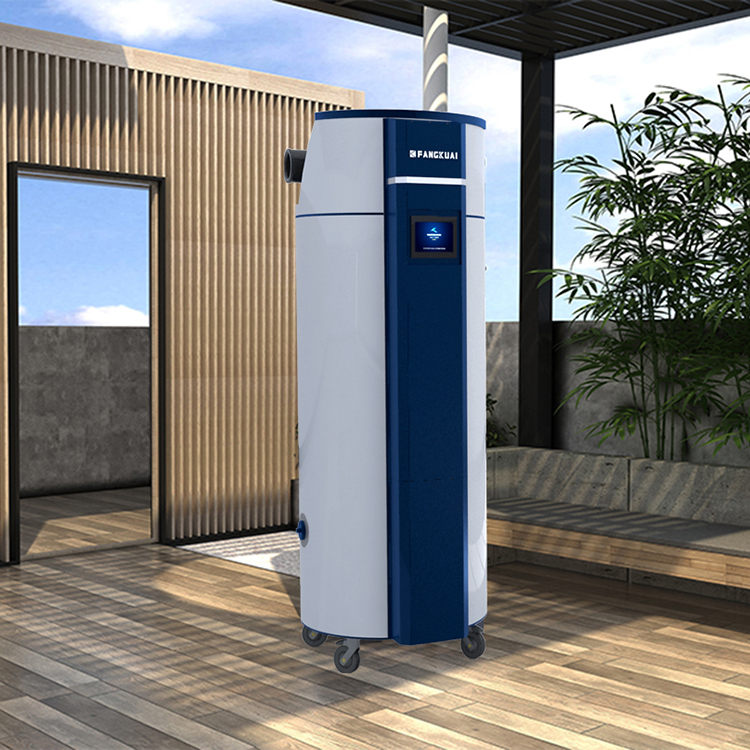
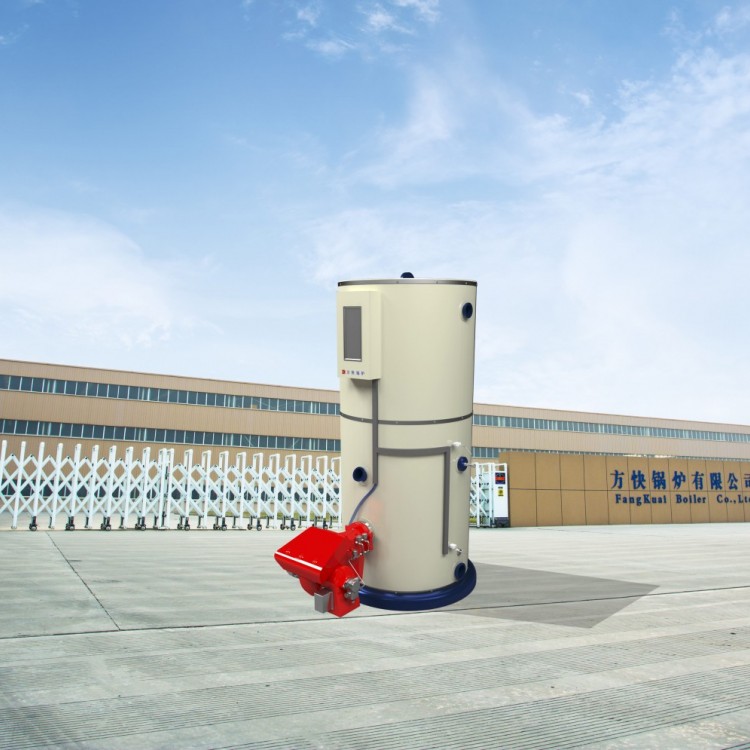

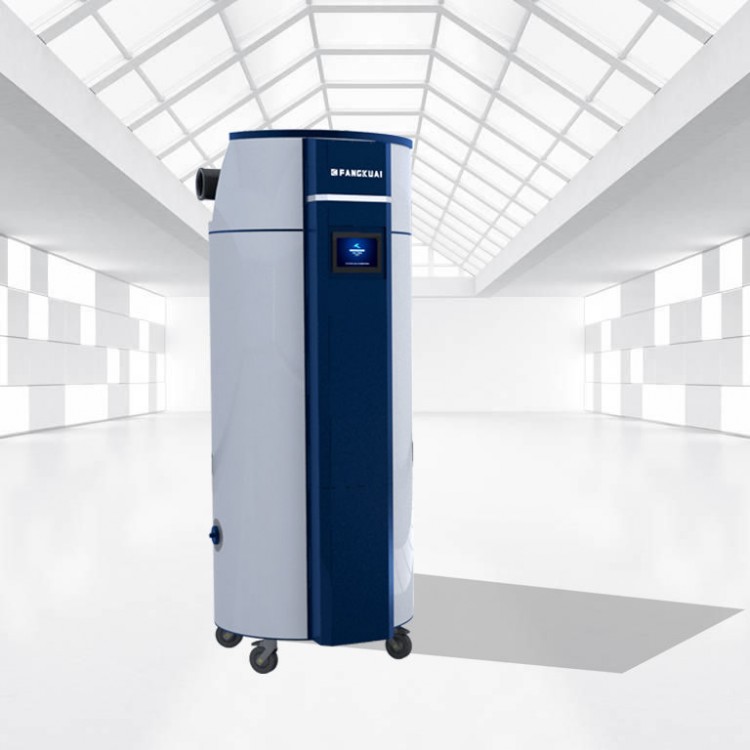
A water-tube boiler is an industrial boiler that has a combustion chamber and heating surface set outside the drum, causing water and steam to flow within the tubes. It has a relatively complex structure, with the steam-water system mainly including the drum (steam drum), headers, water-cooled walls, convection tubes, economizers, and superheaters; while the combustion system mainly includes burners, furnace and flue, and air preheaters. The structural forms include water-tube boilers, straight water-tube boilers, and bent water-tube boilers, etc.
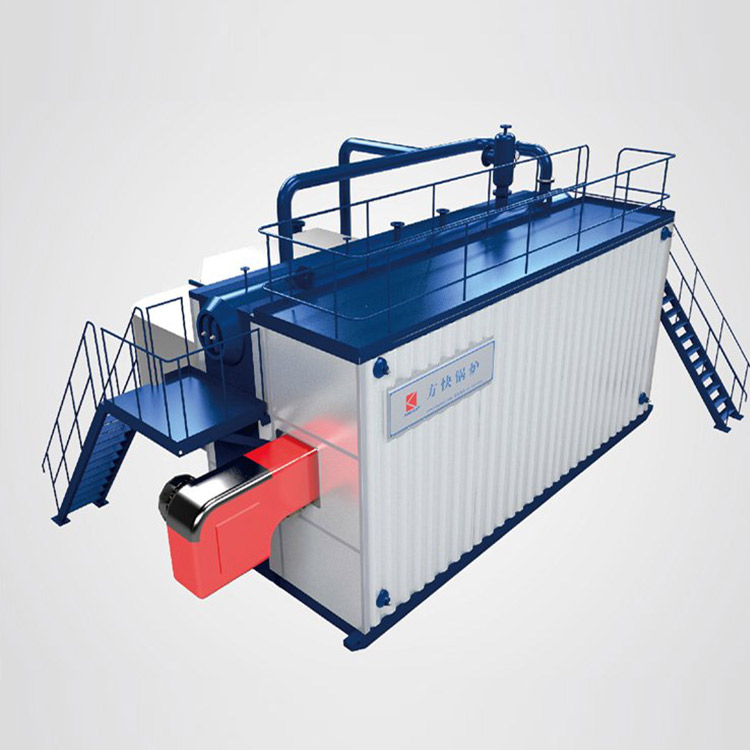
Due to the smaller cross-sectional area inside the tube compared to the outside, the steam flow velocity is greatly increased, and the steam produced on the heating surface is immediately flushed away, which enhances the boiler water's heat absorption rate. Compared to shell-type boilers, water-tube boilers have a smaller diameter, higher working pressure, and smaller water capacity, resulting in less severe damage in case of an accident. The water circulation in the boiler is good, the evaporation efficiency is high, and it has better performance in adapting to load changes, with a higher thermal efficiency. Therefore, boilers with higher pressure and greater evaporation capacity are typically water-tube boilers. A water-tube boiler is one where water and steam flow inside the tubes, while flames or flue gases burn and flow outside the tubes.