










Boiler parameters are the main indicators of boiler performance, including boiler capacity, steam pressure, steam temperature, and feedwater temperature.
Boiler capacity can be expressed in terms of rated evaporation or higher continuous evaporation. Rated evaporation refers to the steam produced continuously per unit of time at specified outlet pressure, temperature, and efficiency. Higher continuous evaporation is the amount of steam that can be produced continuously per unit of time at specified outlet pressure and temperature.
Steam parameters include the pressure and temperature of the boiler's steam, usually referring to the superheated steam pressure and temperature at the outlet of the superheater and reheater. If there are no superheater and reheater, for a constant-pressure heating hot water boiler manufacturer, it refers to the saturated steam pressure and temperature at the boiler outlet. Feedwater temperature refers to the inlet temperature of the economizer, and for a constant-pressure heating hot water boiler manufacturer without an economizer, it refers to the water temperature entering the drum.

The working principle of a vacuum boiler: Water temperature changes with different pressures. A vacuum boiler utilizes the temperature difference in water boiling due to pressure differences. At 1mmHg, the boiling point of water is, and at a pressure of 6mmHg, it is 4°C. The working vacuum pressure range of a vacuum boiler is 20mmHg to 500mmHg. The pressure in a vacuum boiler affects the media water temperature, causing it to rise to saturation in a normal pressure heating hot water boiler. This results in the formation of steam at the same temperature above the water surface. The heat exchanger begins to exchange cold and hot water quality at the user's location. In a normal pressure heating hot water boiler factory, steam outside the pipes is cooled and condensed into water droplets on the water surface, which are then reheated. This completes the entire cycle.

What are the main features of gas-fired boilers?
1. Large font displays water temperature, facilitating control over the boiler and system's operation. Water temperature can be set freely from 10℃ to 90℃, with the boiler automatically heating the system or providing hot water for daily use and bathing.
2. The control system manages the start and stop of the circulation pump based on the boiler water temperature. The hot water circulation pump activates when the boiler water temperature reaches the set upper limit, and it shuts down when it falls below the set lower limit.
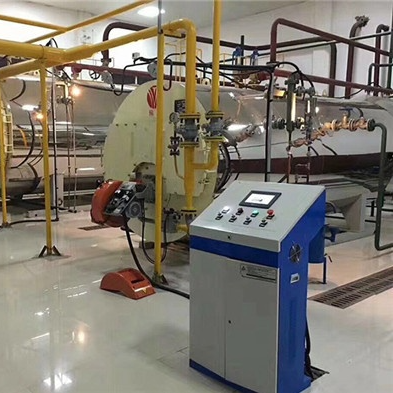
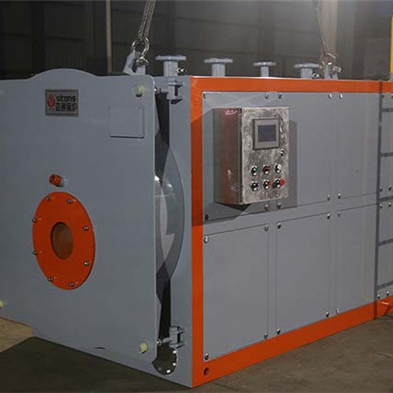
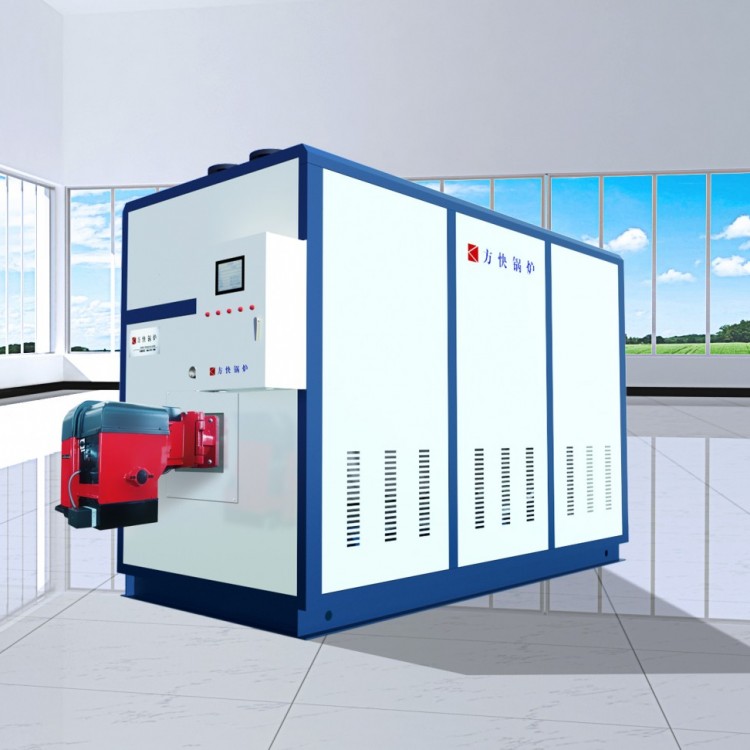
3. The horizontal gas-fired hot water boiler features a three-pass fully wet-back structure. It utilizes a large furnace and thick flue tubes to increase the radiant heat absorption in the furnace, effectively reducing energy consumption. The use of threaded flue tubes and corrugated furnace tubes significantly enhances heat transfer efficiency, greatly reducing fuel consumption.
4. The unit is equipped with overheat protection (the burner automatically stops and emits an alarm when the water temperature inside the furnace exceeds the maximum limit), secondary overheat protection (the secondary circuit is automatically disconnected when the boiler shell temperature exceeds 105℃), dry-burn and low-water protection (the boiler stops working and emits an alarm when the water level is below the low level), and electric leakage protection (the power supply is automatically disconnected when the control system detects electrical leakage or a short circuit).