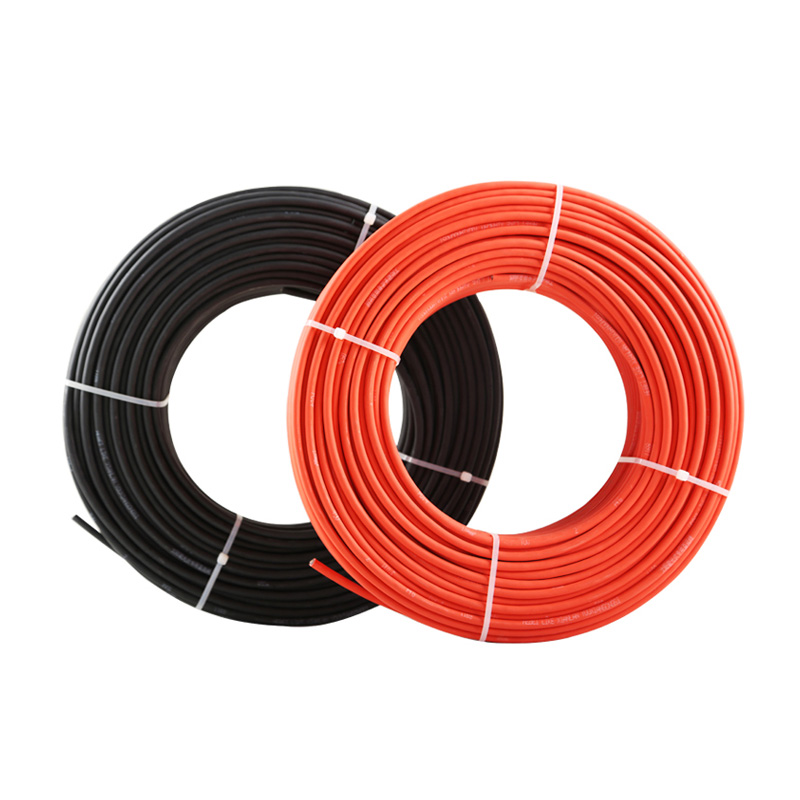
DC line PV1-F 1 * 4 square photovoltaic cable: a powerful tool for solar energy transmission
introduction:
With the rapid development of solar power generation technology, solar photovoltaic cables have quickly emerged as an important link in power transmission. Among them, the DC line PV1-F 1 * 4 square photovoltaic cable has become a transmission tool in the field of solar power generation due to its reliable characteristics. This article will elaborate on this topic from four aspects.
Aspect: Excellent power transmission capability
The PV1-F 1 * 4 square photovoltaic cable uses high conductivity copper core wire, which reduces energy consumption and electronic losses during current transmission, and has low resistance and voltage drop. Its 1 * 4 square thick wire can provide sufficient power transmission capacity, effectively avoiding energy loss during transmission and ensuring the stable operation of the photoelectric conversion system.
2: Weather resistance performance
Solar power generation systems often operate in outdoor environments and require good weather resistance. The DC PV1-F 1 * 4 square photovoltaic cable adopts a brand new weather resistant reinforced polymer material, which has good weather resistance and UV radiation resistance. It can resist ultraviolet rays, extreme temperatures, and climate change for a long time, ensuring stable and reliable transmission of the cable in complex outdoor environments.
3: Safe and reliable fire resistance performance
Solar power generation systems often operate under high temperature conditions, and fire resistance is crucial for the selection of cables. The DC PV1-F 1 * 4 square photovoltaic cable is made of flame-retardant materials and has undergone special fire prevention treatment to effectively suppress the spread of fire. Even under high temperature conditions, cables can maintain stable transmission performance, avoiding serious consequences caused by fires.
4: Simple and reliable installation and maintenance
The design of the DC PV1-F 1 * 4 square photovoltaic cable is reasonable, easy to install and maintain. It has good flexibility and is suitable for various complex wiring environments, such as roofs, grasslands, and deserts. During the installation process, the cables are reliably grounded and the wires are firmly connected to ensure the stability of power transmission. In daily maintenance, users only need to regularly clean and inspect cables to ensure their long-term reliable operation.
Conclusion:
The DC PV1-F 1 * 4 square photovoltaic cable has become an indispensable part of solar power generation systems due to its excellent power transmission capacity, weather resistance, safe and reliable fire resistance, and simple and reliable installation and maintenance characteristics. In the future, with the further development of solar power generation technology, we believe that this cable will continue to play an important role in the field of solar power generation and make greater contributions to sustainable development.
Photovoltaic cable is a special type of cable used in solar photovoltaic module systems (also known as photovoltaic systems or solar energy systems). It has the characteristics of weather resistance, high temperature resistance, friction resistance, and has a long service life. The high-performance insulation material and sheath material cross-linked by high-energy electron radiation provide reliable insulation and mechanical properties.
Photovoltaic cables are mainly used in outdoor environments and can also be used to connect photovoltaic system equipment outside buildings with electrical equipment inside buildings. From the perspective of performance requirements for cables in the usage environment, photovoltaic cables incorporate three aspects of requirements: firstly, the requirement for cable flame retardancy, which is usually only applicable to indoor cables; Secondly, outdoor cables should have requirements such as resistance to UV aging, moisture (including resistance to hot water hydrolysis and mold), and high and low temperature resistance; Thirdly, both indoor and outdoor cables will encounter the requirement of thermal oxidative aging resistance.