








Now, many people are unaware that recycling old wire and cable is necessary. In fact, this practice not only maximizes the residual value of old wire and cable but also differentiates and prevents social loss. To reduce environmental impact and transform waste into treasure, one can regenerate and reuse them, thereby reducing production costs for businesses. The recycled old wire and cable materials usually have varying degrees of aging and the additives contained within suffer different levels of loss. Although the recycled wire and cable may have different properties compared to new materials after recycling and processing, recent research data shows that by adjusting the formula and adding necessary functional additives, the processing, mechanical, and electrical properties of the recycled wire and cable can be improved. Different product requirements can be met by employing different process formulas and techniques. This involves melting the recycled wire and cable material for regeneration, then adding appropriate functional additives to re-granulate after crushing, to produce lining material, which is used in the inner sheath of power cables. This not only aids in environmental protection but also significantly reduces production costs for businesses, challenging the limits of corporate competition.
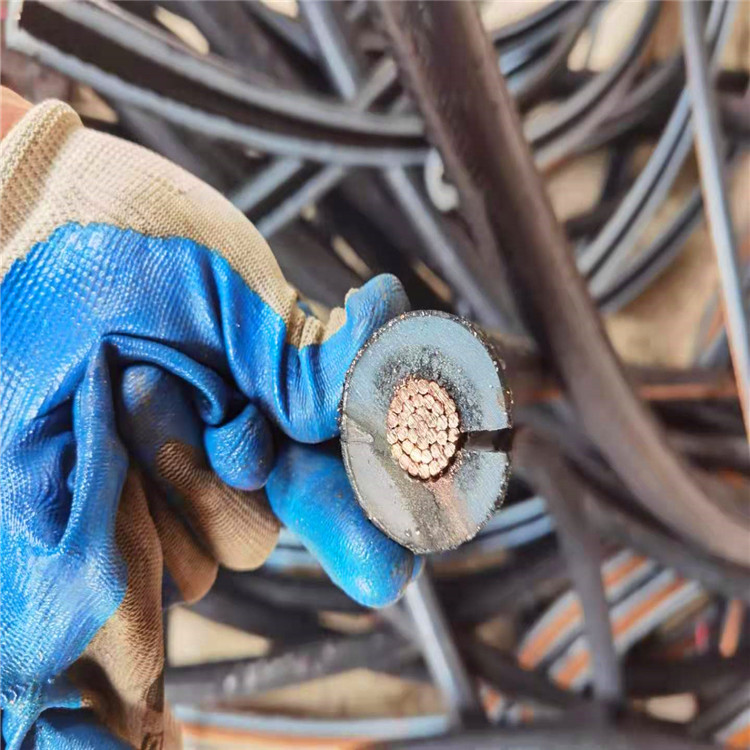
Now, as life progresses and cities evolve, the power industry has reached a peak, so the use of cables is no longer just a matter of numbers. Since usage entails wear and tear, this has led to the development of the cable recycling industry.
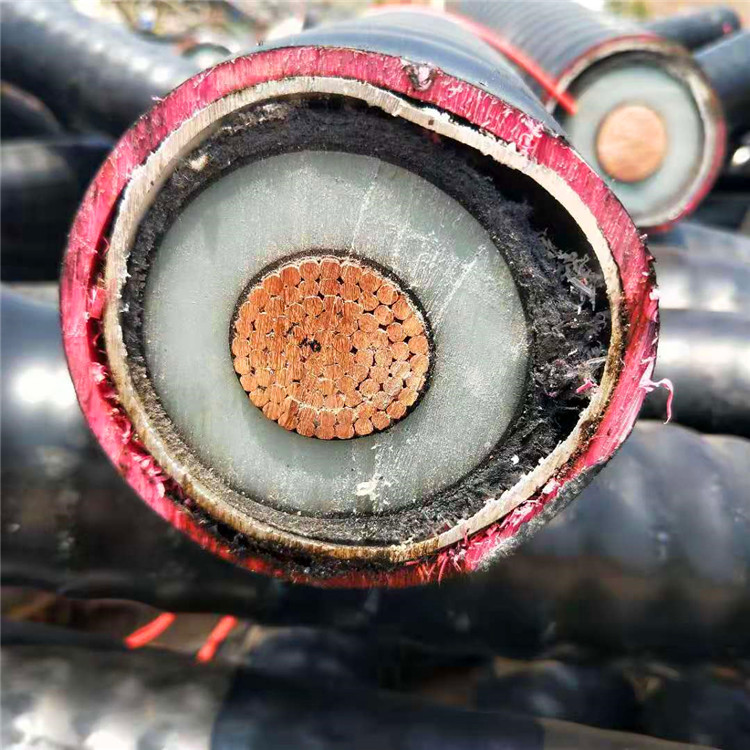
Nowadays, with the continuous advancement of technology, we must use technology to solve production challenges. Wires and cables are consumables in economic development, and the equipment for crushing and recycling waste wires and cables also promotes the development of China's circular economy, making an indelible contribution to societal progress.
Worn-out cables and wires must be processed after collection, which involves separating aluminum and copper cores, stripping off the steel sheath or wire, then using a specialized wire stripping machine to remove the outer sheath, separating metal from plastic. Subsequently, a static separator is employed to break down the mixture, utilizing the different electrical properties of metals and plastics to separate out copper, aluminum, and other metals.