






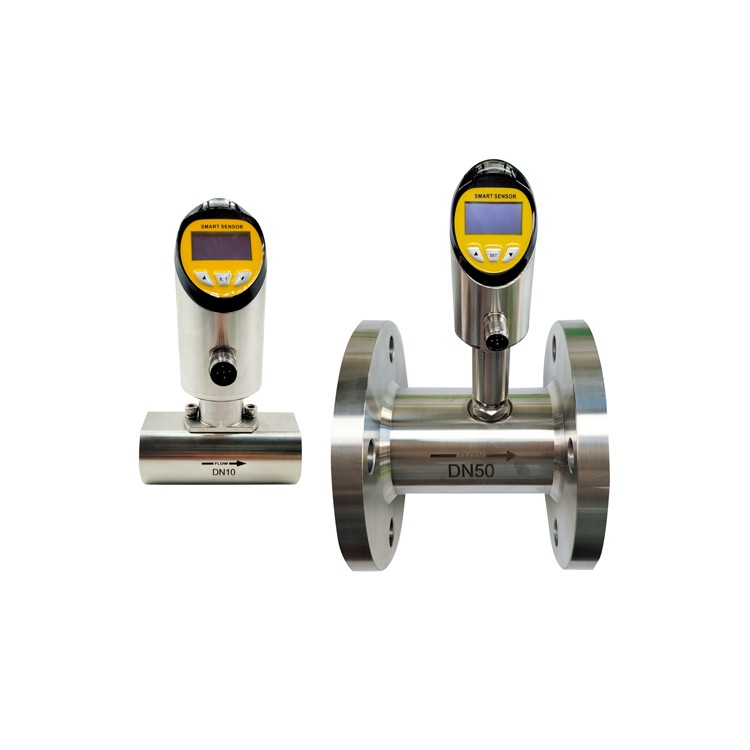

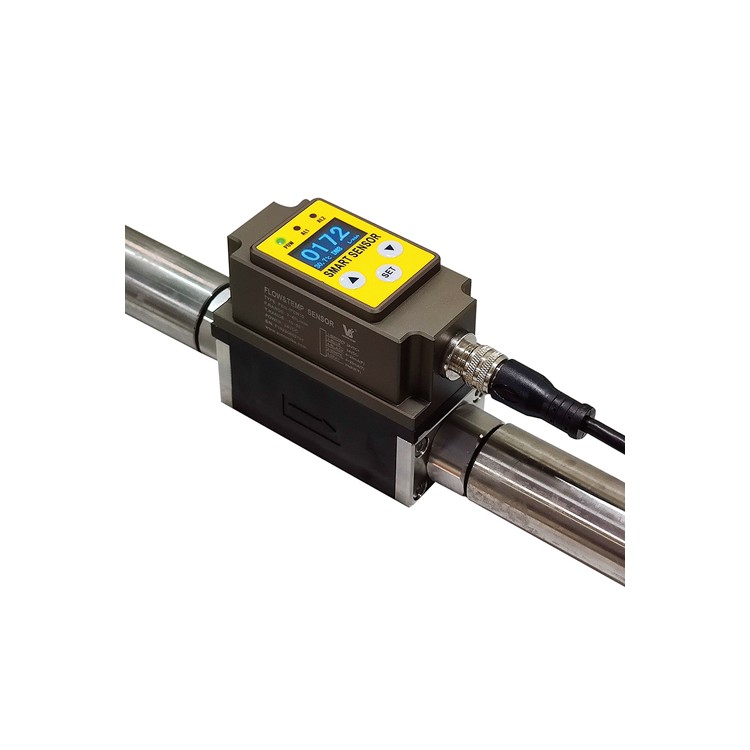


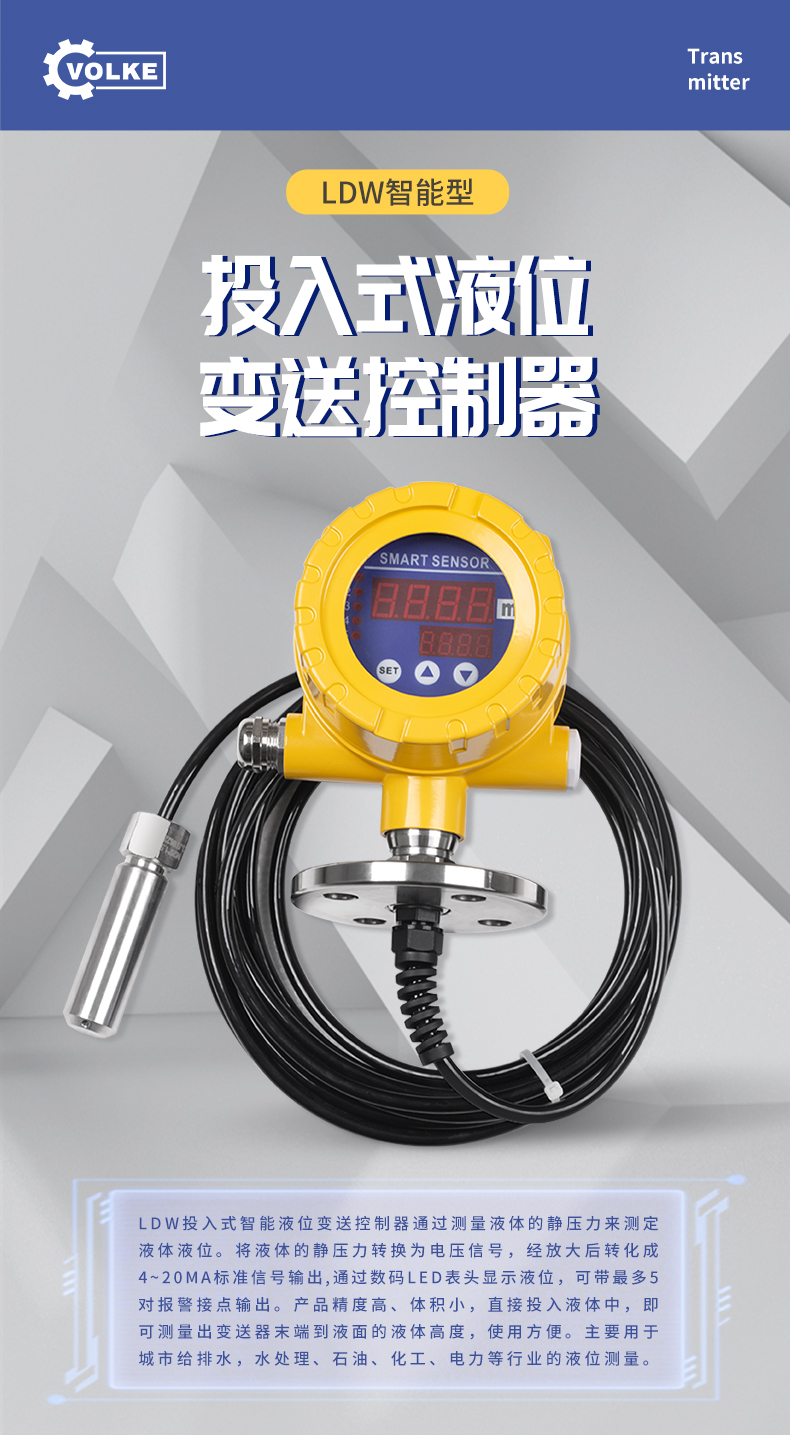
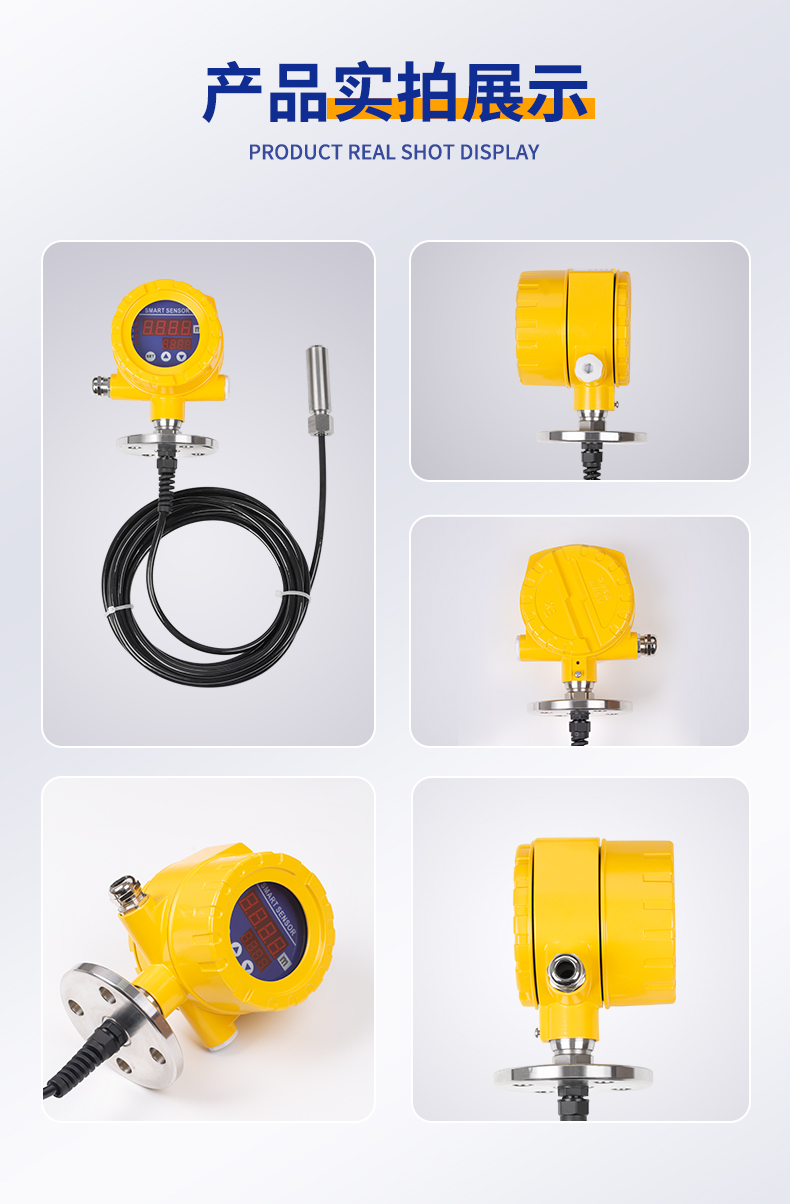
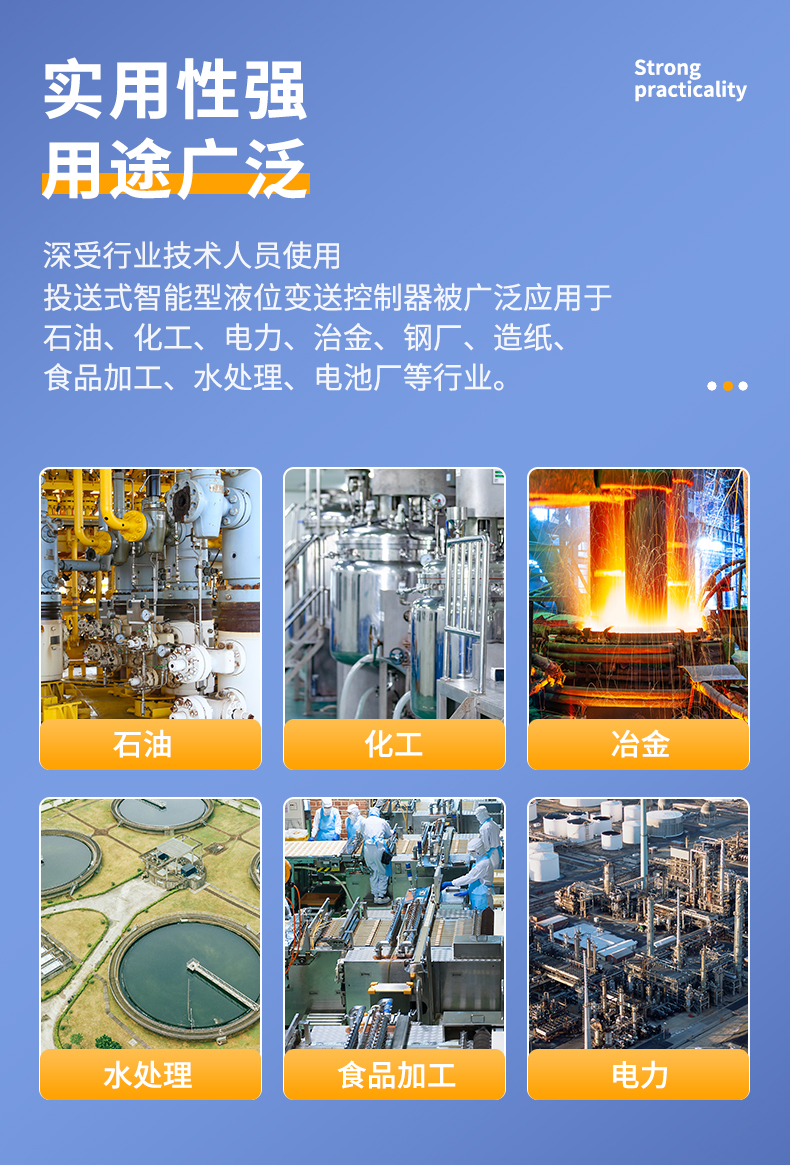
Submersible level gauges are liquid level instruments that detect and measure the height of liquid levels by inserting the measuring device into the container. In industrial production processes and industries such as ships and water treatment, level control is crucial, making submersible level gauges widely used across various fields.
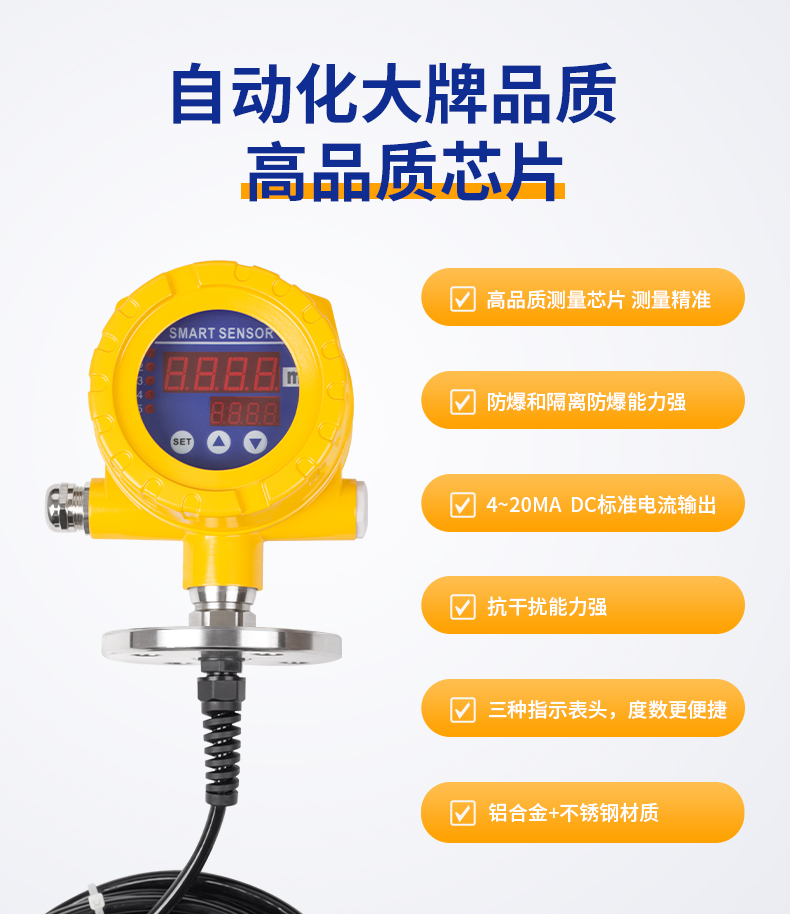
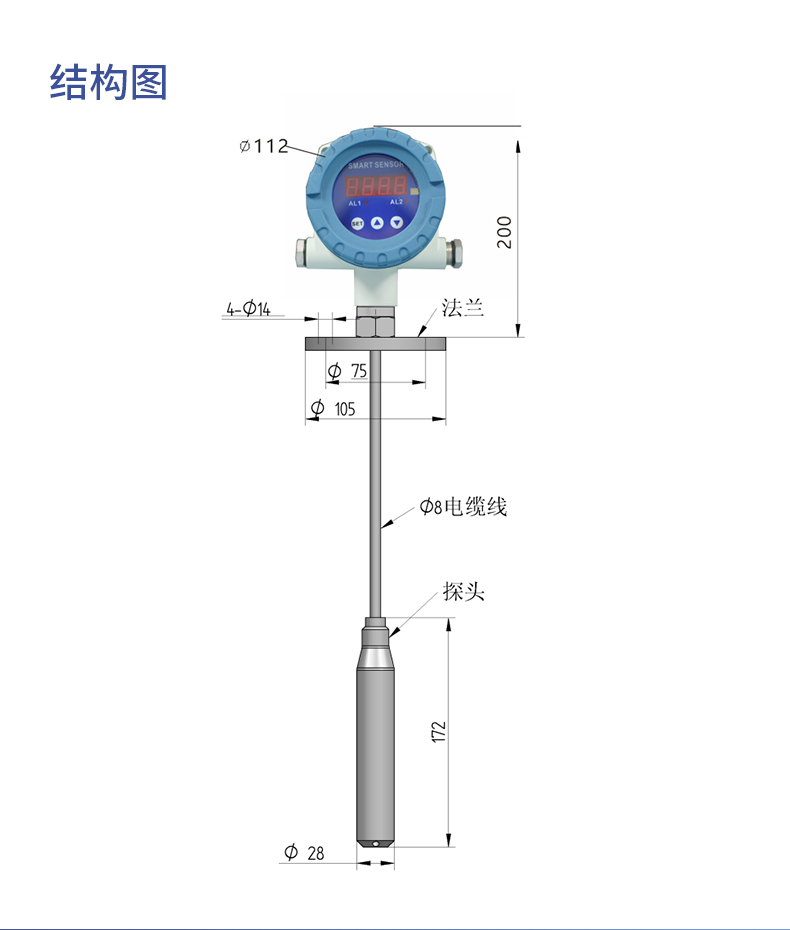
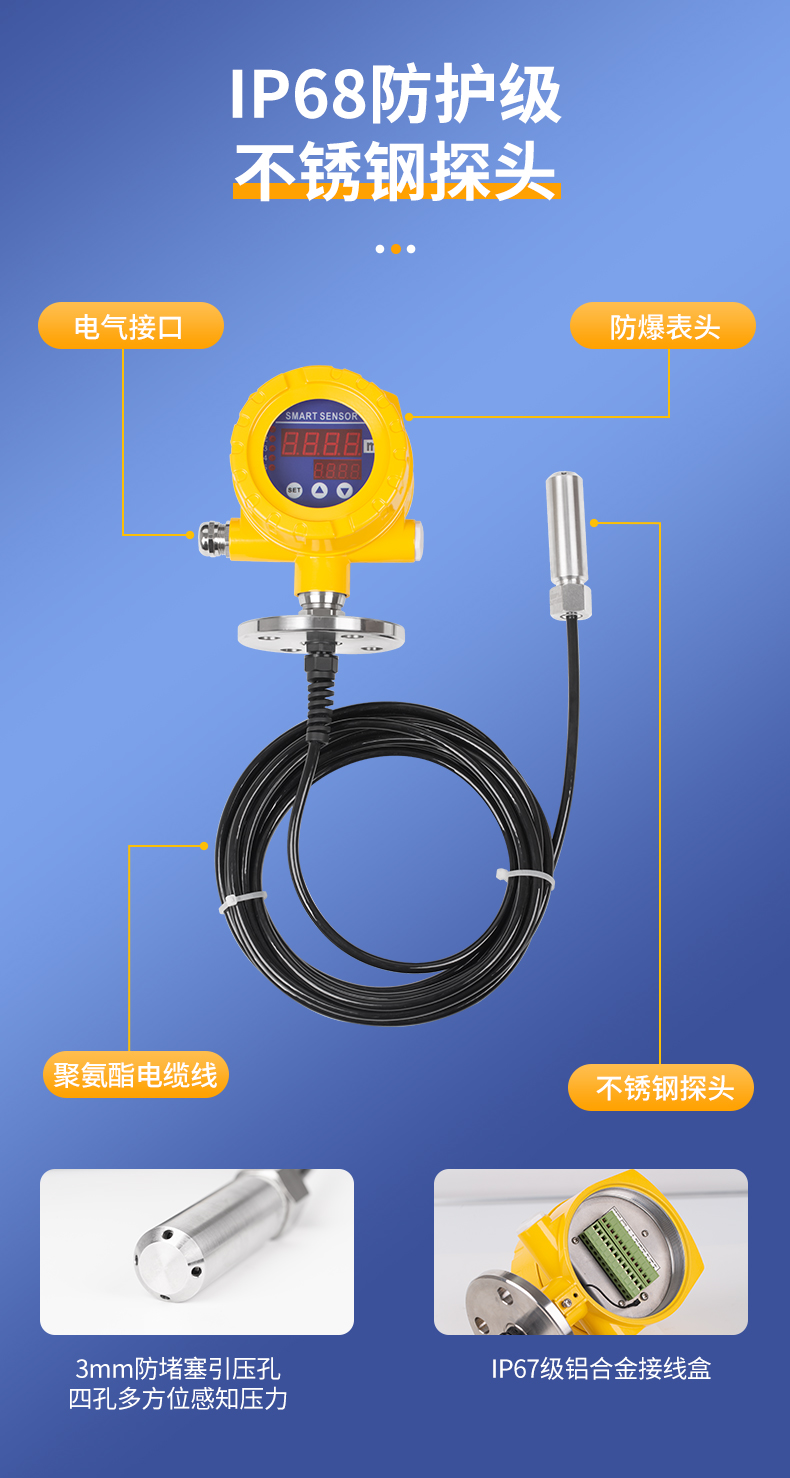
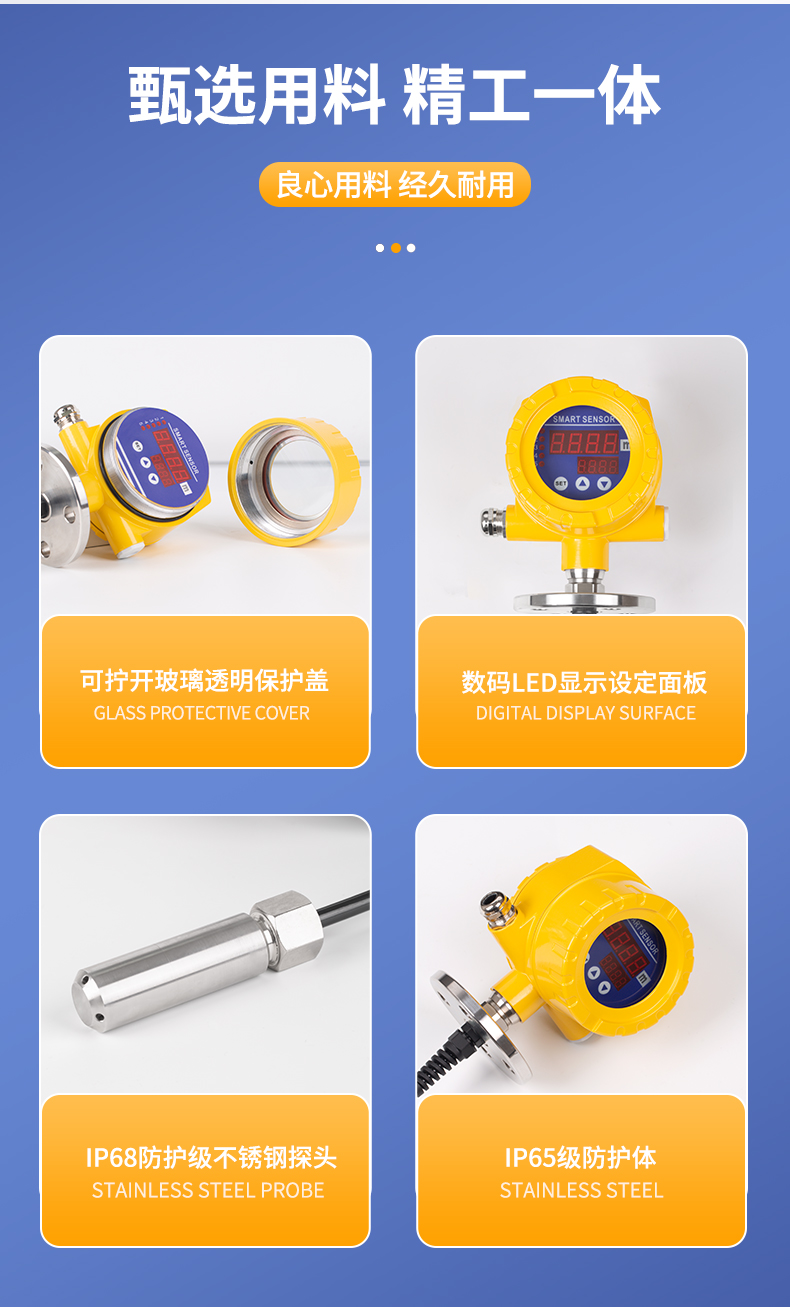
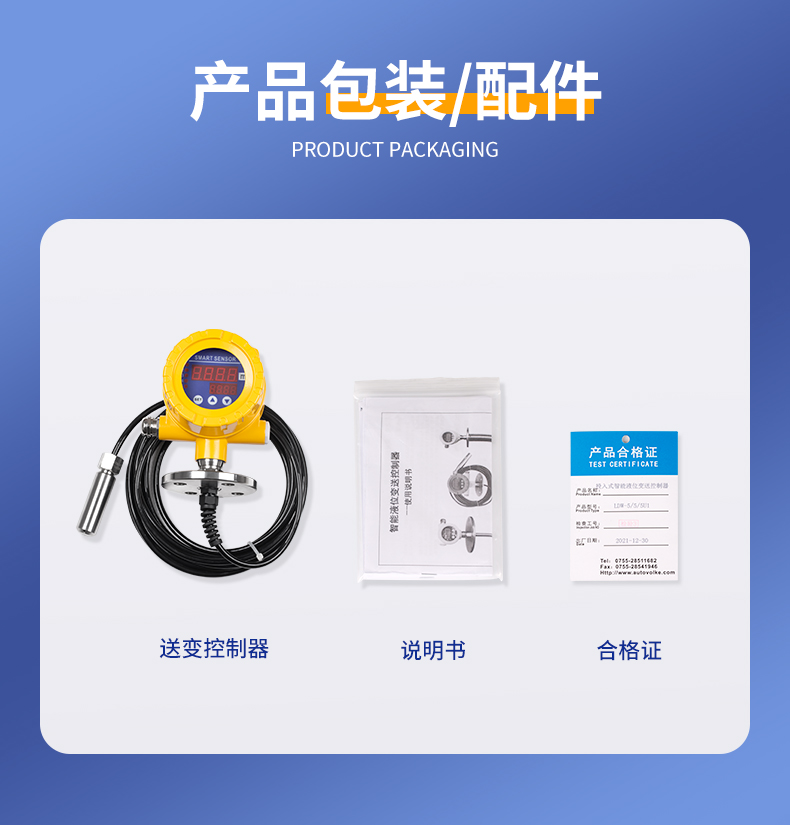
Submersible level gauges are mainly composed of components such as measuring rods, sensors, converters, displays, and cables. The measuring rod is a long, thin, and rigid steel pipe (usually 1~3 meters in length), installed in the liquid and fixed vertically. The sensor is mounted at the bottom of the measuring rod, featuring high sensitivity and reliability, capable of quickly and accurately reading the height of the liquid level.
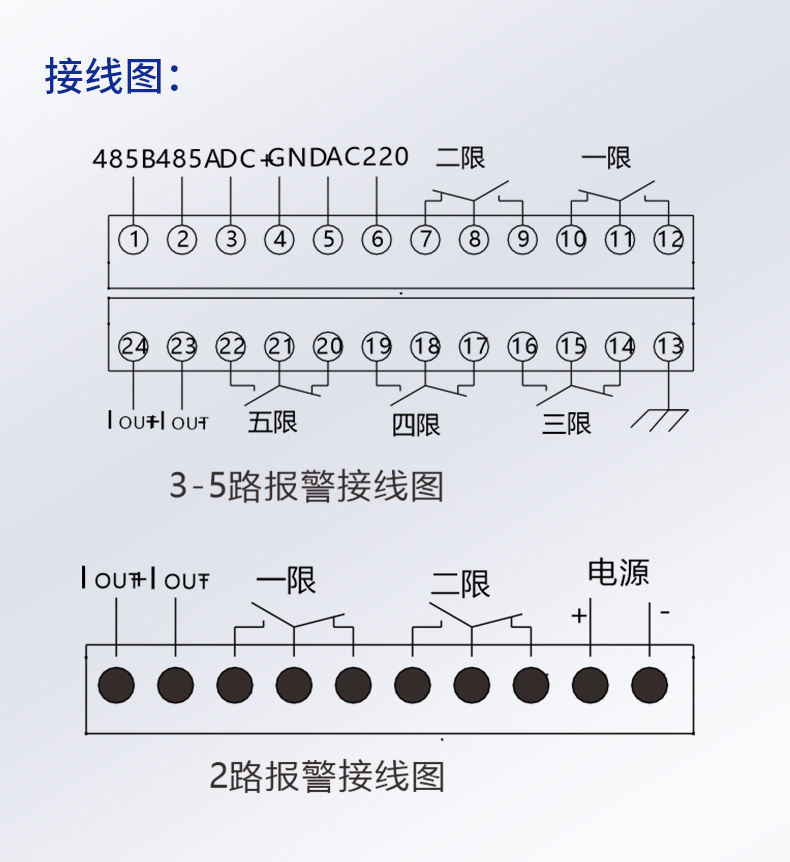
The converter is a device directly connected to the sensor, converting the data collected by the sensor into a standard signal for output to a display or PLC control system. Different types and specifications of converters can be selected according to various working environments and control requirements.
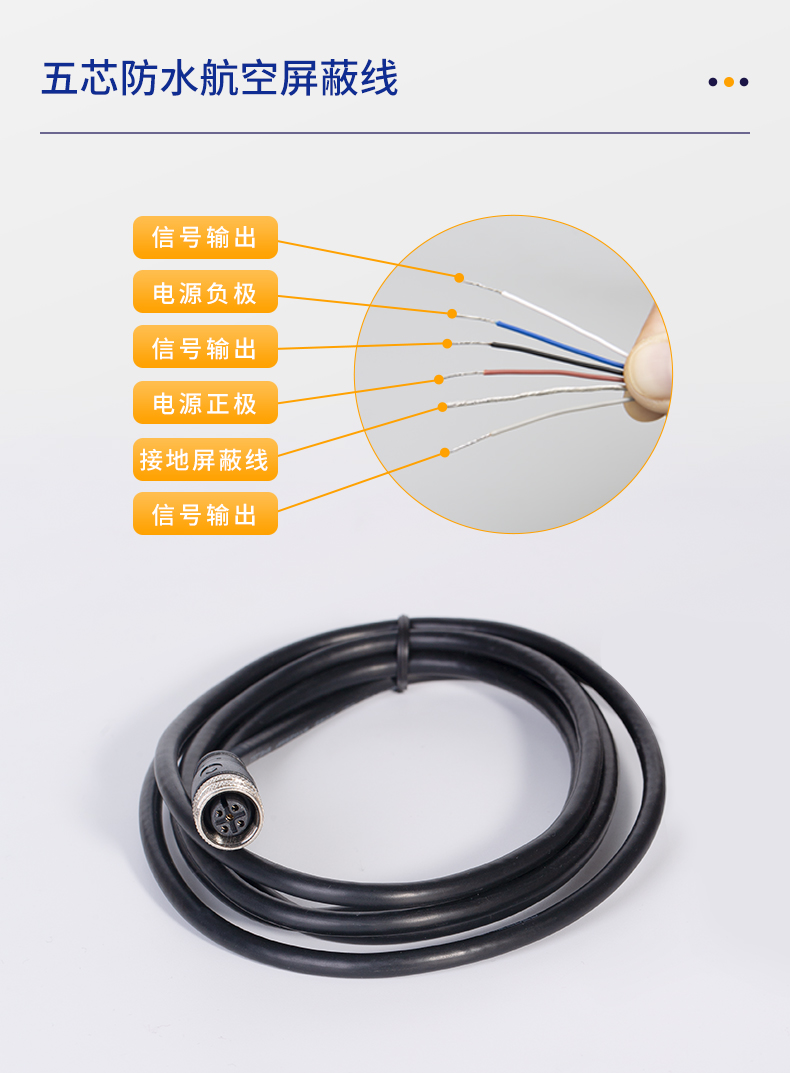
The display is typically directly connected to the level gauge's control box, where it can show liquid level height, alarm signals, and fault alarms, etc. The cable connects the measuring rod to the control box, transmitting the measured data to the converter and display.
Submersible level gauges are available in two different types: float type level gauges and capacitive level gauges. The float type level gauge detects the liquid level height through a float installed at the end of the measuring rod. As the liquid level rises, the float rises with the liquid, thereby achieving the purpose of measuring the liquid level. Float type level gauges are suitable for various liquid mediums and multiple containers, offering advantages such as high reliability, long service life, and simple operation.
Capacitive level gauges measure liquid level height based on the change in capacitance between the liquid and the capacitor. Compared to float-type level gauges, they are more accurate, and have no moving parts, thus offering superior stability and reliability.
In addition to float and capacitive level gauges, immersion level gauges come in many other types, such as ultrasonic level gauges, capillary level gauges, and so on. These different types of level gauges are suitable for various applications and have their own advantages and disadvantages.
In summary, the application scope of the immersion level gauge is very broad, capable of detecting and controlling the level of liquids in various media and containers. With the continuous advancement of technology, the accuracy and reliability of the level gauge will continue to improve, providing better assurance for automated control in industrial production and other fields.