








Our country's research on mold temperature control machines started late, only beginning in the late 1970s, but progress has been rapid. Some products have caught up with similar foreign products. The production materials can be divided into two main categories. One category is made from petroleum products, known as thermal oil. Due to the high specific heat of petroleum and the ability to select appropriate fractions, resources are also abundant. Generally, naphthenic or aromatic mixed base materials are used, with antioxidant and heat-resistant additives added to produce it. The other category is produced from organic substances.

For plastics, the main purposes are as follows:
Maintain the mold temperature at a constant working temperature.
2. For thermoplastic materials, a higher mold temperature generally improves surface quality and flowability, but it extends the cooling time and injection cycle. A lower mold temperature reduces shrinkage within the mold, but increases the shrinkage rate of the molded part after demolding.
3. For thermosetting plastics, a higher mold temperature typically reduces cycle time, with the duration determined by the cooling time required for the parts.

Temperature control machines for molds can achieve ±0.1℃ temperature control. They can handle both heating and cooling temperature control. In the plastic industry, this equipment is widely used and primarily serves the following functions:
1. Enhance product molding efficiency.
2. Reduce the production of defective products.
3. Enhance product appearance, suppress product defects.
4. Accelerate production, reduce energy consumption, and save resources.
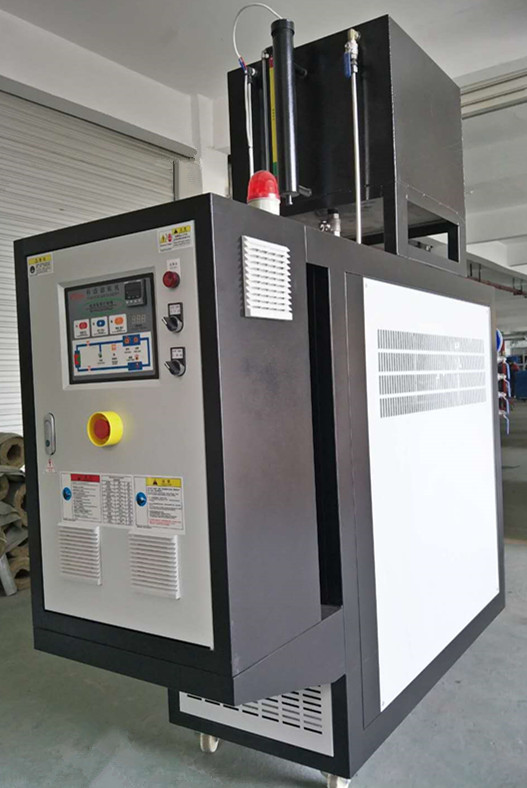
Mold temperature control machines, also known as mold temperature control units, are increasingly prevalent in the machinery industry as it continues to grow and expand. No longer limited to the initial application in the temperature control industry for injection moldings, they are now widely used across various sectors such as plastic molding, light guide plate die casting, rubber tires, roller production, chemical reaction vessels, adhesive bonding, and compounding. There are currently two types of mold temperature control machines: water temperature machines and oil temperature machines.