








Mold temperature controller parameter configuration:
1. Temperature control utilizes PID self-tuning intelligent control, capable of meeting the strict requirements of high process standards.
2. Original components for electrical appliances include WEST, ABB, TE, LG, Schneider, and Siemens, with high-temperature resistance.
3. Automatic exhaust gas return and oil temperature display upon startup, heating power switch function.
4. Utilizing Yuexin circulating pumps, the pump power is tailored to customer needs, saving up to 35% on electricity.
5. Unique heating design with automatic temperature control, quickly achieving the required temperature for various products.
6. The control box and body are isolated, providing excellent heat insulation and extending the service life of electrical components.
7. RS485 communication function for automated management. Set values and actual values are displayed separately.
8. Chain anti-error circuit and multiple safety monitoring devices; the machine automatically detects anomalies and has indicator lights to display the status of the anomalies.

The advantages of the mold temperature control machine:
1. Under the delivery's operating pressure, it can achieve a higher working temperature of ≤320°C, which reduces the pressure grade of the heated equipment and enhances the system's safety.
2. Uniform heating with PID self-tuning intelligent control for temperature regulation, ensuring ±1°C accuracy in temperature control, meeting the stringent requirements of high process standards.
3. Compact in size, occupying minimal space; can be installed near heat-using equipment without the need for a dedicated boiler room or a dedicated operator, thus reducing equipment and operational costs, with quick recovery.
4. Equipped with complete operation control and safety monitoring devices, the heating process is fully automated, operation is simple, and installation is convenient.
5. Closed-loop heating system with minimal heat loss, energy-efficient, environmentally friendly, and widely applicable.
6. Available in low-temperature models ≤180°C, medium-temperature models ≤300°C, and high-temperature models ≤350°C, with a full range of product specifications for wide user selection.
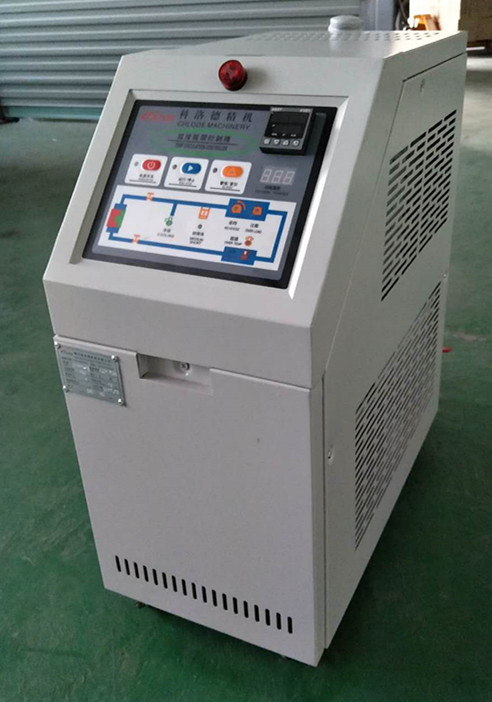
Mold temperature controllers have a significant role in the die casting industry, particularly in the manufacturing of magnesium and aluminum alloys. Inconsistent or improper mold temperatures can lead to unstable casting dimensions, deformation of castings during the production process, and defects such as thermal stress, sticking, surface concave, shrinkage holes, and thermal blisters. They also impact the production cycle, making variables like filling time, cooling time, and spraying time unstable. The mold's lifespan can be shortened as well, with the risk of expensive steel experiencing thermal cracks due to extreme temperature shocks, accelerating its aging.
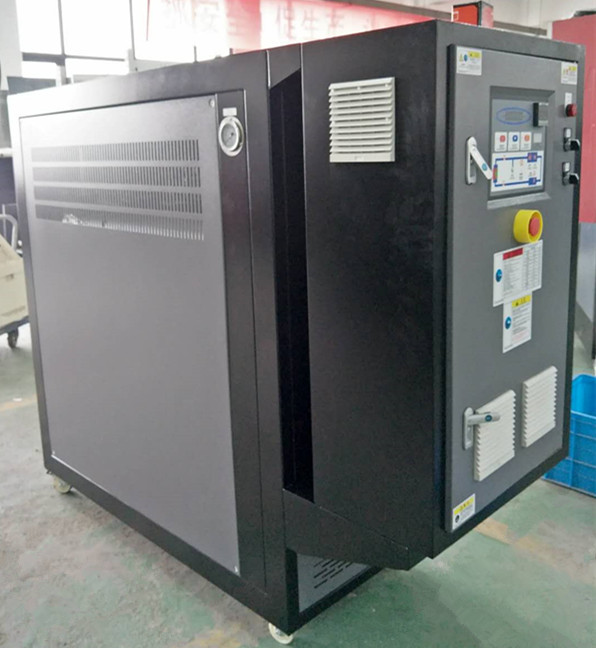
Mold temperature controllers are widely used in the plastic industry, primarily serving the purpose of:
1. Enhance product molding efficiency.
2. Reduce the production of defective products.
3. Enhance product appearance and suppress product defects.
Accelerate production, reduce energy consumption, and conserve resources.