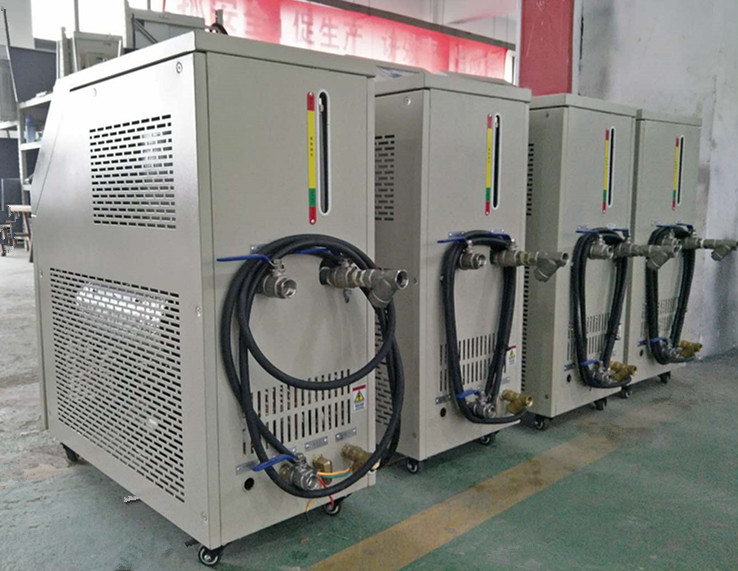
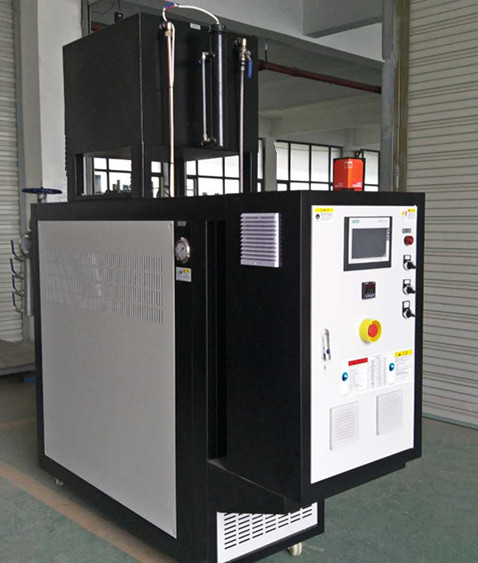











The mold temperature control machine uses thermal oil for heating. Prior to use, it is essential to empty any accumulated water in the heating equipment and pipes. Pipe water is difficult to clean; if possible, use a hot air blower. The difficulty in adjustment is significant if the water is not completely cleared. After confirming the equipment is drained clean, fill with thermal oil. Be cautious not to overfill the oil tank; once a certain liquid level is reached, start the equipment's circulating oil pump. As the oil is added, air is expelled. When the circulating oil pump is running, monitor the pressure gauge to ensure the pressure is stable within the allowable range, indicating that the air in the equipment's pipes has been mostly removed.
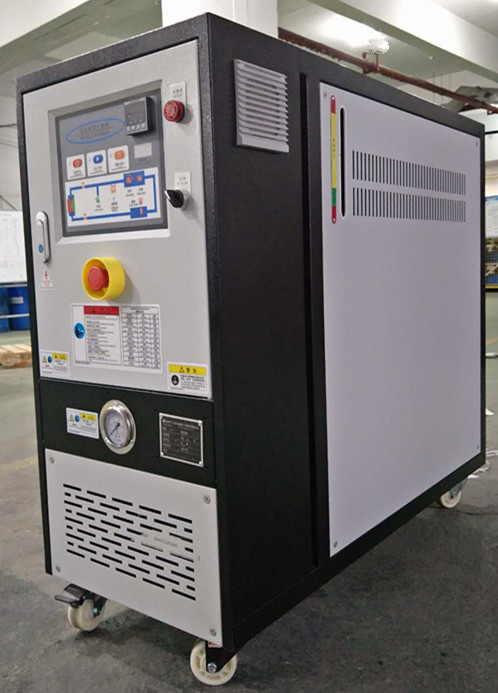
What is the primary function of a mold temperature controller?
Purpose of the mold temperature controller: primarily to effectively control the mold temperature, allowing us to better achieve product quality during the production process.
Maintain the mold temperature at a constant working level. If done successfully, it can optimize the cycle time, ensuring consistent high-quality injection parts. The mold temperature affects several aspects, including surface quality, fluidity, shrinkage rate, injection cycle, and deformation. Different materials are affected differently by either excessively high or insufficient mold temperatures.
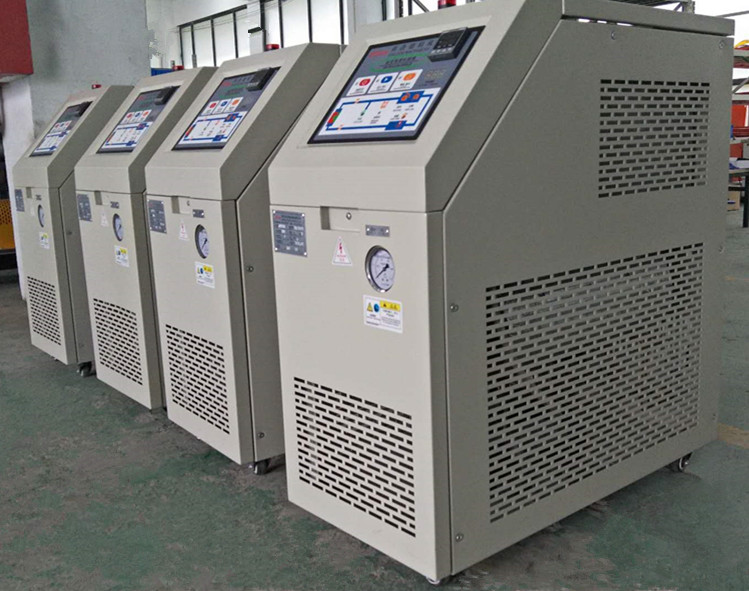
Under stable system pressure, heating is permissible; however, the temperature must not rise too quickly during the process. Monitor the pressure stability, and do not increase the temperature when it is unstable. Once the pressure stabilizes at the equipment's set value, the temperature control of the mold has been successfully adjusted.
After the mold cavity is filled with plastic, it needs to be cooled using a mold temperature control machine to rapidly cool and solidify the molten plastic. This is the macro definition of cold molding, but few people know that the cooling rate affects the physical strength and internal stress of the product. Our mold temperature control machines are designed to achieve accurate temperature control, master the heating and cooling rates, and thus achieve efficient mold temperature control. They are characterized by low failure rates, stable operation, simple operation, and ease of maintenance.