








Steps for using the mold temperature machine:
1. Inspect and set up before machine testing. Check if the oil, electricity, gas, and pipelines of the mold temperature machine are normal. Turn on the control panel, access the operating interface, and set the temperature. However, note that the set temperature should be lower than the outlet temperature.
2. Operational inspection: Start the oil pump, check if the direction of rotation for the oil pump and fan is correct, and confirm that the fan and oil pump can operate normally before proceeding to the next step.
3. Refuel. Add a thermal transfer oil to the expansion tank reservoir, circulate the thermal transfer oil to distribute it throughout the various parts of the oil carrier, then proceed with mechanical operations.
4. Monitor for any gas leaks and leakage in the pipeline. Additionally, it is necessary to confirm that the model thermometer's pressure and temperature readings are normal during operation, as well as the safety of the environmental conditions.

Mold temperature machines are commonly used in die casting and injection molding. Taking die casting as an example, encountering uneven or improper mold temperatures can greatly lead to unstable casting dimensions. During production, this may cause casting deformation, resulting in defects such as thermal stress, sticking, surface indentations, shrinkage holes, and hot blisters.
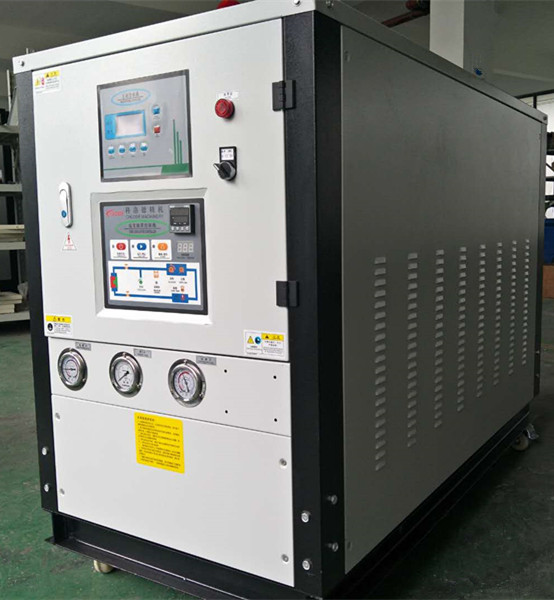
Types of mold temperature controllers:
The types of mold temperature controllers are categorized based on the heat-conductive fluid used (water or heat-conductive oil). Mold temperature controllers using water typically have a high outlet temperature of 90°C, while those using oil are used for temperatures of ≥200°C. Generally, mold temperature controllers with an open water tank for heating are suitable for both water and oil, with a high outlet temperature ranging from 90°C to ≥150°C. The main features of these controllers are their simple design and cost-effectiveness. On this basis, there is also a mold temperature controller that uses pressurized water, allowing an outlet temperature of 160°C or higher. Due to the superior thermal conductivity of water over oil at temperatures above 90°C, this machine excels in high-temperature operation capabilities. Additionally, there is a forced circulation mold temperature controller, which, for safety reasons, is designed to operate at temperatures above 150°C using heat-conductive oil. To prevent overheating of the oil in the mold temperature controller's heater, the machine employs a forced circulation pumping system, and the heater is composed of a certain number of stacked pipes, each containing finned heating elements for flow guidance.
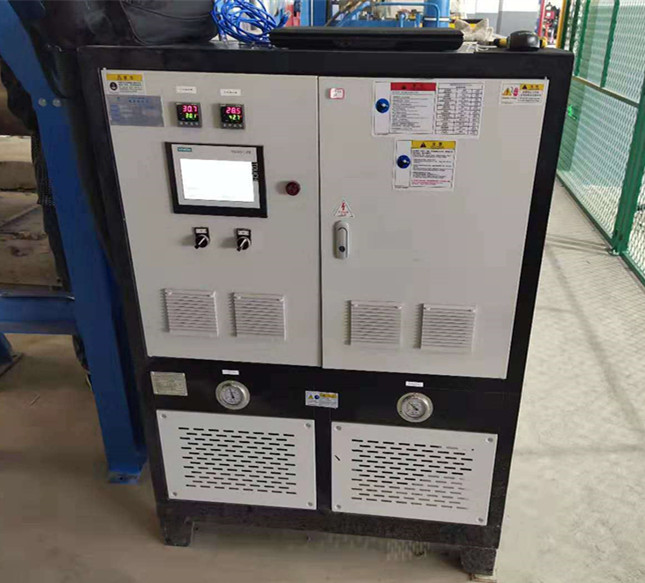
During the production process, energy consumption can be reduced and energy saved. High-quality mold temperature machinery and equipment can effectively utilize electricity and resources during operation, further saving costs, reducing energy consumption, and improving efficiency.