








Mold temperature control machines have a significant application in the die casting industry, particularly in the manufacturing of magnesium and aluminum alloys. Uneven or improper mold temperatures can lead to unstable casting dimensions, deformation of castings during production, and defects such as thermal stress, sticking, surface indentation, shrinkage holes, and thermal blisters. They also impact the production cycle, introducing unstable variables such as filling time, cooling time, and spraying time. The mold's lifespan can be shortened, causing expensive steel to crack due to extreme temperature shocks, accelerating its aging.
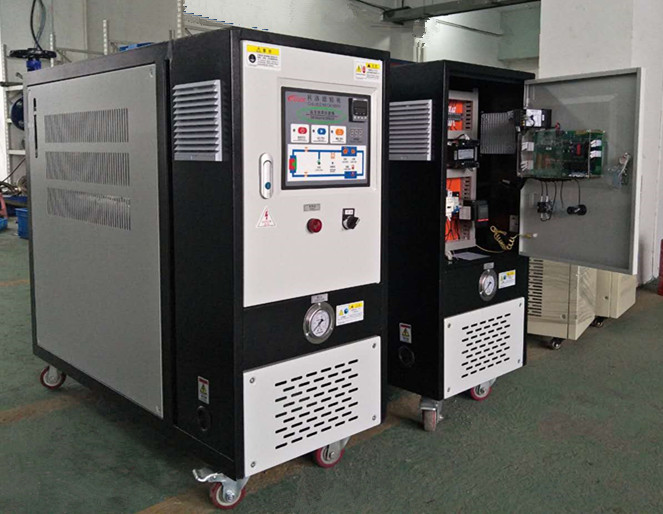
Additional Features of the Molding Temperature Controller:
1. Easy installation;
2. Simple operation, no personnel required; just a brief training for the operator and they can start operating immediately, or they can follow the manual instructions.
3. The heating method is recirculating heating, thus the medium experiences no loss.
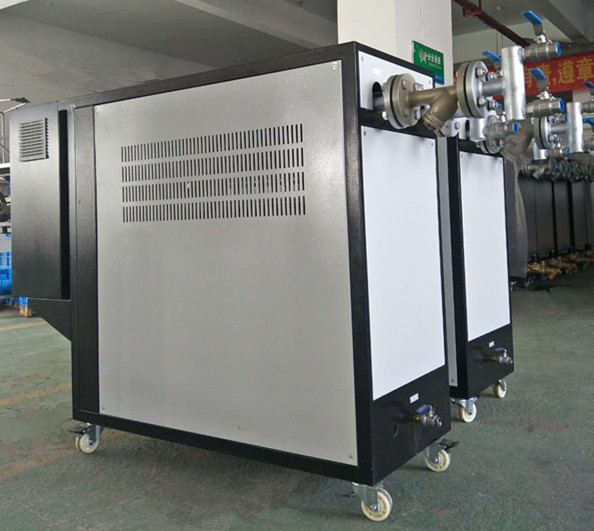
Mold temperature controllers are widely used in the plastic industry, primarily serving the purpose of:
1. Enhance product molding efficiency.
2. Reduce the occurrence of defective products.
Enhance product appearance, suppress product defects.
Step up production pace, reduce energy consumption, and conserve energy.
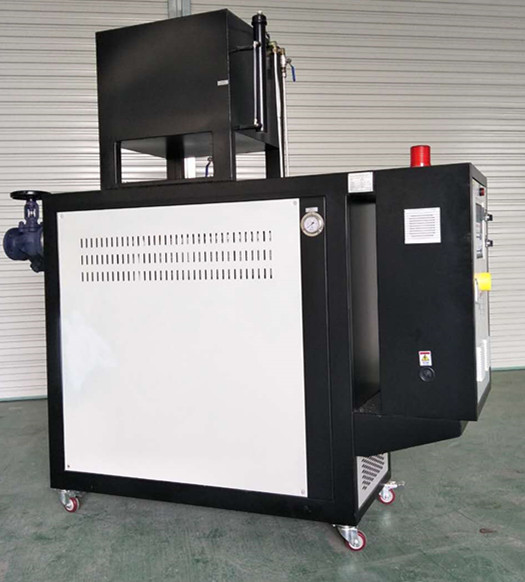
Principle of operation for the mold temperature control machine:
The mold temperature control machine is composed of a water tank, a heating and cooling system, a power transmission system, a liquid level control system, and temperature sensors, as well as injection components. Typically, the pump in the power transmission system circulates the hot fluid from the water tank equipped with an internal heater and cooler to the mold, and then back to the water tank; the temperature sensors measure the temperature of the hot fluid and transmit the data to the controller in the control section; the controller adjusts the temperature of the hot fluid, thereby indirectly regulating the mold temperature. If the mold temperature exceeds the set value during production, the controller will open the solenoid valve to connect the water inlet pipe until the temperature of the hot fluid, i.e., the mold temperature, returns to the set value. If the mold temperature is below the set value, the controller will activate the heater.