








Mold temperature controllers can reduce the production of defective products through temperature control, improve product quality, and play a crucial role in the molding process within the plastics industry. Good temperature control and accuracy help us better grasp the production and shaping of products, thus avoiding the production of defective items.

Mold temperature machines are commonly used in die casting and injection molding processes. For example, in die casting, uneven or improper mold temperatures can significantly lead to unstable casting dimensions. During production, this can cause casting deformation upon ejection, resulting in defects such as thermal stress, sticking, surface indentation, shrinkage holes, and thermal blisters.
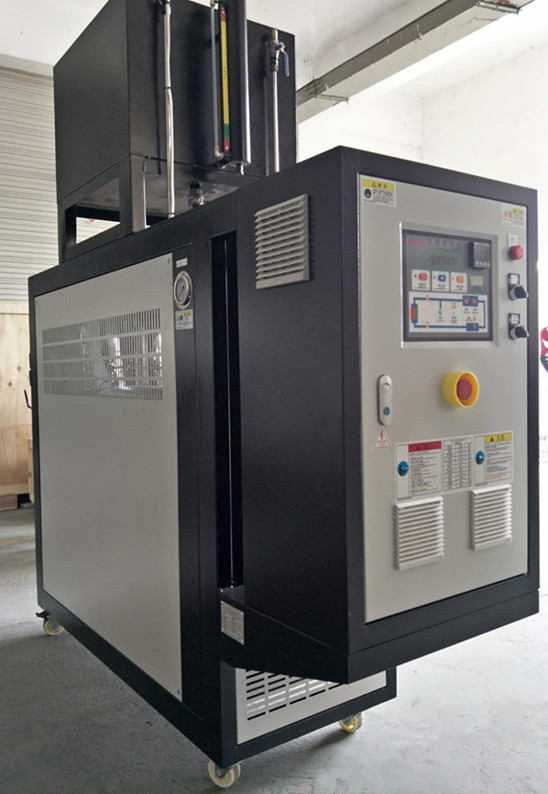
The role of the mold temperature machine is to heat or cool the mold and maintain its working temperature, ensuring stable quality of injection parts and optimized processing time. Mold temperature machines are divided into water temperature machines and oil temperature machines. In the injection molding industry, the temperature of the mold plays a decisive role in the quality of the injection parts and the injection time.
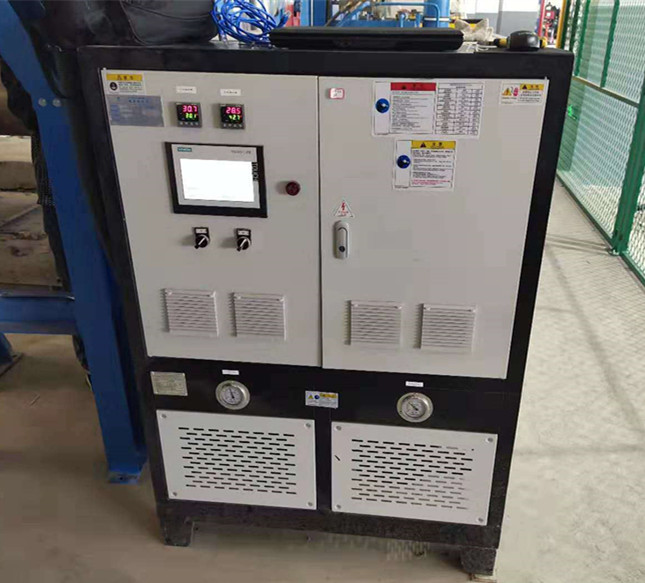
The main function of the mold temperature controller is to heat, maintain, and control temperature. Initially, it was used for injection molding machine molds, but with the development of the industry, mold temperature controllers have been applied to various production industries, including reactors, rolling mill rolls, lamination machines, calendering machines, and more. You can find the presence of mold temperature controllers in these industrial equipment. A mold temperature controller is a temperature control system, which can also be referred to as a module, a temperature control module. Any industrial equipment that requires temperature control can use this module. Currently, the high temperature of mold temperature controllers can reach up to 350°C.