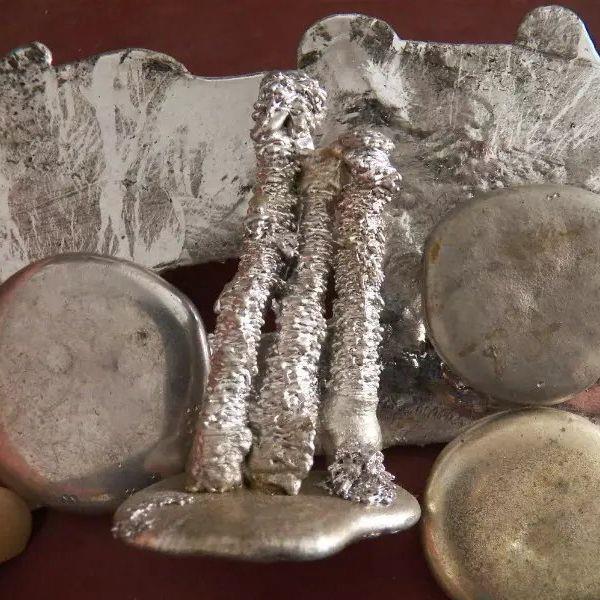













Dongguan Xiaobu Xinpengda Recycling Resource StationWe collect and recycle tin slag, tin ingots, waste tin paste, waste tin bars, waste tin wire/tin beads, and tin powder products. Adhering to our service philosophy of "customer first," we provide exceptional service and maintain a high standard of quality, earning the trust and praise of our extensive clientele. With the principle of honesty and integrity, we offer products, perfect service, and have established solid business relationships with numerous clients across the country, winning a favorable reputation among our users!

In Q2 of 2011, affected by the Japanese earthquake, the global electronics industry saw a slowdown in growth. However, considering the production recovery cycle of Japanese electronic materials and equipment, as well as the downstream effect of orders, we believe that starting in Q3, the global electronics manufacturing sector will experience a recovery growth, which will be faster than anticipated.
G. Decorative: Possesses a silvery white luster (typically, metals in powder form are black), commonly used as paint, also known as silver powder or silver paint. It is used to protect iron products from corrosion and to enhance their aesthetic appeal. H. Low Temperature Resistance: Withstanding low temperatures, aluminum actually increases in strength and lacks brittleness when it's cold. Hence, it is an ideal material for low-temperature applications such as refrigeration warehouses, freezers, Antarctic snow vehicles, and production facilities for hydrogen peroxide.

Zhongshan Tin Slang Purchase | Factory Selling Scrap Tin Slabs | Local Collection
Due to the sampling and mailing process you've initiated, the sampled products do not fully reflect the even distribution of various metal contents in the actual products to be recycled, which is commonly referred to as uneven sampling. In such cases, we will quote based on the actual sampled samples and conduct a second sampling verification upon receiving the product mailing. There will be price discrepancies if the samples do not match the overall product situation. Of course, if you follow our sampling method, the differences in the samples will be minimal.
Tin balls are a common soldering defect encountered in reflow soldering, often occurring during rapid heating in the soldering process; or if the preheating zone temperature is too low and suddenly enters the welding area, tin balls are also prone to form. The following is a specific summary of the common causes of tin balls.
(1) Incorrect reflow temperature curve settings. Firstly, if the preheating is insufficient, not reaching the required temperature or time, the solder paste will not only have low activity and low volatilization, but also fail to remove the oxide film on the焊盘 and solder particles' surfaces, and prevent the solder paste powder from rising to the solder surface. This results in poor wetting of the liquid solder, prone to the formation of solder balls. The solution is to extend the preheating time to 120-150°C. Secondly, if the preheating zone temperature rises too quickly, reaching the peak temperature too soon, it can cause the moisture and solvents within the solder paste to not fully evaporate. Upon reaching the reflow temperature zone, this can lead to boiling of moisture and solvents, causing solder balls to spatter. Therefore, attention should be given to the rate of temperature increase. Poor wetting of the preheated solder material can lead to solder balls. As the temperature increases, the wetting of the liquid solder improves significantly, reducing the formation of solder balls. However, excessively high reflow temperatures can damage components, printed circuit boards, and pads, so an appropriate welding temperature should be chosen to ensure good wetting of the solder.
(2) The flux failed to function. The purpose of the flux is to remove the oxide layer from the pad and solder particle surfaces, thereby improving the wetting properties between the liquid solder and the pad, as well as the component leads (solder ends). If the paste is left to sit for too long after application, the flux can evaporate, losing its deoxidizing effect, resulting in reduced wetting properties of the liquid solder. This inevitably leads to solder balls during reflow. The solution is to use solder paste with a working life of over 4 hours, or to minimize the sitting time.
(3) The template has excessively large or severely deformed holes. If solder balls consistently appear in the same location, it's necessary to inspect the metal plate's design structure. Inaccurate template opening dimensions can lead to unclear outlines, bridging, and excessive solder paste leakage, especially on larger焊盘 with softer surface materials (like copper templates). This often occurs in fine-pitch device焊盘 printing and inevitably results in a large number of solder balls after reflow soldering. The solution is to: select appropriate template materials and manufacturing processes based on the different shapes and center distances of the焊盘 patterns to ensure solder paste printing quality, reduce the size of the template holes, strictly control the template manufacturing process, or switch to laser cutting with electro-polishing for template production.
(4) Excessive placement pressure during soldering. Overly high placement pressure can squeeze solder paste beyond the pad. If the solder paste is applied too thickly, it is even more likely to be pushed out of the pad, resulting in solder balls after reflow. The solution is to control the solder paste thickness and simultaneously reduce the placement pressure of the pick and place head.
(5) The solder paste contains moisture. If the solder paste is taken out of the refrigerator and used directly without opening the lid, condensation can occur due to the large temperature difference, causing the moisture to boil and溅射 during reflow, forming solder balls. The solution is to: After removing the solder paste from the refrigerator, it should generally be left at room temperature for more than 4 hours to allow the temperature of the sealed can to reach the ambient temperature before opening the lid and using it.
(6) Inadequate cleaning of printed circuit boards results in solder paste residue on the surface and through-holes. The solution is to enhance the responsibility of operators and process personnel throughout the production process, strictly adhere to process requirements and operating procedures, and strengthen quality control of the process.
(7) Using non-contact printing or excessive printing pressure. In non-contact printing, there is a certain gap between the template and the PCB. If the squeegee pressure is not controlled properly, it can easily cause the solder paste below the template to flow into the non-solder pad area of the PCB surface, which will inevitably lead to solder balls after reflow soldering. The solution is: unless there are special requirements, it is advisable to use contact printing or reduce the printing pressure.
(8) Solder Paste Degradation. If the time from placement to reflow is too long, oxidation of the solder particles in the solder paste will cause the flux to deteriorate and lose its activity, leading to the solder paste no longer flowing and solder balls forming. The solution is to use solder paste with a longer shelf life.

Shenzhen Electronic Factory Tin Scrap Recycling, Tin Ingot Recycling Quotation, Local Collection
Recycling tin aligns with China's current path of sustainable development. The reuse of resources conserves our tin stock. Recycled tin blocks are reintroduced into production facilities for further use. Additionally, the price of recycled tin is lower post-secondary recycling, indirectly reducing production costs for businesses. The recycling of tin involves collecting waste tin from production processes, discarded tin-containing materials, and tin-containing household goods. Without the tin recycling industry, these tin-containing products produced by businesses or individuals would end up discarded in our living environment. Over time, air oxidation would dissipate the tin elements, leading to both waste and environmental pollution. The rise of the tin recycling industry has also improved the living conditions of many, creating jobs and providing a source of income through the sale of discarded tin-containing materials. While these factors are crucial to the emergence of the tin recycling industry, the importance of tin and its widespread applications necessitate the industry's existence to ensure the sustainable use of tin for the benefit of humanity.