








The temperature control unit can also shorten the cycle time and reduce product costs. Secondly, the mold temperature control unit must be able to maintain the temperature of the heat-conducting fluid within a range of 1℃-3℃, which is specifically determined by the quality requirements of the injection molded parts. Thirdly, the heat-conducting fluid must have excellent thermal conductivity, and importantly, it should be capable of transferring or removing large amounts of heat in a short period of time. From a thermodynamic perspective, water is clearly superior to oil.
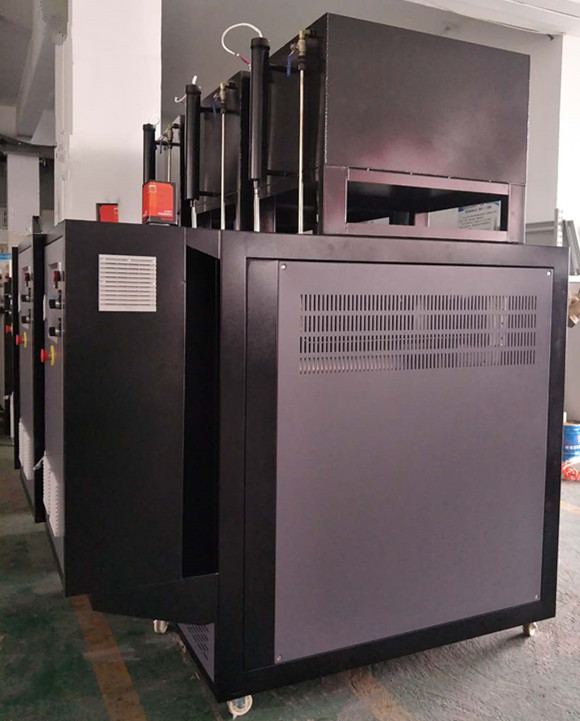
The oil circulation temperature control unit integrates a heating tube, oil pump, temperature control components, program board, pipeline system, and oil tank into one unit. The oil pump, heating tube, and user equipment end all belong to the same pipeline system. The heat-conducting oil is continuously forced to circulate by the oil pump, absorbing heat from the heating tube, which gradually raises the oil temperature. As the oil temperature rises, it directly increases the temperature at the user equipment end. In this way, the program board detects the oil temperature through the temperature control system and stops the heating request of the heating tube only when the oil temperature reaches the set temperature value. This is also the working process of the oil circulation temperature control unit.
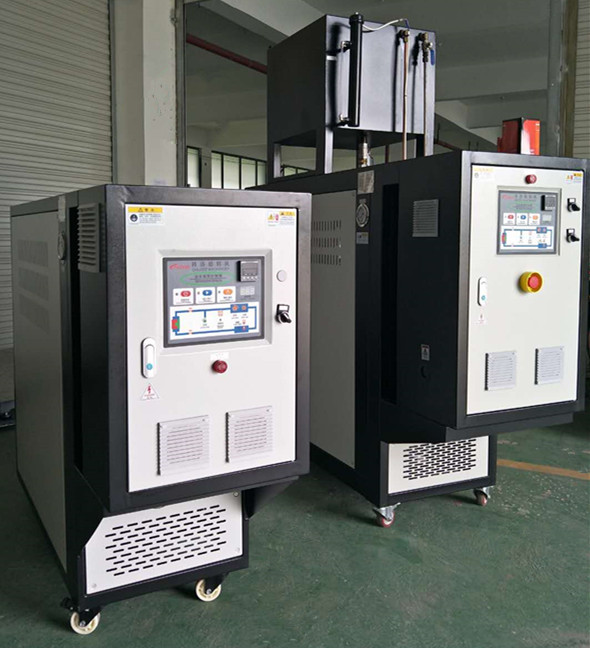
Engineering plastics such as PC, PA, PBT, etc., have high temperature requirements. The heat generated by the injection molding machine itself is insufficient to meet the optimal temperature needed for the molding process. The temperature control function of the plastic mold can quickly raise the mold temperature and can freely adjust and ensure the stability of the mold temperature according to the specific material requirements, thereby reducing the occurrence of defective products.
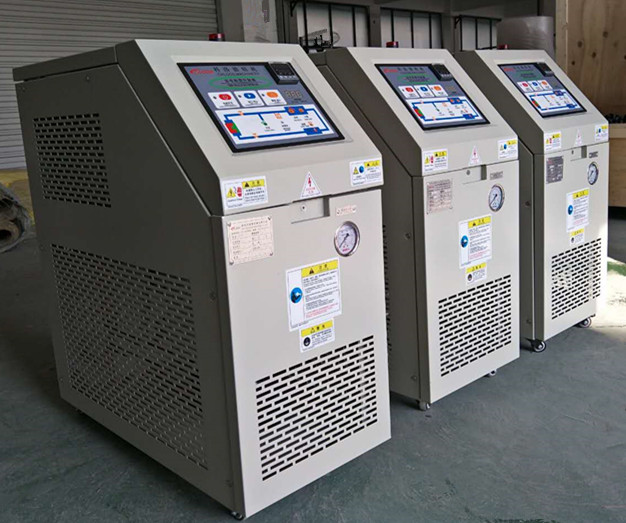
It's easy to see that oil circulation temperature control units are highly versatile. Among all current temperature control devices, none have such a broad range of applications as the oil circulation temperature control units.
Advantages of the oil recirculation temperature control unit:
The oil circulation temperature control unit is aptly referred to as a high-end temperature control device, and there's a clear rationale for this. Firstly, it boasts an extensive temperature control range, capable of reaching up to 350 degrees, even 400 degrees, which is challenging for conventional heating and temperature control equipment. Secondly, due to its use of liquid thermal oil as the heat transfer medium, the application scope of the oil circulation temperature control unit is exceptionally broad. There are several benefits to using thermal oil as a heat transfer medium: 1. Uniform heating 2. Cooling effect 3. Modular design. It is precisely these characteristics of thermal oil that equip the oil circulation temperature control unit with the aforementioned attributes.