








The application of the oil recirculation temperature control unit
The oil circulation temperature controller is suitable for the production of engineering plastics and plastic products, such as nylon, PC, and acrylic injection molding products. It pre-adjusts to the required temperature for the injection mold, forming the product in one go, thus reducing trial mold materials. The mold temperature controller accurately reduces waste, providing production efficiency and quality, making it an indispensable tool in the injection molding industry. The oil circulation temperature controller is also widely used in temperature control processes such as petrochemical polymerization, concentration, distillation, melting, insulation, and heating for chemical reactions, as well as in the thermal processes of textile dyeing, printing, lamination, and non-woven heating and insulation!
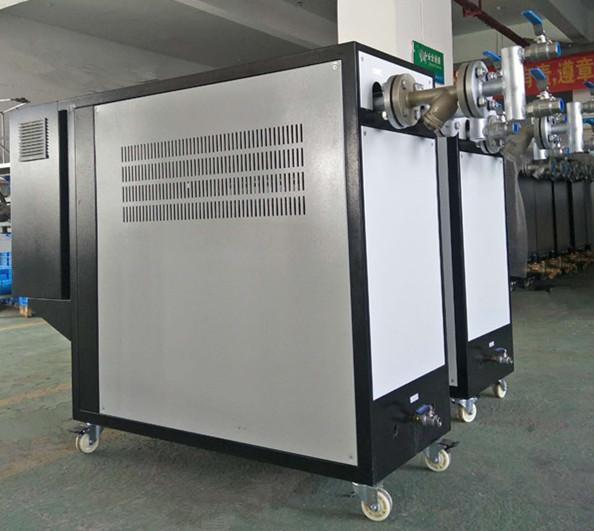
When it comes to this, it's not hard to see that the oil circulation temperature control unit has a wide range of applications. Among all current temperature control devices, none have such a broad application as the oil circulation temperature control unit.
Advantages of the oil recirculation temperature control unit:
The oil recirculation temperature control unit is aptly named as a leading temperature control device, and there's a clear reason for it. Firstly, it boasts an impressive temperature control range, capable of reaching up to 350 degrees, even 400 degrees, which is challenging for conventional heating and temperature control equipment. Secondly, due to its use of liquid thermal oil as the heat transfer medium, the application scope of the oil recirculation temperature control unit is extremely wide. There are several advantages to using thermal oil as the heat transfer medium: 1. Uniform heating, 2. Cooling effect, 3. Modular design. It is precisely these characteristics of thermal oil that equip the oil recirculation temperature control unit with the aforementioned qualities.
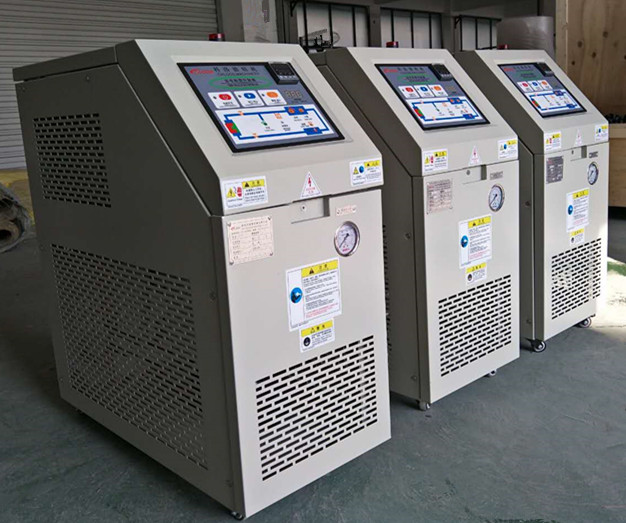
The cooling methods for mold temperature machines are direct cooling and indirect cooling. Indirect cooling employs a separate cooling circuit from the main circuit, whereas direct cooling involves the cooling circuit directly participating in the main circuit. Water-cooled mold temperature machines typically use direct cooling. In contrast, oil-cooled mold temperature machines, due to the heating process where water and oil cannot be mixed, usually adopt indirect cooling, often using plate heat exchangers for cooling.
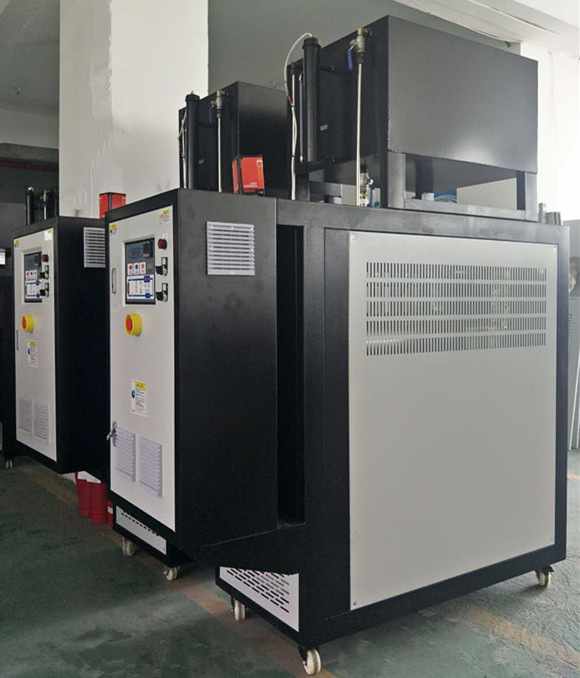
Magnesium alloy die-casting oil circulation temperature control units, capable of operating at temperatures up to 350 degrees Celsius, feature today's process design for high temperature control accuracy, rapid heat conduction, and energy saving. They can be configured with automatic oil extraction and return, full vacuum operation, and RS485 communication functions, making them comparable to the high-standard European imported mold temperature control machines available today. Common applications of oil circulation temperature control units include roller temperature control, roller heating for calenders, mold heating for hydraulic presses, roller heating for lamination machines, roller heating for extrusion presses, mold heating for injection molding machines, oven and curing room heating, blow mold heating, extrusion die heating, extrusion mold heating, open mill heating, printing roller heating, hot press heating plate control, vulcanizer flat plate heating, heating plate control, hydraulic press temperature control, reaction kettle temperature control, and more!