












I. Overview of Steel Reinforced Truss Deck
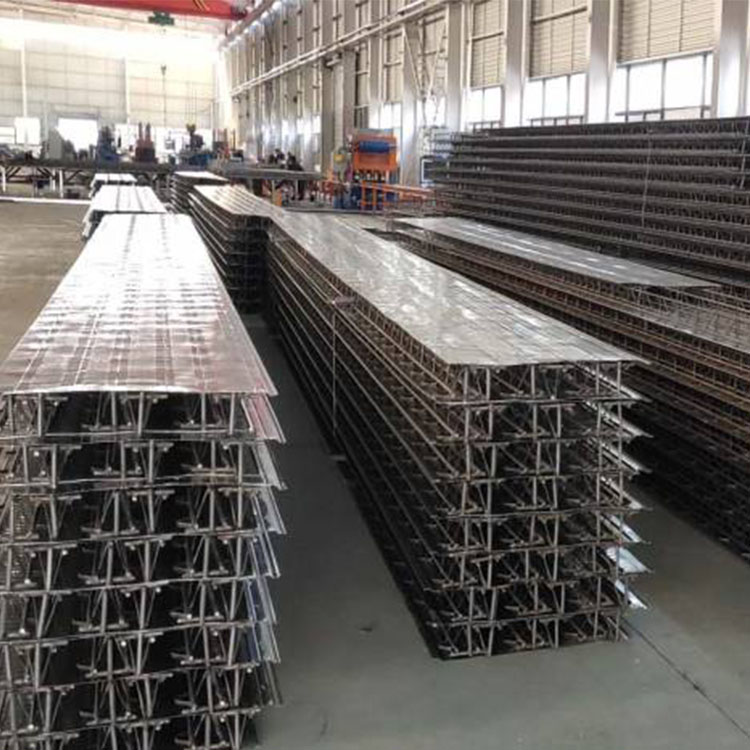
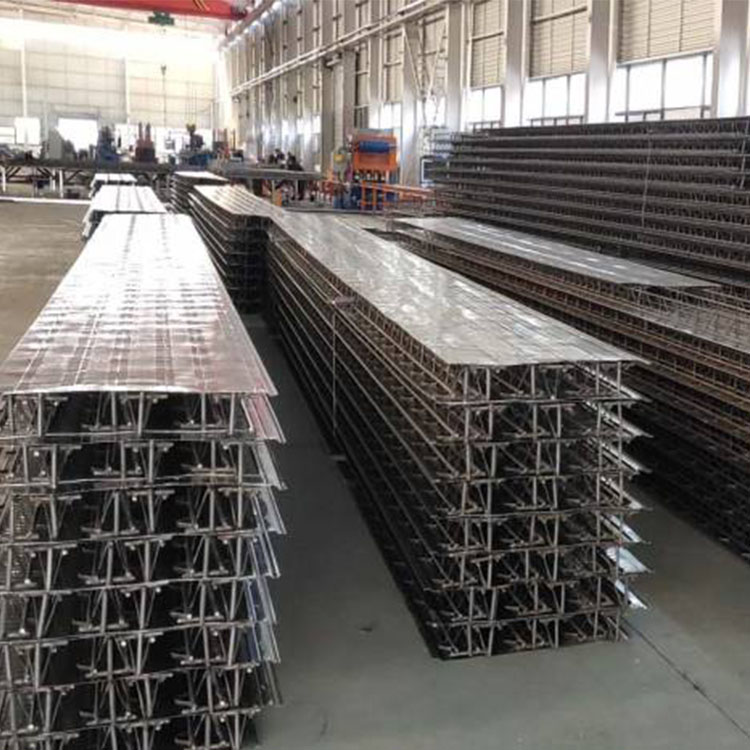
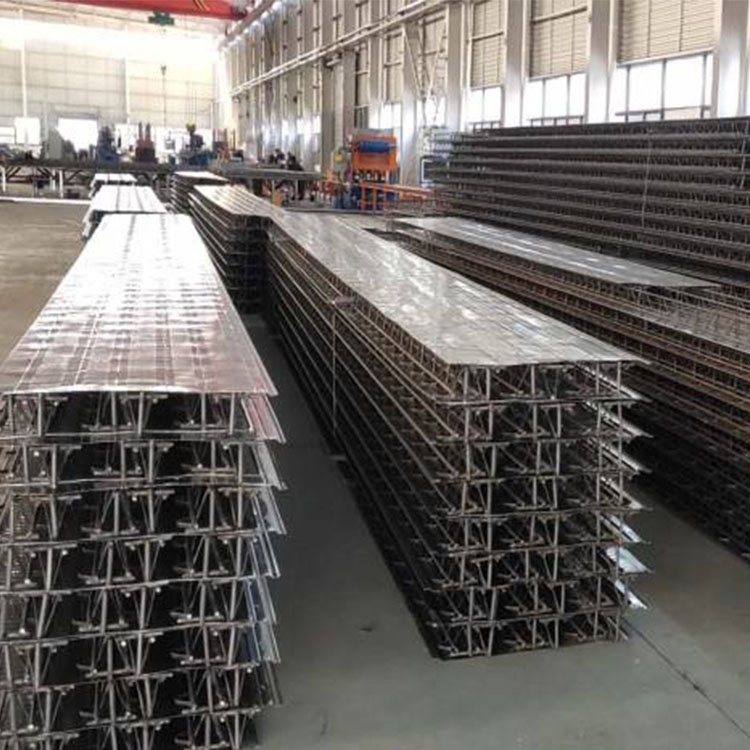
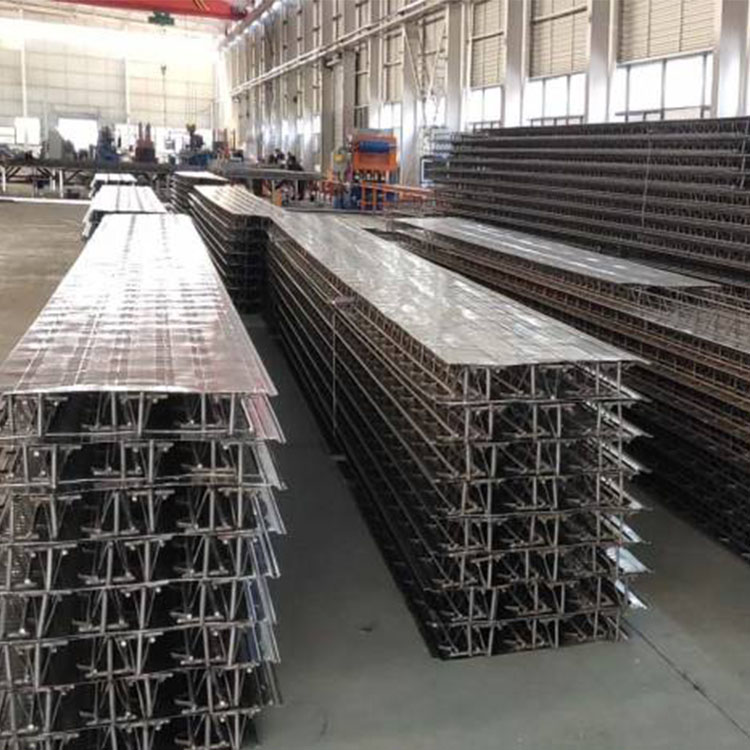
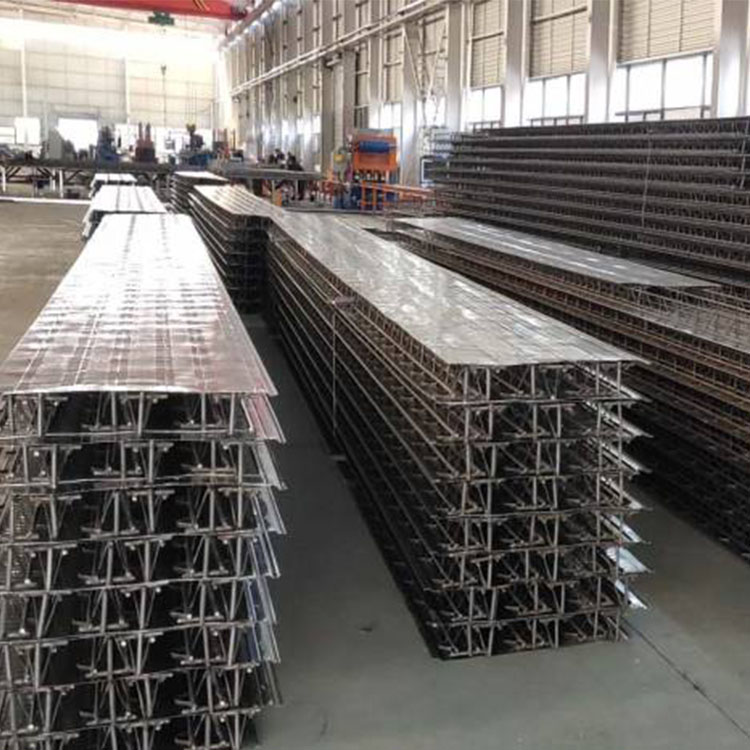
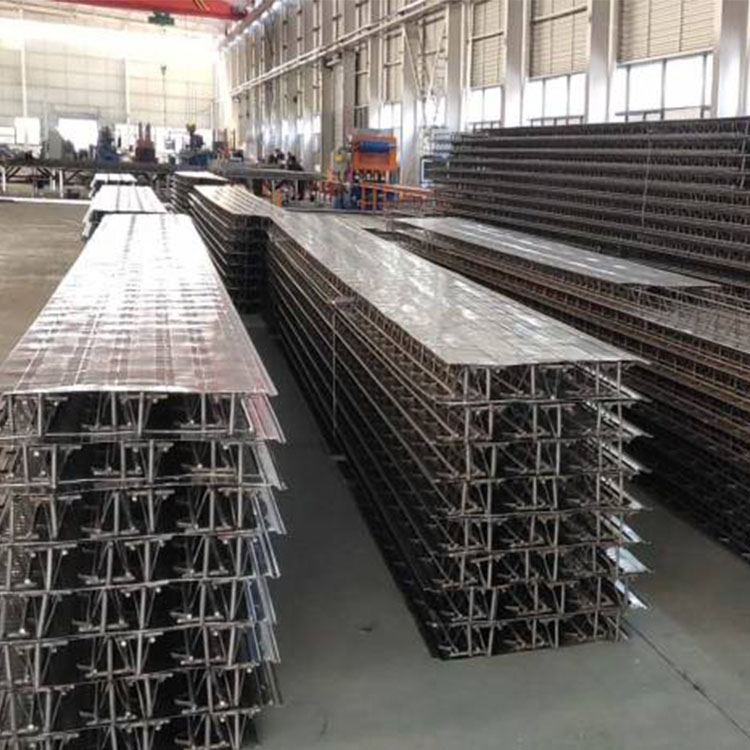
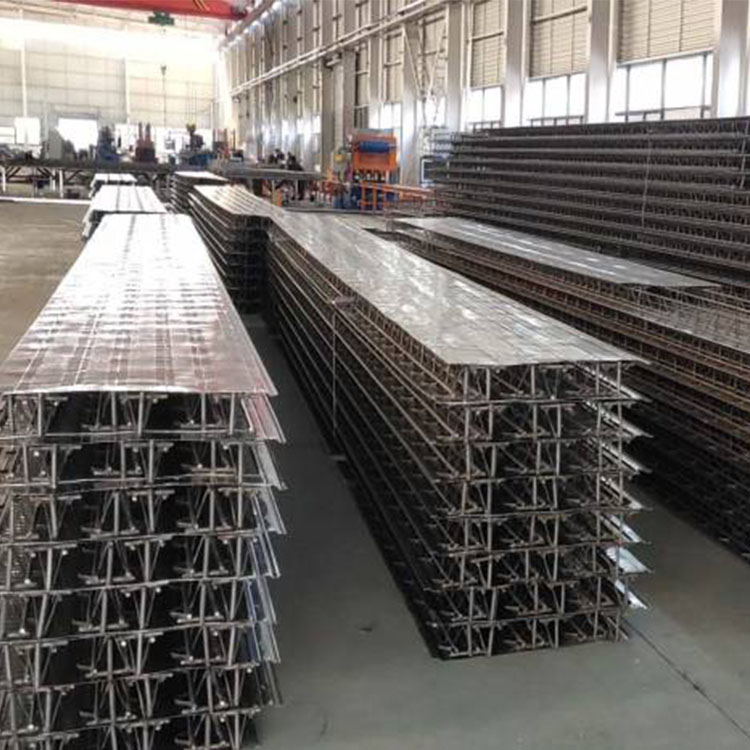
Reinforced truss floor decks are a composite template formed by processing the steel rebars in the factory into steel truss structures and welding them together with galvanized corrugated steel sheet molds. During the construction phase, the steel rebars are...
Truss floor deck can bear construction loads, and can be directly laid on beams for simple rebar work before concrete pouring. As it completely replaces the formwork function, it reduces the setup and teardown of formwork frames.
The process significantly enhances the efficiency of floor construction.A floor-decking product that enhances customer value,We have eliminated factors causing an increase in material costs.,Change the usage of the pressed steel plate to only serve as a floorboard
Templates during the construction phase, reducing the consumption of corrugated steel sheets, and lowering the requirements for the stable coating of the corrugated steel sheet's performance. We have altered the load-bearing mode of the deck sheet during construction.,During the construction phase, by molding
Steel plate stiffness is now provided by reinforced trusses, thereby offering greater floor deck stiffness to accommodate larger unsupported floor spans. We have reduced the costs for our clients' future maintenance.,Pressure
Galvanized steel sheets are only used as formwork during the construction phase. No treatment is required for stability, and there is no need to meet the lifespan requirements for building use, thus there is no consideration for maintenance costs later on.
Section 2: Advantages of Steel Reinforced Truss Floor Deck
(1)Economic
Reinforced truss has a rational load-bearing pattern, cost-effective material selection, and significant comprehensive cost advantages.
Adjustable truss height and steel bar diameter for suitabilityetBoards for wide spans
Can be designed as a two-way board
(2)Convenient
On-site rebar tying work volume can be reduced60%-70%Further shorten the project timeline.
The truss loading pattern can offer greater floor deck stiffness, significantly reducing or eliminating the need for temporary supports.
(3)Safety
Mechanical properties are essentially the same as traditional cast-in-place slabs, with excellent crack resistance in the slabs.
Fire-resistant performance is comparable to traditional cast-in-place slabs, superior to composite steel deck slabs.
The bottom mold is not in use during the stress phase, so there is no need to consider fire resistance and corrosion prevention issues.
(4)Reliable
Rebar is evenly arranged, with reliable guarantees for the spacing between layers of rebar and the thickness of the protective layer.
Double discount edge lap design, effectively ensuring the construction quality of composite flooring.
Steel reinforcing truss deckSimilar bidirectional stiffness benefits seismic resistance of buildings.
Screw pin welding quality is easier to ensure.


The evolution of roof deck products
Best-selling item: Non-composite profiled steel plate Plain Open Sheet | Superior Substitute: Composite corrugated steel sheet Open-end plates, Close-end plates, and Reel-end plates | Third Generation: Reinforced steel truss floor deck | Fourth Generation: TDD assembled removable steel truss floor deck |
III.TDV、TDMProduct Introduction: Type Steel I-Beam Truss Floor Deck
TDV、TDMThe steel truss deck is a composite formwork that involves fabricating the reinforcement into steel truss elements in a factory and then welding these truss elements with galvanized steel pressed decking to form an integrated unit. During the construction phase, the steel truss floor deck can bear construction loads and be directly laid on beams for concrete pouring with simple reinforcement work. As it fully replaces the formwork function, it reduces the board... Erecting and dismantling projects, significantly enhancing floor construction efficiency.
IV. Product Composition
TDV、TDMType steel truss floor deck is composed of upper chord steel, lower chord steel, web steel, bottom form, and support steel.
V. Material Parameters
Top and bottom rebars: Reputation hot-rolled coil rebarsHRB400Grade or Cold Rolled Ribbed Reinforcing SteelCRB550Grade.
Cold-rolled round steel bars for the web.
TDV、TDMType Bottom Mold Steel Plate: Zinc-plated steel plate, commonly used thickness is0.4~0.5mmDouble-sided galvanized coating amount120g/m2。
Section 6: Product Dimension Parameters:
| Name | Specs |
| Rebar diameter | 6-14mm |
| Hollow section steel bar diameter | 4-7mm |
| Reinforced steel truss height ht | 70-270mm |
| Anchor plate horizontal reinforcing bar diameter | 10mm(h≤100mm),12(h>100mm) |
| Vertical steel bar diameter of support bracket | 12mm(h≤100mm),14(h>100mm) |
| Base mold steel plate thickness | 0.4-0.6mm |
| Bottom die steel plate width | 590mm |
| Concrete protective layer thickness | 15mm,20mm,25mm,30mm |
| Reinforced truss deck plate length | 1.0-12m |
Section 7:TDMAdvantages of Type Steel I-Beam Truss Deck:
Excellent weld joint bearing capacity
"M"Type upright rib width up to2-3mmThe weld point bearing capacity of the steel rebars in the web of steel truss girders is approximately equal to that of the common ones."V"Lipped plate weld point load-bearing capacity1.5 Multiple.
Effective and stable performance
The distance between the steel truss and the welding points on the bottom mold is approximately5mmThe bottom mold surface is free of weld points, preventing rust spots, and boasts superior corrosion resistance.TDV Type steel truss deck, eliminating the possibility of future maintenance.
Avoid leakage
Due to the absence of weld points on the mold base, there are no holes that can be pierced, ensuring no leakage of the welding material.
TDMApplication industries for type steel truss deck plates
Suitable for high-purity factory buildings without suspended ceilings, for laboratories, computer rooms, information centers with stringent requirements for indoor air quality, and for environments where air humidity and salinity are a concern. High coastal city usage; buildings without suspended ceilings, exposed public structures; high-rise office buildings with superior quality sold directly before ceiling decoration.
TDVSteel I-Beam Truss Deck Application Industry
Not particularly demanding on ceiling bottom effect, or in multi-story steel structure factories and public buildings with suspended ceilings.
EightApplication Solutions:
High-rise, high-rise structure
High-rise buildings and their structures demand not only stringent quality standards for construction but also specific requirements for project timelines and on-site safety. Reinforced steel truss floor deck panels are designed to serve both as construction molds and as load-bearing components. Reinforcement steel"Dual Role"Our high-rise and high-level construction solutions excel, utilizing reinforced truss floor slabs in high-rise buildings to create multiple relatively independent and safe work surfaces. Enhanced construction progress.
Bi-directional board structure
Compared to steel sheet purlins, designing and constructing a two-way slab scheme is highly beneficial for reinforced steel truss floor decks. Without increasing the floor thickness, reinforced steel truss floor decks can be installed on-site Reinforcement in both directions is easily achieved, making it simple to meet the design requirements for two-way slabs.
Large-span structure (with support solutions)
In large-span applications, to save costs, small-sized rebars can be used for steel truss floor slabs. During construction, a simple temporary support is set at the center of the floor span prior to casting concrete. Supports are designed to meet construction requirements while also protecting the floor's strength to meet usage stage standards.
Long-span structure (no support scheme)
Reinforced truss deck for steel beam, thanks to its technically rational mechanical design, can achieve by appropriately adjusting the steel bar type.5mUnsupported large plate cross design requirements. In practical applications, it can accelerate the implementation process. Efficiency in production, cost-saving in construction.
Thick plate design
For300mmAbove-thickness slabs can be designed using reinforced truss deck panels, which can reduce or eliminate temporary supports, thereby accelerating the construction progress.
The use of steel truss floor slabs in multi-story reinforced concrete structures can reduce the workload for on-site formwork installation and removal, minimize labor costs, and significantly accelerate project progress.
Reinforced concrete or steel structure residential projects
This type of structure typically demands a high-quality finish on the floor slab, necessitating a plastering project, utilizing multi-dimensionalTDDDetachable steel truss deck assembly effectively addresses This challenge meets the demand for construction speed in steel structure projects and also allows for the removal of the formwork after the floor construction is completed, achieving a satisfactory decorative effect.
Circular, Elliptical, Other Shapes
These structural floor slabs are typically designed as two-way slabs, which not only bear vertical loads but also horizontal tensile forces; in addition, due to the irregular shape of the structure, the support issues for floor construction often arise. Issues with difficult construction can be effectively addressed by using reinforced steel truss floor decks.
Pitched roof structure
For sloped roofs, reinforced truss deck panels can be used for laying the roof panels. The deck panels can be installed along the slope or parallel to it, both options are feasible. The roof must be properly treated for performance stability.