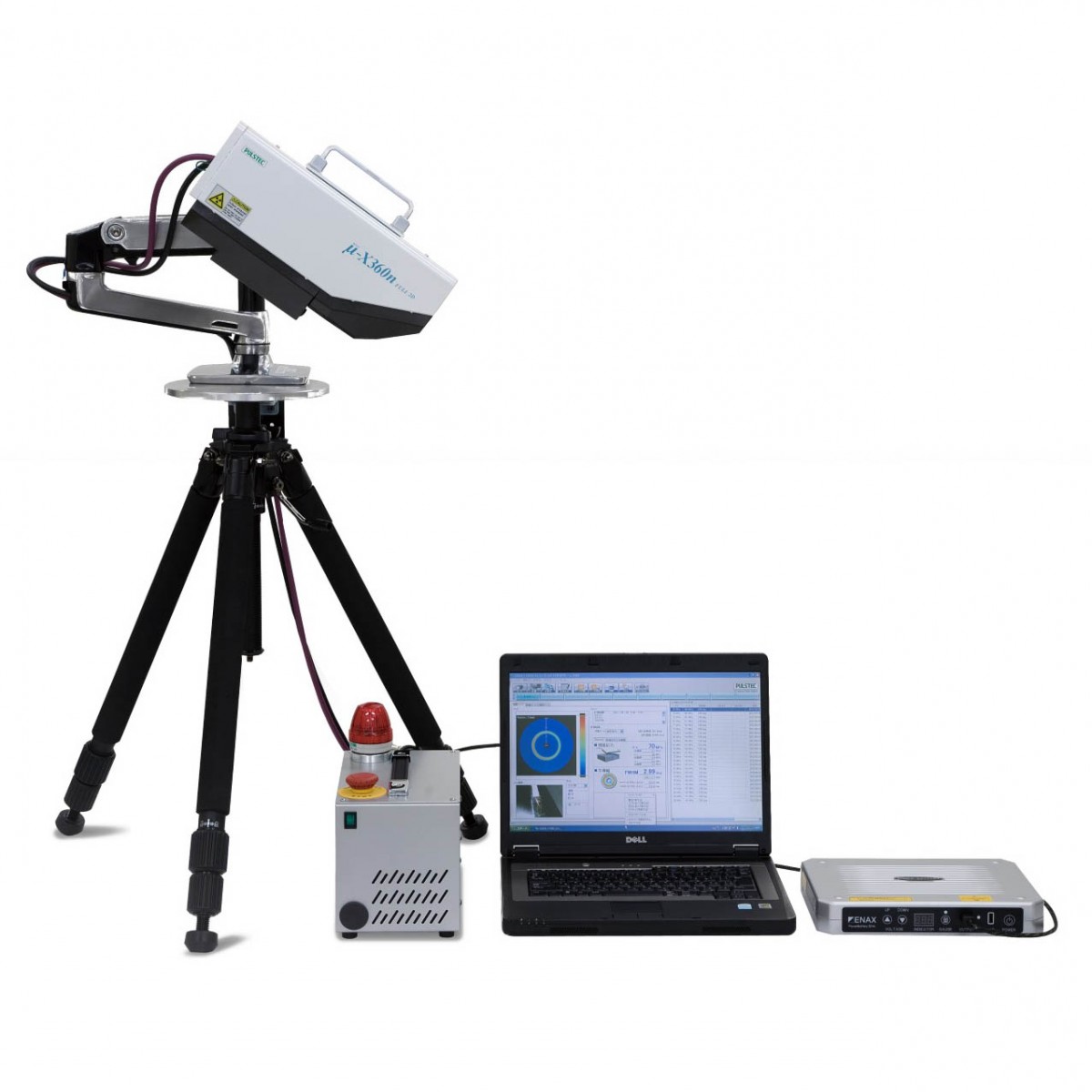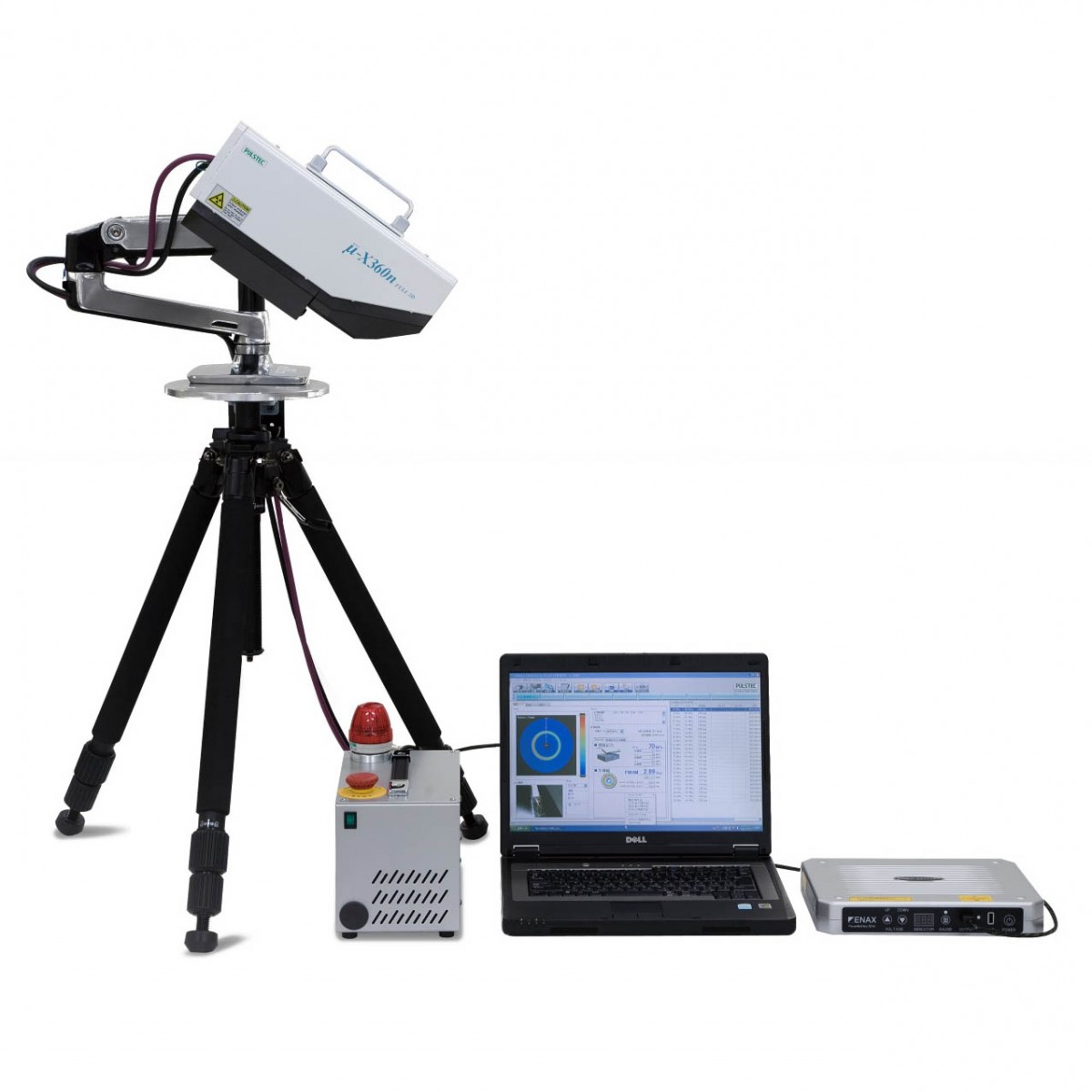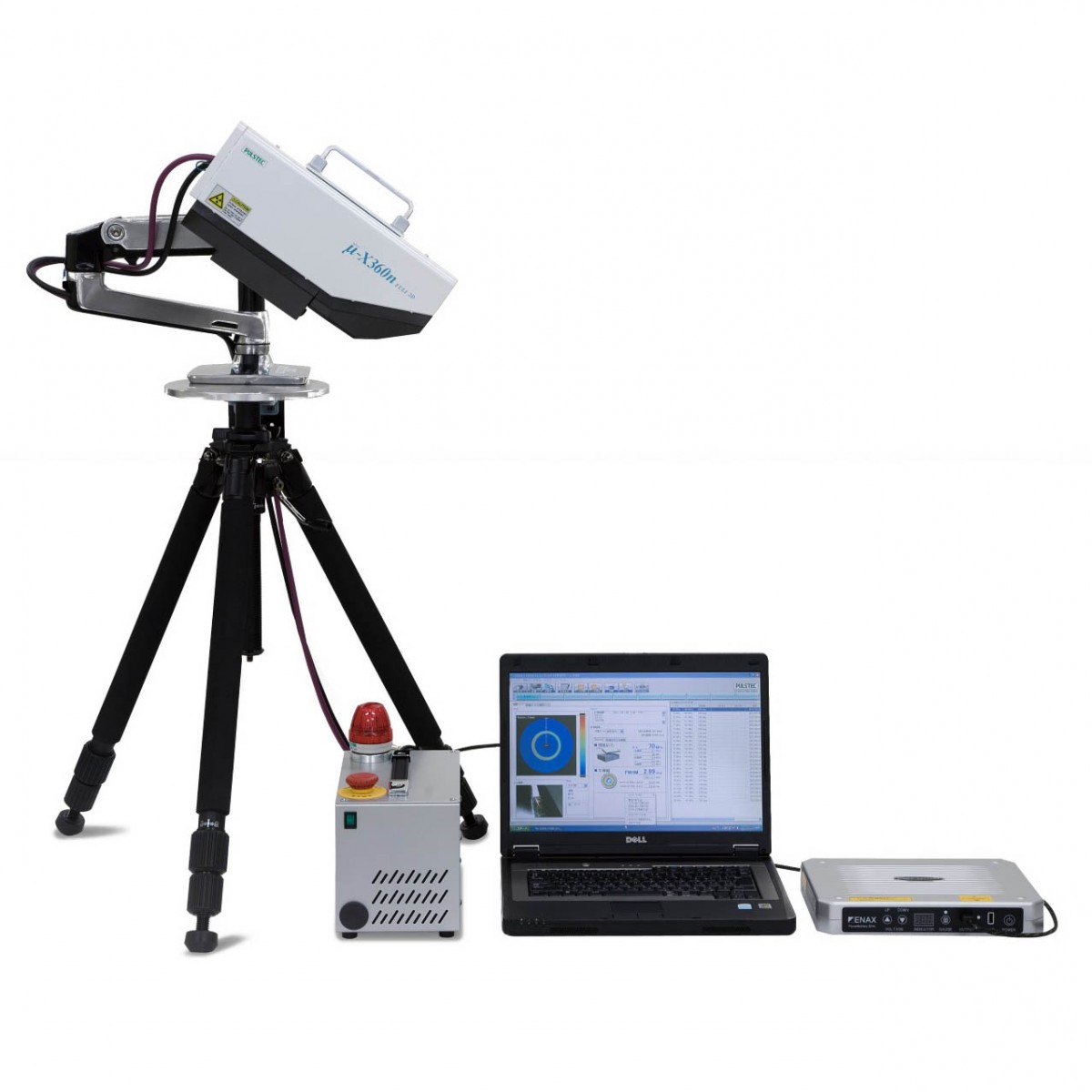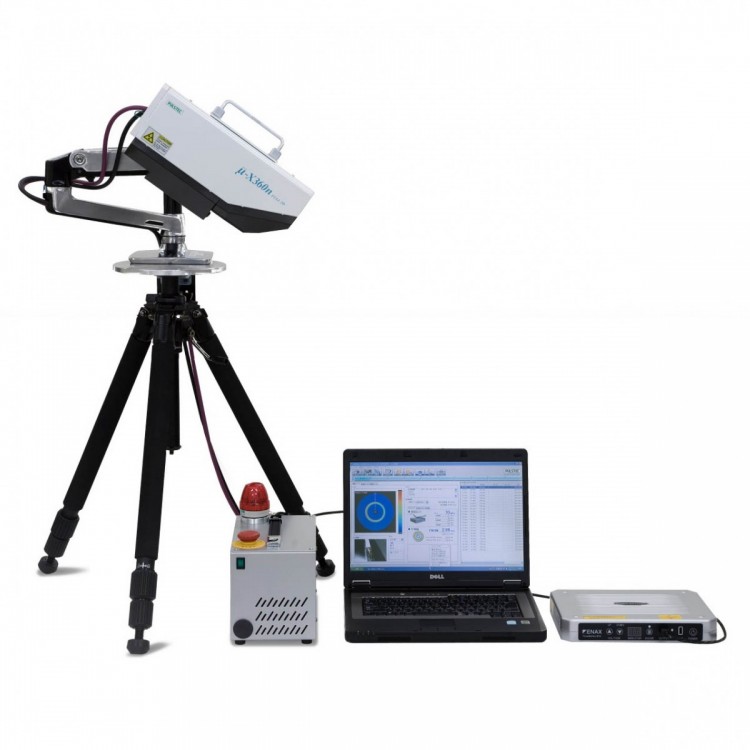

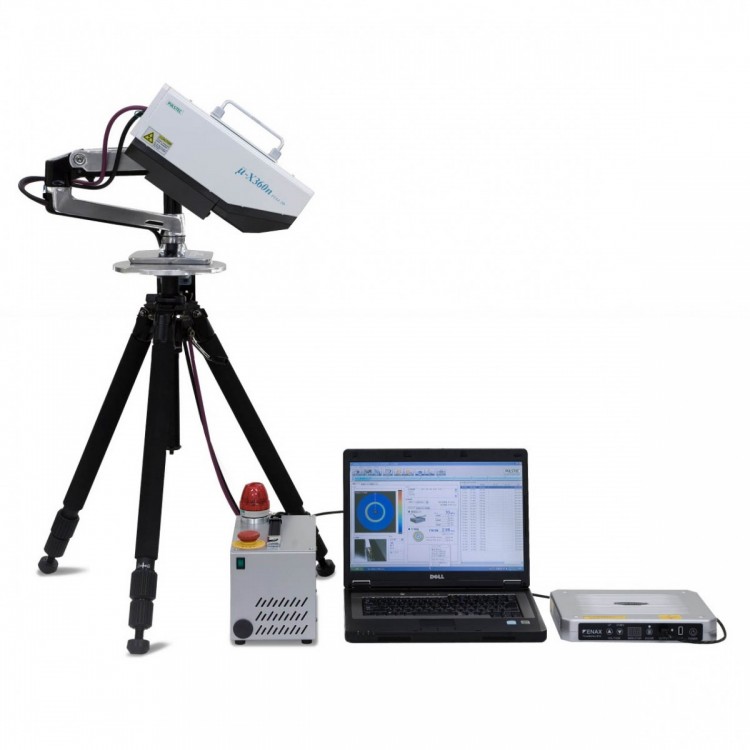








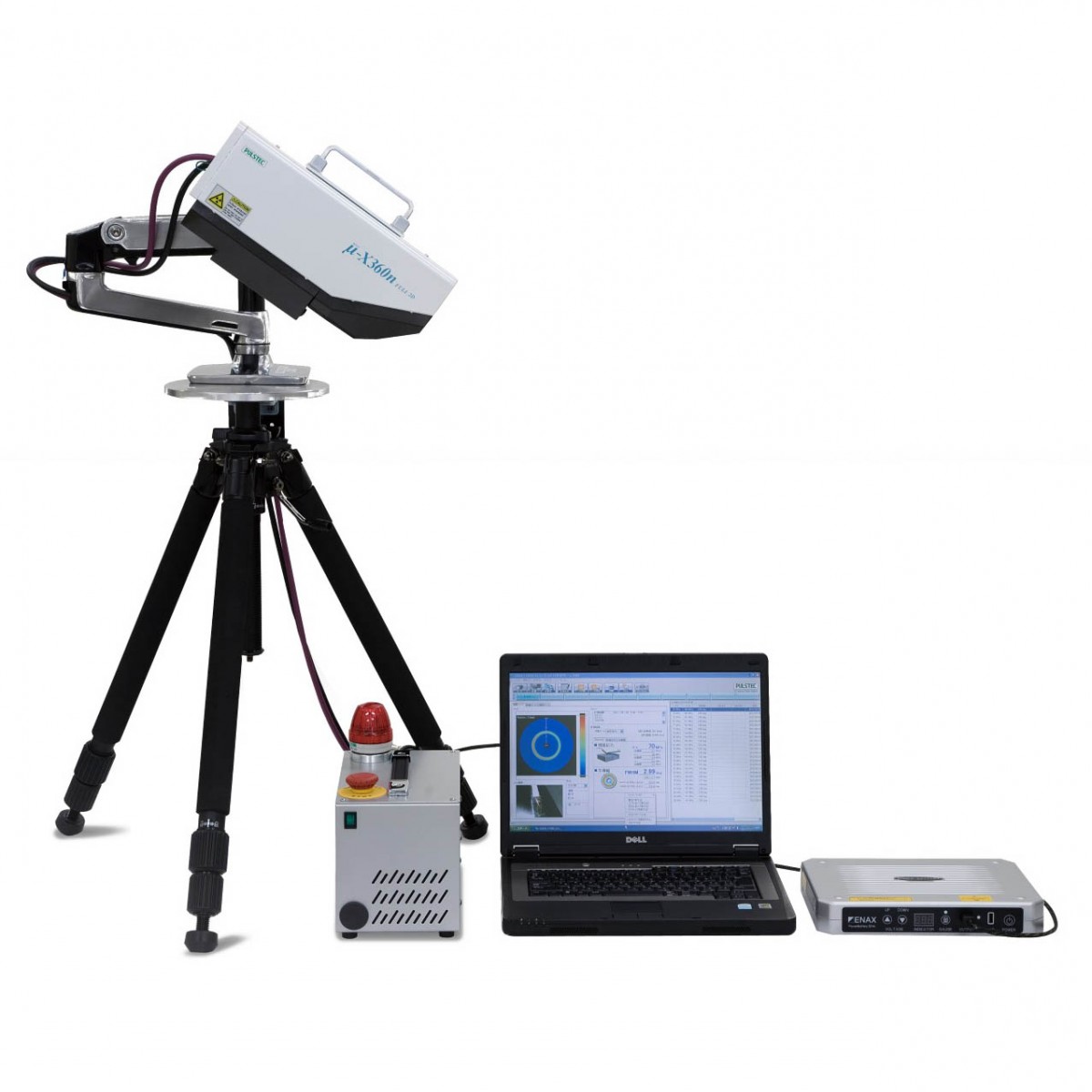
Portable X-ray Residual Stress Analyzer μ-X360n
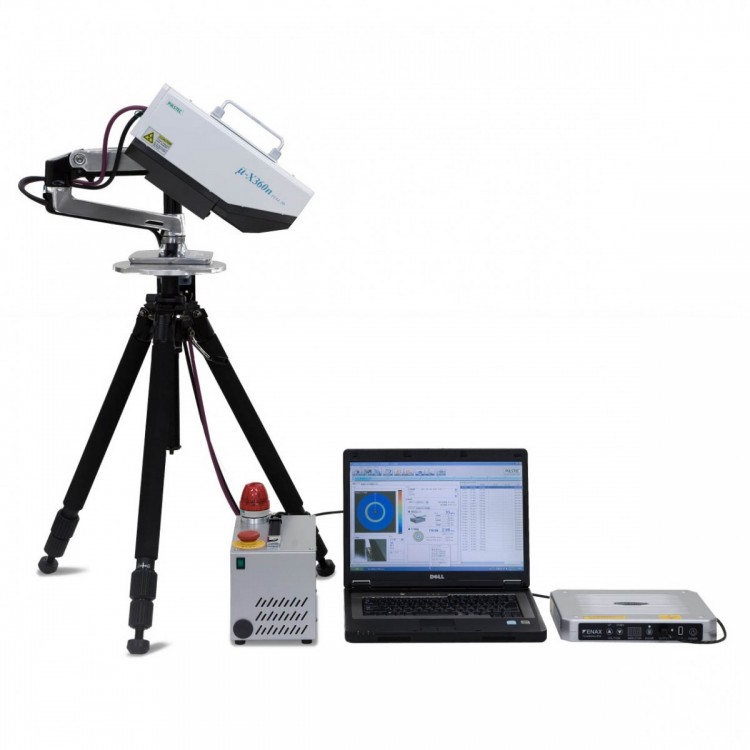
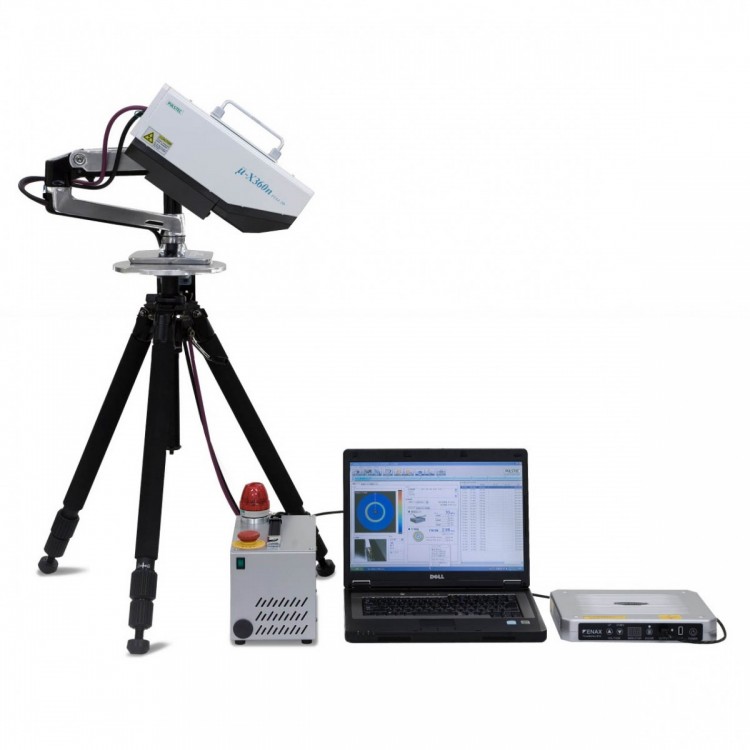
Japan's Pulstec Company introduces the next-generation portable X-ray residual stress analyzer μ-X360n, the world's first to introduce advanced full two-dimensional surface probe technology into X-ray residual stress measurement. Its launch has elevated X-ray residual stress analysis technology to a new level, and it has been highly favored by the industry since its debut.
Next-generation portable X-ray residual stress analyzer μ-X360n
Japan's Pulstec Company launches the new generation portable X-ray residual stress analyzer μ-X360n, the world's first to introduce precise full two-dimensional surface probe technology into X-ray residual stress measurement. Its introduction elevates the technology of X-ray residual stress analysis to a new level, and it has been highly favored by the industry since its launch!
With traditionalXRadiation Residual Stress Detection Principle Differences
Traditional Equipment —— Based on Point/Line Detector Technology
By measuring the diffraction angle shift caused by stress, the magnitude of the stress can be calculated. During the measurement, it is necessary to change the incident angle of X-rays multiple times (usually 5-7 times) and adjust the position of the one-dimensional detector to find the diffraction angle corresponding to each incident angle.
After applying stress, the angle of diffraction is measured with an angle gauge, and the angle change is calculated to obtain stress data.
mu-x360n — Based on Full Two-Dimensional Detector Technology
After a single-angle incident, a complete Debye ring is obtained using a two-dimensional detector. The variation of interplanar spacing under stress and the corresponding stress are calculated by comparing the Debye ring without stress to the deformed Debye ring under stress conditions.
After applying stress, analyzing the change in the Debye ring before and after a single incidence, will yield all residual stress information.
Product Features:
Full two-dimensional probe, no need for an angle gauge, no need for liquid cooling, more convenient measurement.
X-ray single angle (usually 35°) testing is completed with a single incidence, offering faster measurement.
2D detector single-shot acquisition360°Obtain diffraction data and a complete Debye ring.
Up to500A data point for residual stress data fitting
The entire machine does not need to be rotated during the testing process, and the test is not restricted by the sample's shape. Outdoor on-site testing becomes easy and feasible.
Built-inCCDCamera and laser-assisted positioning system, making sample positioning easier.
Fully automatic software measures residual stress, half-width, and residual austenite data
Debye ring data can be extended to analyze material texture and grain size.
Low power consumption30kv,1mA),Low radiation, safer to use.
Easy to operate, low maintenance costs.