
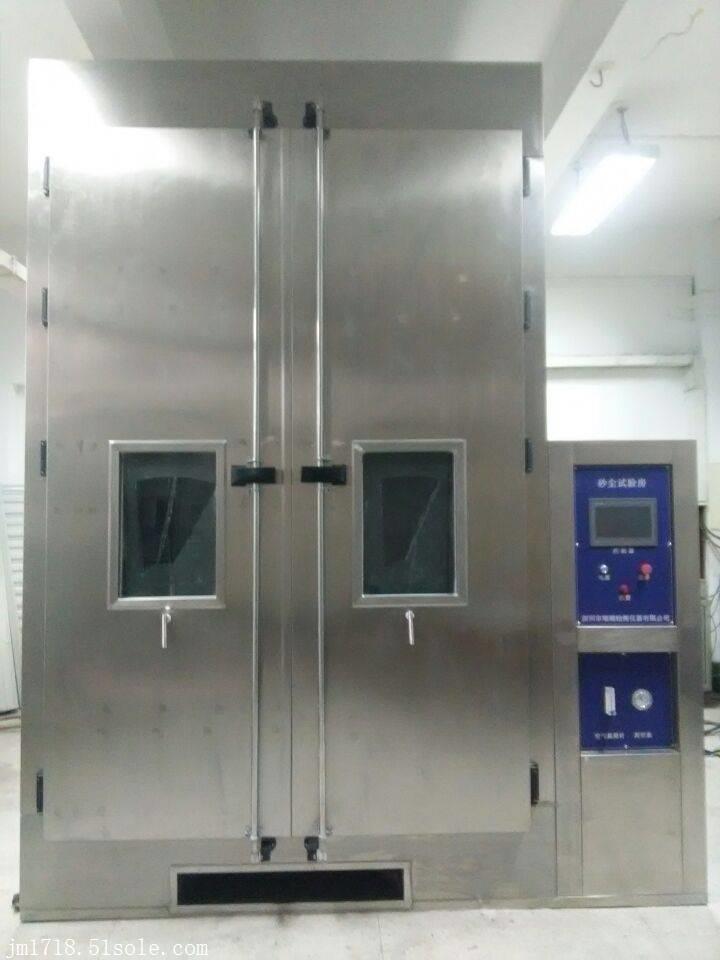
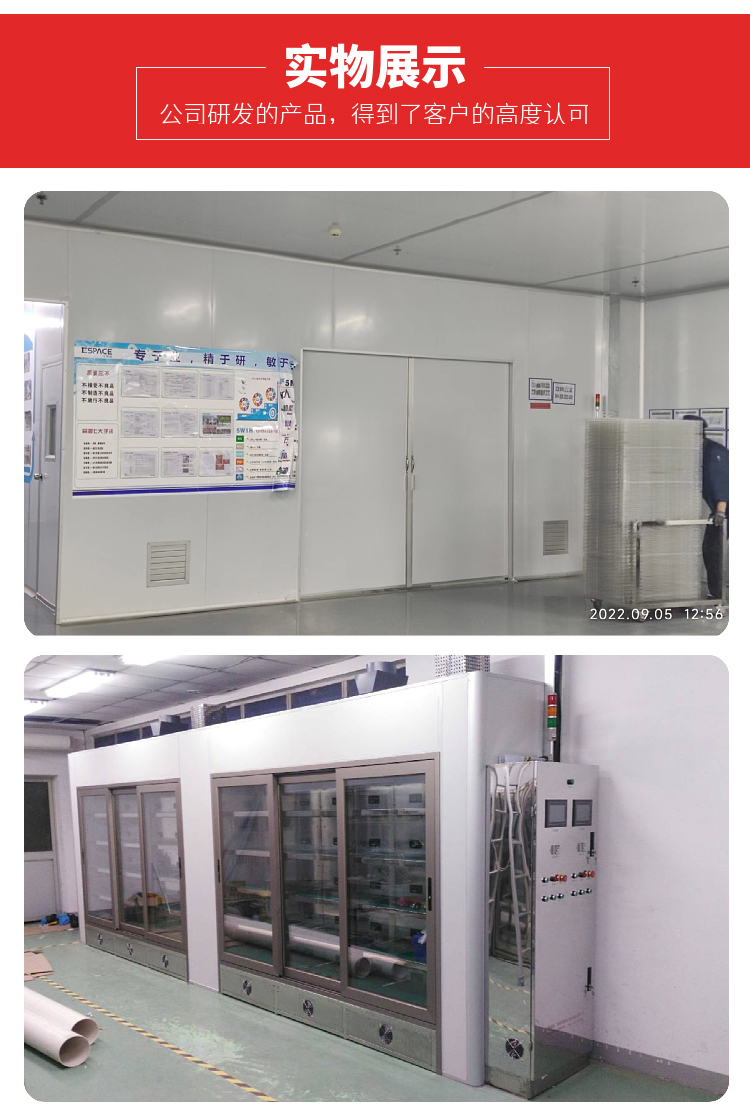


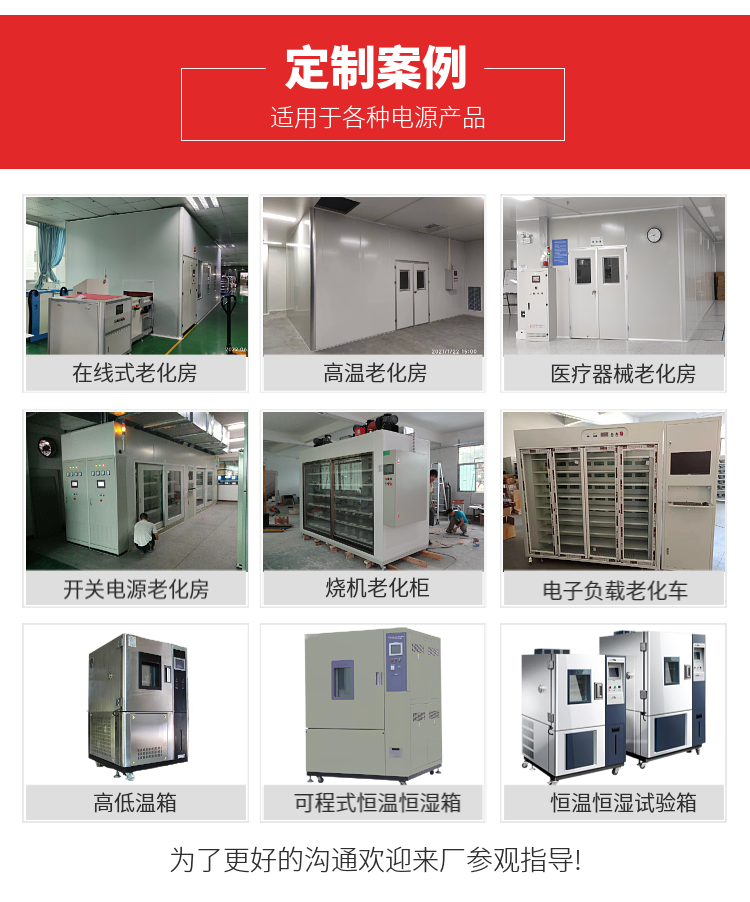





Thermal aging room design plan
1. Today, we share some valuable insights with you. This time, it's about the installation of a high-temperature aging room in Jiangmen, specifically for inverter aging products. Below is the technical scheme of the aging room for your reference.
Constant-temperature aging room design
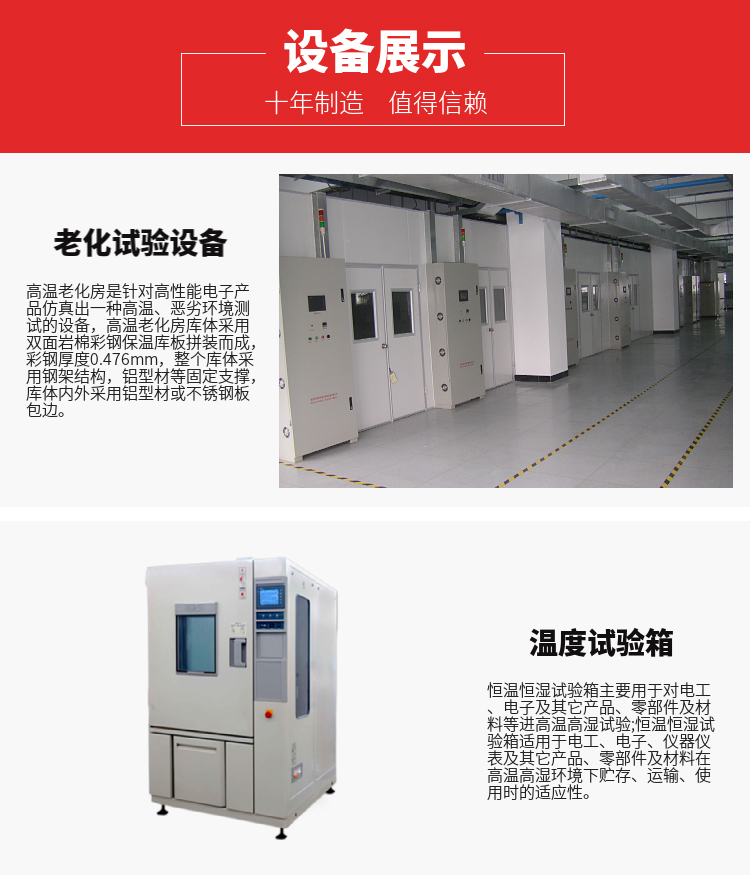
1. Next, we will provide a detailed introduction to the恒温老化房 and its design principles. The恒温老化房 is a device designed to simulate a constant temperature and harsh environment test for high-performance electronic products, an essential experimental equipment for improving product stability and reliability.
2. Constant-temperature rooms, boiler rooms, and aging rooms are typically used in specialized industries, so there are many factors to consider when designing a constant-temperature room. Below, I'll briefly discuss the key points of constant-temperature room design. When planning the overall design of a constant-temperature room, it's important to consider the broad range they need to cover and involve various experts such as HVAC technicians, construction workers, and electrical and plumbing installers for comprehensive planning. The goal is to create a more reliable and stable working environment for the constant-temperature room, extend its lifespan, and meet the health and safety requirements of the workers. In the overall design process, it's crucial to consider the relationships between different components and to strictly coordinate and manage each aspect to ensure no collisions, leaks, or damage. Advanced and scientific technologies from both domestic and international sources can be utilized, along with environmentally friendly and cost-effective materials and equipment. Then, incorporate more humanized design concepts into the constant-temperature room's design plan.
Operation Specifications for Constant Temperature Aging Room
1. Operation specifications for high-temperature constant-temperature aging rooms: When all high-temperature aging room equipment requires electrical power testing, staff entering the site must wear insulating shoes, ensure that all testing equipment is on a surface covered with insulating material, and set up warning barriers around the equipment, prohibiting anyone from approaching.
2. Next, we share an aging room operation procedure for reference, which you can modify according to the specific conditions of your company's aging room. First and foremost, prior to using the aging room safety operation guidelines, preparations must be made, and a thorough understanding of the equipment's performance is required, as well as familiarity with the safety precautions in each specific operation.
3. Today, let's familiarize ourselves with the operation procedures for the aging room: prepare before use, and have a thorough understanding of the equipment's performance, as well as be aware of the safety precautions for each specific operation.
4. Aging Room Test Operation Procedure Guidance 0 Purpose: Standardize the high-temperature aging procedures and standards for electronic products, ensuring control panels and other products undergo aging tests according to the standard. 0 Scope: Applies to the high-temperature aging operations of the company's electronic products. 0 Responsibility: The assembly workshop is responsible for aging the electronic products and maintaining records of their entry and exit.
Walk-in Constant Temperature Aging Room
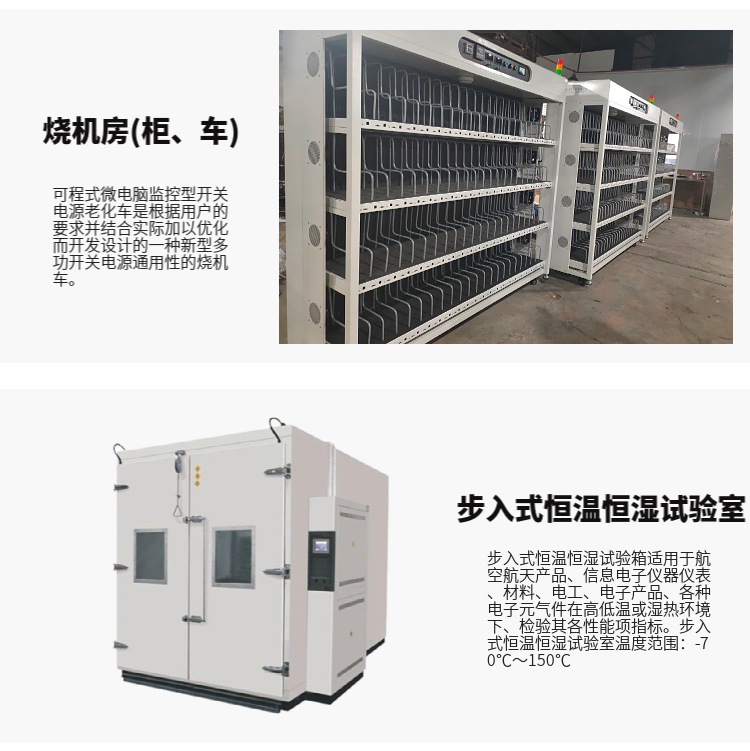
1. Walk-in constant temperature and humidity aging rooms are suitable for low-temperature, high-temperature, high and low temperature change, constant heat, and high and low temperature alternating humidity tests of whole machines or large components. They can be customized according to customer requirements. These rooms are designed based on the GB2423[1].02 high-temperature test method, GB2423[1].01 low-temperature test method, GB2423[1].03 constant humidity test method, and GB2423[1].04 alternating temperature aging room test method. The temperature control in walk-in aging rooms is accurate and precise. Thanks to the unique duct system design and electrical control system, they maintain a highly uniform room temperature, surpassing that of concurrent walk-in constant temperature and humidity test rooms. The components and assembly in these rooms match well, with most functional components using advanced original imported parts, enhancing product safety and reliability. Walk-in high and low temperature aging rooms are widely used in power electronics, computers, communications, biopharmaceuticals, and other fields.
High-temperature aging chamber
1. Definition of High-Temperature Aging Room A high-temperature aging room, also known as an aging room, is a project designed to simulate a high-temperature and harsh environment for high-performance electronic products such as complete computers, monitors, terminals, automotive electronics, power supplies, motherboards, monitors, and switch-mode chargers. It is a crucial experimental facility for enhancing product stability and reliability, and a vital production process for manufacturers to improve product quality and competitiveness. Aging rooms are widely used in industries such as power electronics, computers, communications, biopharmaceuticals, and more. Constant temperature and humidity aging rooms are an advanced form of the standard aging room, requiring controlled temperature and humidity, and are applied in more precise and high-demand industries. Application Scope of High-Temperature Aging Room High-temperature aging rooms are extensively used in fields such as power electronics, computers, communications, biopharmaceuticals, and more. They are suitable for quality testing of electronic, plastic products, electrical appliances, instruments, food, vehicles, metals, chemicals, building materials, aerospace, medical... etc. The high-temperature aging process is widely adopted globally to improve the stability and reliability of electronic products. Through high temperature aging...
2. Wuhan Get. High-temperature aging rooms, thermal aging chambers, drying ovens, and high-temperature test chambers are all temperature testing equipment, but they differ in specifications, functions, and standards.
Difference between ambient aging and high-temperature aging
1. Based on the establishment of the Arrhenius acceleration model, applying the time-temperature superposition principle, the translation factor at room temperature was obtained through linear extrapolation of the high-temperature shifting factor. This led to the creation of a prediction equation for the aging performance degradation of rubber at room temperature, which was then compared with实测 room temperature aging performance degradation data.
2. Aging typically refers to the placement of batteries after the assembly and filling process, before the first charge, which can be done at normal temperature or high temperature. Both methods serve to stabilize the properties and composition of the SEI (Solid Electrolyte Interphase) film formed after the first charge, ensuring the stability of the battery's electrochemical performance. The main purposes of aging are threefold: After the battery undergoes the pre-formation process, the graphite anode inside the battery forms a certain amount of SEI film, but this film has a dense structure with small pores. Aging the battery at high temperature helps to restructure the SEI, forming a loose and porous film. The battery's voltage is unstable after formation, slightly higher than the actual voltage. The purpose of aging is to make the voltage more accurate and stable. Placing the battery at high or normal temperature for a period of time ensures that the electrolyte can fully wet the electrodes, which is beneficial for the stability of the battery's performance.
3. The power-on method and test circuit form for high-temperature static power aging are the same as those for normal temperature static power aging, with the difference being that the former is conducted at a higher ambient temperature. Since the device undergoes aging at a higher ambient temperature, the junction temperature of the integrated circuit can reach very high levels.
4. Lithium-ion battery aging generally refers to the storage after the battery is assembled and filled with electrolyte, and it comes in two types: normal temperature aging and high temperature aging. Both are designed to stabilize the properties and composition of the SEI (Solid Electrolyte Interphase) film formed after the first charge. The normal temperature aging temperature is 25 degrees Celsius, while the high temperature aging temperature varies by manufacturer, with some using 38 degrees and others 45 degrees. The aging time is typically between 48 to 72 hours. Lithium-ion battery aging also involves two scenarios: open and sealed. For batteries that are open-cycled, it's better to seal them after aging if the relative humidity can be controlled below 2%. For high temperature aging, it's preferable to age them after sealing. However, it is certain that the aging process of the battery involves electrochemical kinetic changes, which greatly benefit the stability of the SEI film and promote the stability of the electrochemical system.
Battery Normal Temperature Aging vs. High Temperature Aging
1. Room temperature aging temperature is 25 degrees, with high temperature aging varying by manufacturer, ranging from 38 to 45 degrees. Aging time is between 48-72 hours. For lithium-ion batteries, aging is divided into two types: open and sealed. Regarding batteries to be sealed after room temperature aging, it's better to seal them after aging if the relative humidity can be controlled below 2%. As for high temperature aging, after sealing...
2. General aging procedures include: charging to 0-2V, storing at room temperature for 7 days, and then storing at 45°C for 7 days. Disqualify products with voltage differences before and after battery aging. Leave the battery open-circuited at high or room temperature for 7 or 28 days. To assess self-discharge performance, measure the discharge capacity by discharging the battery to the cutoff voltage.
3. The difference between room temperature aging and high temperature aging is that, in a general sense, walk-in high temperature aging rooms and controlled temperature aging rooms are a type of product. Both walk-in high temperature aging rooms and controlled temperature aging rooms are named according to temperature. A walk-in high temperature aging room is any room with a temperature higher than room temperature and is called a high temperature aging room. "Controlled temperature aging" literally refers to aging at a specific temperature point.
4. Batteries exhibit enhanced stability in performance after high-temperature aging. The majority of manufacturers producing lithium-ion batteries employ this high-temperature aging process, aging the batteries for 1 to 3 days at temperatures between 45 to 50 degrees Celsius, followed by storage at room temperature. Post high-temperature aging, potential issues such as voltage fluctuations, thickness changes, and internal resistance variations become apparent, all of which directly test the safety and electrochemical performance of the batteries. Currently, most battery companies use low-quality domestic separators for mass production, making high-temperature aging a concern for the internal structural safety of batteries. To shorten the overall production cycle, new batteries aged at high temperatures only accelerate the chemical reactions without causing significant damage. The batteries are then left at room temperature for over three weeks, allowing for a full chemical reaction between the anode and cathode, separator, and electrolyte to reach equilibrium. It is only at this point that the battery's performance is considered more authentic.
High-Temperature Aging Room
1. The heater uses high-temperature-resistant wire that does not burn at 300℃. A 40W explosion-proof lighting with high-temperature resistance is installed indoors to extend bulb lifespan and prevent explosion. The storage body is made of flame-retardant insulation material, offering excellent thermal insulation and high safety ratings. Over-temperature audio-visual alarm function: during the aging process, if there are situations like over-temperature or overload, the aging room will automatically cut off the power supply and trigger an alarm.