







High-temperature aging rooms are classified as which level of key fire prevention areas?
1. Key fire protection targets, focusing on critical areas such as the fire control room, fire pump room, generator room, kitchen, and guest rooms. To enhance fire safety management in critical areas and ensure the implementation of fire safety measures, the following is formulated in line with the actual fire safety work of the unit:
2. Materials used in high-temperature aging rooms should possess certain fire-resistant properties, particularly for structural materials such as the roof, walls, and floor. Generally, materials like fire-resistant boards, refractory bricks, and non-combustible materials, which offer good fire resistance, are used.
3. Fire Classification of Insulating Materials in High-Temperature Aging Rooms and Fire Resistance Grades According to the National Standard GB8624-97, the combustion performance of building materials in high-temperature aging rooms is categorized as follows: A Grade: Non-combustible Building Materials: These materials hardly ignite. B1 Grade: Flame Retardant Building Materials: These materials have good flame retardancy, are difficult to ignite in air or under high temperatures, and are not likely to spread quickly, and will stop burning immediately upon removal of the ignition source. B2 Grade: Combustible Building Materials: These materials have some flame retardant properties. They will ignite immediately upon contact with open flame or under high temperatures, and are prone to fire spread, such as wooden columns, wooden trusses, wooden beams, and wooden staircases. B3 Grade: Highly Combustible Building Materials: These materials have no flame retardant effect, are highly flammable, and pose a significant fire risk.
4. The definition of key fire safety areas is based on Article 19 of the "Regulations for Fire Safety Management in Government Offices, Organizations, Enterprises, and Public Institutions" (Order No. 61). Key fire safety areas refer to locations that are prone to fires, where a fire may pose severe risks to personal and property safety, and have a significant impact on fire safety.
5. High-temperature aging room fire classification, insulating materials, and fire rating: The fire classification of insulating materials in high-temperature aging rooms, according to the national standard GB8624-97, categorizes the combustion properties of building materials in high-temperature aging rooms as follows: Non-combustible building materials: The material almost does not burn. B1-rated flame-retardant building materials: Flame-retardant materials have good flame retardancy.
6. Little Lithium has compiled fire safety knowledge for everyone! Share with you all! 1. Ten fire prevention and explosion-proof regulations for lithium battery production and use enterprises: Battery storage rooms and aging rooms must be isolated from other areas and independently set up; Battery storage rooms and aging rooms must be separated by solid brick walls and use normally closed fire doors.
What level of key fire prevention area does the high-temperature aging room fall under?
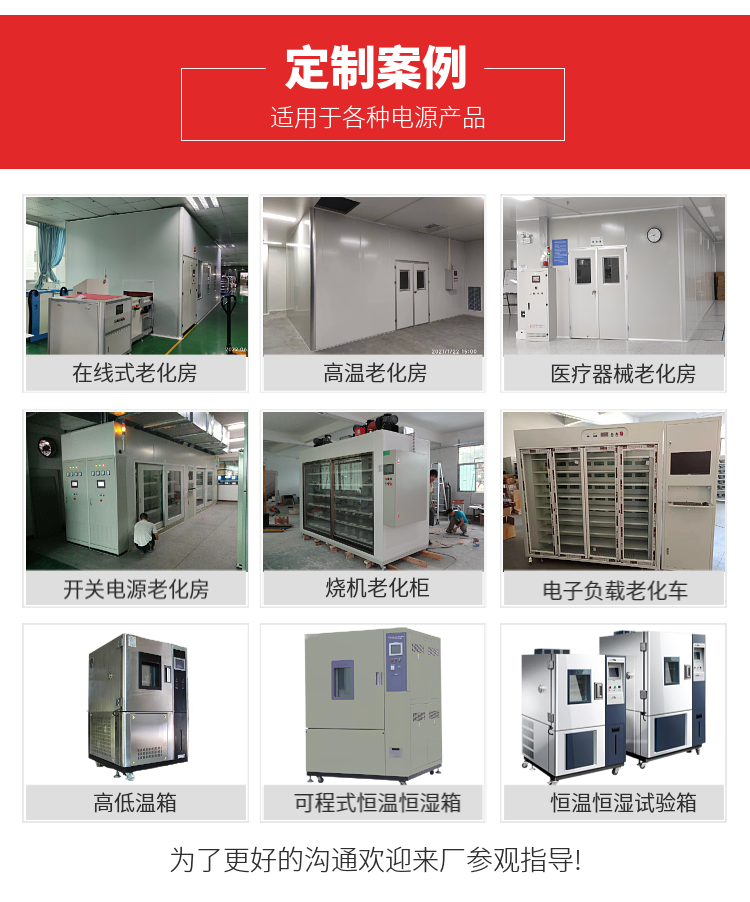
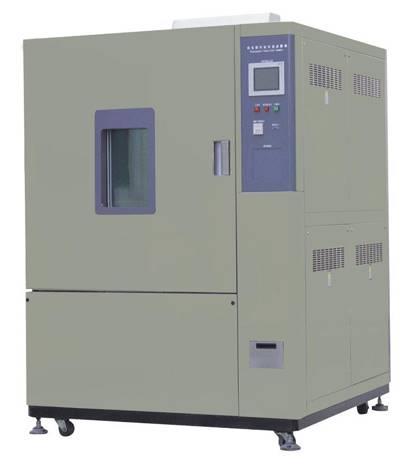
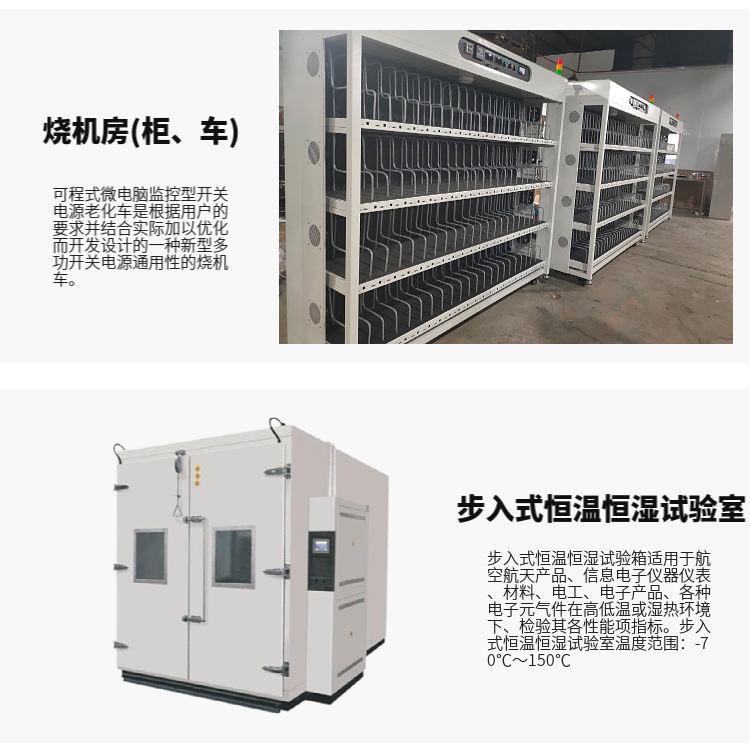
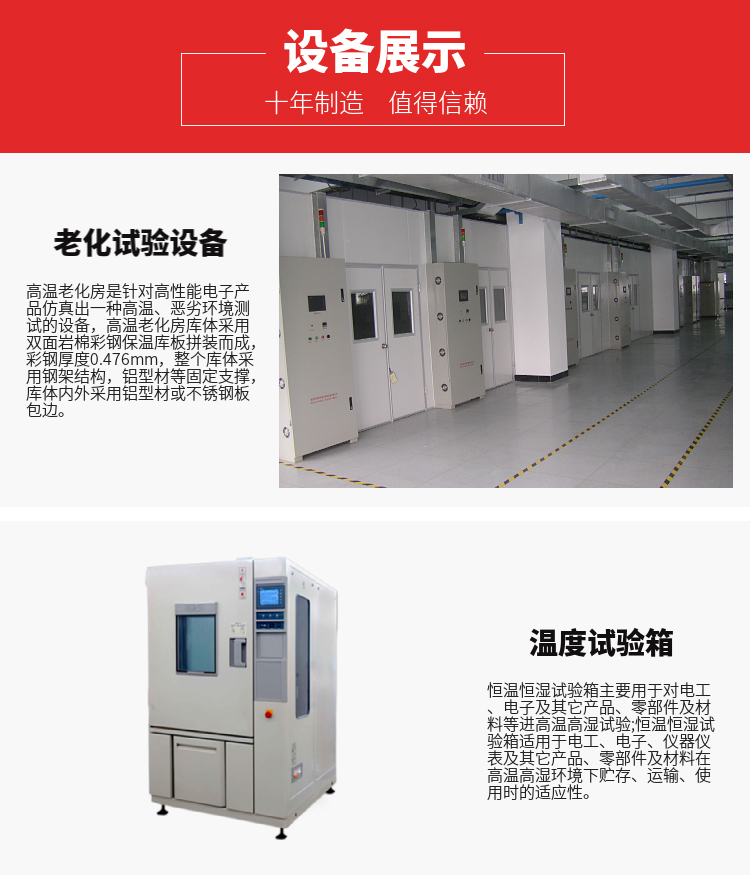
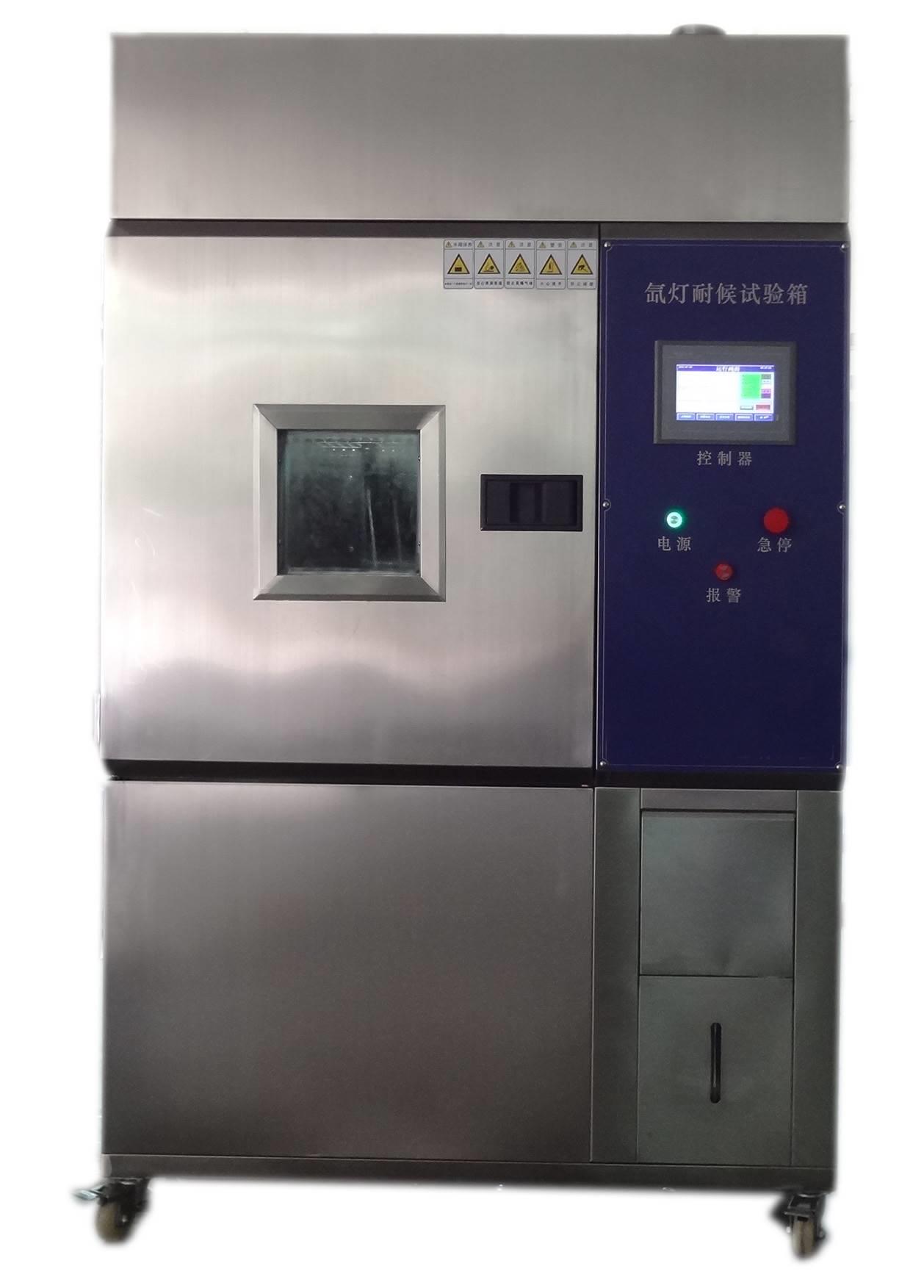
1. What is an aging room: An aging room, also known as a high-temperature aging room or a constant-temperature aging room, is a device used for high-temperature and harsh environment testing. Therefore, aging room, high-temperature aging room, and constant-temperature aging room are different names for the same equipment. The aging room simulates a high-temperature and harsh external environment for electronic products and tests their performance and quality, helping manufacturers quickly identify and resolve issues in production environments to improve product quality and competitiveness. Aging room product structure: The external framework of the aging room is commonly made of double-sided color steel thermal insulation panels. Depending on different requirements, it is equipped with the main system, power system, control system, heating system, temperature control system, air intake and exhaust system, constant temperature system, time control system, and test load. High-temperature aging room air circulation and heating system: The circulation system, over-temperature exhaust system, heating system, and the matching duct system are installed at the top of the aging room to save space; the circulation system uses a circulation fan and matching ducts to ensure uniform temperature within the testing area.
2. To ensure safe operation and production in the high-temperature aging room, extend the service life of the equipment, and especially to customize this specification. Preparations should be made before using the safety operating procedures, and a thorough understanding of the equipment's performance is required. Familiarize yourself with the safety precautions in each specific operation. The high-temperature aging room is under the detection line and must be managed and used by a designated person. Use of other areas must be approved by the detection line supervisor, and the line will arrange for personnel to operate the aging room and equipment. Before use, be familiar with the aging room's operation methods and pay attention to the surrounding environment and the location of the electrical switches. After each use, check all safety measures like water, electricity, and gas are in order before leaving. Fire-fighting equipment is available around the aging room for immediate use in case of emergencies. Precautions: Before using the high-temperature aging room, check for a safe operating environment: for instance, the room should be clean, free of standing water, and the aging equipment should have good electrical connections. Turn on the lighting and power circuits of the corresponding aging room, and then power up the aging equipment.
3. Based on this category, the specification outlines different requirements for fire-resistant design in civil buildings, including fire ratings, fire separation distances, fire compartments, safe evacuation, and fire extinguishing facilities, to achieve a unified goal of ensuring building fire safety, guaranteeing construction projects, and enhancing investment returns.
4. Fire classification of insulation materials and fire rating in high-temperature aging rooms. According to the National Standard GB8624-97, the combustion properties of building materials in high-temperature aging rooms are classified into the following categories: ...: Non-combustible building materials: The materials hardly ignite.
5. A high-temperature aging room is a common laboratory equipment, often used for high-temperature aging tests on materials and components. Due to the potentially hazardous operating environment of high-temperature aging rooms, it is necessary to comply with relevant fire safety standards during design and operation to ensure the safe and stable operation of the laboratory.
How much is the high-temperature aging generally?
1. High-temperature testing evaluates the stability of the specimen's performance under high-temperature conditions, as well as the presence of softening, reduced efficiency, property changes, potential damage, oxidation, and other issues after long-term high-temperature testing. The general temperature range used is -20℃ to 40℃, with the standard range being -40℃ to 50℃ to 60℃.
2. The higher the temperature, the faster the aging. For instance, at room temperature, it may take 2 years for aging to cause discoloration, but under high temperatures, it could start to discolor in just a few days.
3. For the aging temperatures T selected from the above two methods, it is recommended to prioritize 30, 40, 570, 8100, 1215, 1720°C, as suggested by the "GB2422 Basic Environmental Test Procedures for Electrical and Electronic Products - Test B: High Temperature Test Method."
4. The severity of the test depends on the temperature of the high-temperature and the duration of exposure. Low-temperature test: It is used to determine the adaptability of the product to storage, transportation, and use under low-temperature climatic conditions. The severity of the test depends on the temperature of the low-temperature and the duration of exposure.