


















PFAS Definition
Per- and polyfluoroalkyl substances (PFAS) are a group of fully fluorinated alkyl and polyfluoroalkyl compounds containing at least one completely fluorinated carbon atom. This extensive family is composed of nearly 5,000 synthetic chemicals, including perfluoroalkyl acids (PFAAs), perfluoroalkyl carboxylic acids/carboxanilides (PFCAs), perfluoroalkyl sulfonic acids/esters (PFSAs), and perfluoroalkyl sulfonamides (FASAs). The currently internationally concerned perfluorooctanoic acid (PFOA) and perfluorooctane sulfonate (PFOS) respectively belong to the PFAAs and PFSAs.
FAS Features:
01. Persistence: Extremely difficult to decompose into harmless substances in the natural environment.
02, Mobility: The compound is easily migratory, potentially causing global pollution.
03. Bioaccumulation: Continuously accumulates in the food chain cycle
04. Hazardousness: Generally, FPAS compounds pose harm to organisms and the environment; more compound types require analysis.
Applications of PFAS:
PFAS are also subdivided into various subgroups based on their structure. PFAS are widely used and are employed in the manufacture of a multitude of products, including technical goods, semiconductors, batteries, smartphones, cars, and planes, due to their unique, ideal characteristics. For instance, they remain stable under high temperatures. PFAS can repel water and oil, and many of them also possess surfactant properties and functions, such as acting as waterproof and oil-resistant agents. Key industries utilizing PFAS include aerospace, automotive, aviation, textiles, leather and apparel, construction and household products, electronics, firefighting, and food processing. Over the past few decades, global manufacturers have started to replace long-chain PFAS with short-chain PFAS or non-fluorinated substances. This trend is driven by the global scientists and authorities' assessment and recognition of the adverse effects of long-chain PFAS on human health and the environment. Short-chain PFAS may also exhibit similar or other noteworthy characteristics.
PFAS are a class of man-made chemicals widely used in industries and consumer products such as chemicals, textiles, paper and packaging, coatings, and building materials. Existing studies have shown that PFAS can cause liver damage, developmental and reproductive harm, genetic and immune system damage, and carcinogenicity in laboratory animals.
In the food packaging industry, PFAS are widely used as surfactants to produce non-stick coatings for cookware and waterproof, oil-resistant coatings for paper products.
Another well-known use of PFAS is in firefighting foam, particularly for liquid fuel fires.
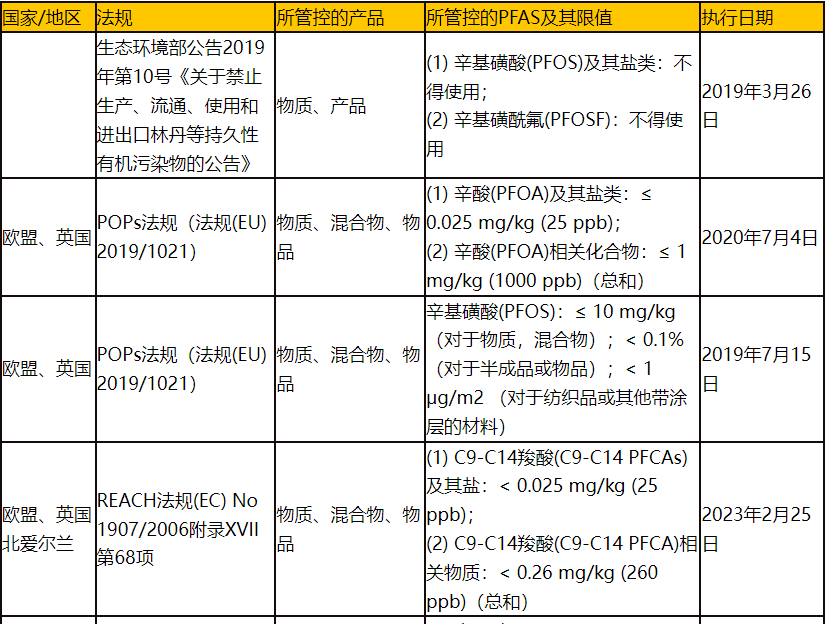
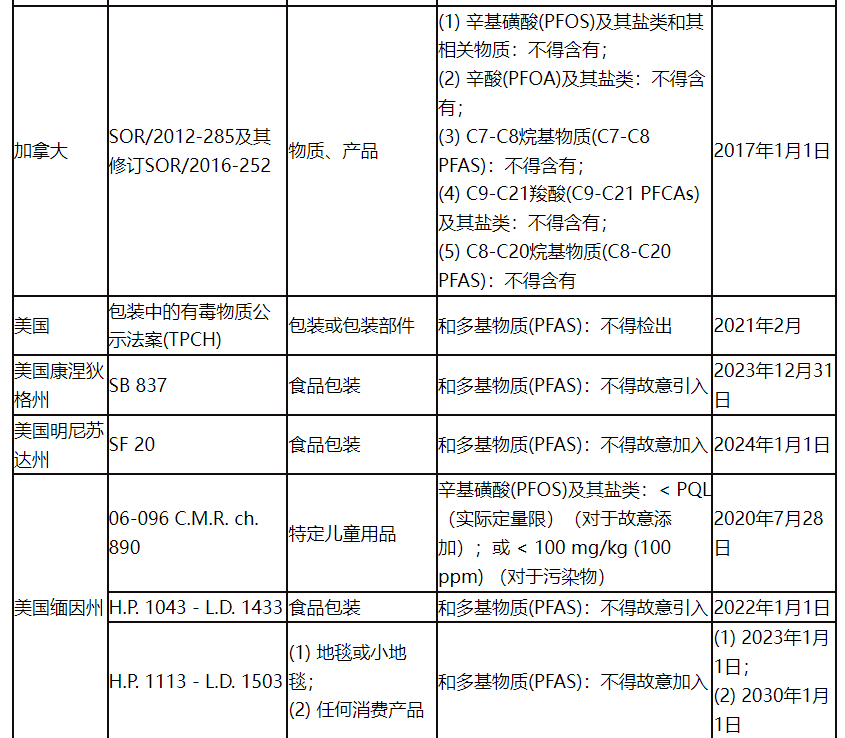
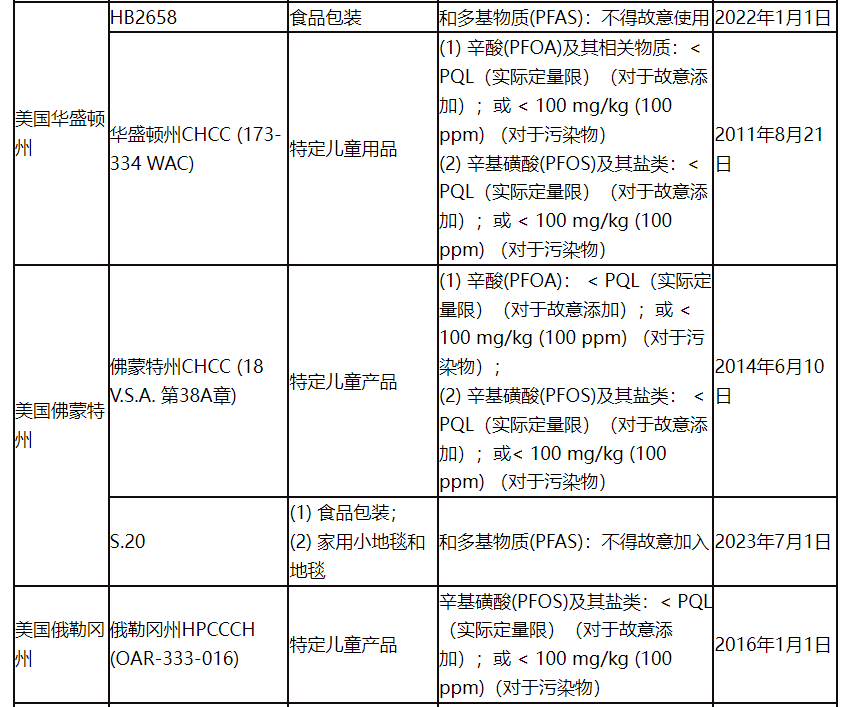
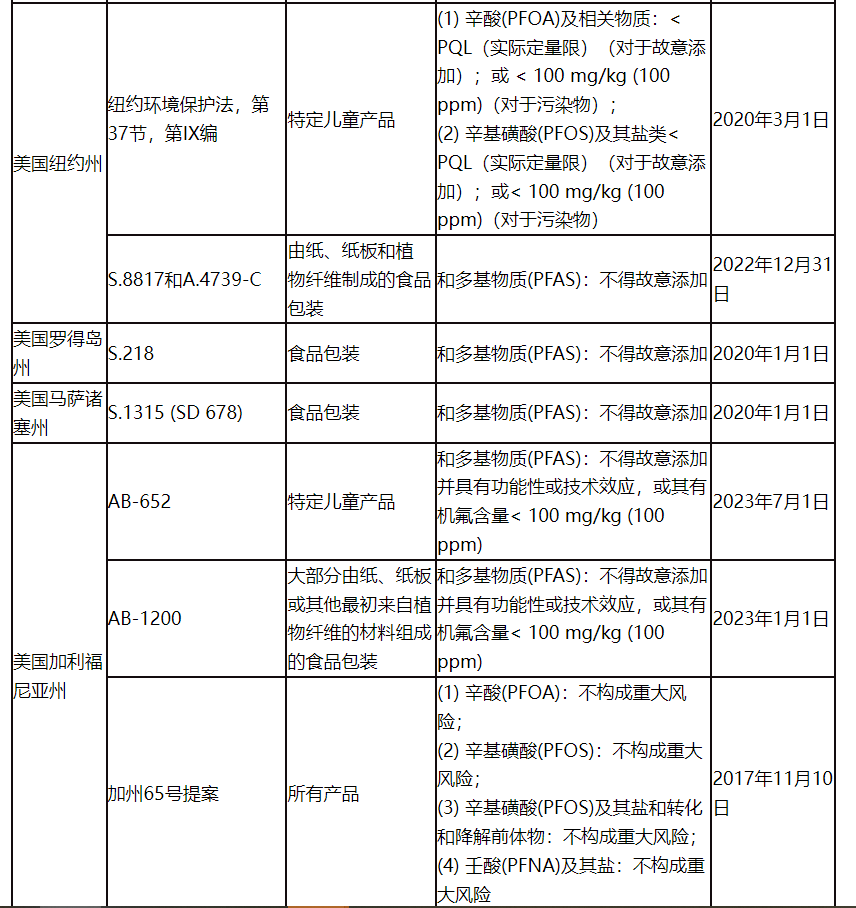
Regulatory Requirements for PFAS in Various Regions

Inspection Cycle
5 business days
Sample Quantity:
10g and up per material