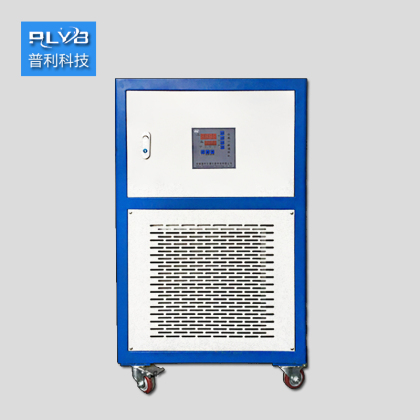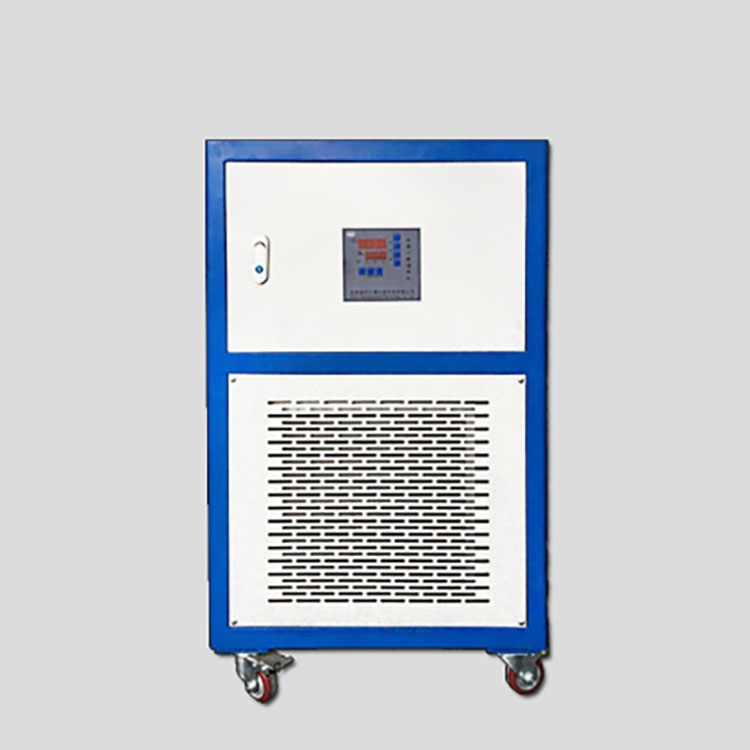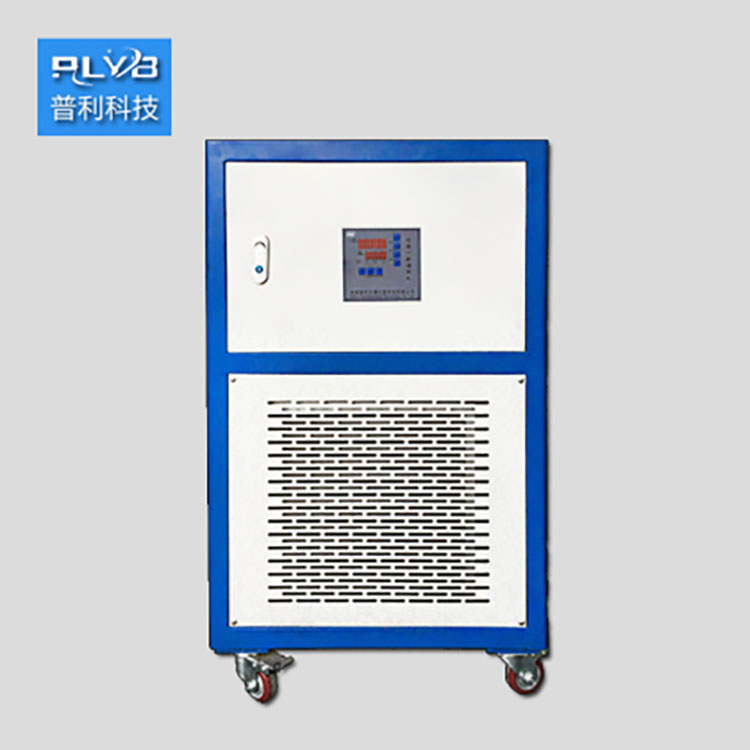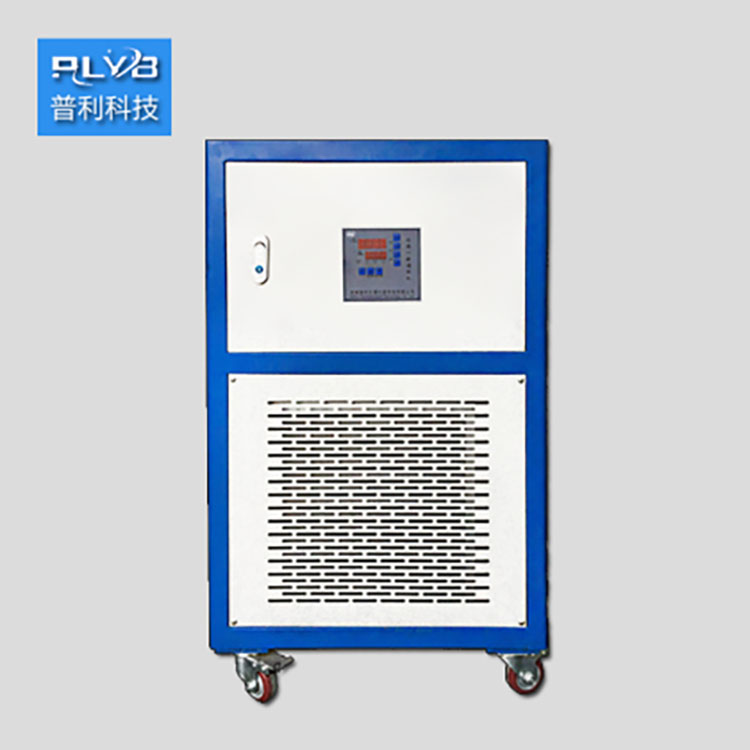

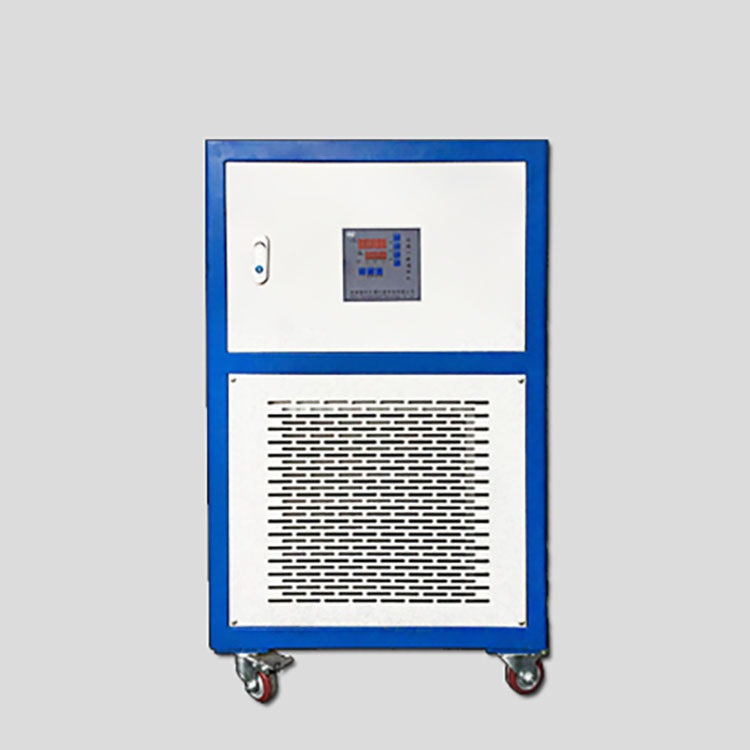

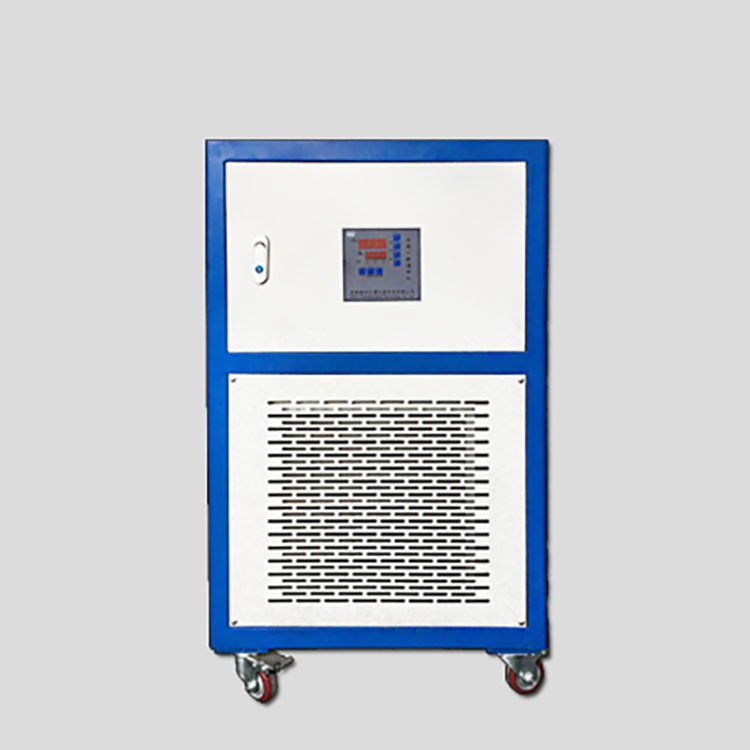

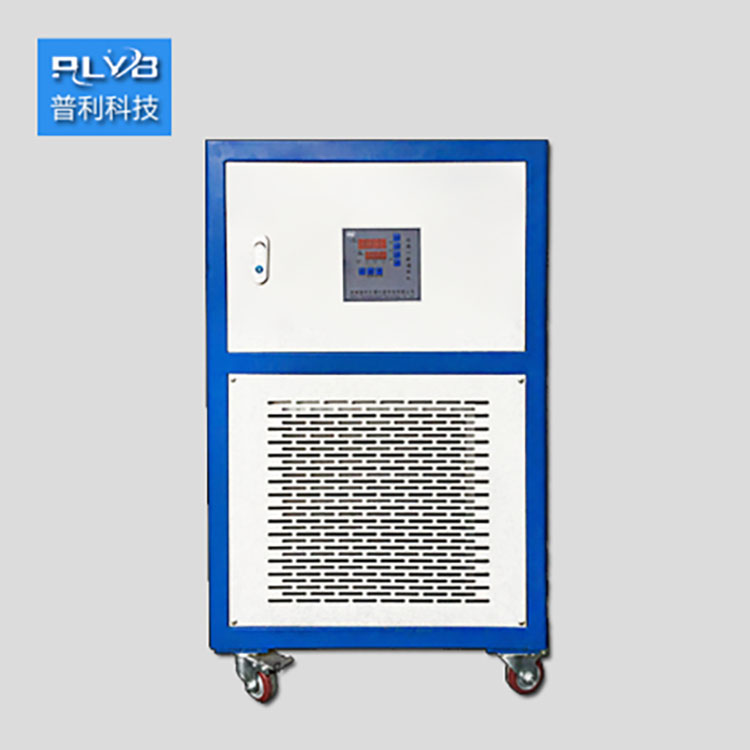









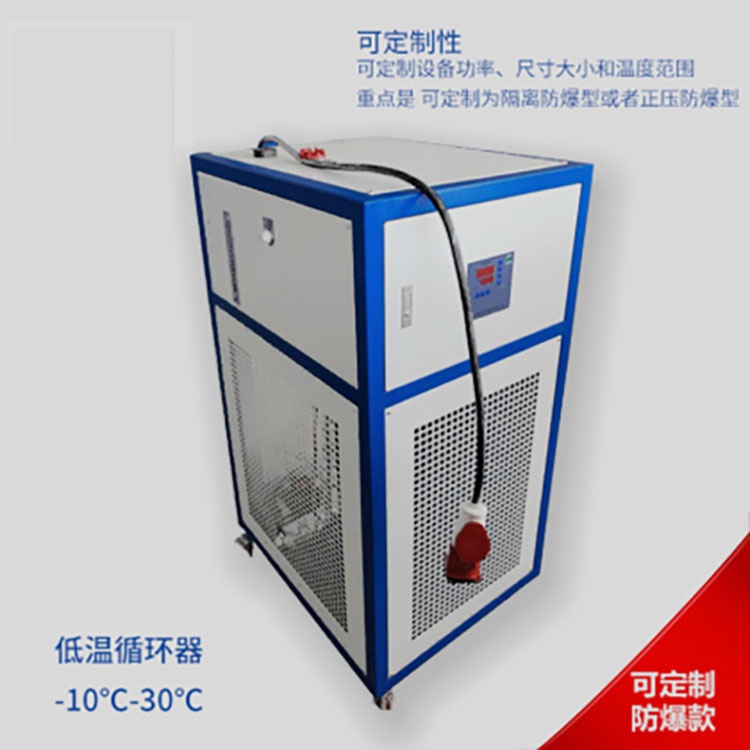
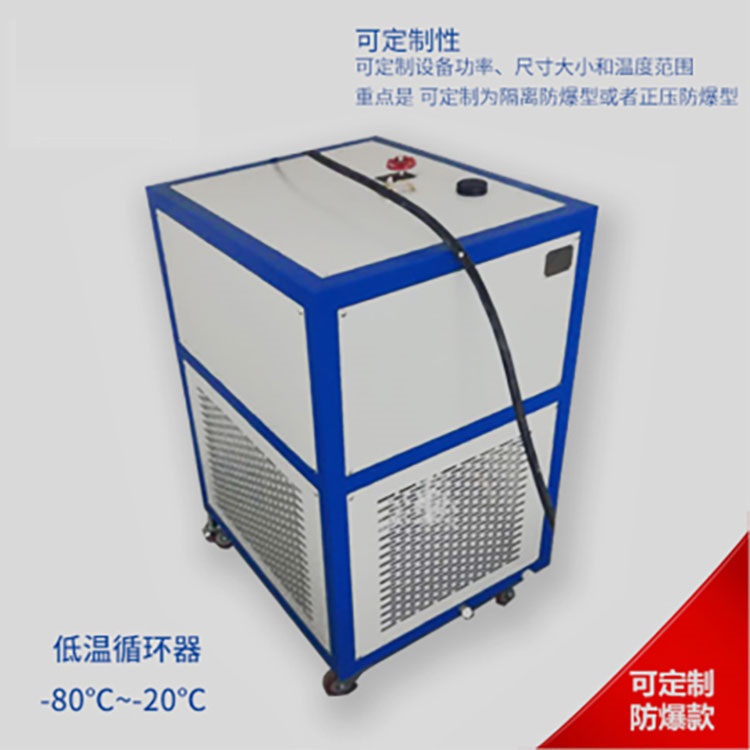
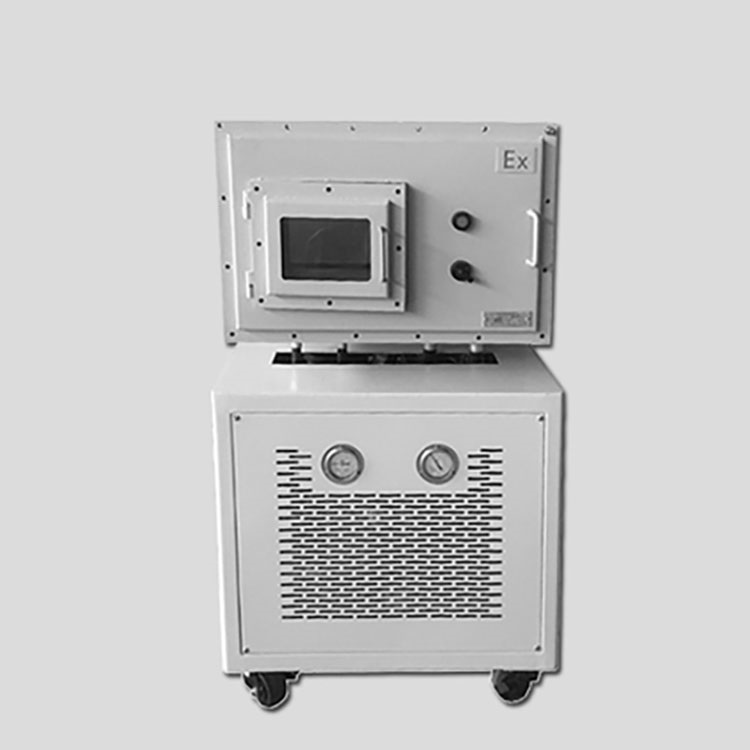
Product Overview: High and Low Temperature Cycling Equipment
The entire liquid circulation is sealed, equipped with an expansion vessel. The expansion vessel and the liquid circulation are insulated and do not participate in the liquid circulation; they are merely mechanically connected. The medium in the expansion vessel remains below 60 degrees Celsius, regardless of whether the liquid circulation is at high or low temperatures. The entire liquid circulation is a closed system, without water vapor absorption at low temperatures and without oil mist generation at high temperatures, allowing the thermal oil to operate over a wide temperature range. No mechanical or electronic valves are used in the entire circulation system.
Product Features:
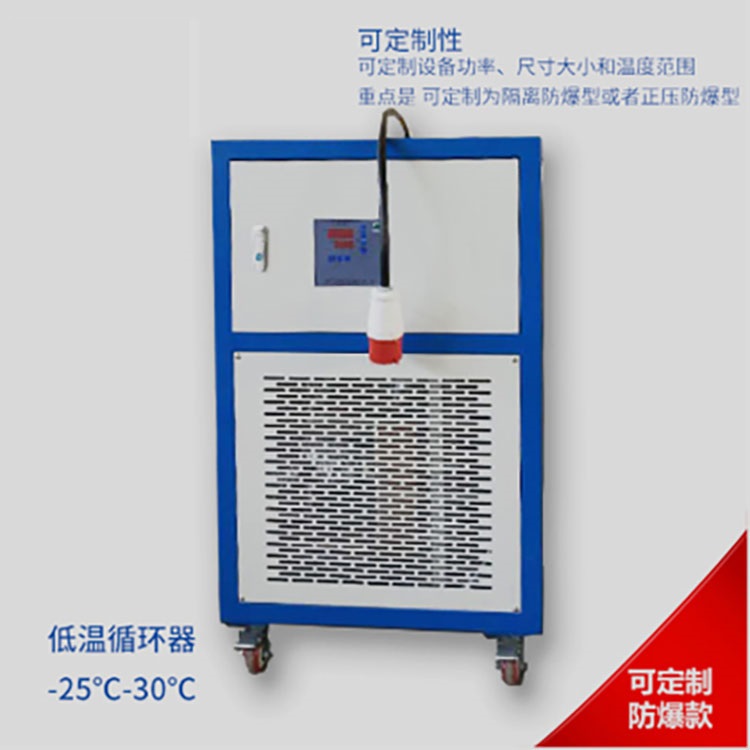
Wide working temperature range with heating and cooling functions; temperature range of this circulator: -20℃ to 200℃, customizable temperature control range.
Controller with LED display, capable of simultaneously showing set temperature, actual temperature, and over-temperature alarm value.
Fast, simple refilling.
Ensure rapid cooling under high temperatures; capable of continuous temperature control from 200°C to -20°C.
Closed-loop management ensures full-sealed treatment with no oil mist or water absorption, guaranteeing the safety of the experiment and the longevity of the thermal conductive fluid.
Refrigeration unit with Gullen USA compressor and circulating pump, offering stable performance and reliable quality.
Features self-diagnostic function; overload protection for the refrigerator; multiple safety functions including high-pressure pressure switch, overload relay, and thermal protection device.
Maintain the temperature of the thermal conductive medium, using the same thermal conductive medium throughout the entire cooling process.
High lift design for long-distance transfer of heat-conducting medium.
Features:
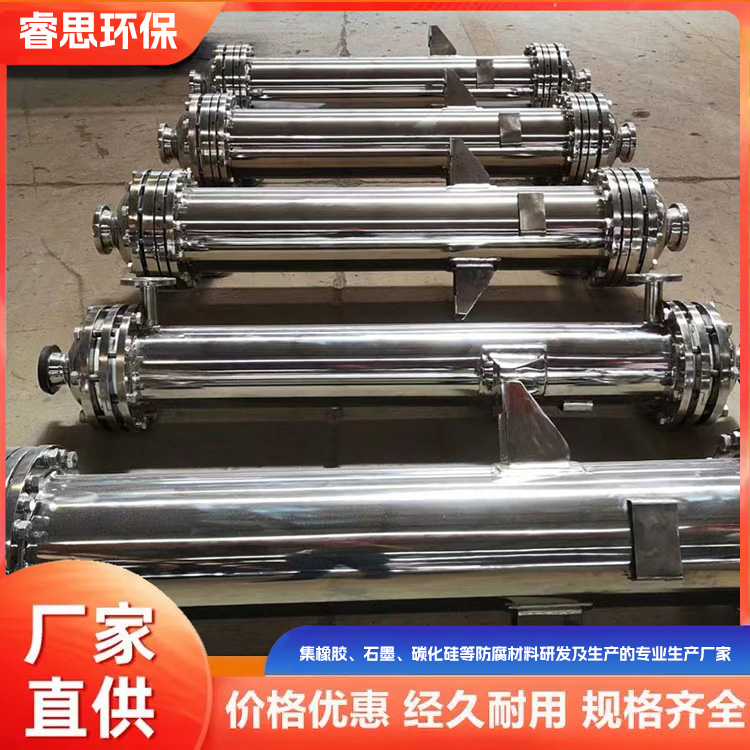
1、High/Low Temperature Cycling UnitUtilizing wavy plate heat exchangers, offering a large heat exchange area and rapid heat exchange speed.
2. Sealed complete liquid circulation: No oil mist volatilization at high temperatures, heat transfer oil is not oxidized or darkened; no absorption of moisture from the air at low temperatures, extending the life of the heat transfer oil and reducing operating costs.
3. Precisely controlling the temperature of chemical reactions is the first choice for safely managing exothermic reactions.
4. The equipment employs PID intelligent control, automatically adjusting the power output according to the chemical process, accurately controlling the temperature during the reaction process, and meeting the requirements of the reaction technology for temperature changes.
5. Customized recirculating pumps offering the highest flow rates, producing the lowest pressure and heat, achieving the highest heat exchange efficiency, the lowest system resistance, the smallest pump system heat, and the lowest energy consumption of the system.
6. Standard model features PLC control and a more user-friendly interface (human-machine interface), with simple operation. It can display the set temperature, outlet temperature, and temperature change curve inside the kettle during the working process, enabling multi-segment temperature programming for the program.
7. Standard models can set the maximum temperature difference between the reactor body and jacket according to the safety requirements provided by the reactor manufacturer. If the temperature difference between the inside and outside reaches the manufacturer's required safety limit, the equipment will automatically shut down and issue an alarm, ensuring that the reactor will not crack due to excessive temperature difference.
High and Low Temperature Cycling DevicePreparation Before Use
1. Use: First, open the wooden crate and install the in/out liquid valves onto the in-liquid port. (Note: The machine is marked with in/out liquid ports, the valves are stopcocks, the fluid flow has a direction, and the direction is indicated on the valve.)
2. Connect the valves and reactors with hoses, ensuring the reactor's inlet and outlet are positioned below and above, respectively, to maintain the reactor filled with liquid at all times.
3. Open the liquid filling hole of the high and low temperature tank, add the medium into the machine, turn on the machine's circulation switch, and allow the liquid to circulate throughout the system. (Note: Be sure to exhaust the air in the system.)
Cooling medium should meet the operating conditions (i.e., not freeze under low temperatures and not boil under high temperatures).
High/Low Temperature Cycling UnitUsage Instructions:
Thermal Conductive Synthetic Oil and Power Connection Added
1. Connect the equipment's recirculation outlet to the reactor's inlet, and the equipment's recirculation inlet to the reactor's outlet. This makes the system an enclosed recirculation system.
2. Connect the power source properly.
3. Open the cover of the liquid filling tank, add heat-conducting oil to the expansion level; open the exhaust valve, turn on the power, press the circulation button, and start adding heat-conducting oil to the system. Continue until liquid overflows from the exhaust port. (At this point, most of the air in the system has been expelled.)
4. After filling, the liquid level in the expansion tank must be at the fixed level at 25 degrees, and cannot exceed or fall below the calibrated level. (Exhaust valve closed.)
Power switch: First turn on the power switch according to the work requirements.
Heating Switch: Turns the heating switch on or off based on the set temperature value. (Must be on during the heating or constant temperature phase.)
Refrigeration/Pre-cooling Switch: Turns the refrigeration switch on or off based on the set temperature value. (This switch should be turned off if not in the cooling phase and the measured temperature is greater than 70.)
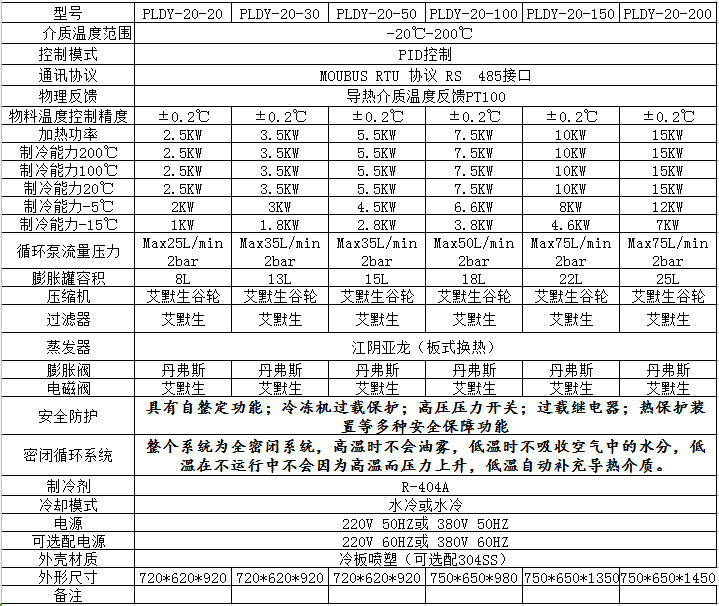
Product Specifications