







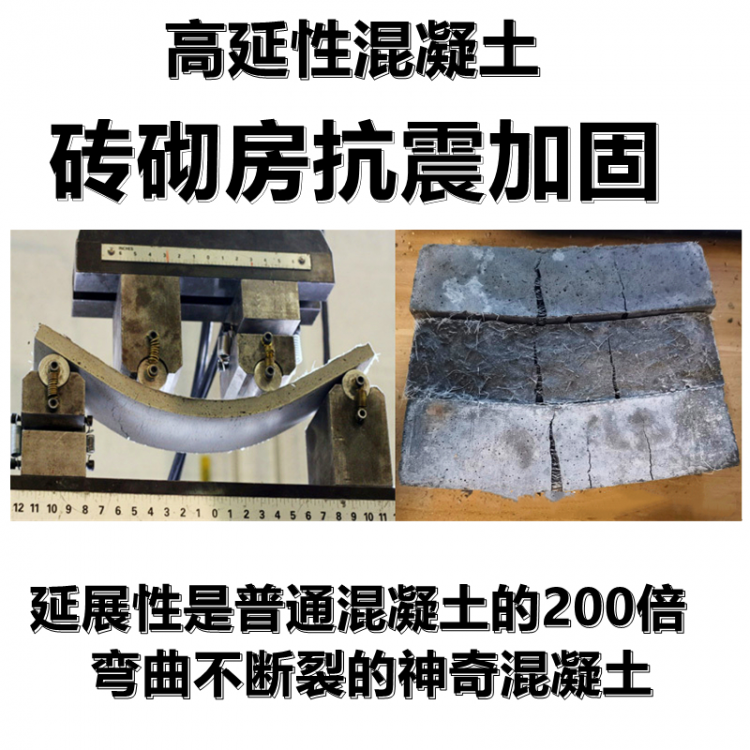


High-strength polymer mortar is a one-component polymer repair mortar specifically developed for the surface repair of high-grade concrete structures. It combines the high strength characteristics of inorganic cementitious repair mortars with the excellent properties of polymer mortars, such as flexibility, adhesion, and crack resistance. It is particularly suitable for repairing surface defects on C50 and above box girders for high-speed railway passenger lines and C55 and above track slabs.
I. Product Features
High strength, with a final compressive strength of over 60MPa, fully meets the surface repair requirements for C50~60 concrete.
2. Strong adhesion to existing concrete surfaces. When used in combination with the primer, the mortar's tensile bond strength is ≥3.0Mpa, capable of causing concrete surface failure.
3. Excellent waterproof, anti-seepage, and weather resistance performance.
4. Suitable for construction on damp substrates and in humid conditions, capable of local emergency repairs under continuous operation.
5. Environmentally friendly, free of volatile harmful substances.
II. Performance Specifications
Compressive strength
1d(Mpa)
Flexural strength 1d (Mpa)
Compressive Strength 28d (Mpa)
Flexural strength 28d (MPa)
Leakage resistance strength 28d (MPa)
Tensile adhesion strength of 28d (MPa) when paired with the primer
≥30
≥4
≥60
≥8.0
≥1.5
≥2.5
Section 3: Performance Specifications Description
Compression and bending strength
Considering the design strength of concrete for prestressed box girder in high-speed railway construction is C50 (actual strength ≥60Mpa), and the design strength of concrete for track slab is C55~60 (actual strength also ≥60Mpa).
2. Tensile bond strength
The patching mortar contains solid colloidal powder, hence its tensile bond strength is approximately 1.5 Mpa. Considering the actual requirements for high-speed rail patching mortar, when used in conjunction with a special primer, the tensile bond strength can reach above 2.5 Mpa. The internal control standard for this product is ≥2.5 Mpa.
4. Usage Instructions
Clean defects on the surface of the box girder and track slab, remove spalling, loose, honeycomb, and corroded concrete, and rinse clean with clear water.
2. Add water and mix. The water content should be 13~15% (by weight) and mix mechanically for 3-5 minutes (slow speed).
3. Special-purpose primer for coating. Apply a layer of the special-purpose primer (in a milky liquid form) to the patched surface. Use a brush to apply the primer horizontally and vertically, typically covering 3-5 square meters per kilogram of primer.
4. Immediately apply the mixed patching mortar with a trowel after brushing the interface agent onto the repair surface, pressing it firmly.
Typical repair layer thickness should not exceed 30mm, with a recommended thickness of no more than 10mm per application. Allow the surface layer to dry before proceeding to the next step. Custom high-strength polymer self-leveling mortar can also be mixed according to customer specifications.
5. After repair, moist-cure the exposed mortar surface for 7 days (refer to concrete curing procedures), then transition to dry curing for 21 days to achieve the designed strength.
V. Cautionary Notes
Polymer mortar is mixed and used immediately. Construction in low-temperature environments can incorporate winter construction methods for the relevant mortar.
Store in a cool, dry place; shelf life 6 months.

WeChat Official Account

Scan to follow Official Account













