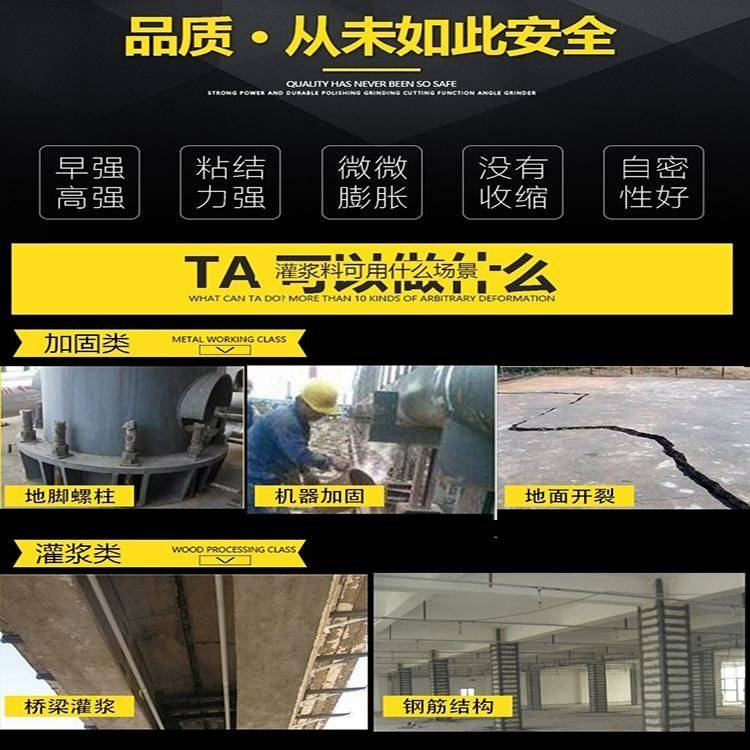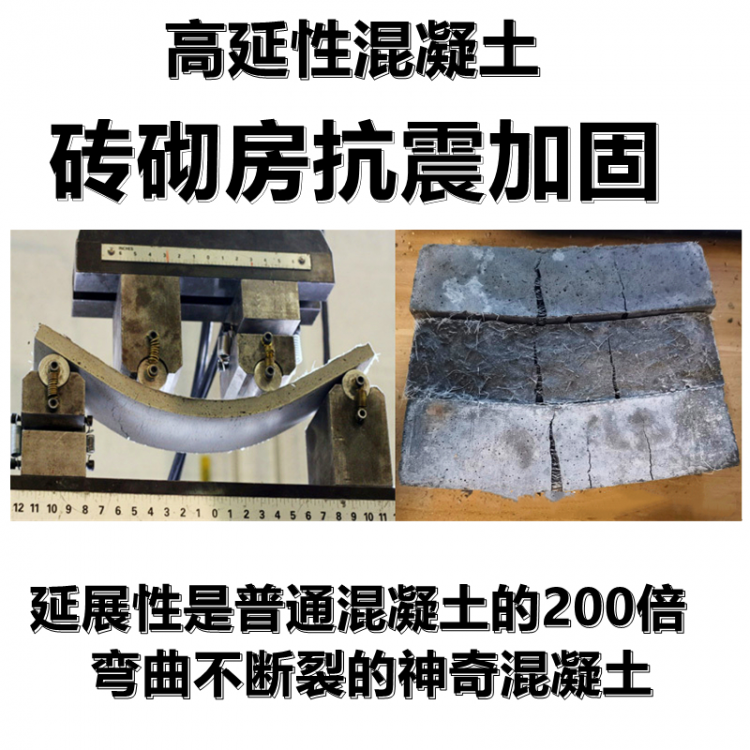


Grouting materials are primarily used for emergency repairs of airport runways, reinforcement of road and bridge projects, structural steel foundation connections, embedded reinforcement, concrete structure reinforcement and renovation, crack treatment of old concrete structures, equipment and machinery installation, building reinforcement, foundation engineering consolidation, and various emergency repair projects.
Grout material offers reliable quality in construction, cost reduction, shortened project duration, and ease of use. It is used as construction material on construction sites, with notable characteristics and prominent advantages, making it a popular choice for many companies.
Grouting material application method:
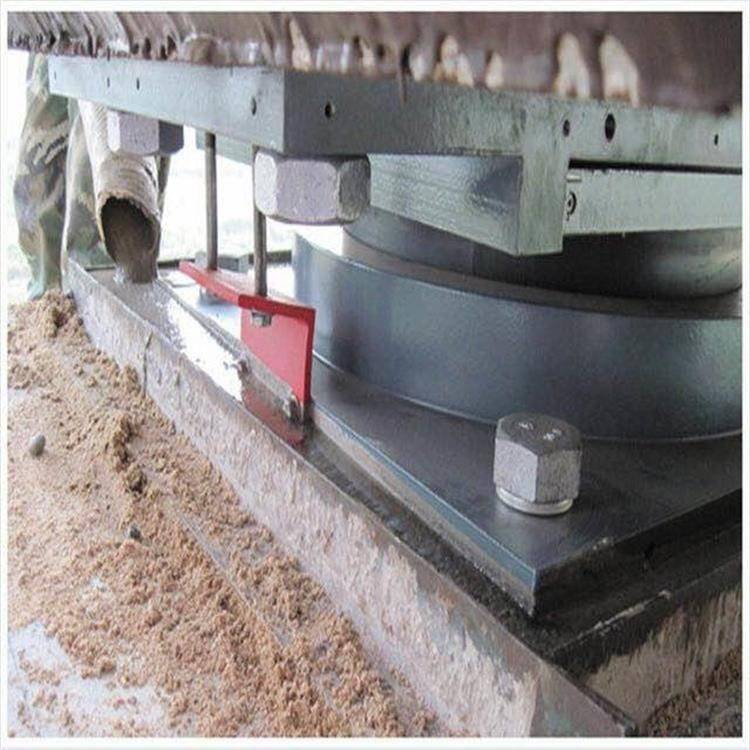
1. Prior to grouting, prepare mixers, grouting equipment, molds, and maintenance materials. Clean the surface of the equipment foundation, ensuring no debris such as gravel, excess mortar, dust, oil stains, or release agents. The equipment foundation surface should be adequately moistened 24 hours before grouting. One hour before grouting, remove any accumulated water.
2. During the secondary grouting, the horizontal distance between the mold and the equipment base should be kept around 100mm; the mold top elevation should not be less than 50mm above the equipment base surface.
3. During the reinforcement of concrete structures, formwork support should leave sufficient grouting holes and vent holes. The diameter of the grouting holes should not be less than 50mm, and the spacing should not exceed 1000mm.
4. When mixing cement-based grouting materials, add water according to the product's required amount. It is recommended to use mechanical mixing. Initially, add 2/3 of the water and mix for about 3 minutes, then add the remaining water and mix until uniform. The mixing location should be close to the grouting site.

Section II: Application Scope
Grouting of dam body and foundation cracks in hydraulic engineering projects.
2. Inject underground waterproof curtains to intercept water sources of infiltration, achieving overall anti-seepage and leakage blocking.
3. Reinforce and enhance the mechanical strength of soft soil and rock, repair concrete structures, and restore their integrity.
4. Correct cracking and tilting in dams and high-rise buildings caused by uneven settlement due to unstable strata.
5. Grouting reinforcement for subsidence under highways, bridges, airport runways, etc.
6. Pre-treatment for excavation of various underground structures, and engineering services such as hole protection and wall stabilization, and prevention of water inrush and leakage during geological drilling in complex stratified formations.
7. Sand stabilization in complex stratified layers and consolidation of clayey soil layers.
III. Technical Specifications
1. The physical properties of the casting material (measured at 21°C) allow for the production of ultra-fine cement grout according to specific customer requirements.
2. The strength ratio of the paste of grouting material under different water-cement ratios. Just like cement, the fluidity and permeability of the grouting material increase with the increase of the water-cement ratio, but the setting time extends and the strength decreases with the increase of the water-cement ratio. Therefore, under the premise of meeting construction requirements, the water-cement ratio should be minimized as much as possible.
Section 4: Packaging and Storage
Packaged in plastic woven bags, net weight 25 kg per bag, shelf life 6 months.
Store in a dry, well-ventilated room; keep bags sealed to prevent moisture and freezing.
V. Usage Instructions
1. For different gap sizes, soil and geological conditions, grouting foundation requirements, and strength specifications, determine the appropriate water-cement ratio (typically ranging from 0.5 to 4.0 for grout materials). Mix with an electric mixer until uniform, then pour the slurry into the grouting bucket.
2. Connect and secure the feeding nozzle of the grouting machine to the grouting nozzle that has been pre-mounted on the foundation. Power on the grouting machine, open the valve to start grouting. Maintain the grouting pressure within a specific range (usually between 0.1-0.5 MPa). The required grouting pressure varies depending on the foundation conditions and water-cement ratios. Excessive pressure may cause cracking in the grout, preventing even penetration. Insufficient pressure will not allow penetration into fine spaces.
3. Seal the grouting holes after the grouting is completed.
4. For larger grouting areas, segmented grouting can be employed.
Six: Cautionary Notes
The material must be blended with a high-speed mixer (1500 rpm) for at least 5 minutes. During the pouring process, a low-speed mixer should also be used to prevent settlement.
2. Super-fine cement grouting material is a grouting material based on cement. During use, it is necessary to wear gloves, protective eyewear, and dust masks, and to wear a work uniform to prevent eye and skin burns. If accidentally splashed into the eyes, please rinse thoroughly with plenty of water and consult a doctor; if accidentally ingested, drink plenty of water immediately and consult a doctor.