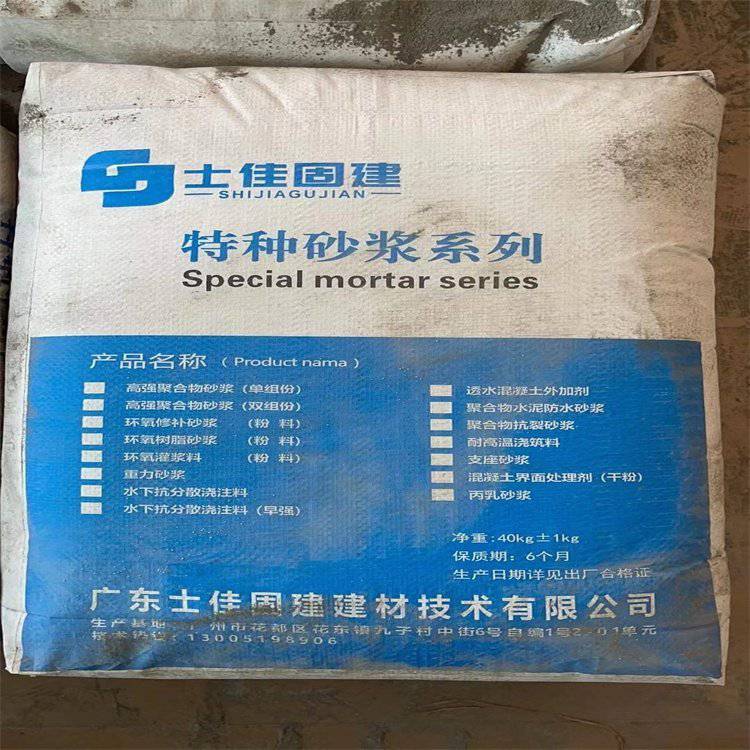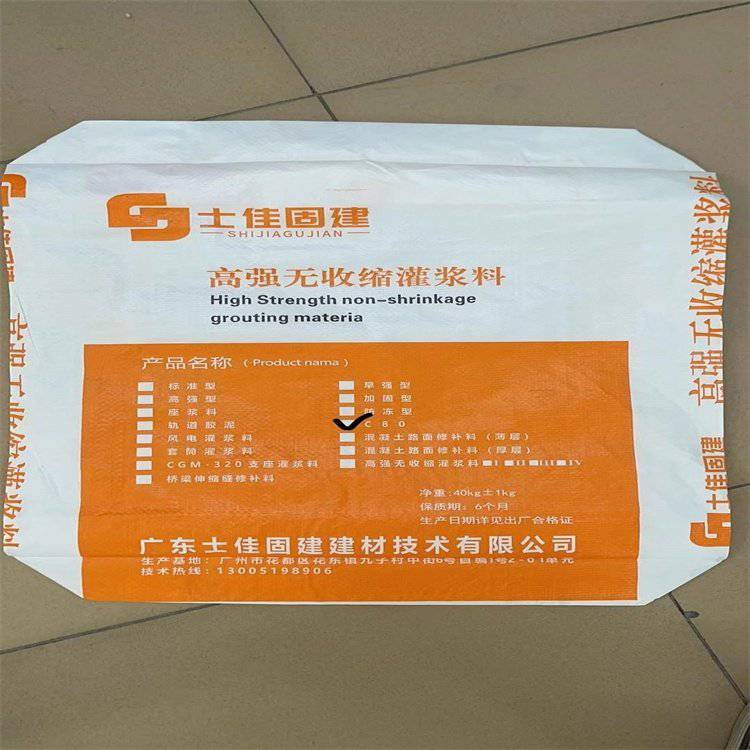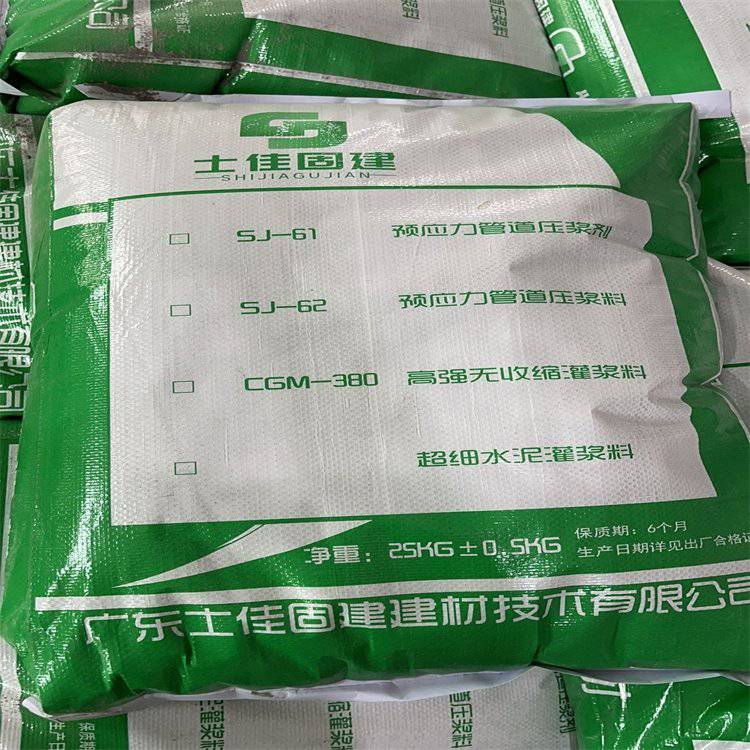


Key Products: CGM High-Strength Non-Shrink Grouting Series (CGM-340, CGM-380), Epoxy Grouting, Epoxy Patching Mortar, CGM-320 Support Grouting, Quick-Fill Gravity Mortar, Anchor Grout, New Bridge Specification Prestressed Pipe Grouting Agent, CGM High-Strength Emergency Repair Material; High-Strength Polymer Mortar, High-Performance Self-Leveling Mortar (Multi-Color), High-Strength Abrasion-Resistant Material, Steel Adhesive, Rebar Adhesive, Steel Encapsulation Grouting, Joint Sealant, Carbon Fiber Adhesive, Dry-Hanging Adhesive; Bonding Agent, Prestressed Pipe Grouting Agent, Abrasion-Resistant Floor Hardener, and Product Master Batch...
CGM High-Strength Non-Shrink Grouting Material
Product Features: 1. Early and high strength: compressive strength of ≥27 MPa in 1 day; ≥40 MPa in 3 days; ≥60 MPa in 28 days.
2. Microexpansive
Ensure tight contact between the equipment and foundation, with no shrinkage after secondary grouting.
3. High fluidity
Fills all voids, meeting the requirements for secondary grouting of equipment.
4. Anti-segregation
Overcame the phenomenon of segregation caused by excessive water addition during on-site use.
5. Crack Resistance
Cracking phenomena during on-site use due to uncertain water addition, fluctuating environmental temperatures, and limitations in maintenance conditions.
6. High durability
After one million fatigue tests and 50 freeze-thaw cycles, there is no significant change in strength. After soaking in engine oil for 30 days, the strength is notably improved.
7. Suitable for winter construction
Outdoor construction is permitted at temperatures as low as -10°C.
Product Application:
1. Used for secondary grouting of equipment foundations.
2. For anchoring foot bolts and embedding rebars.
3. For reinforcing and repairing concrete structures.
Technical Specifications:
Pre-construction preparation
1. Machine Mixing: Concrete mixer or mortar mixer;
2. Manual Stirring: Several mixing tanks and shovels
3. Several buckets.
4. Several weighing scales
5. Chute
6. High-position funnel, grouting tube, and pipe fittings;
7. Grouting Propeller
8. Templates (steel molds, wood molds)
9. Straw bags, rock wool blankets, etc.
10. Cotton yarn, tape;
Grouting construction
Step 1: Basic Processing
The base surface should be roughened. Clean the base surface, free of debris such as gravel, slurry, dust, oil stains, and release agents. The base surface should be thoroughly moistened 24 hours before grouting, and any standing water should be removed 1 hour before grouting.
Step 2: Inspection
1. Set up forms according to the grouting construction drawing. Seal the joints between the forms and the foundation, as well as between the forms themselves, with cement grout and tape to ensure the entire form set is watertight.
2. The horizontal distance around the template and equipment base should be maintained at approximately 100mm for ease of grouting construction.
3. The template top should be elevated 50mm above the equipment base surface.
4. In case of leakage during grouting, it should be addressed promptly.
Step 3: Grout Material Preparation
Generally, mix with water according to a standard of 13-14% for general reinforced type and 9-10% for stone aggregate reinforced type.
2. Recommend using mechanical stirring, which typically takes 1-2 minutes (handheld drill stirrers are strictly prohibited). When stirring manually, first mix with 2/3 of the water for 2 minutes, then add the remaining water and stir until uniform.
3. The mixing quantity should be determined based on the usage amount to ensure the material is used up within 40 minutes.
4. Under no circumstances should any admixture or external additive be mixed with CGM grouting material during on-site use.
Step 4: Grouting Construction Method
1. For longer equipment or track foundations, segmented construction should be employed.
2. Illustrations of Several Common Grouting Methods
3. During the secondary grouting, the following requirements should be met.
① During the secondary grouting process, grouting should be performed from multiple points on one side or adjacent sides until it overflows from the opposite side, to facilitate air exhaust during grouting. Grouting from all four sides simultaneously is not allowed.
② After grouting begins, it must be carried out continuously without interruption, and the grouting time should be minimized as much as possible.
③ Absolutely no vibration is allowed during grouting. If necessary, use a grouting booster to push the CGM grouting material along the bottom of the grouting layer. It is strictly prohibited to push from the middle or upper part of the grouting layer to ensure the homogeneity of the grouting layer.
④ After the equipment foundation grouting is completed, cut a 45-degree angle outward along the equipment edge within 3-6 hours after grouting (refer to the illustration below) to prevent cracks from forming at the free end. If edge cutting is not possible, smooth the surface of the grouting layer with a trowel within 3-6 hours after grouting.
⑤ When the thickness of the grouting layer exceeds 150mm, use reinforced high-strength, non-shrinkage grouting material with pebbles.
⑥ When the amount of equipment foundation grouting is large, the mixing of aggregate reinforced grouting material should be done mechanically to ensure the grouting construction.
Step 5: Maintenance
Within 30 minutes after grouting is complete, cover it immediately with a wet straw cover or rock wool blanket, and maintain its moisture.
2. During winter construction, the maintenance measures should also comply with the relevant provisions of the current "Code for Construction and Acceptance of Reinforced Concrete Engineering" (GB50204).
3. After the grouting material reaches the demolding time, the equipment installation can be carried out. Please refer to the "Demolding and curing time as well as environmental temperature relationship table" for the specific time.
4. After the equipment foundation grouting is completed, if any portions need to be removed, gently scrape them off with a trowel or shovel tool within 3-6 hours after grouting, before the grout hardens.