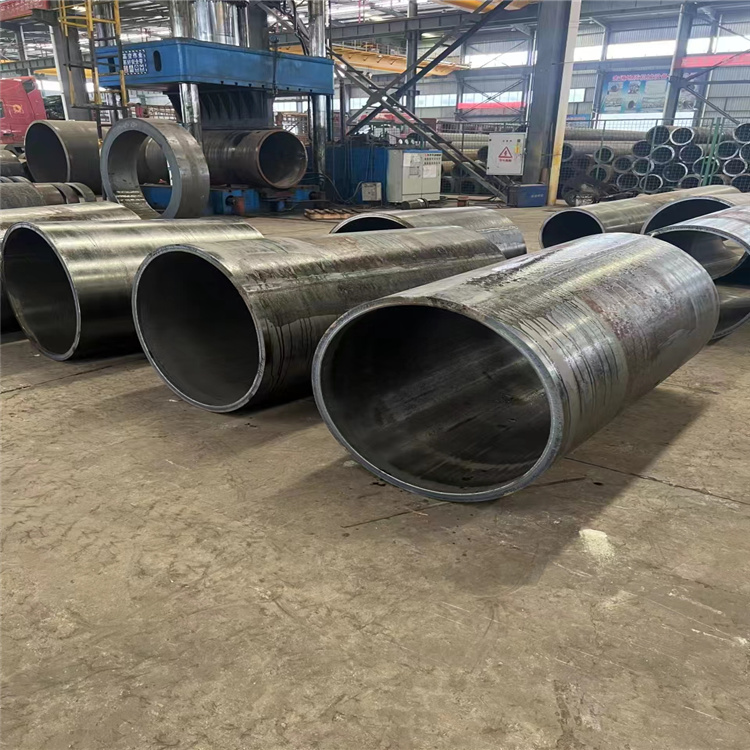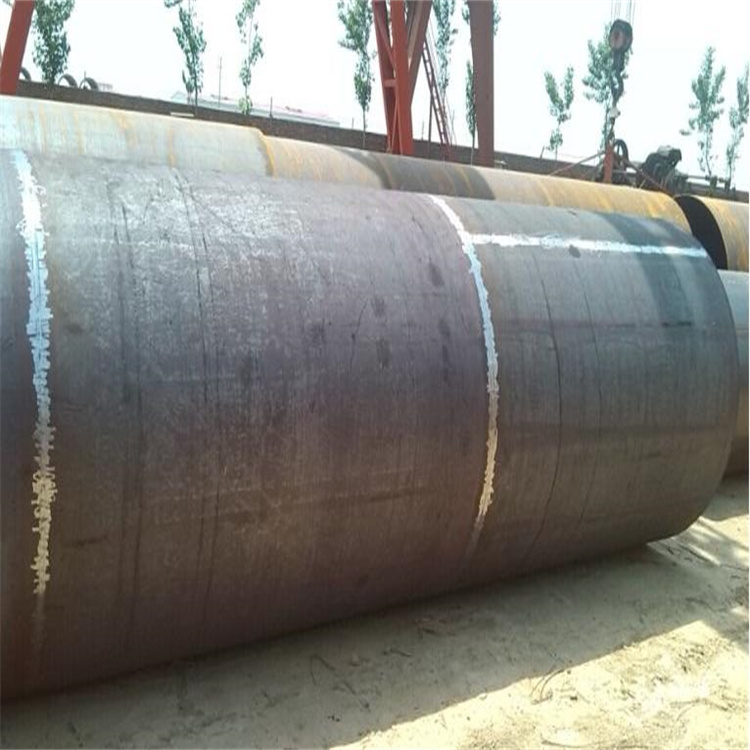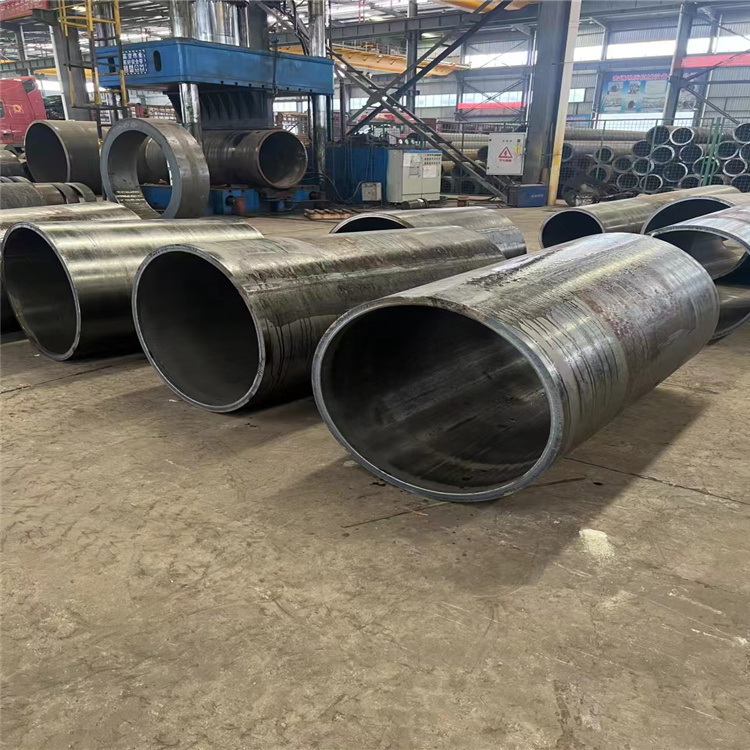

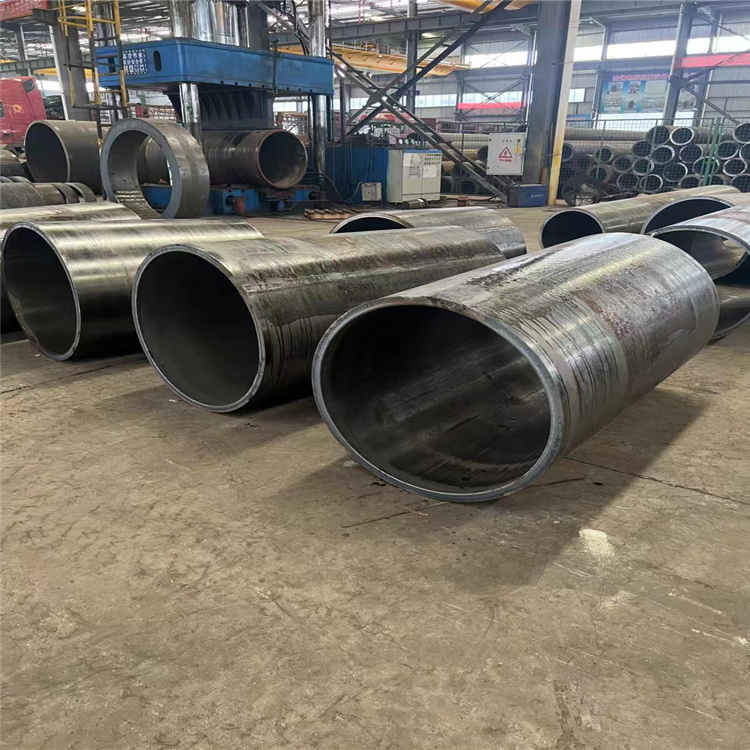
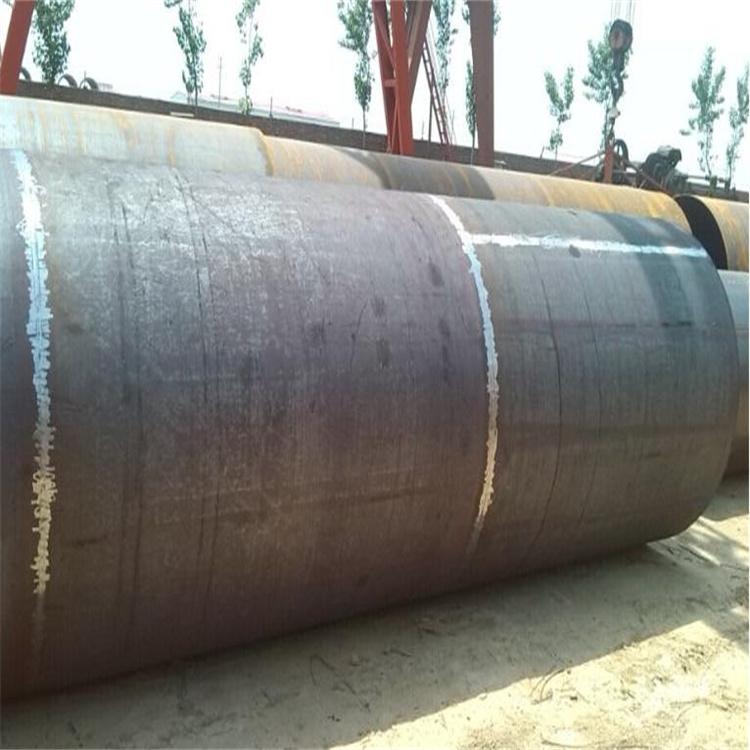
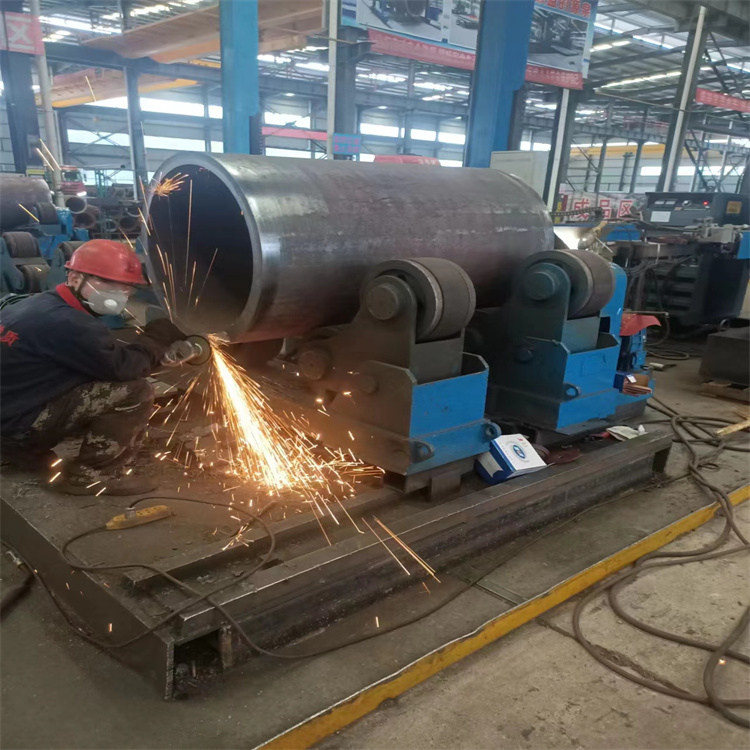











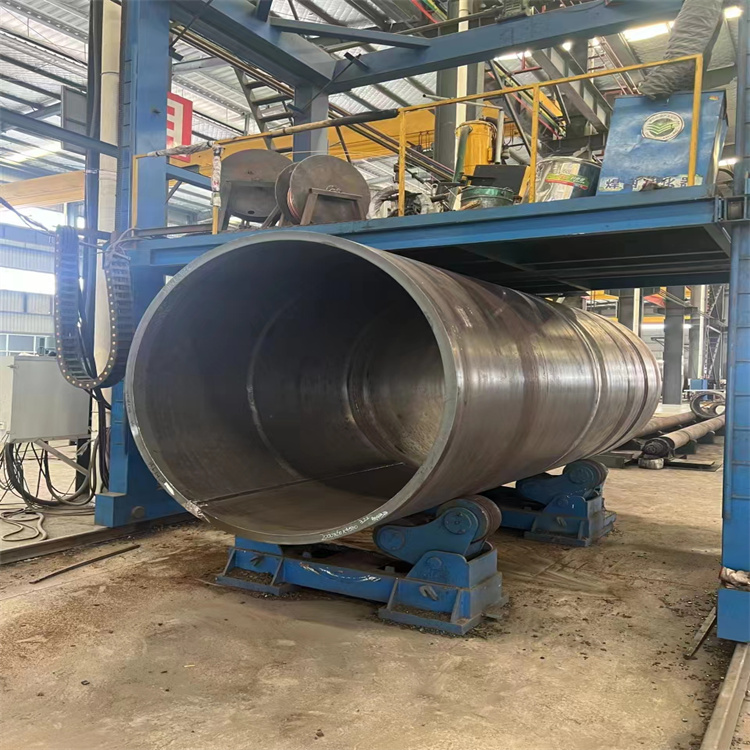
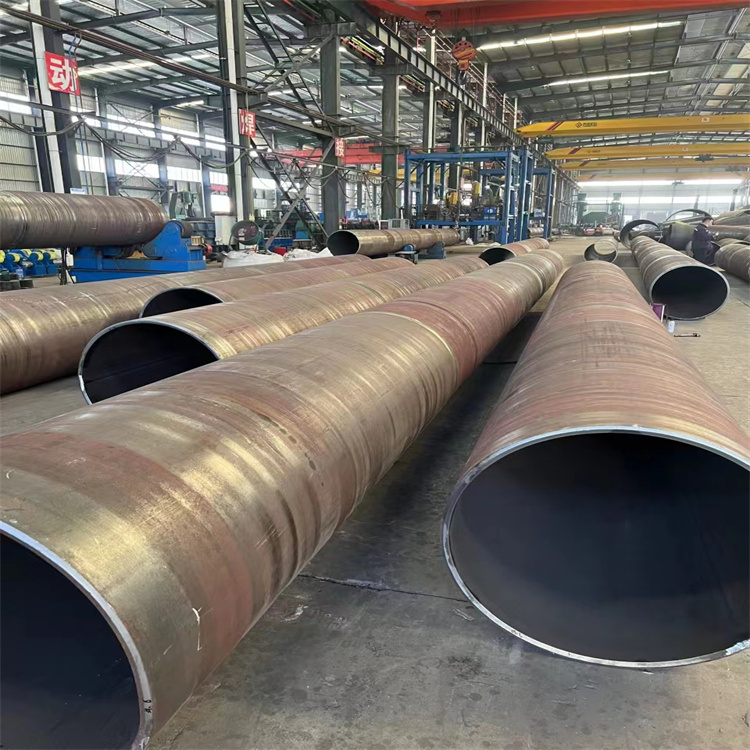
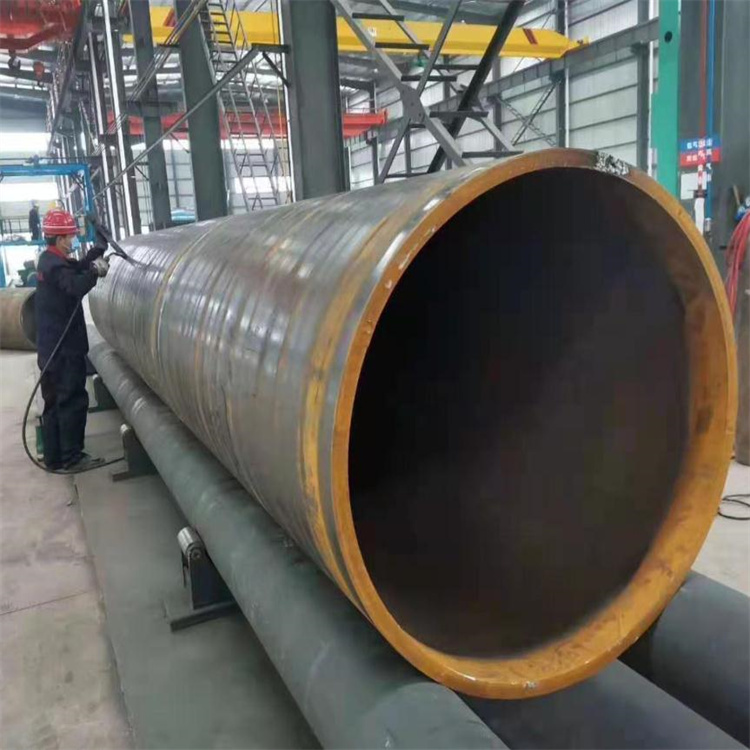
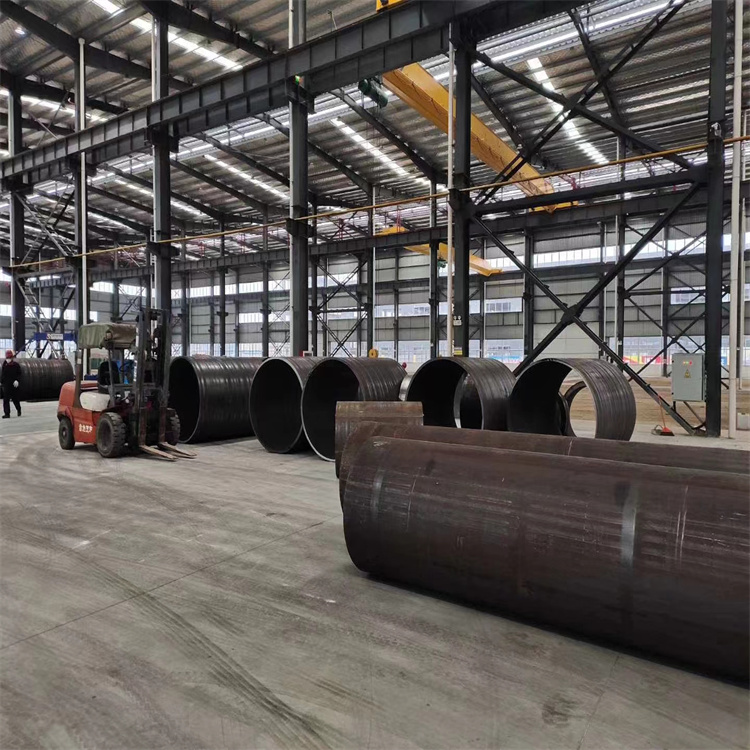
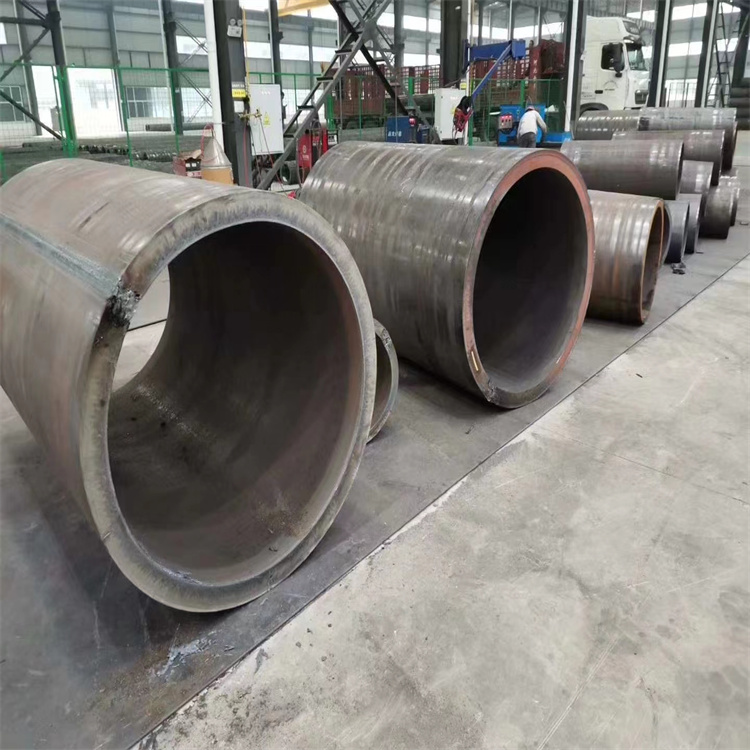
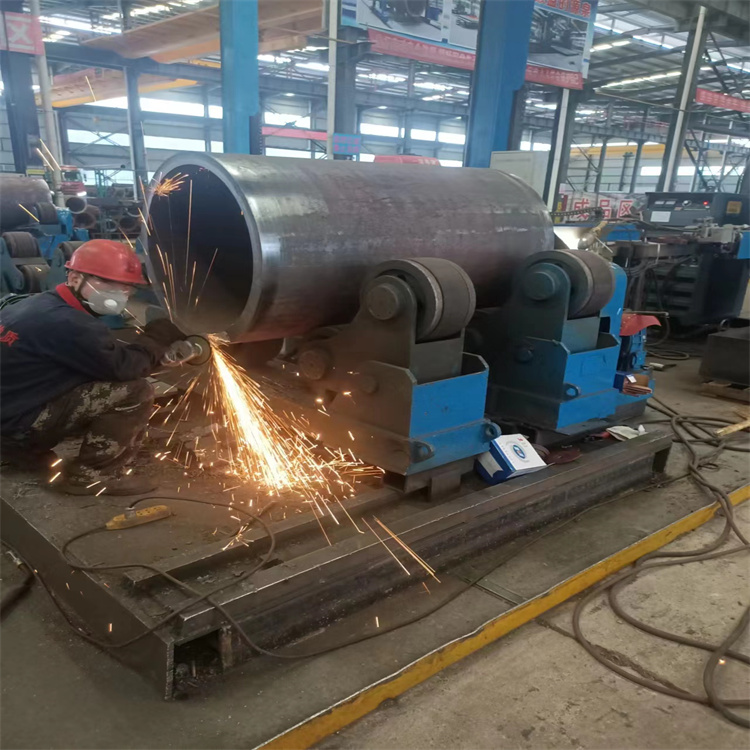
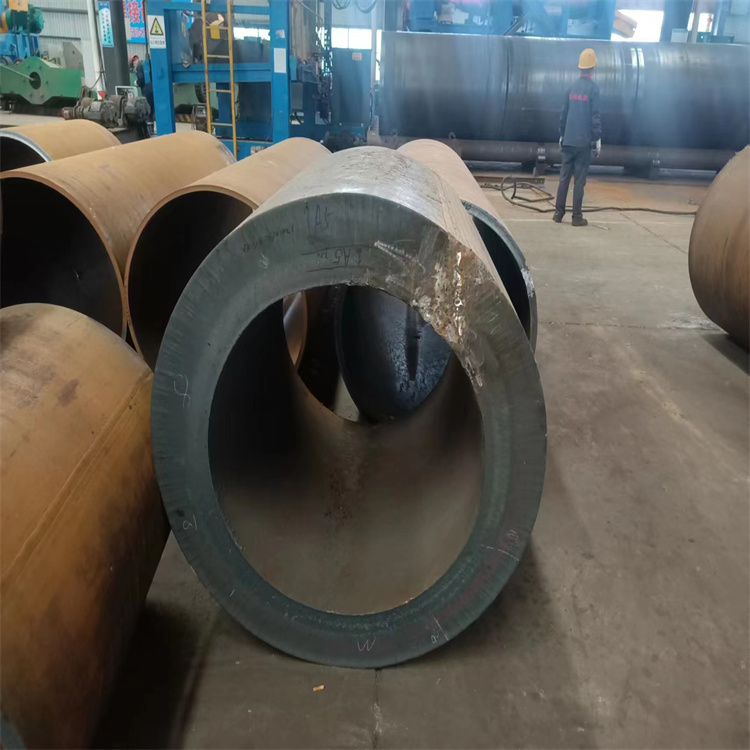
Thick-walled straight seam welded pipe with submerged arc welding process
1. Plate inspection: Upon entering the production line, the steel plate used to manufacture large-diameter electric-resistance-welded straight seam steel pipes undergoes an initial full-panel ultrasonic inspection.
2. Milling Edges: Double-sided milling of the steel plate edges using a milling machine to achieve the required width, parallelism of the edges, and bevel shape.
3. Pre-bent Edges: Use a pre-bending machine to bend the sheet edges to the required curvature.
4. Forming: On the JCO forming machine, first, half of the pre-bent steel plate is pressed into a "J" shape through multiple step-by-step stamping. Then, the other half of the steel plate is bent in the same manner to form a "C" shape, ultimately creating an open "O" shape.
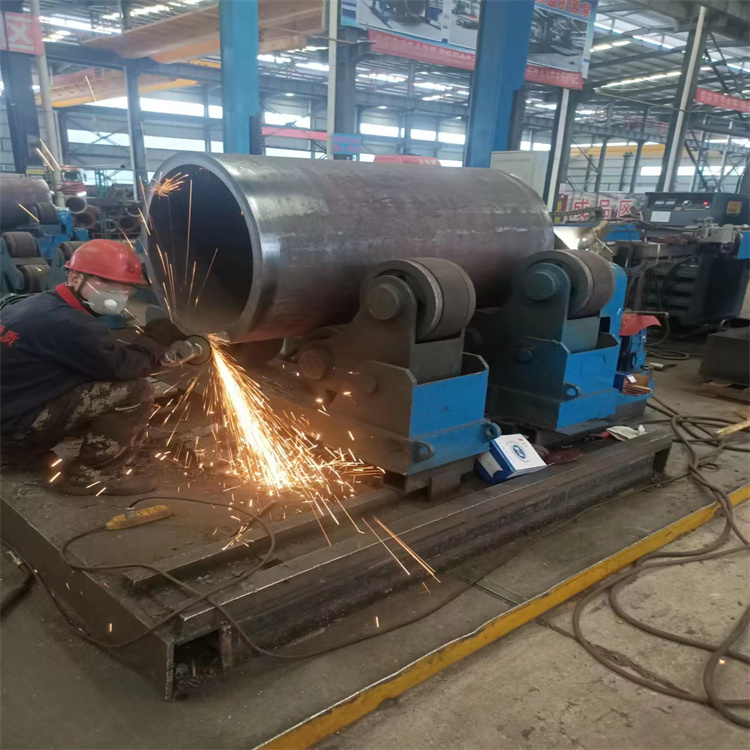
5. Pre-welding: Join the formed thick-walled straight seam pipes and perform continuous welding using gas shielded welding (MAG).
6. Internal Welding: Uses longitudinal multi-wire submerged arc welding (*up to four wires) for welding on the inner side of straight seam steel pipes.
7. External Welding: Welding is performed on the outer side of straight seam submerged arc steel pipes using longitudinal multi-wire submerged arc welding.
8. Ultrasonic Inspection I: Inspection of the inner and outer weld seams of straight seam welded steel pipes, as well as the base materials on both sides of the weld seams.
9. X-ray Inspection I: Industrial TV X-ray examination of internal and external weld seams.