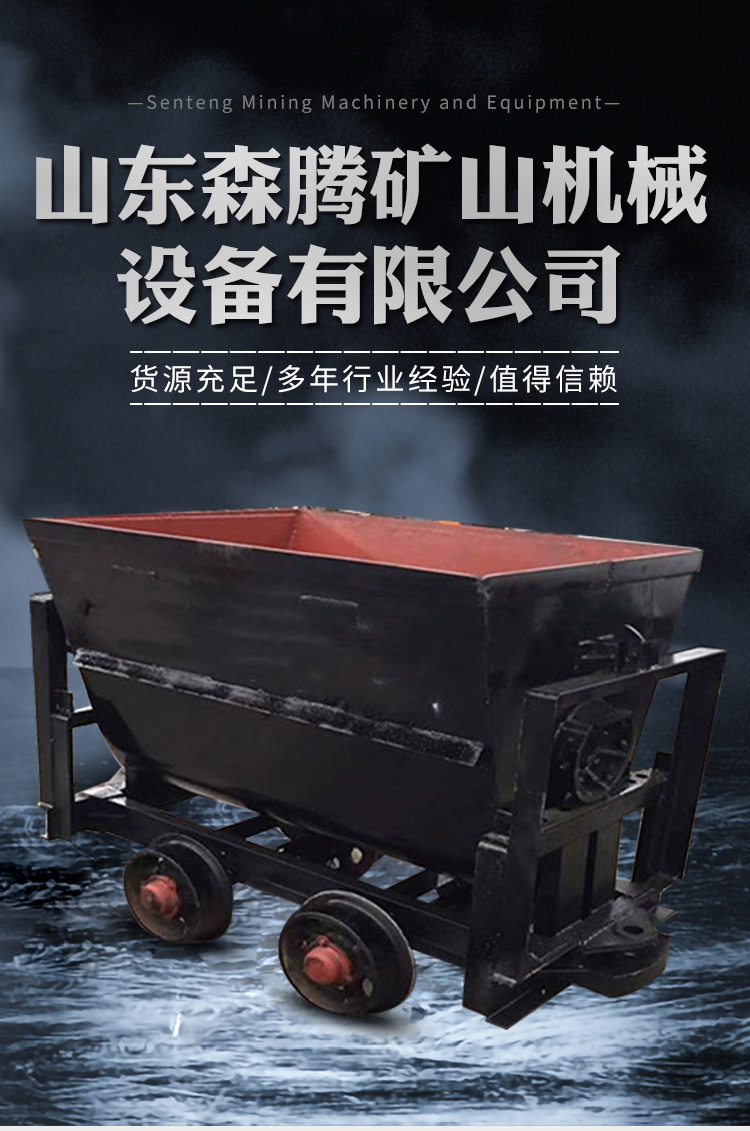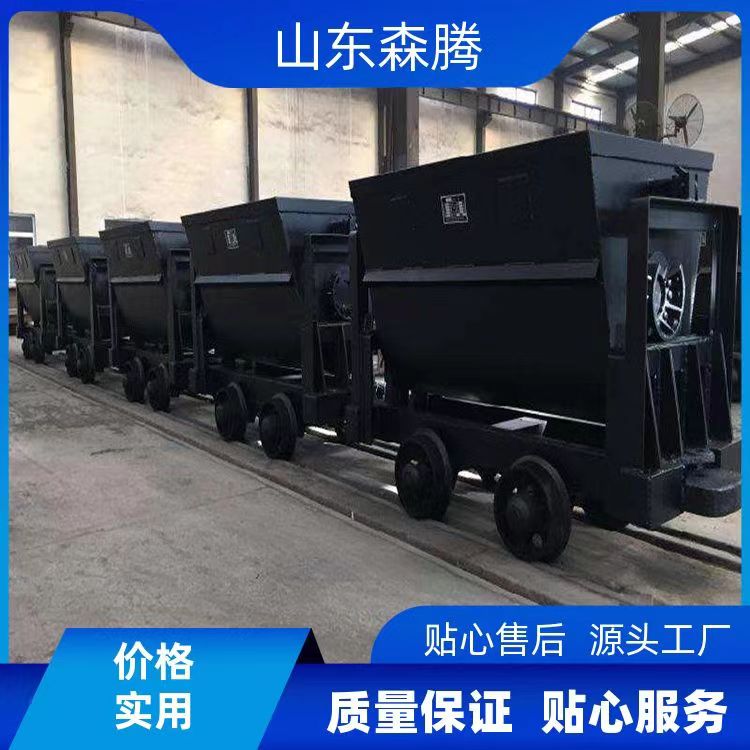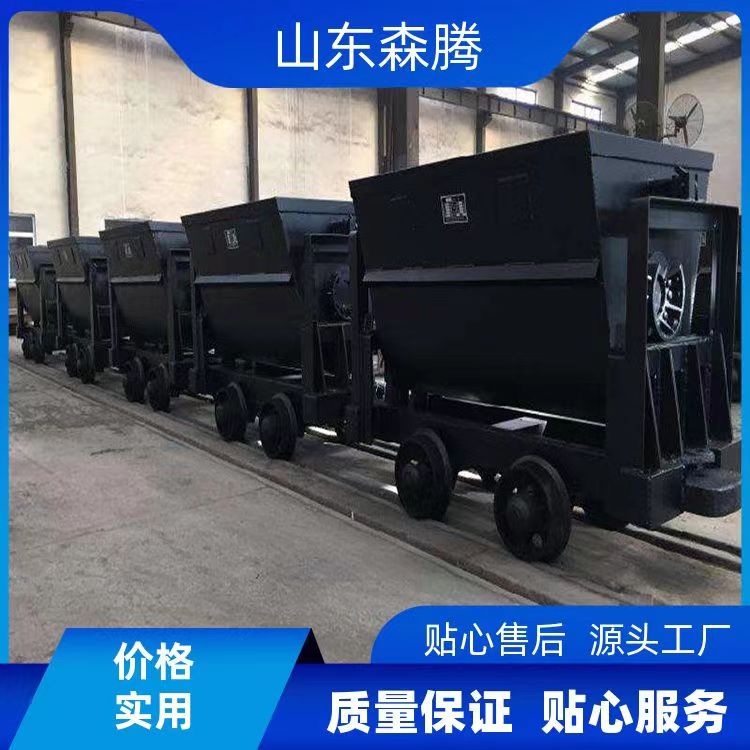


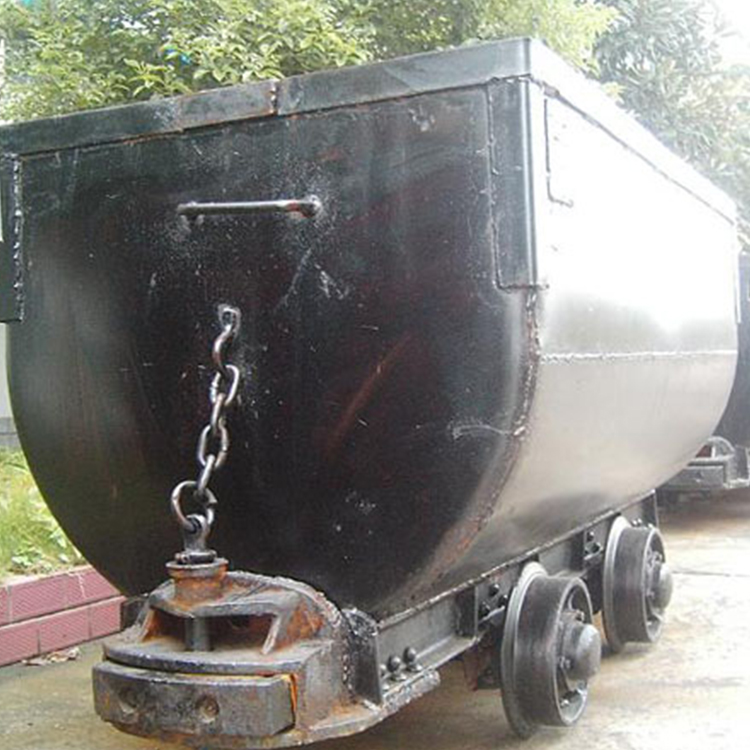














Vehicles for ore track transportation. Compact in size to accommodate the narrow conditions of underground tunnels. Includes trucks, personnel cars, material cars, etc. [1]
Miner cars are narrow-gauge railway vehicles used for transporting loose materials such as coal, ore, and waste rock in mines, typically requiring locomotives or winches for pulling. Miner cars are categorized into five main types based on their structure and unloading methods: fixed miner cars (material cars, flat cars), dump trucks, single-side curved track side discharge miner cars, bottom (side) discharge miner cars, and shuttle miner cars.
Wheeled vehicles towed by locomotives or winches, used for transporting coal, slag, equipment, machinery, and personnel. Mine cars are primarily used for track transportation in underground tunnels, shafts, and on the surface in coal mines, making them a widely-used and extensively applied transport equipment, with common gauges being 600, 762, and 900mm.
Standard or narrow gauge railway haulage vehicles for transporting ore, waste rock, coal, and other loose materials in mines are generally towed by locomotives or winches. In addition to wagons for transporting loose materials, mining vehicles also include flatbed trucks and material carriers for transporting materials; incline and level shaft passenger cars for passengers; and other vehicles such as water supply trucks, fire trucks, and sanitation vehicles, among others.
Portable conveyor car for loose materials on light rail. Powered by manual labor, winch, or tow vehicle, used on construction sites to transport loose construction materials. Composed of components such as buckets, frames, running wheels, connectors, etc. Fixed mine car buckets are rigidly connected to the frame, and must be unloaded by being flipped over using a tipper. Tipper buckets are supported on a flip rail on the frame, allowing them to be tipped and unloaded on the flip rail.
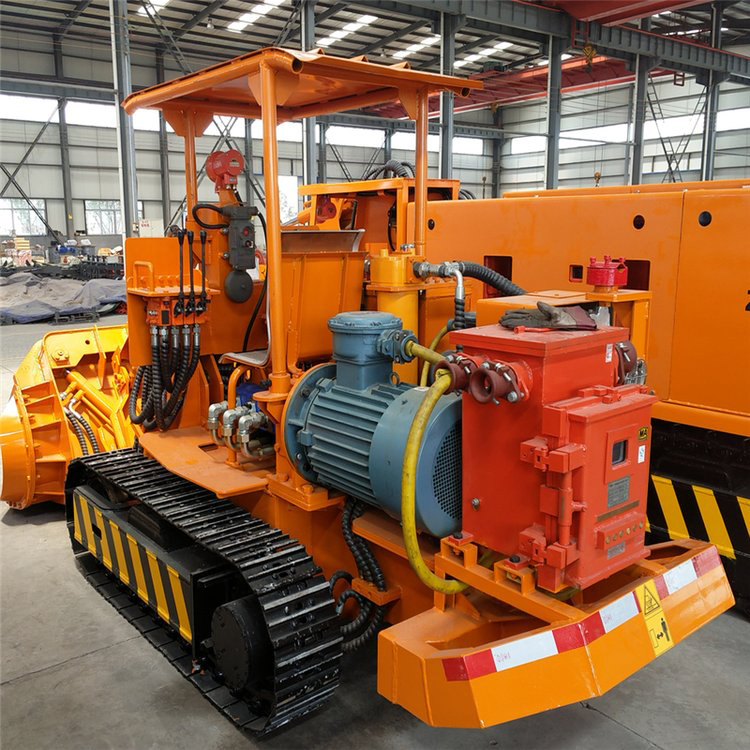
Front-end loader truck
The truck bed section is V-shaped or U-shaped, supported on the flip轨 of the chassis, with the truck bed flipping on the flip轨 for unloading.
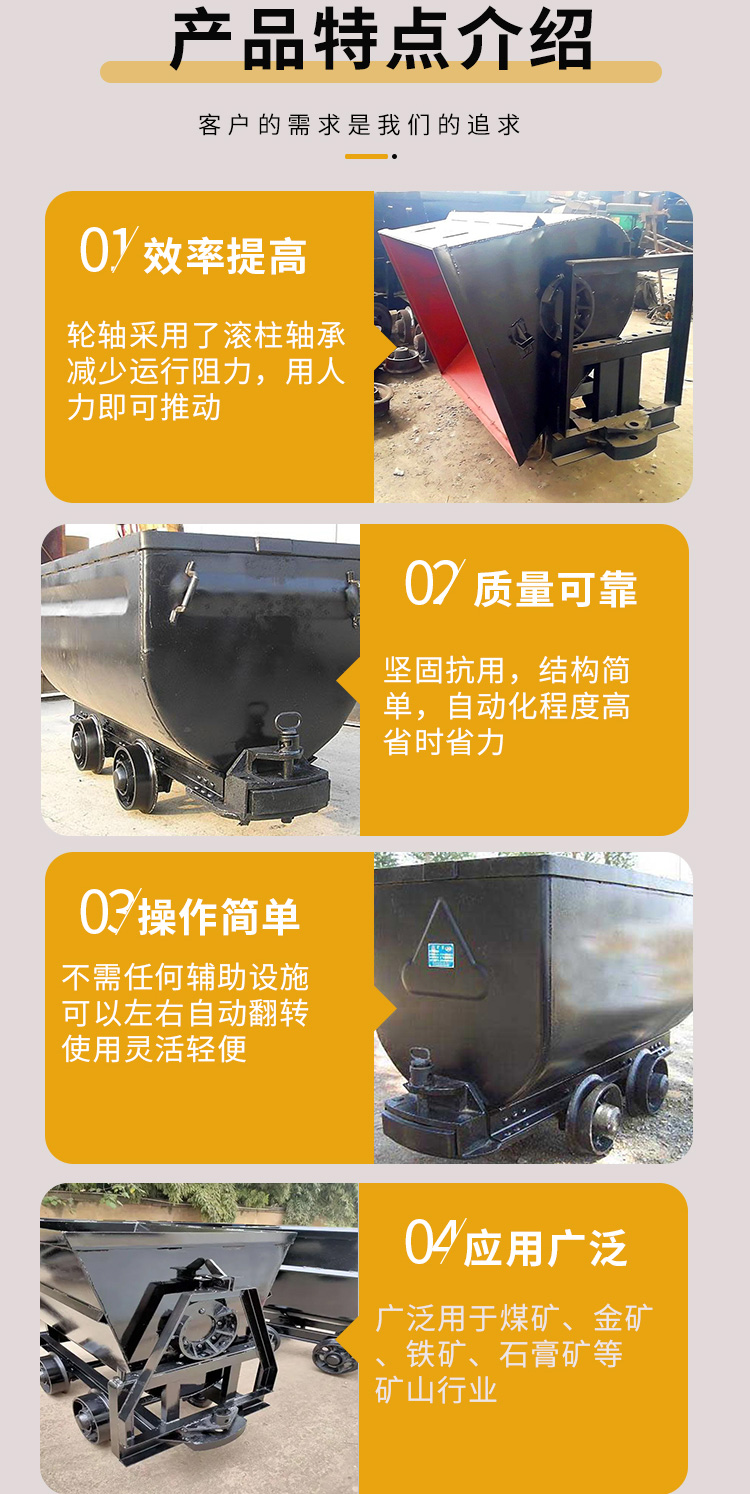
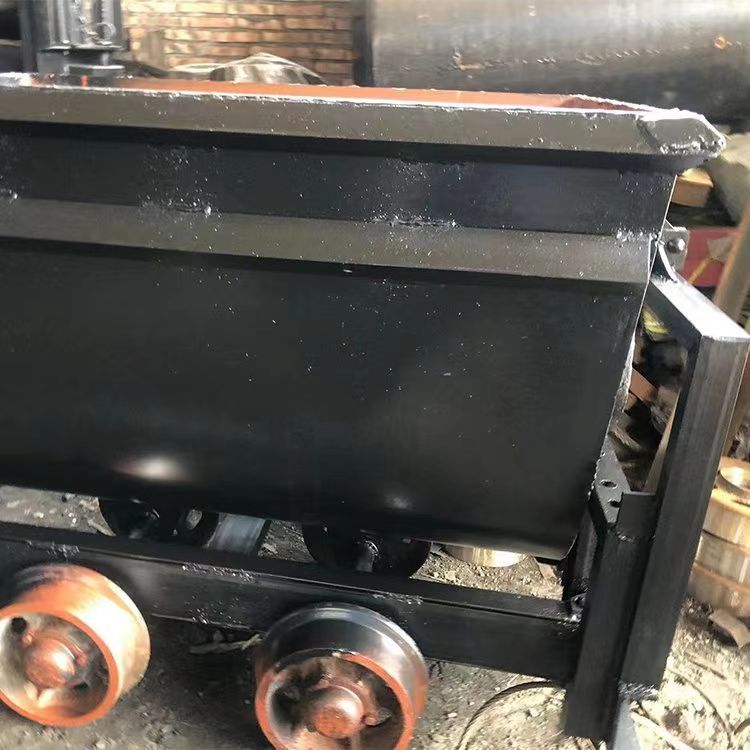
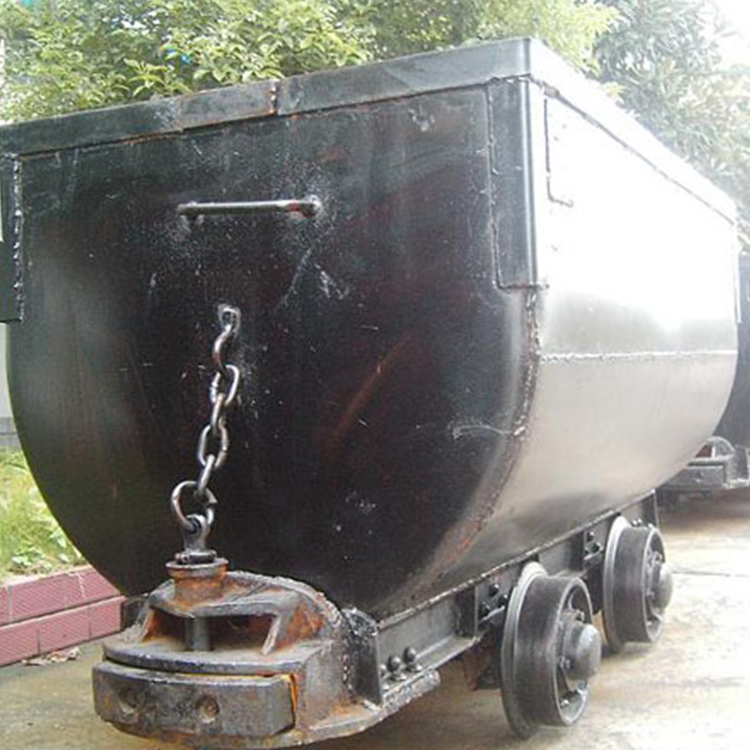
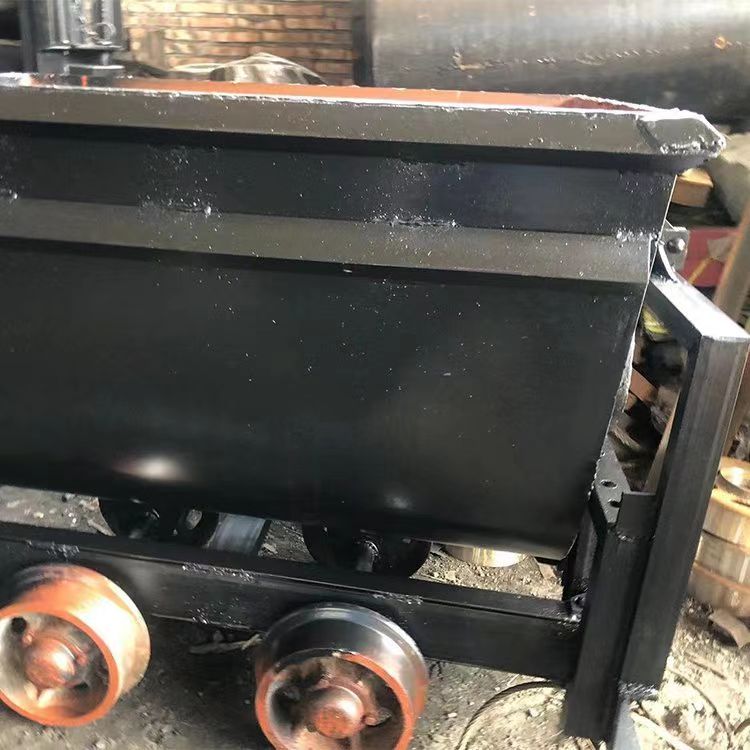
The dump truck (also known as the side dump truck or simply the dump car) is primarily composed of the following parts: the truck body, frame, buffer truck head, triple ring chain, truck pinion wheel shaft, and wheels, among others. The dump truck is characterized by its simple and sturdy structure, ease of use, and the ability to easily unload materials by manually releasing the locking plate. The shapes are U-shaped and V-shaped, and they are also commonly referred to as drum trucks. The wheel shafts use roller bearings, effectively reducing running resistance, allowing for easy pulling or pushing by locomotives or manual labor. The bearings are solid and hollow shafts, with the 30313 bearing having a solid shaft diameter of 80mm. The trucks are made of steel plates, typically with a thickness of 4-5mm, and can be custom-made to special requirements. The base is made of 14# channel steel.
Composed of V or U-shaped cross-section car bodies, manual or foot pedal levers, flip tracks, and frames, etc. The car body is flipped and unloaded, or returned to its original position, by shifting the center of gravity from loaded to unloaded. Common volumes range from 0.6 to 1.7 m³.