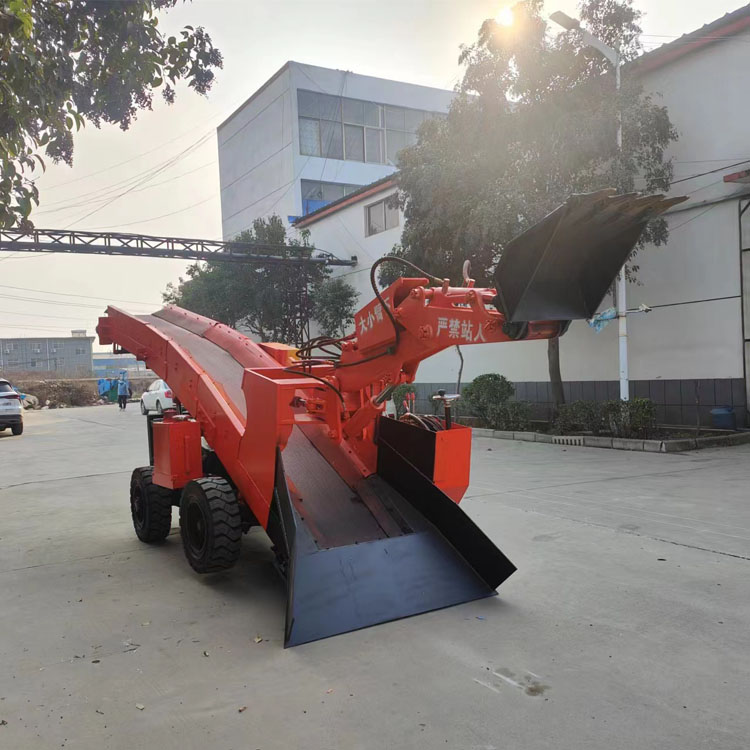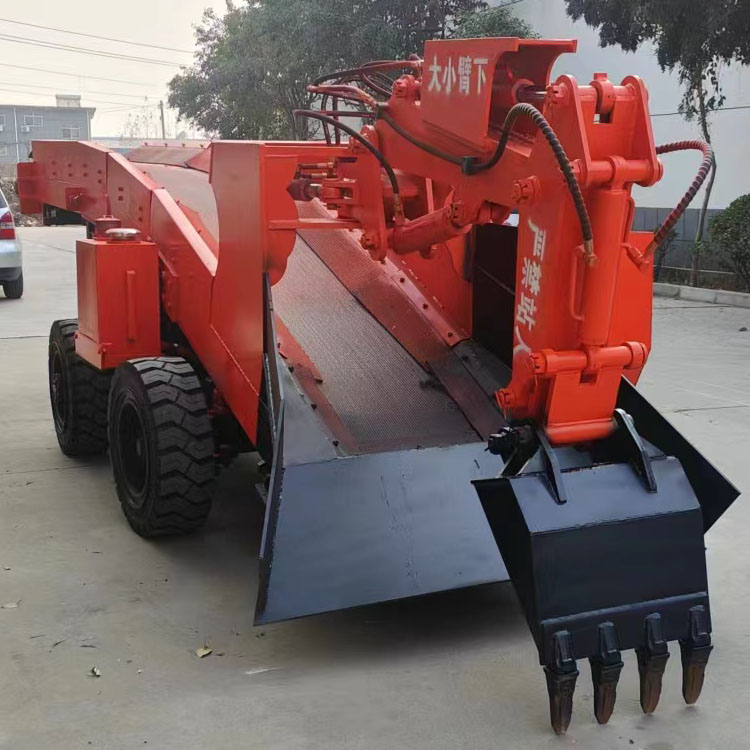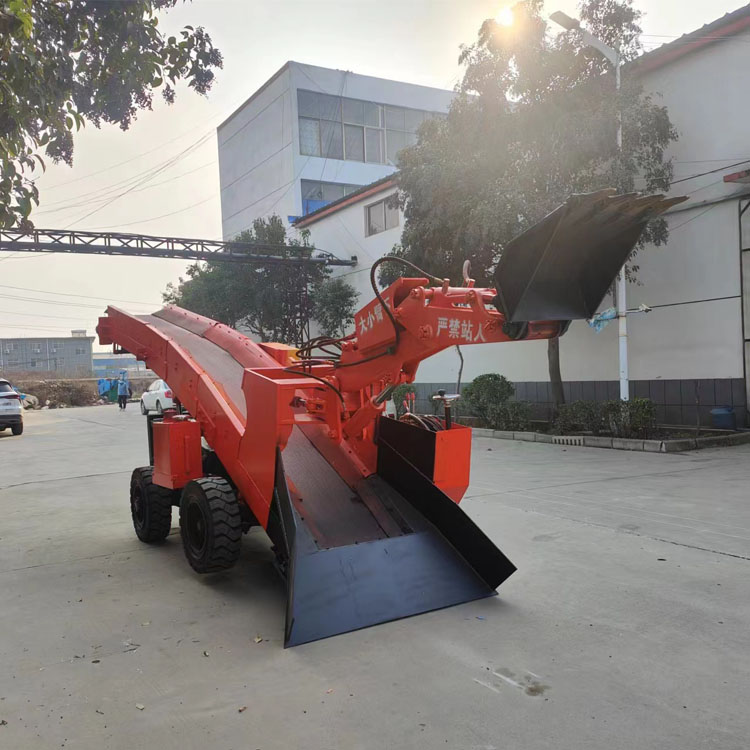
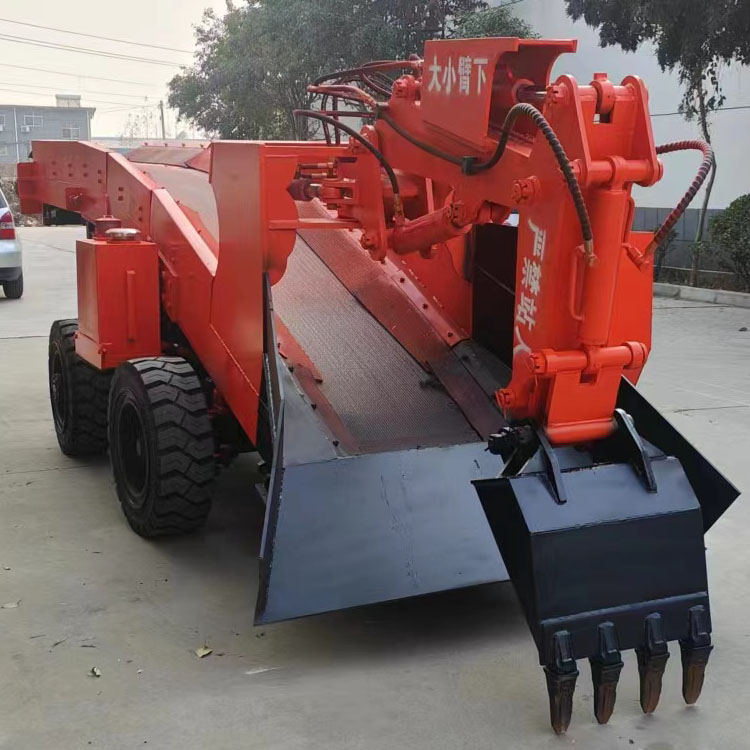













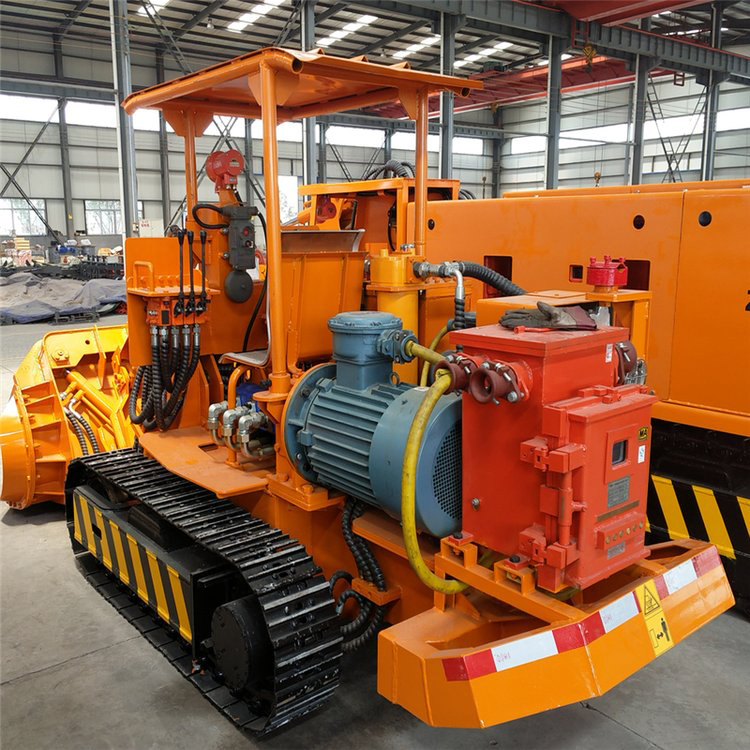


The wheel-type scraper is an industrial machine that includes five functions: hydraulic movement, excavation and collection, conveying, loading, and bottom cleaning.
The hydraulic walking function is achieved through a hydraulic motor, a reducer, a drive shaft, and then to the wheels driven by another reducer. The hydraulic motor features three functions: forward, reverse, and automatic braking. The digging and collection function is performed by a mechanical arm, which is capable of digging, extending, loading, and unloading materials. The large arm can elevate, lower, and rotate left and right. The operation of digging and collection is fully hydraulically controlled and operated with two handles, with each handle controlling two actions, making it easy to operate.
The conveying and loading function is handled by the conveyor system, with its conveyor frame controlled by hydraulic cylinders for lifting and lowering. When the conveyor frame lowers, it lifts the front wheel, and the feed opening at the front becomes more tightly sealed with the ore, ensuring stability during operation. It can also collect and scatter materials, level the ground. The conveyor trough width is 750mm, with a conveying speed of 800-900mm per second. The scraper chain is driven by a 15KW motor, offering more stable transmission performance, longer service life, and easier maintenance.
The wheel-mounted scraper is an ideal equipment for continuously loading solid bulk materials (such as slag, coal) with an hourly conveying capacity exceeding 80 m3. It is particularly suitable for discharging slag in small and medium-sized cross-section tunnels.
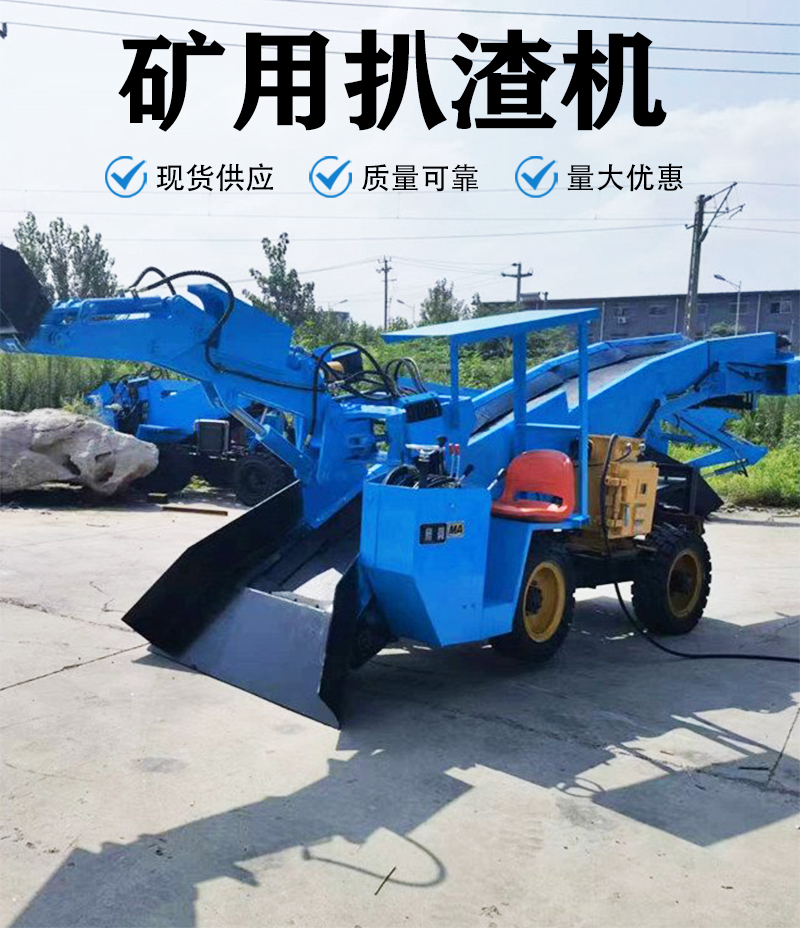
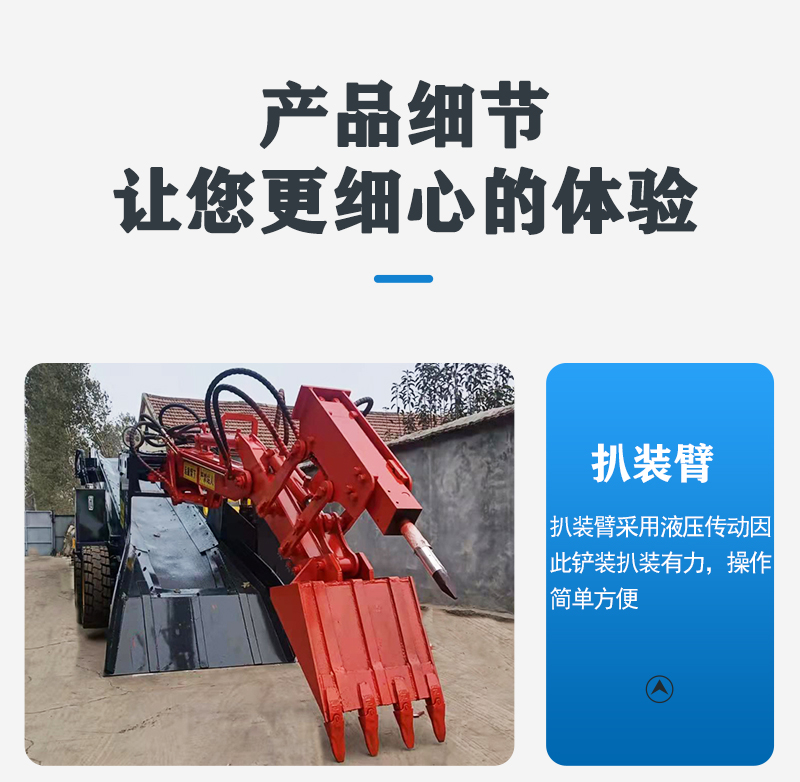
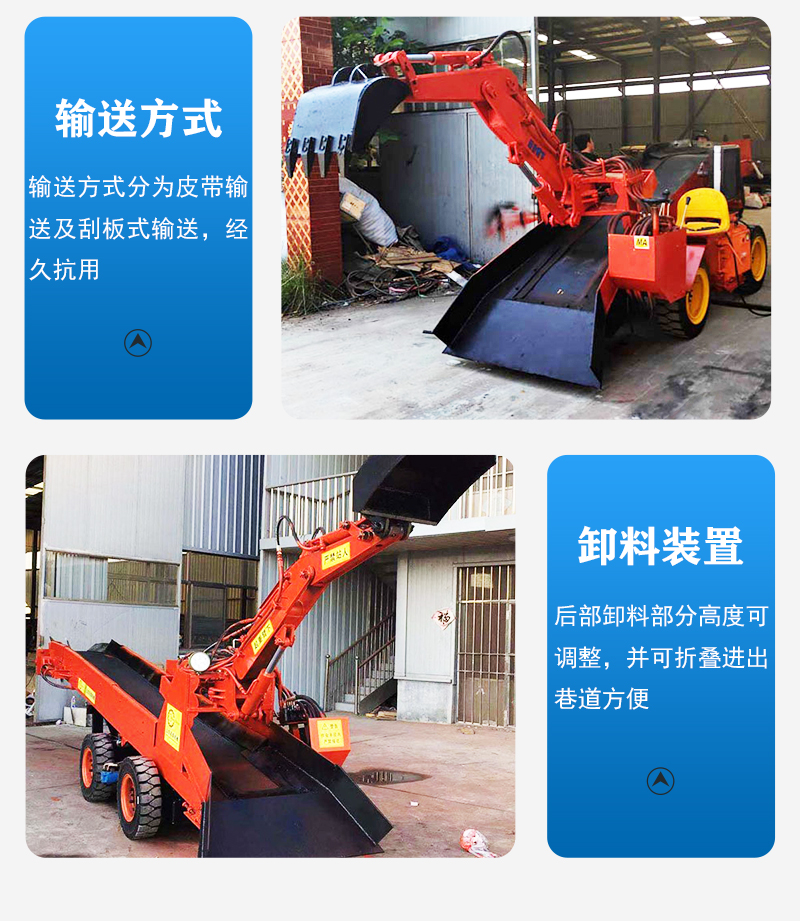


Mucking Loader, also known as a digging loader, combines the functions of mucking and loading with a mechanical arm and conveyor system. It features an electric full-hydraulic control system and production equipment, offering safety, environmental protection, low energy consumption, and high efficiency.
Extendable slag removal machine
Composed of an extendable arm, tilting mechanism, rotating mechanism, and base [3].
The front end of the telescopic arm is connected to the scraper plate, supported by fixed roller wheels, and driven by a hydraulic or pneumatic motor to perform reciprocating scraping movements through a chain wheel and chain. The tilting mechanism is driven by a hydraulic or pneumatic cylinder, allowing the telescopic arm to tilt up and down around a hinge point by ≤ .
Both institutions are mounted on the rotating mechanism. The rotation angle of the rotating part is generally ≤ , and is mostly driven by hydraulic cylinders.