














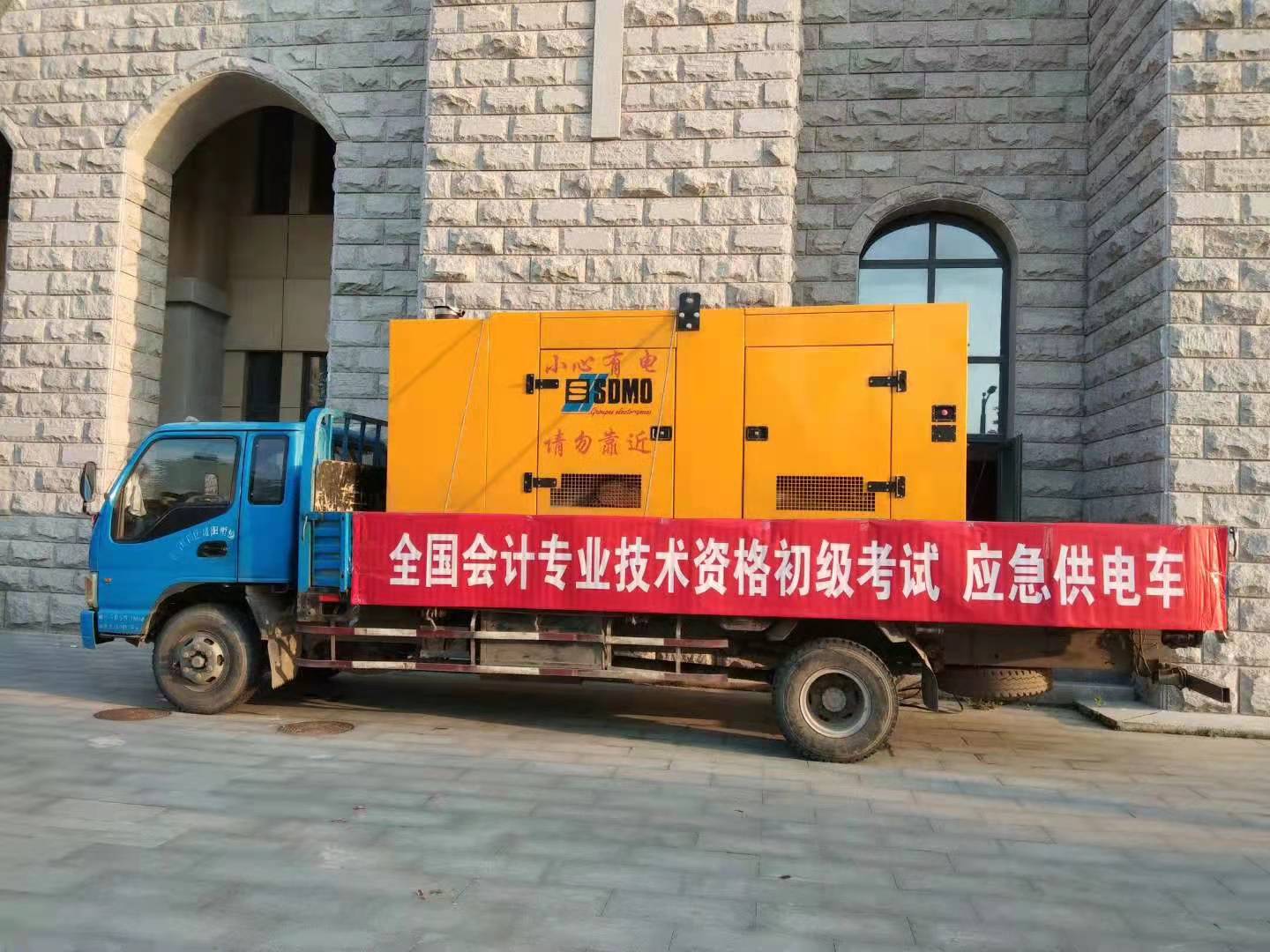
Our generators excel in safety, reliability, low noise, low emissions, and energy conservation. All generators are of the silent type.
Generator set specifications: 100kw-2000kw available. Options include daily, monthly, and annual packages, with 24/7 service. Our staff provide on-site installation, commissioning, maintenance, and equipment support, ensuring continuous power generation according to customer needs. Customer satisfaction is our constant pursuit. We look forward to your collaboration with our enthusiastic service, advanced equipment, and technology.
A detailed explanation of the maintenance concept for diesel generator sets to help you better maintain them.
Currently, diesel generator sets are limited to the following maintenance methods:
1. Inspection of the four leaks in the unit, surface, starting battery, engine oil, and fuel, etc.
2. Improve the clean room environment by regularly replacing the three filters.
3. Perform monthly maintenance for empty runs and semi-annual maintenance for loaded test runs.
4. Utilize power monitoring for real-time observation of electrical quality parameters.
5. Limitations of current maintenance methods:
The current maintenance load testing is only for the existing power-consuming equipment on the backend, posing certain risks and having a relatively low power rating.
There is no scientific basis for changing the three filters or conducting a major overhaul.
After replacing the three filters or major overhaul, there was no specific load for loading and testing the machine, so it's unclear if it can achieve the expected goal.
Excessive carbon accumulation during no-load testing and low-power loaded operation.
Diesel generator sets, when operating under low load, may experience the following failures as the running time extends:
1. For supercharged diesel generators, due to low load and no-load conditions, the supercharging pressure is low, which easily leads to a decrease in the sealing effect of the supercharger oil seal (non-contact type).
2. Accumulation of engine oil within the supercharger's supercharging chamber reaches a certain level, it will leak out from the junction of the supercharger.
3. A portion of the oil that ascends into the cylinder burns, while some does not burn completely, forming carbon deposits on the valves, intake ports, piston crown, piston rings, etc. Additionally, a portion is expelled through the exhaust. Consequently, the cylinder bore exhaust passages will gradually accumulate oil and form carbon deposits.
4. Prolonged operation under low load can also lead to more severe wear of moving parts and deterioration of the engine's combustion environment, ultimately resulting in an earlier need for major repairs.
Therefore, manufacturers of generator sets emphasize minimizing the operation time at low and no-load conditions for both naturally aspirated and turbocharged models, and stipulate that the minimum load should not be less than 25% to 30% of the rated power of the set.
Long-term full-load operation of diesel generator sets not only enhances their performance but also identifies potential safety hazards and prevents major accidents.
Currently, maintenance for diesel generators in the market refers to two aspects: repair and routine maintenance. Repair involves replacing various parts after the generator malfunctions, or conducting a major overhaul of the generator to clean internal soot, etc. Maintenance primarily ensures the generator's performance by regularly replacing the three filters.
As the economy grows, the demand for electricity across various industries has increased significantly, simultaneously revealing the current shortcomings in maintenance and repair.
One, maintenance primarily focuses on repairing equipment after failure. There are no effective means to retest the equipment under actual load after repairs, making it impossible to compare the equipment before and after maintenance. There's no certainty about the equipment's normal operation post-repair, and there's no complete peace of mind regarding the use of the equipment during the next power outage. However, since daily maintenance cannot simulate the operation of the equipment after a power cut, and faults only occur during actual operation when the power is down, the maintenance itself cannot avoid the company's losses.
Two, maintenance includes the replacement of the three filters and no-load testing of the unit. From the perspective of replacing the three filters, users generally do so once a year on a regular basis. However, the operating hours of the unit are the basis for replacing the three filters. Based on current maintenance methods, the unit operates for less than 5 hours per year (under no power interruption), which is significantly less than the required hours for filter replacement. Therefore, replacing the three filters annually has no scientific basis and also increases the company's cost.




















