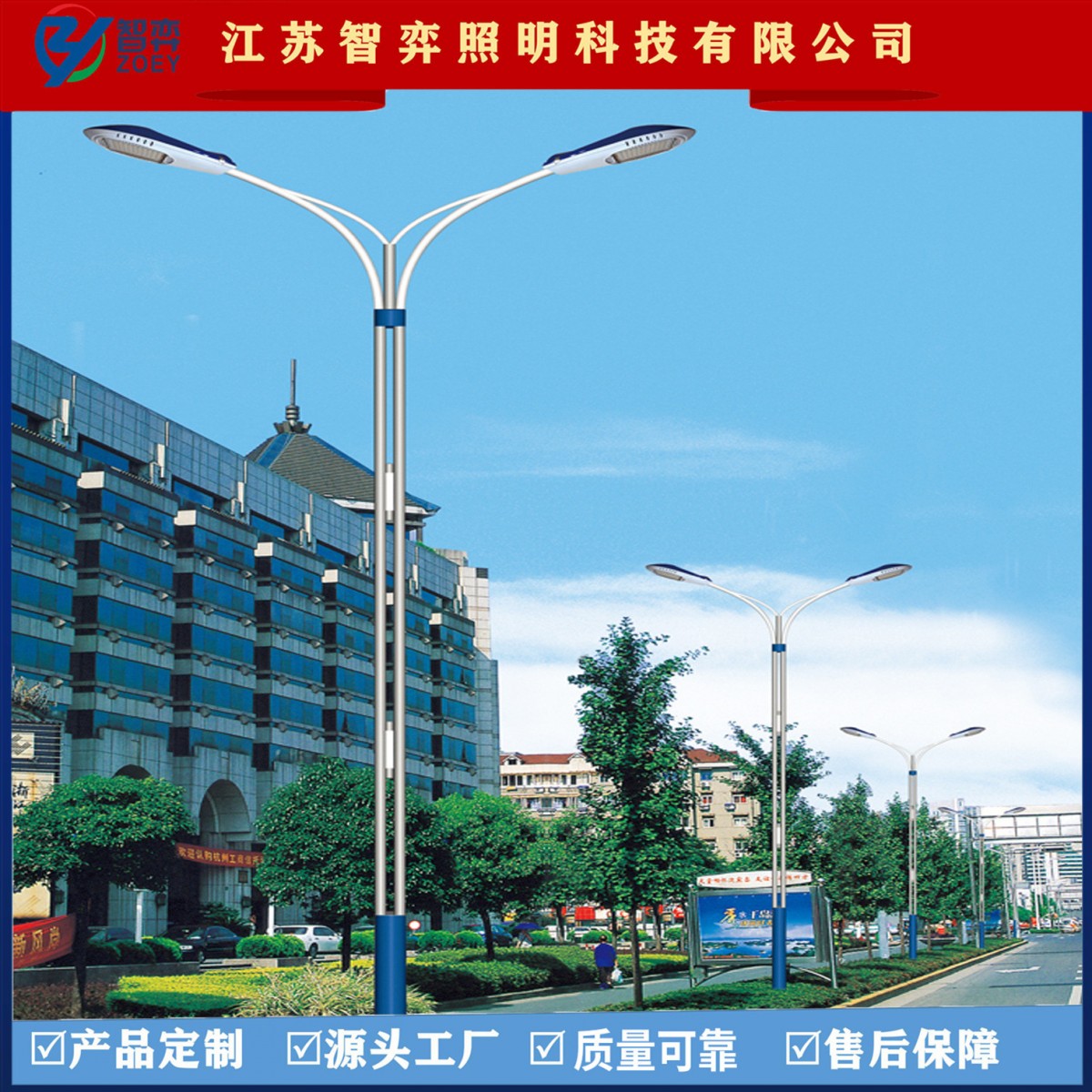














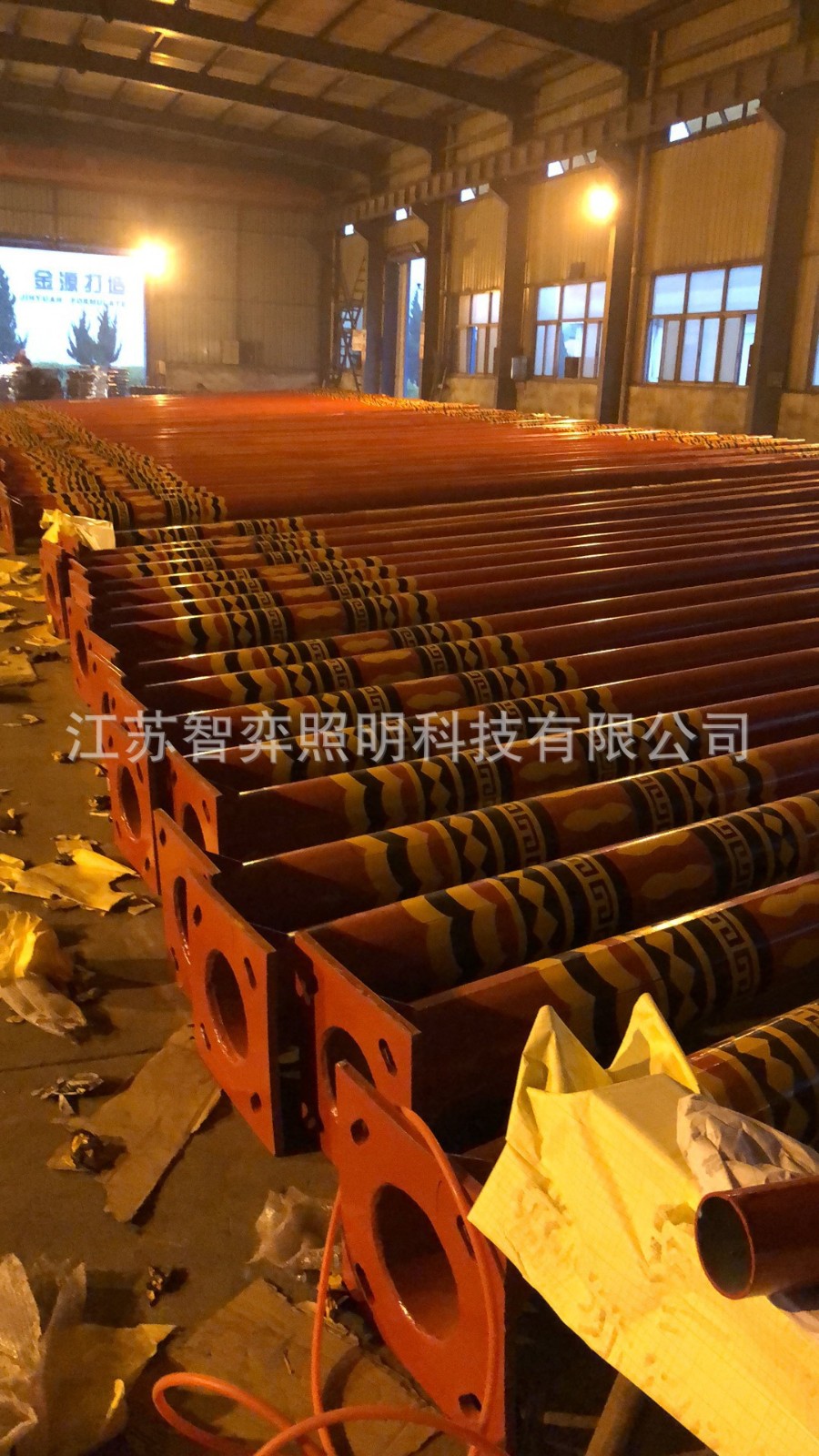
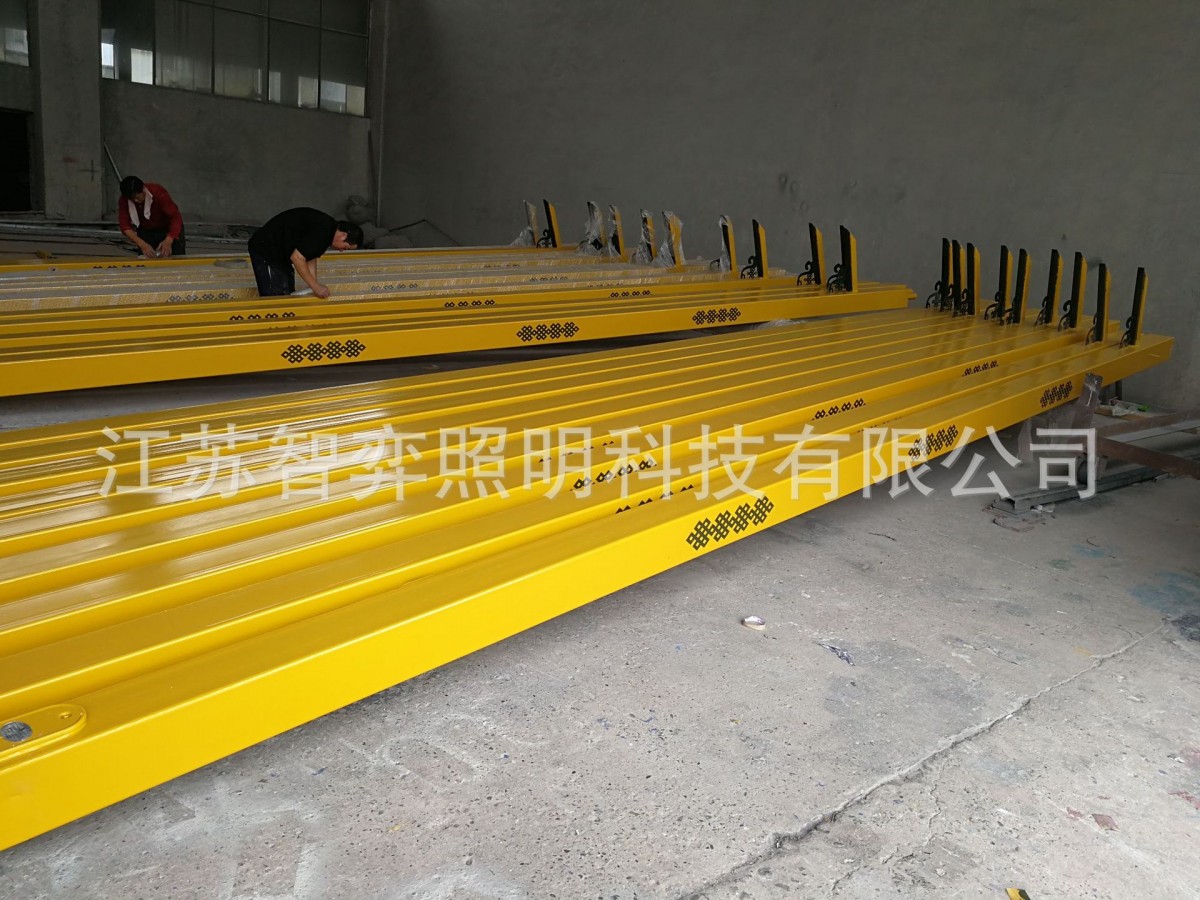

(1) Pole Manufacturing Process:
(1) Cutting → Bending → (3) Welding → (4) Repairing & Sanding → (5) Shaping → (6) Head Trimming → (7) Mounting Bottom Plate → (8) Welding Bottom Plate → (9) Door Opening → (10) Welding Door Strip, Electrical Strip, Lock Base → (11) Bending Fork → (12) Galvanizing → (13) Powder Coating → (14) Final Inspection → (15) Shipment
(II) Process Requirements:
1. Material cutting
1.1 Adjust the slant of the cutting strip machine and ensure it matches the required longitudinal cutting size before cutting.
1.2 Set the steel plate placement, ensuring the scrap size for utilization.
1. The 3 length dimensions are guaranteed at opening, with the width dimensions required to be ≤±2mm. The tolerance for the under-bar material dimensions is as follows: generally, a positive tolerance of 0-2mm for the larger end, and a negative tolerance of -2-0mm for the smaller end. After adjusting the dimensions, the material is cut automatically by the trimming machine.
1. 4 Equipment Aspect: Before cutting, inspect the running condition of the rolling shear equipment, clear debris from the track, and maintain the equipment in good running order.
2. Bending
Bending is a critical process in the production of lamp posts, and the quality of the bend directly affects the quality of the post. Moreover, once bent into shape, it cannot be repaired. Specific attention should be given to the following:
2.1 Before Bending: First, remove the slag from the sheet material to ensure there is no slag pressing on the mold during bending.
2.2 Inspect the length, width, and straightness of the board material. The straightness should not exceed 1/1000. If the straightness does not meet the requirements, make corrections, especially ensuring the straightness of polygonal rods.
2.3 Adjust the large bending machine's bending depth and determine the placement of the sheet material.
2.4 Properly mark on the sheet material, tolerance: ≤±1mm
2.5 Proper alignment and bending to minimize the seam size, ensuring both sides are not more than 5mm high.
Welding
During welding, perform straight seam welding on the tube blanks after the bending machine, as the welding is semi-automatic. It is mainly the responsibility of the welder to have more accountability, adjusting the loose welding position and basic parameters in real-time during welding. Ensure the straightness of the weld seam.
4. Repair and Polish
Rework and polishing involve repairing defects on the billet after automatic welding. The rework personnel should inspect each piece individually, weld any defects found, and then proceed with the polishing. The welded area after polishing should be essentially similar to the automatic weld seam.
5.整形 - Body Shaping
The整形process includes straightening the lamp post, rounding the ends of the billet rod, and ensuring the dimensions of the polygonal diagonals. General tolerance: <±2mm. The straightness error of the billet rod shall not exceed: ≤±1.5/1000.
6. Head-to-head
The straightening process involves flattening the ends of the bent tube blank to ensure the tube opening is perpendicular to the centerline, with no angles or unevenness. Additionally, the ends are then polished smooth.
7. Bottom Plate Installation
Spot-weld the bottom flange and ribbing, the key is to ensure the bottom flange is perpendicular to the centerline of the lamp pole, the ribbing is perpendicular to the bottom flange, and parallel to the lamp pole busbars.
8. Welded bottom flange and rib plate
Welding processes shall comply with national standards, ensuring high-quality welds with an aesthetically pleasing appearance, free of pores and slag.
9. Open the door
During this process, one must be bold yet meticulous. First, carefully inspect the blueprint to determine the door's orientation, then position it according to the dimensions specified on the blueprint, including top/bottom and left/right, as well as the frame size. During plasma cutting, pay close attention to ensure the cut is straight. Additionally, match and weld the cut door panel to the light pole using electric welding.
10. Welded door strips, electrical strips, lock seats
During welding door strips, position a 40mm wide door strip with an extension of 8-10mm. Pay special attention to the door strip being tightly against the lamp pole during spot welding, ensuring a strong weld.
Weld electrical bars and lock seats, primarily, position according to the drawing, welding the lock seat in the center of the door, with an error of ≤±2mm, maintaining a level top, and not extending beyond the light pole.
11. Bend Fork
The process of bending and opening shares similar characteristics; it requires boldness with caution. Firstly, pay attention to the door's direction, secondly, the bending point, and thirdly, the angle of the light fork and the牵引 speed. Avoid sudden changes in speed; ensure a 100% yield rate for the finished product.
Galvanized
12.1 Pre-galvanized Inspection
Inspect the surface of the lamp post before galvanizing for paint welding; if present, clean it.
12.2 Pickling
The lamp post surface must undergo necessary degreasing treatment. After soaking in the degreasing pool for 15-30 minutes, it should be cleaned twice or more in the washing pool.
Surface treatment for the pole with an oxidation layer cleaning in hydrochloric acid for 20-40 minutes to remove the oxidation. If there is localized oxidation, treat it with tools before acid washing for 15 minutes. Analyze the acid composition every 24 hours.
After pickling, it is essential to clean the pole in the washing tank to remove acid ions from the surface, and the cleaning must be performed at least twice.
12.3 Zinc Helper
After the light pole is cleaned, it is dipped into the zinc treatment pool, where the temperature is maintained at 60-70℃ for 3 minutes. The zinc treatment solution is analyzed every 4 hours.
12.4 Galvanized
After water cooling, to prevent white rust (zinc oxide) from forming on the galvanized surface, chromic acid treatment must be applied to the galvanized surface. At this point, a yellow passivation solution is produced on the surface, which can naturally fade after being rinsed by rain.
13. Powder Coated
13.1 Polishing: Use a polishing wheel to flatten the surface of the galvanized rod, ensuring the lamp post has a smooth and even finish.
13.2 Straightening: The straightening and shaping of the diameter after polishing the light pole, ensuring the straightness of the pole must reach 1/1000. The diameter requirements are: small pole ≤ ±1mm, tall pole ≤ ±2mm.
13.3 Door panel for 13.3-inch model
13.3.1 All door panels are to be post-plated, including zinc coating, missing coating, and zinc residue in the lock holes.
13.3.2 When drilling screw holes, the electric drill should be perpendicular to the door panel, with equal gaps around the door panel, ensuring the panel is flat.
13.3.3 After screwing in place, the door panel must not be loose; the fastening must be firm to prevent detachment during transportation.
13.4 Powder Coating: After the doors are installed on the light pole, spray the pole with paint according to the production schedule's color requirements. Then, place it in the curing oven, ensuring the oven temperature and retention time strictly adhere to the specifications of each type of powder coating to maintain the adhesion and smoothness of the light pole, meeting quality standards.
14. Factory Inspection
Factory inspection is conducted by the quality inspectors from our factory. The inspectors must check each item on the pole inspection list individually. They must record and file the results. Additionally, the inspection form must be signed by both the workshop supervisor and the quality inspector before the goods can be shipped.
15. Packaging and shipment
15.1 Wrapping - Packaging as per customer's requirement
15.2 Prior to shipment, the warehouse, in conjunction with the finance department, will handle all pre-shipment procedures. Settlement of product quantity, weight, and amount will be made according to the contract provisions.