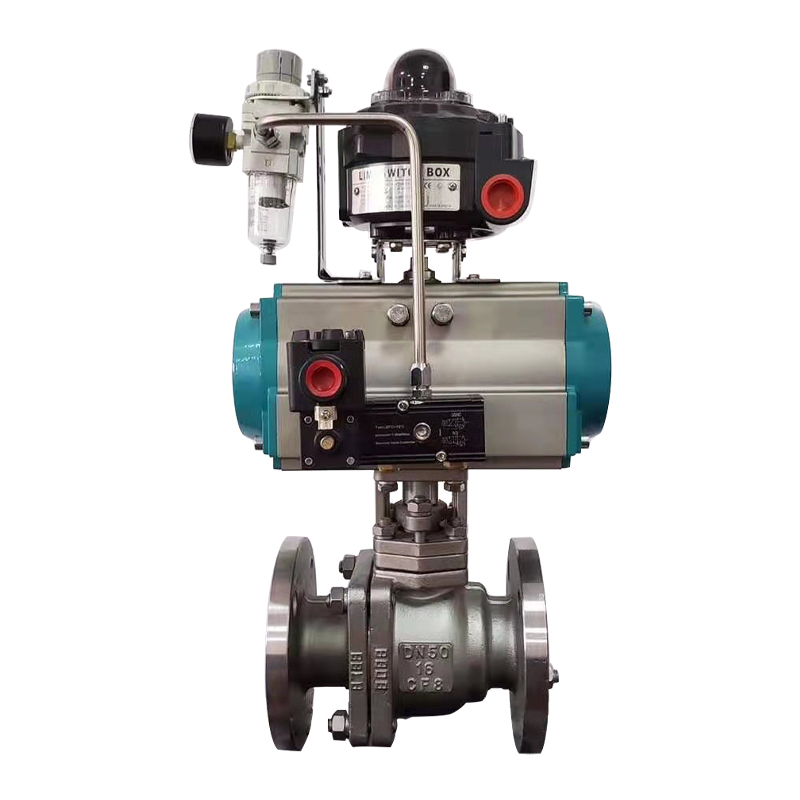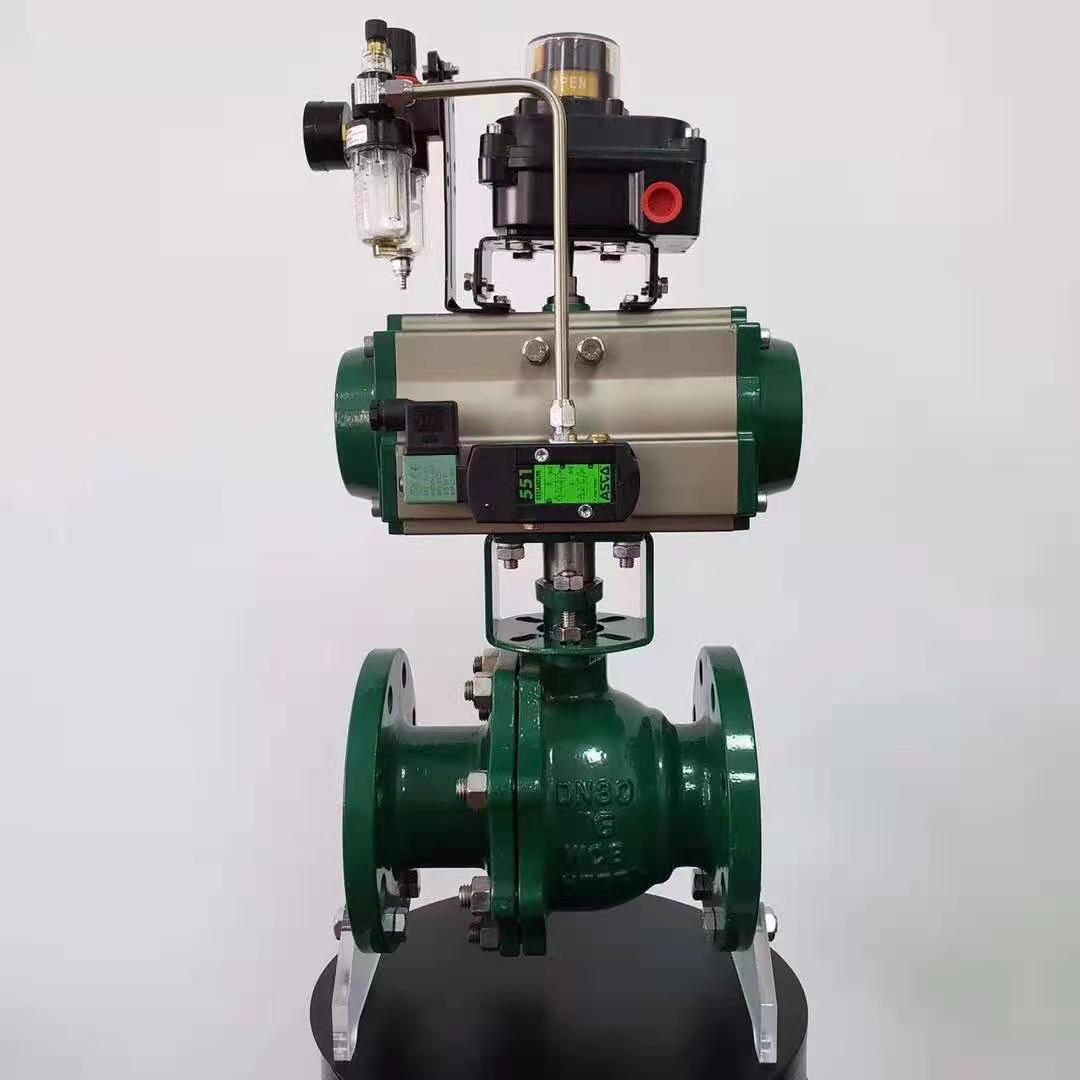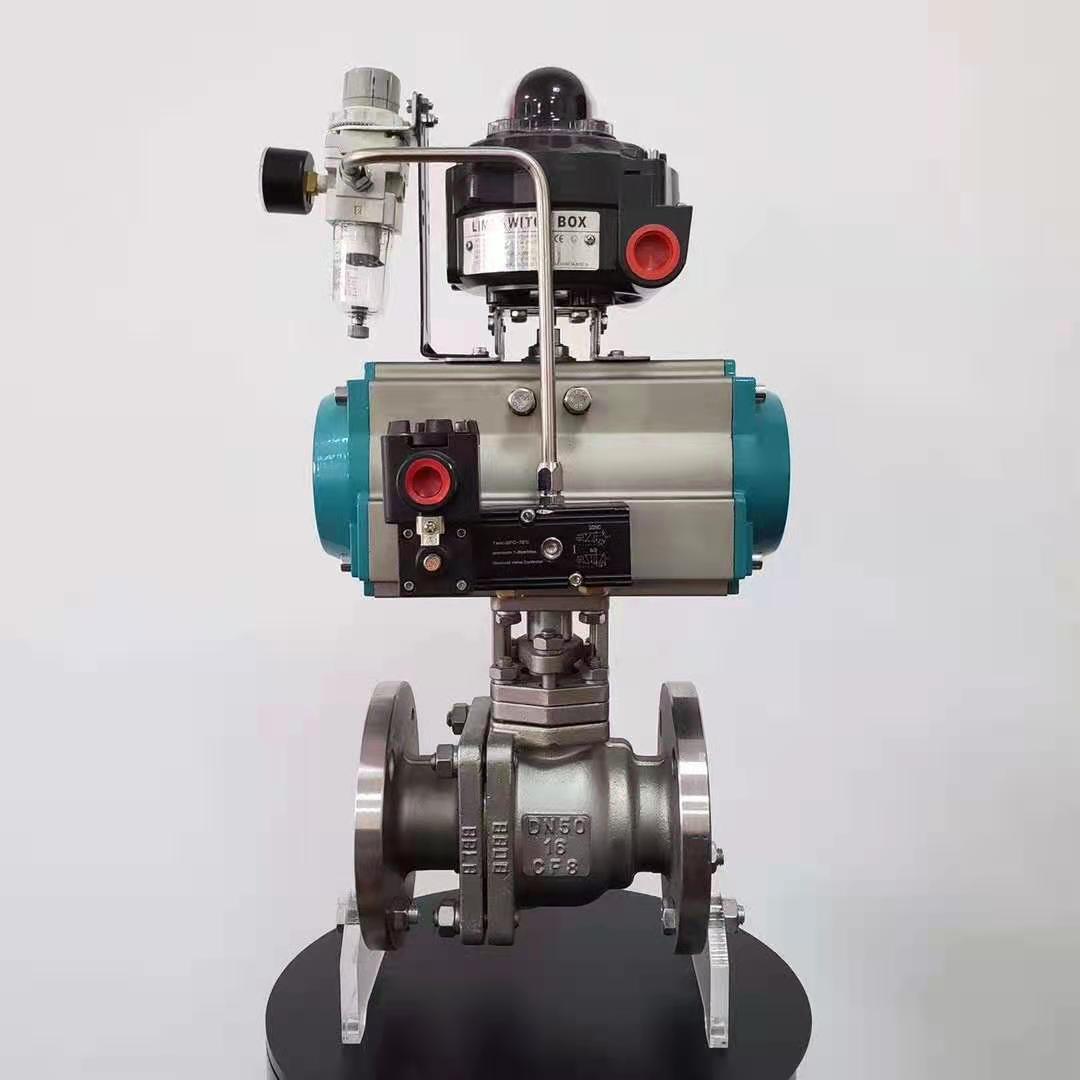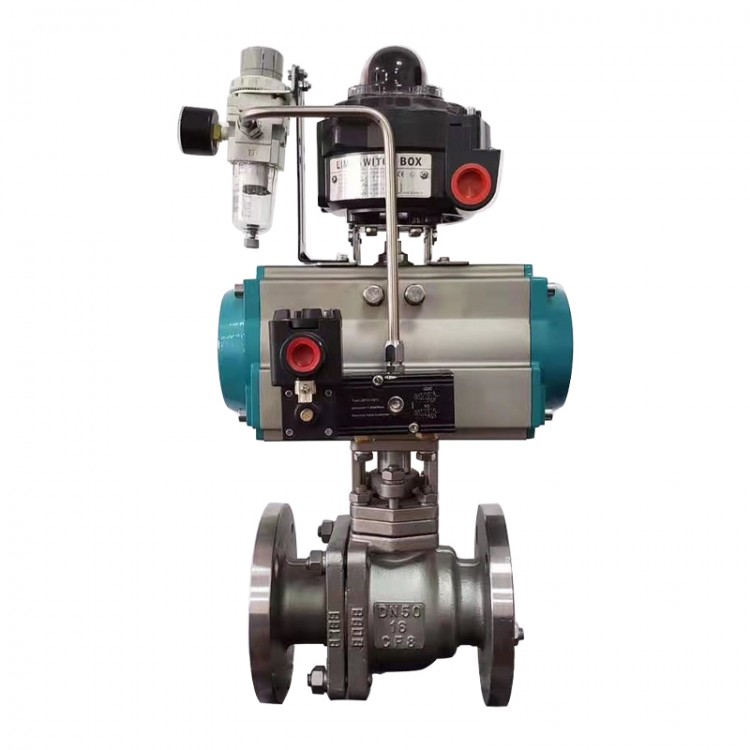


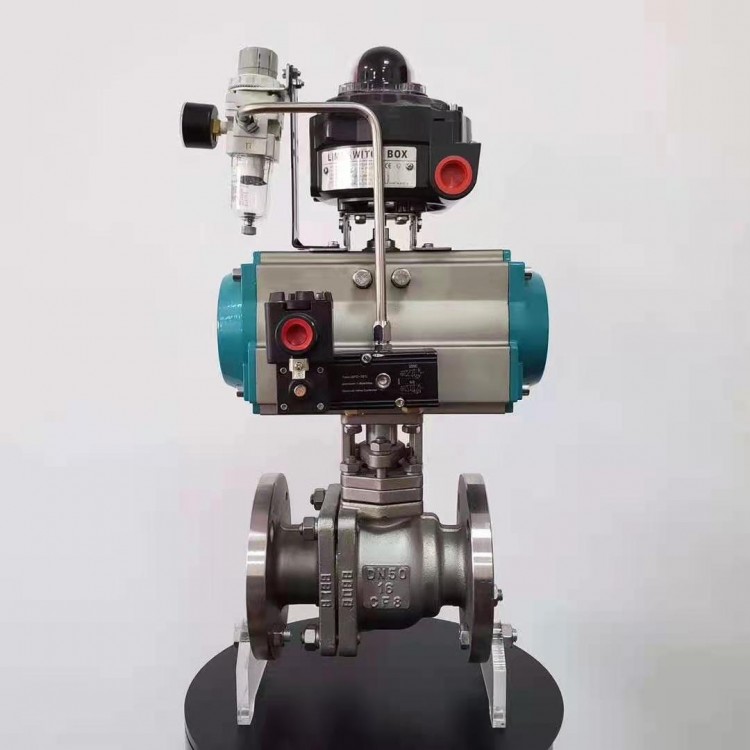












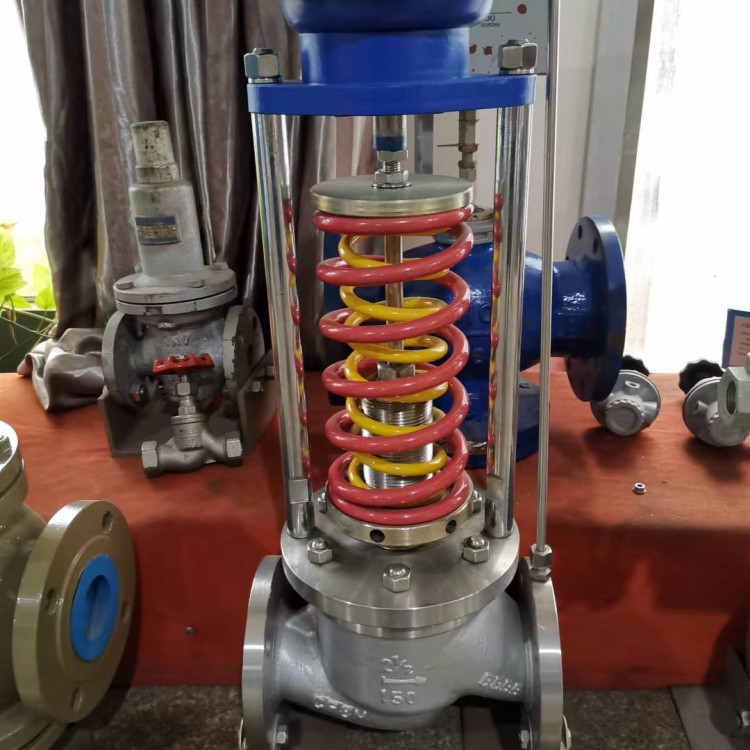
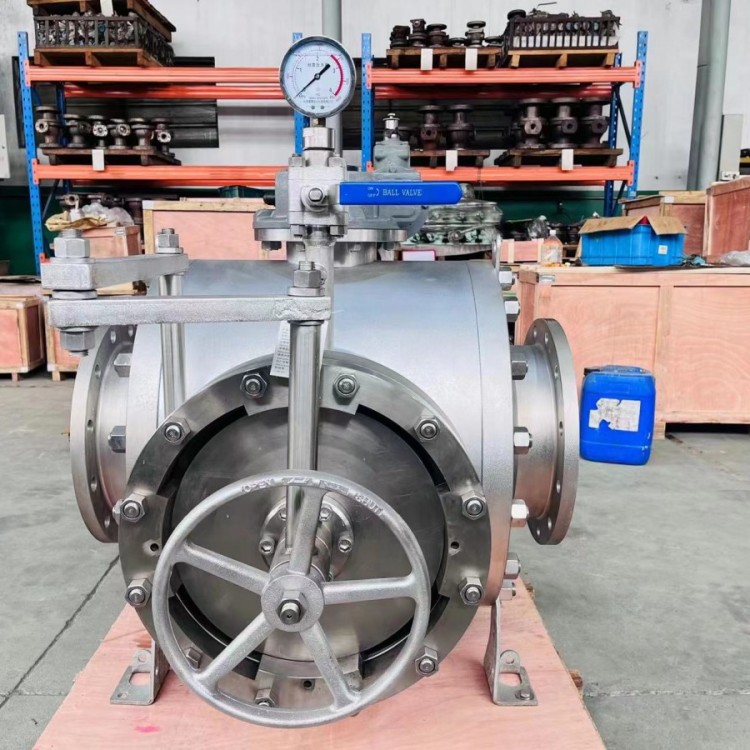
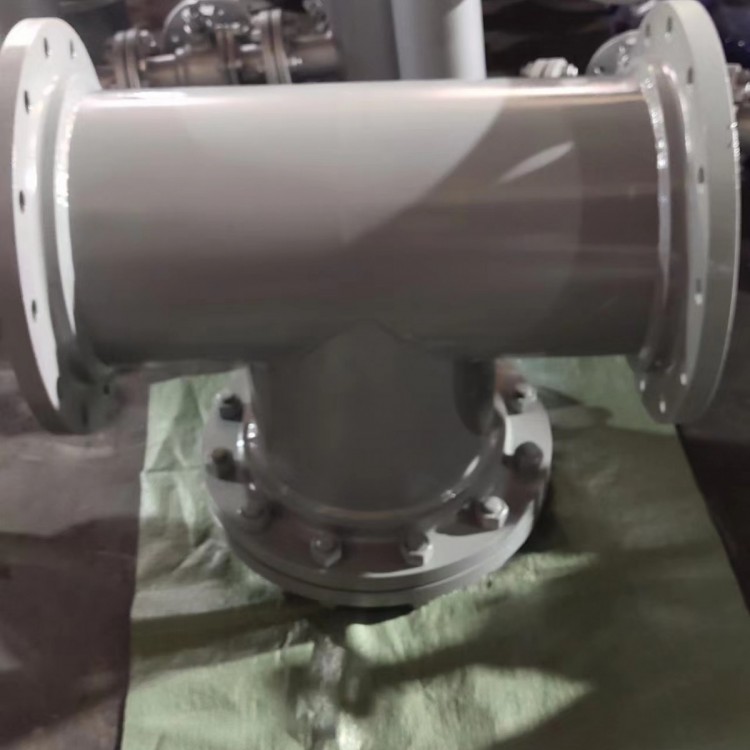
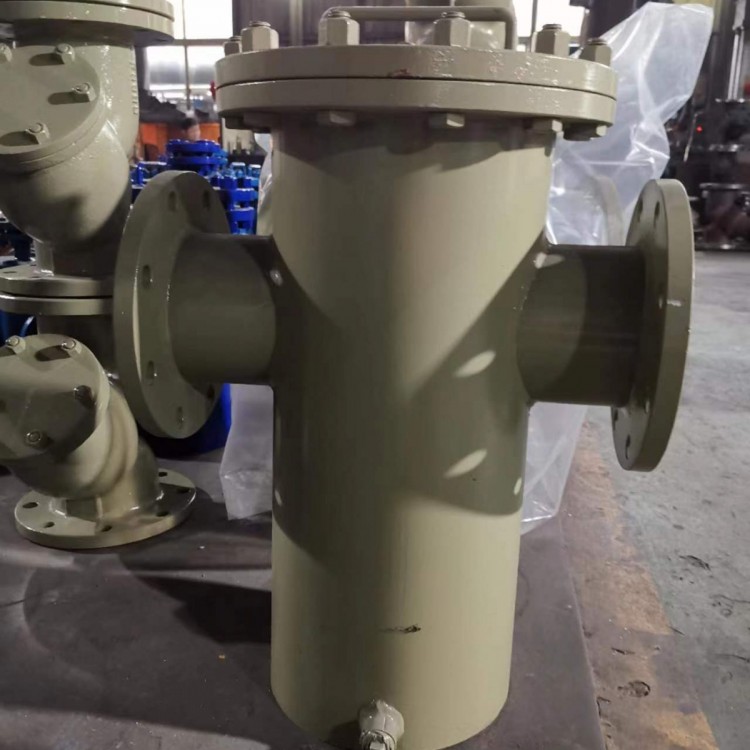
T-Type pneumatic ball valve - The pneumatic normally open and normally closed ball valves are composed of high-precision pneumatic actuators and precision cast ball valves. They are mainly divided into two categories: pneumatic soft-seated ball valves (≤200°) and pneumatic hard-seated ball valves (≤550°). Pneumatic ball valves feature compact structure, small size, reliable operation, low flow resistance coefficient, good sealing, easy maintenance, convenient installation, and strong adaptability. They can be equipped with stroke limit switches, solenoid valves, pressure reducing valves, and a gas source of 0.4-0.7MPa to achieve on/off operation and send out two sets of passive contact signals indicating the valve's state. Pneumatic flanged ball valves are particularly suitable for media that are thick, contain particles, or have fibrous properties. They are widely used in industrial automatic control systems in the petrochemical, chemical, educational equipment, light industry, high-pressure equipment, papermaking, and other industries for remote centralized control or local control. Product features:
(1) Fluid resistance is low; among all valve types, ball valves have the lowest fluid resistance. Even constricted ball valves have relatively low fluid resistance.
(2) Thrust bearings reduce the friction torque on the valve rod, allowing for long-term operation that is balanced and flexible.
(3) The valve seat has excellent sealing performance, utilizing sealing rings made of materials like polytetrafluoroethylene, which are easy to seal. Moreover, the ball valve's sealing capability increases with the increase in medium pressure.
(4) The valve stem seal is reliable. Since the valve stem only rotates and does not move up and down, the stuffing box seal of the valve stem is less prone to damage, and its sealing capability increases with the increase of the medium's pressure.
(5) Due to the excellent self-lubricating properties of materials like PTFE, friction losses with spheres are minimized, contributing to a longer lifespan for ball valves.
(6) The valve stem and head step prevent the valve stem from being ejected. In the event of a fire causing damage to the valve stem seal, the step can still form a metal contact with the valve body, ensuring the stem's seal integrity.