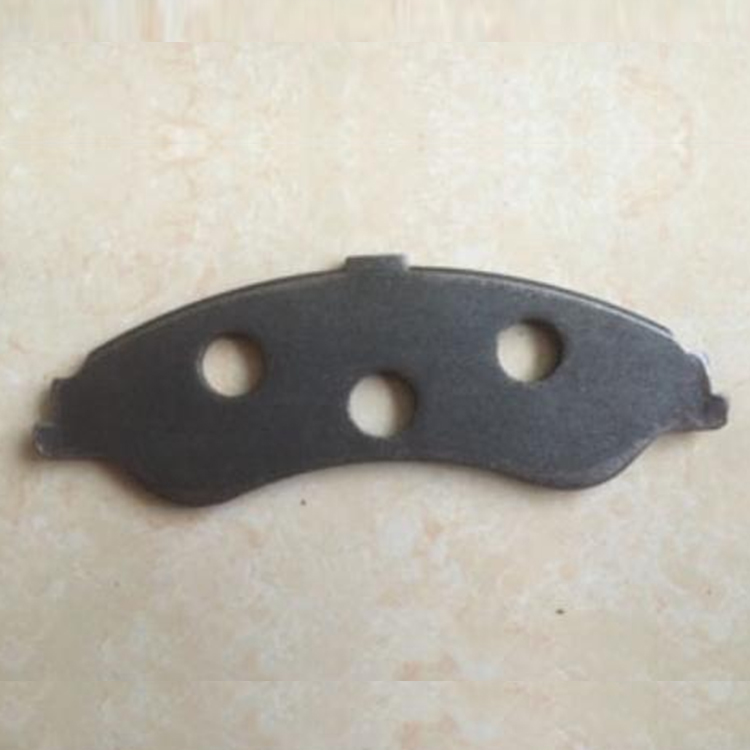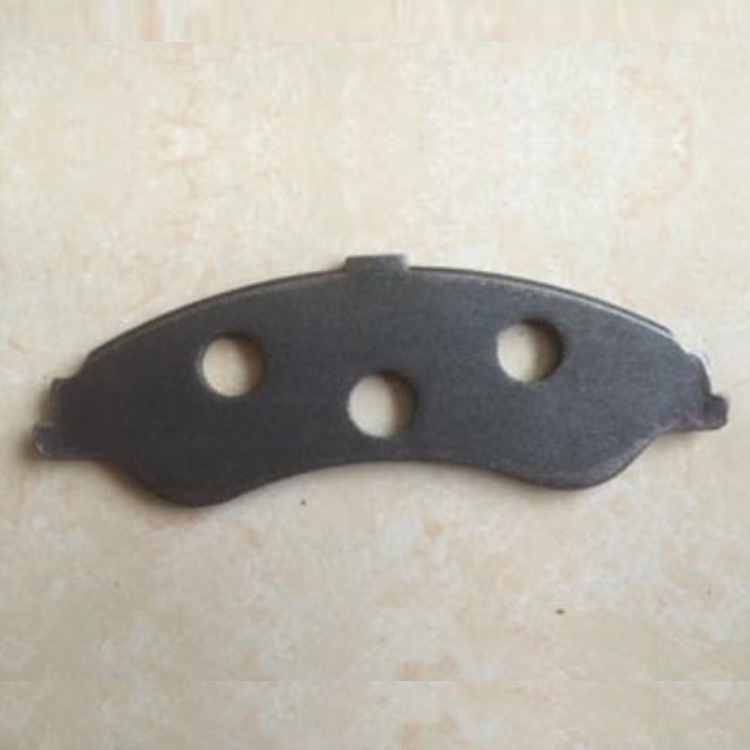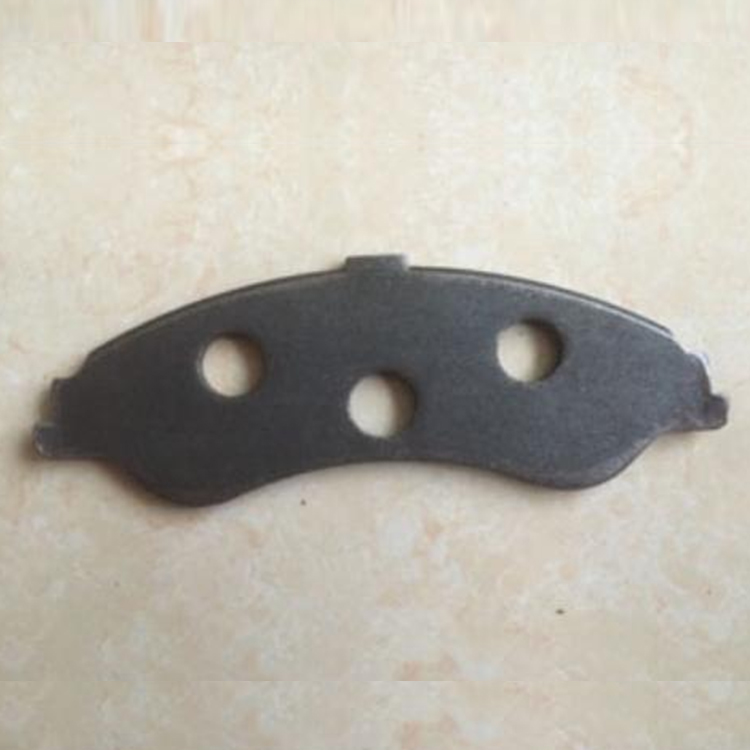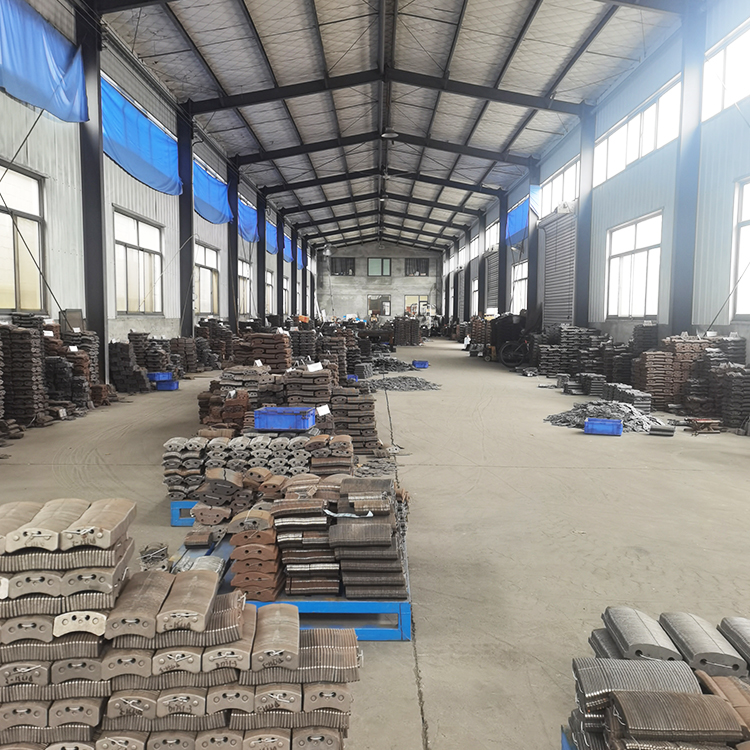

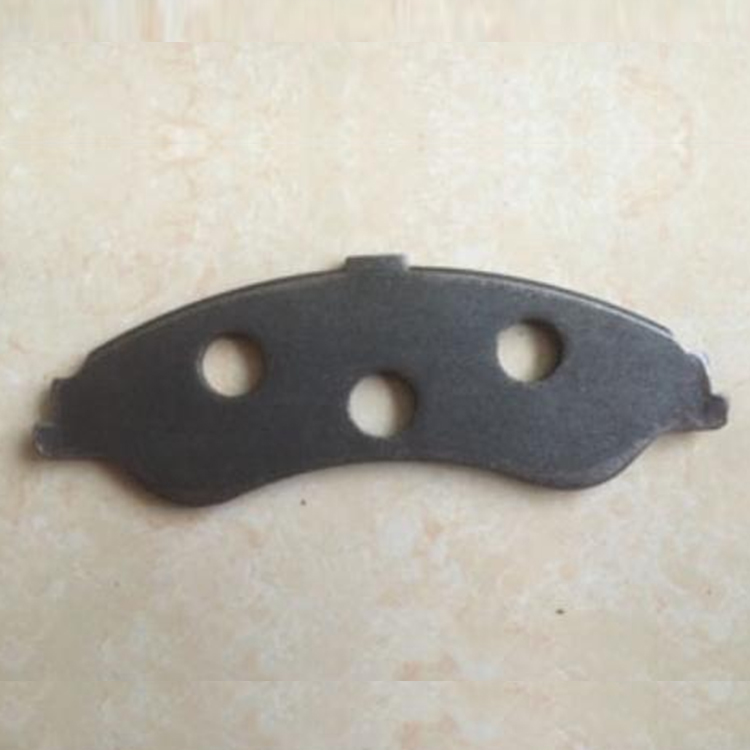

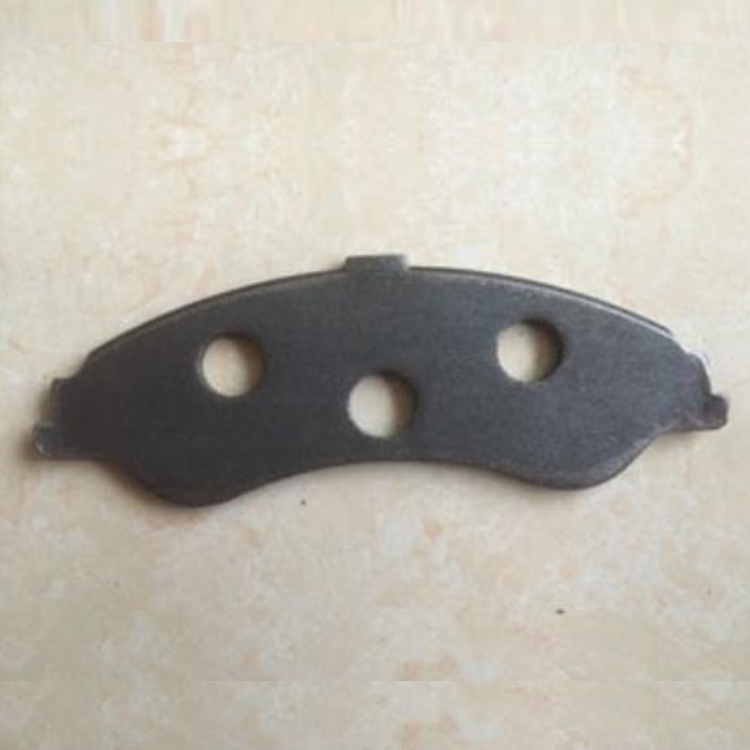








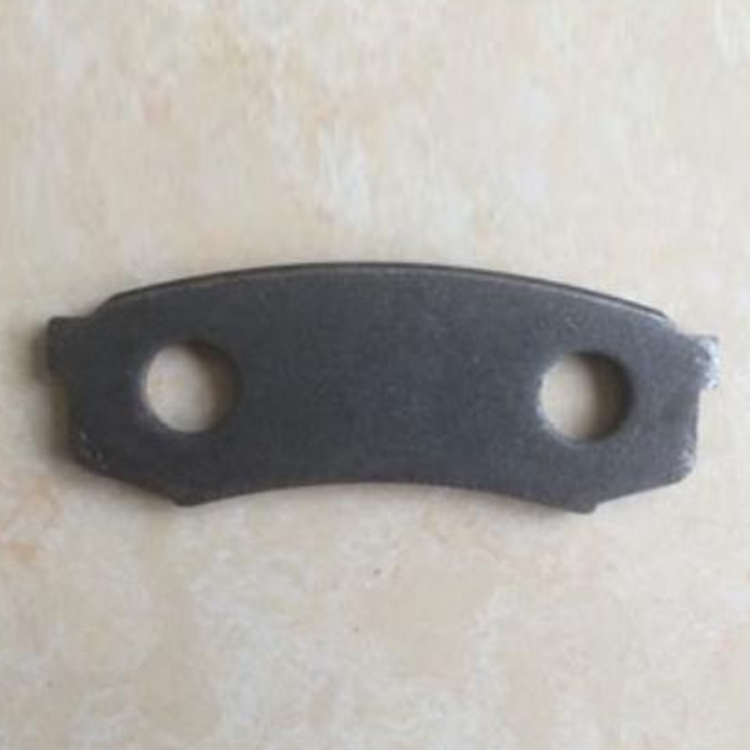
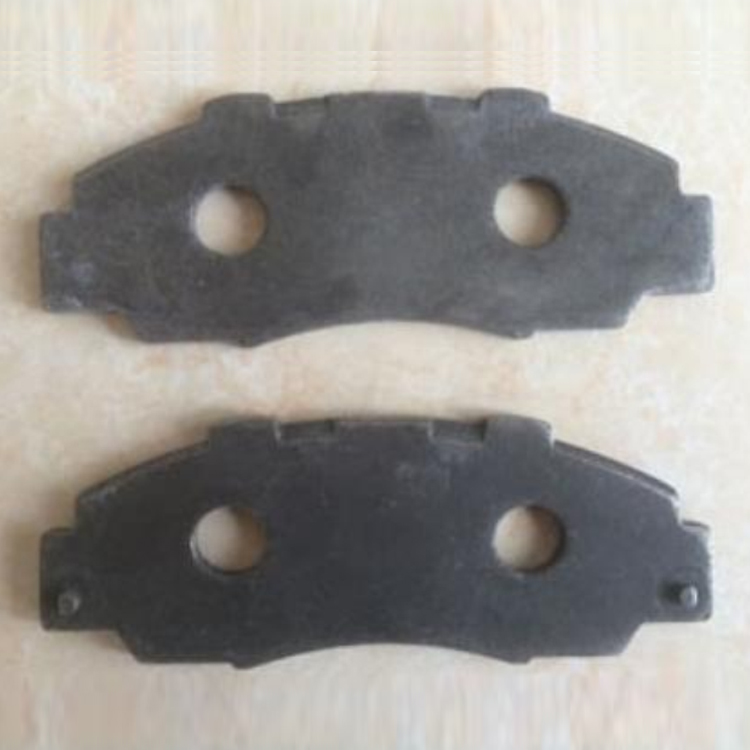

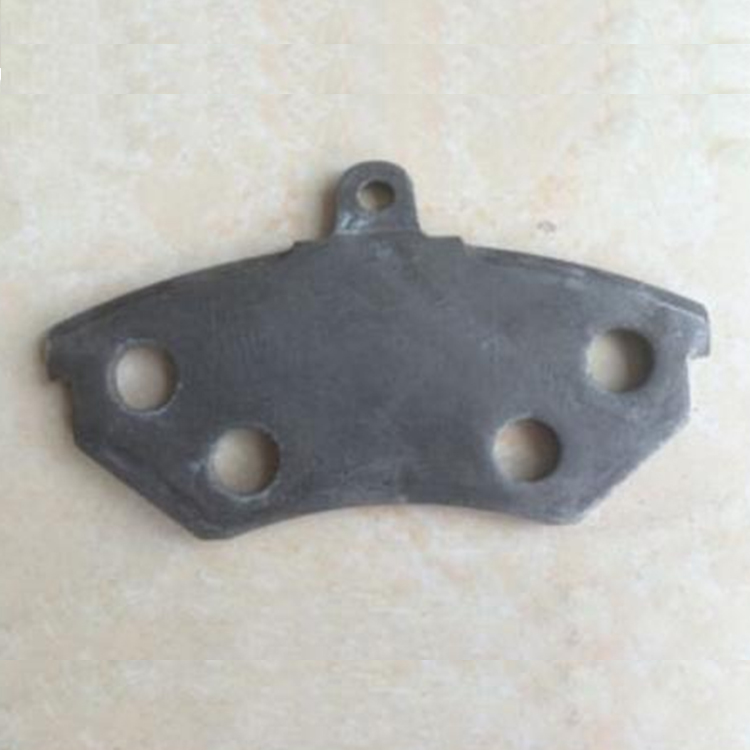
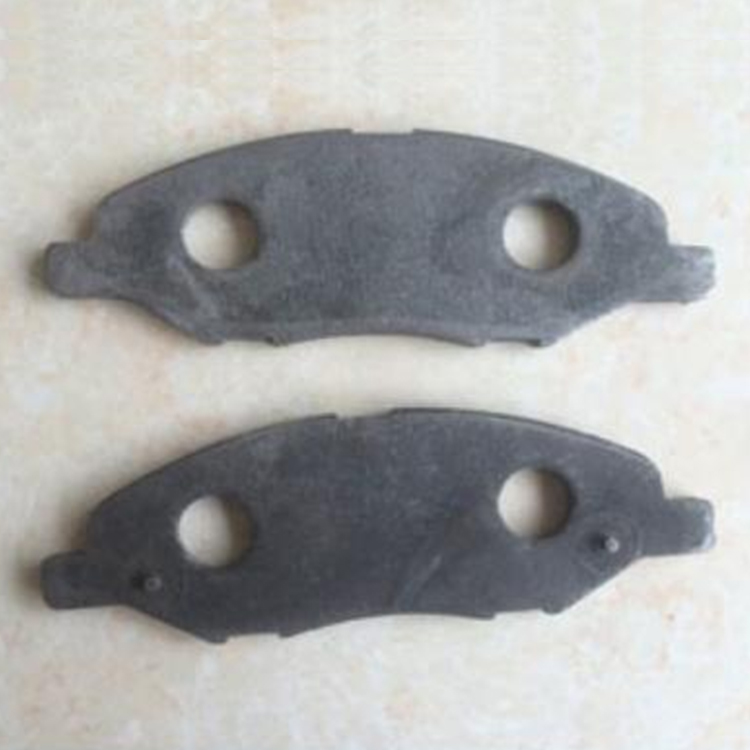
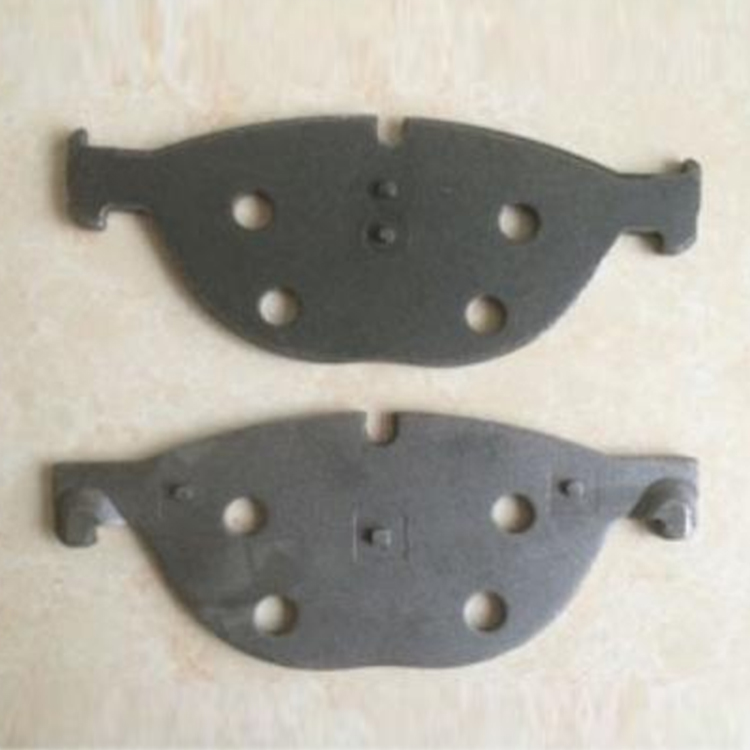
The quality of the DB1375 brake pad steel backing is directly tied to the safety of the vehicle and its occupants, directly impacting the vehicle's quality, reputation, and sales.
A standard steel blank typically requires the following stamping processes: shearing, blanking, trimming, punching, printing, riveting, and single precision stamping. The subsequent operations mainly include degreasing, polishing, phosphating, leveling, sheet inspection, packaging, and shipment.
Steel coils returned from the steel mill are then cut into blocks (1520*6000mm), followed by cutting steel strips slightly larger than the steel back by about 6mm; then, blanking is performed (160~200T press brake), which is commonly referred to as shaping. After the blanks are made, the edges are pressed at an angle. Since the steel back, when formed into friction blocks and assembled on the brake disc, requires a uniform斜edge for assembly and aesthetics, a whole斜edge is needed. This process can cause local expansion, so for high-quality products, an additional flattening process is required. Next is punching (80T press brake), after which, using the holes as a reference, the customer's name, model number, and other information are printed (80T press brake), followed by the punching of fasteners (80T press brake).