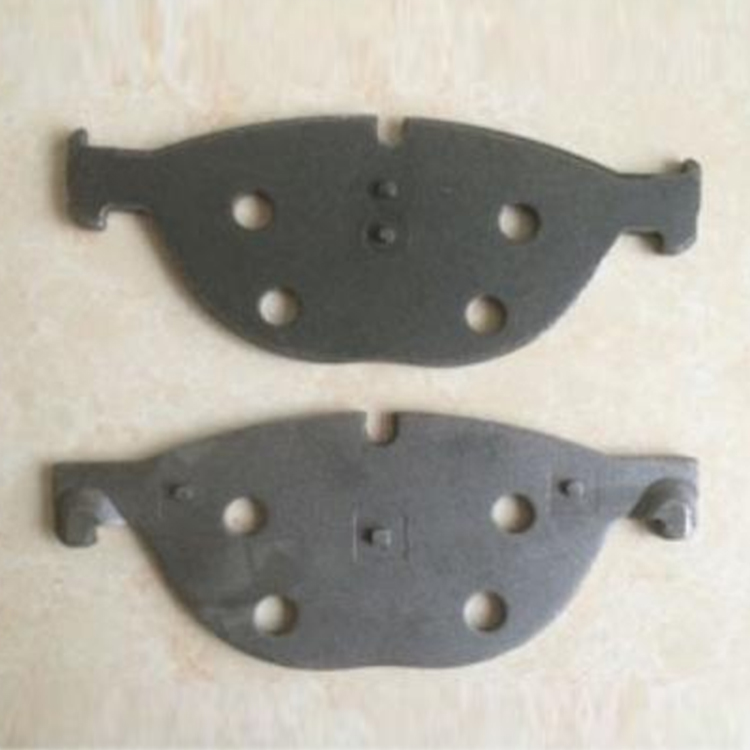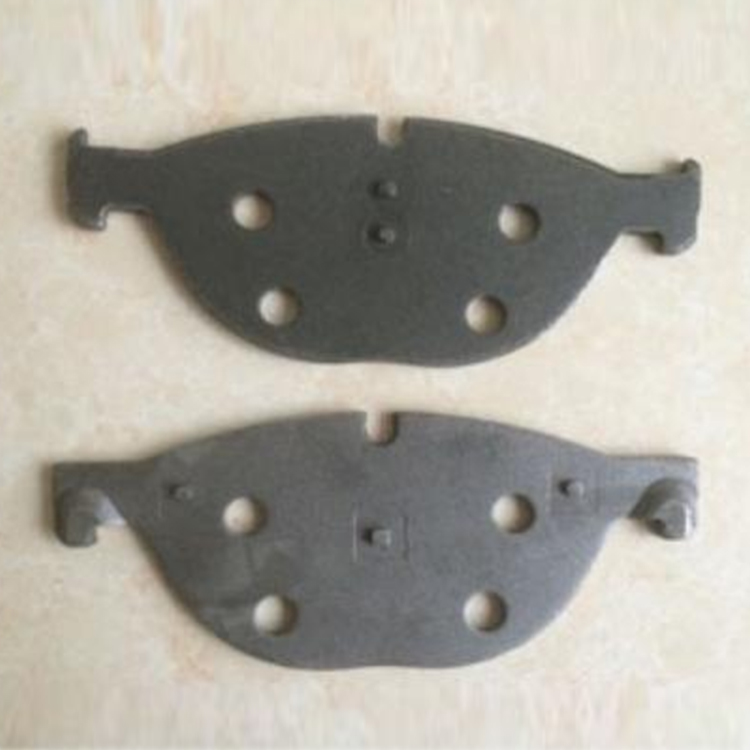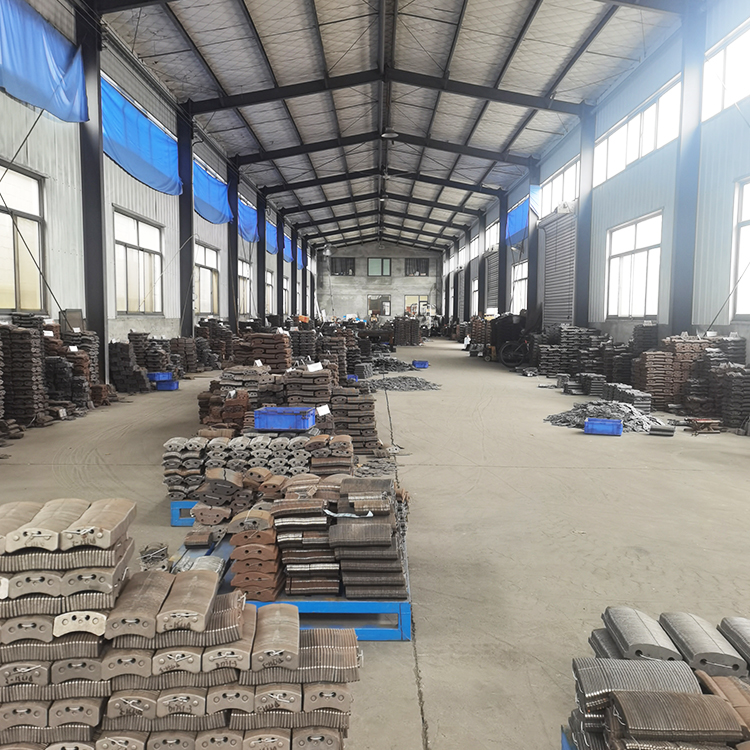

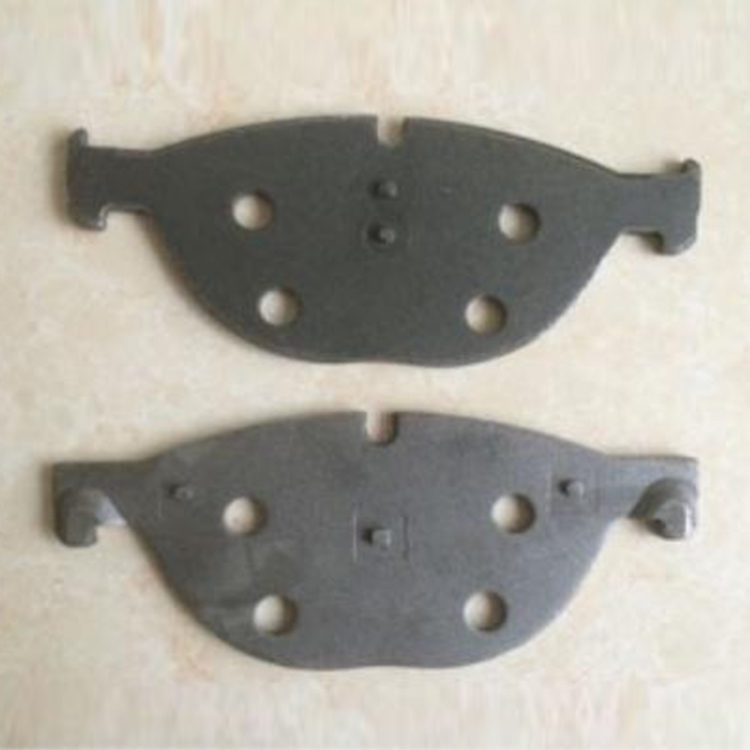

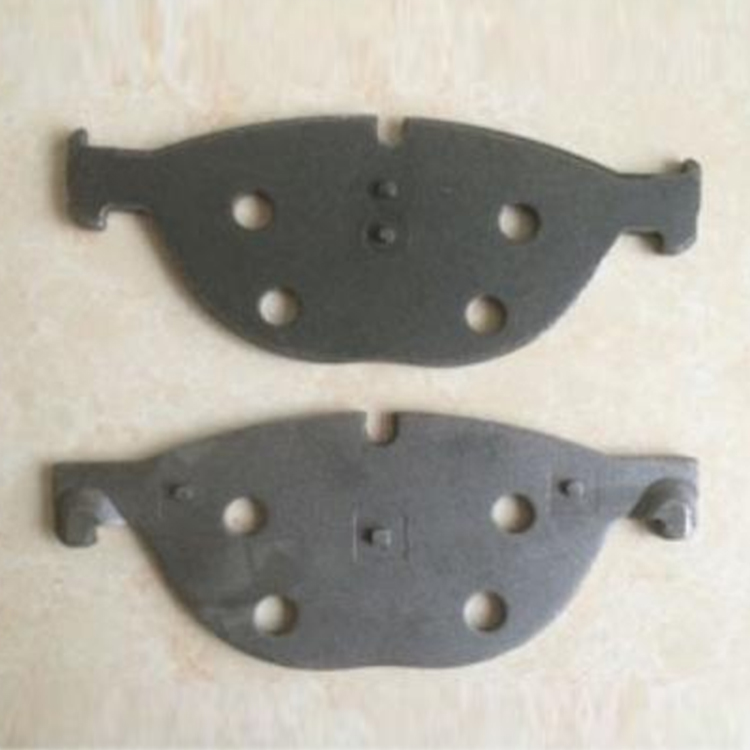
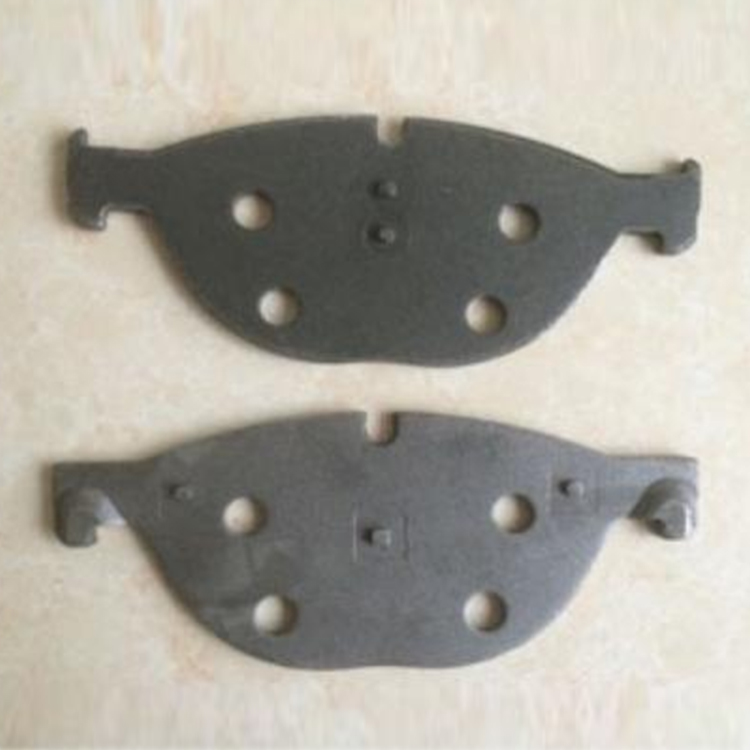
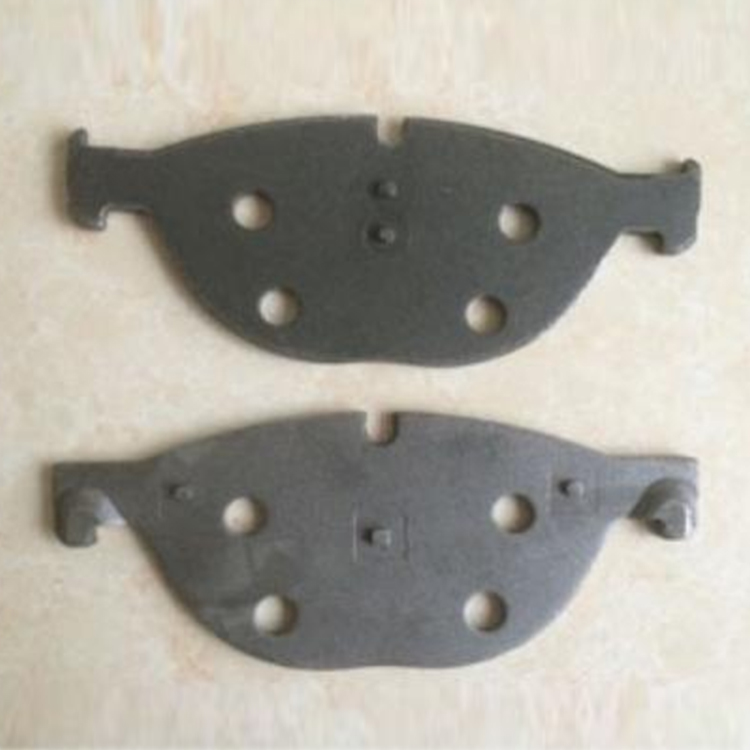








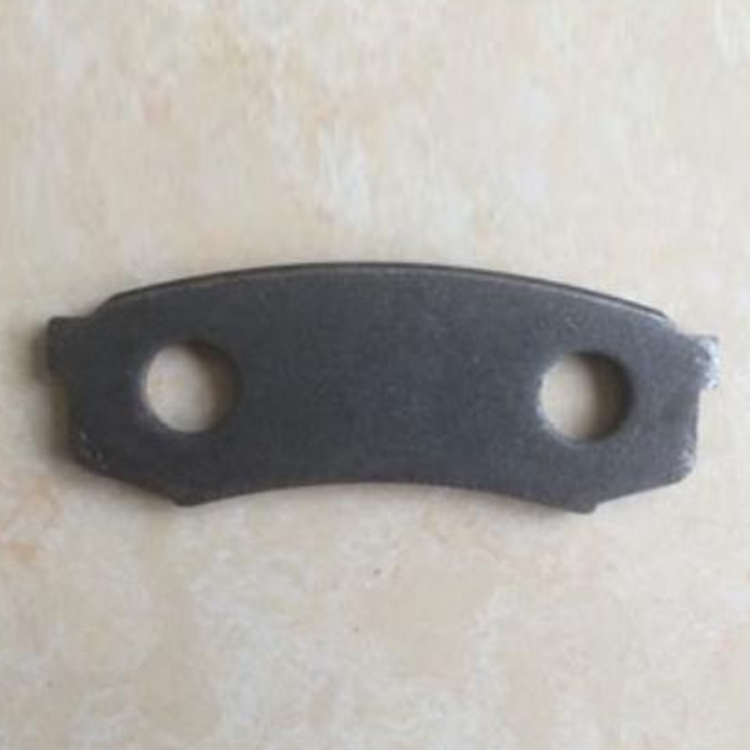
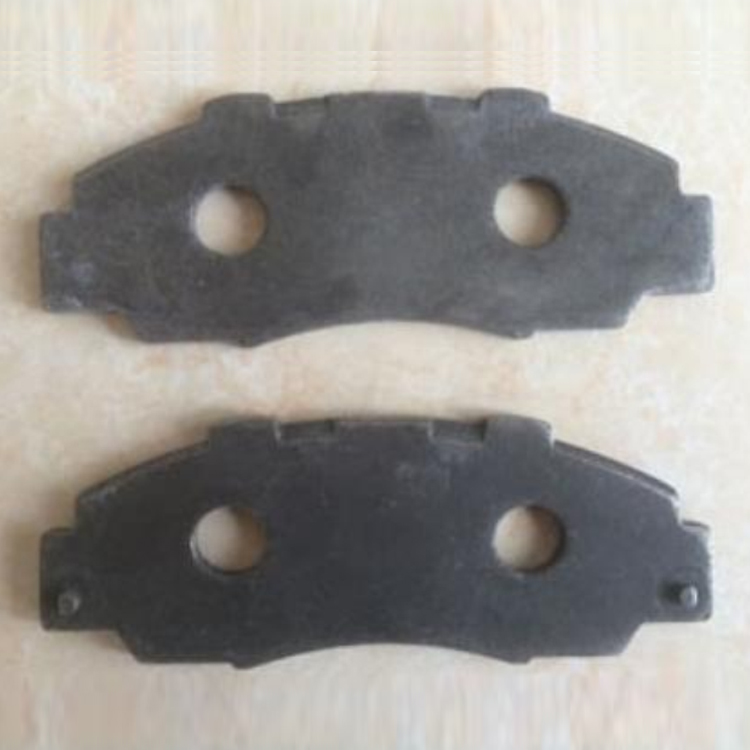

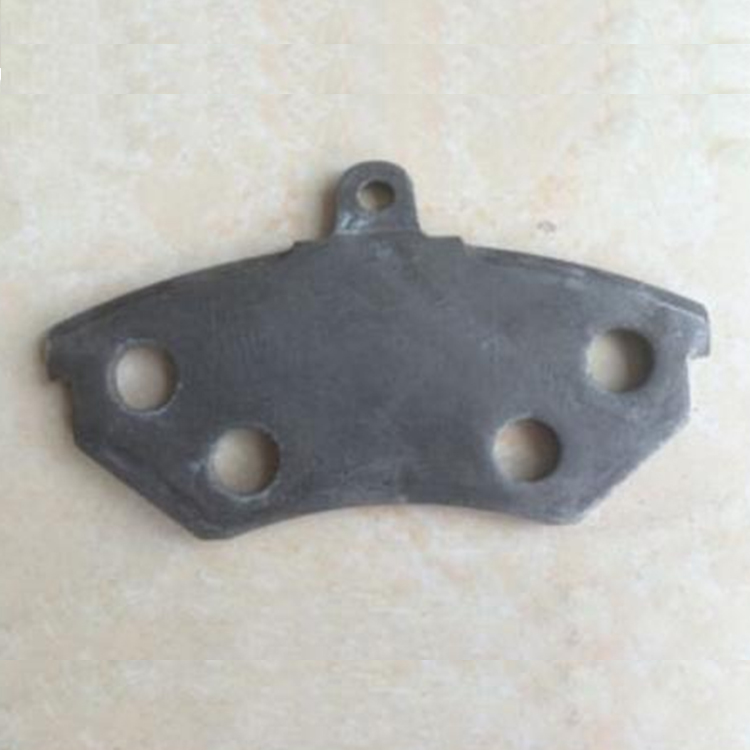
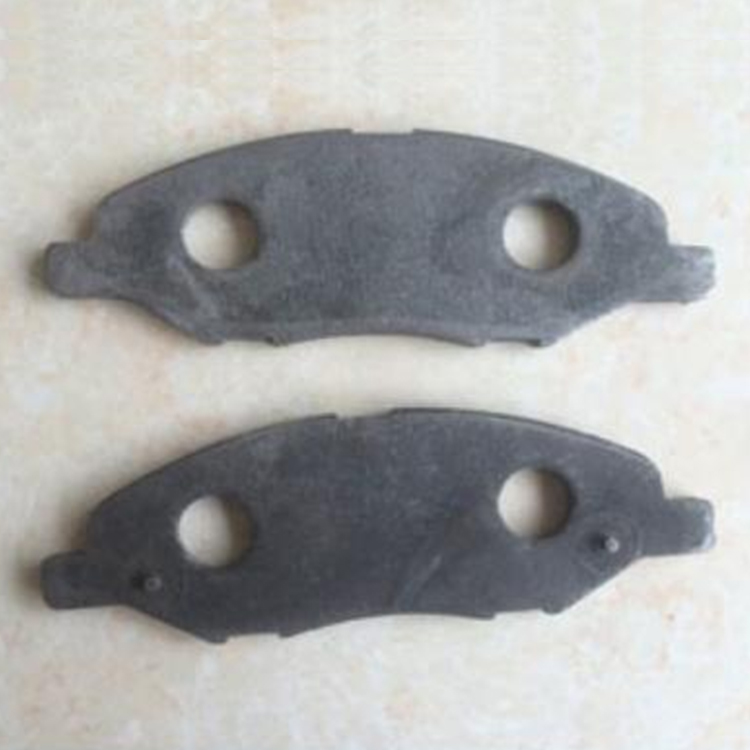
The steel backing plate for the D1409 brake pads is delivered as coil material from the steel mill. It needs to be cut into blocks (1520*6000mm) and then further cut into steel strips slightly larger than the steel backing by about 6mm. Next, the blanking process (160~200T press brake) is carried out, which is commonly referred to as forming. After the rough blanks are made, the edges are pressed斜 to create a uniform slope, as the assembled friction blocks on the brake disc require a consistent slope for both assembly and aesthetics. During the pressing process, local expansion can occur, so for high-quality products, an additional flattening step is required. Following this, the holes are punched (80T press brake). After punching, the holes are used as a reference point to print customer names, style numbers, and other information (80T press brake), and then the rivets are punched (80T press brake).