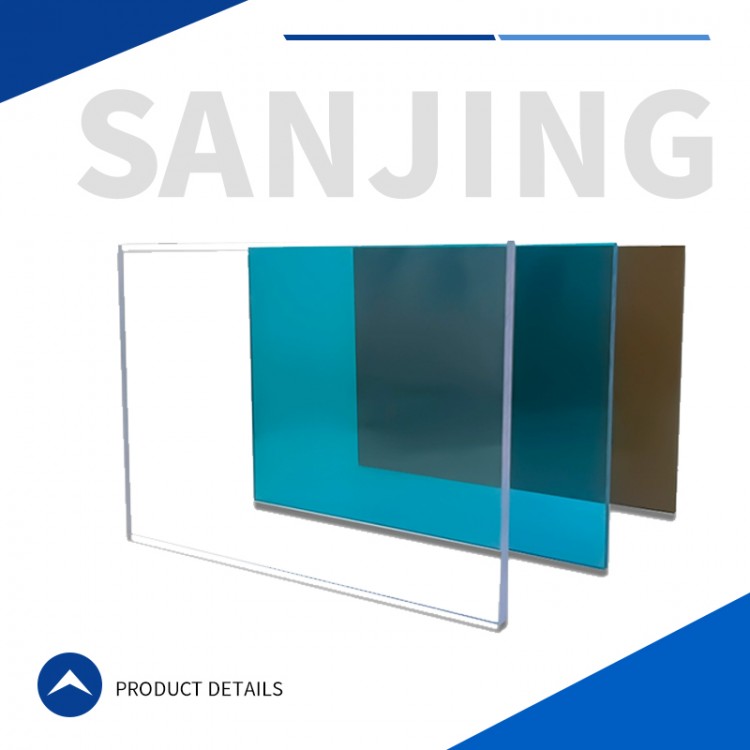







Polycarbonate is colorless, transparent, heat-resistant, impact-resistant, and flame-retardant to BI level, maintaining excellent mechanical properties within normal operating temperatures. Compared to polycarbonate with similar properties, it has better impact resistance, higher refractive index, and good processing characteristics, with flame-retardant properties at UL94 V-2 level without the need for additives. However, polycarbonate is relatively more expensive than polycarbonate and can produce large-scale devices through bulk polymerization methods.PCThe wear resistance of materials is relative. When comparing ABS material with PC material, PC material has better wear resistance. However, compared to most plastic materials, polycarbonate has relatively poor wear resistance, falling in the lower to middle range. Therefore, some polycarbonate devices used for applications prone to wear require special surface treatment.
| Physical Properties | Rated Value | Unit system | Testing Method |
Density (23°C) | 1.15 | g/cm³ | ISO 1183 |
Melt Flow Rate (Melt Flow Rate) (330°C/2.16 kg) | 10 | g/10 min | ISO 1133 |
Melting Volume Flow Rate (MVR) (330°C/2.16 kg) | 10.0 | cm³/10min | ISO 1133 |
Shrinkage Rate 3 | ISO 294-4 | ||
Vertical flow direction: 2.00 mm | 0.85 | % | |
Flow Direction: 2.00 mm | 0.85 | % | |
Absorption rate | ISO 62 | ||
Saturated, 23°C | 0.30 | % | |
Balanced, 23°C, 50% RH | 0.12 | % | |
| Hardness | Rated Value | Unit system | Testing Method |
Ball indentation hardness | 121 | MPa | ISO 2039-1 |
| Mechanical Properties | Rated Value | Unit System | Testing Method |
Tensile Modulus (23°C) | 2400 | MPa | ISO 527-2/1 |
Tensile stress (Indenture, 23°C) | 72.0 | MPa | ISO 527-2/50 |
Tensile strain (Bend, 23°C) | 6.8 | % | ISO 527-2/50 |
Nominal Tensile Fracture Strain (23°C) | > 50 | % | ISO 527-2/50 |
Bending Modulus 4 (23°C) | 2400 | MPa | ISO 178 |
Bend Stress 4 (23°C) | 108 | MPa | ISO 178 |
| Impact resistance | Rated Value | Unit system | Testing Method |
Simply supported beam, gap-free impact strength | ISO 179/1eU | ||
-30°C | No breaks | ||
23°C | No breaks |
| Thermal performance | Rated Value | Unit system | Testing Method |
Hot deformation temperature | |||
0.45 MPa, Annealed | 174 | °C | ISO 75-2/B |
1.8 MPa, as-rolled | 159 | °C | ISO 75-2/A |
Vicat Softening Temperature | 184 | °C | ISO 306/B120 |
Linear Coefficient of Thermal Expansion | ISO 11359-2 | ||
Flow: 23 to 55°C | 6.5E-5 | cm/cm/°C | |
Horizontal: 23 to 55°C | 6.5E-5 | cm/cm/°C | |
RTI Elec | 150 | °C | UL 746 |
RTI Imp | 130 | °C | UL 746 |
RTI | 150 | °C | UL 746 |