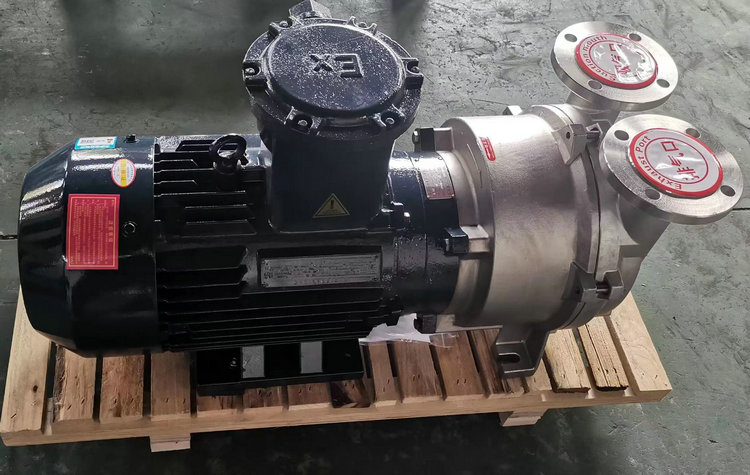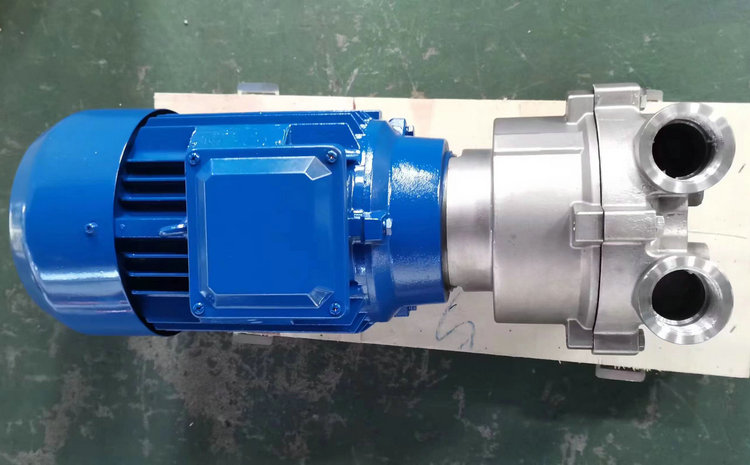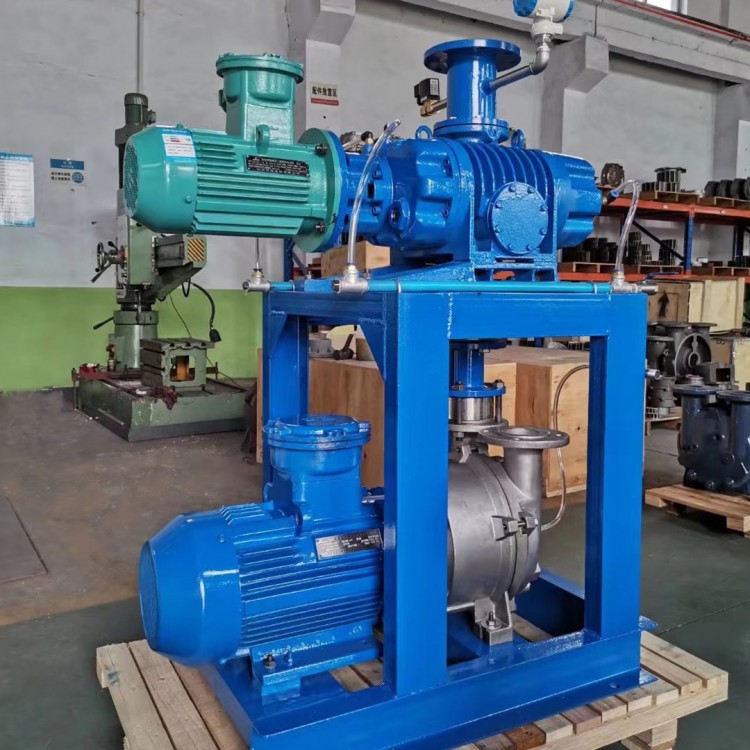

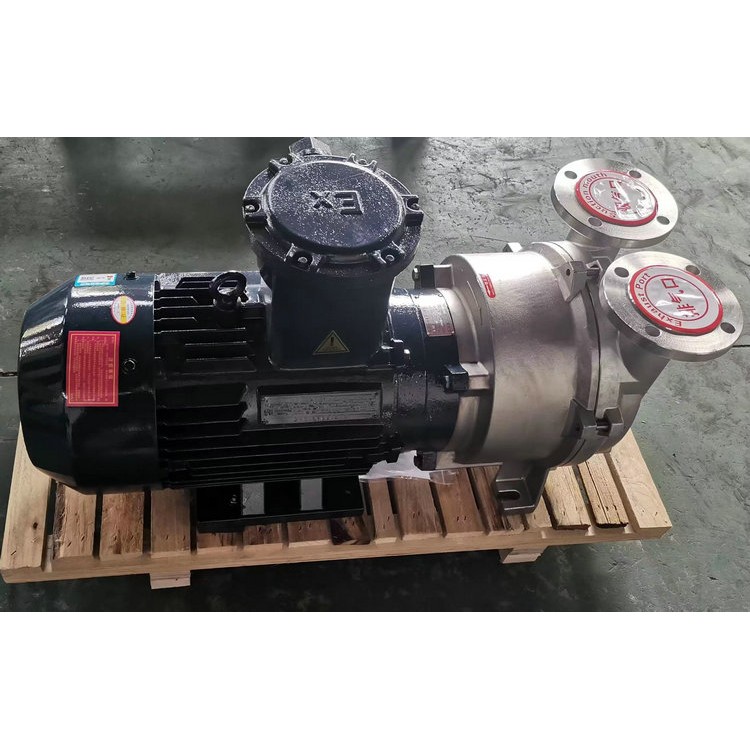

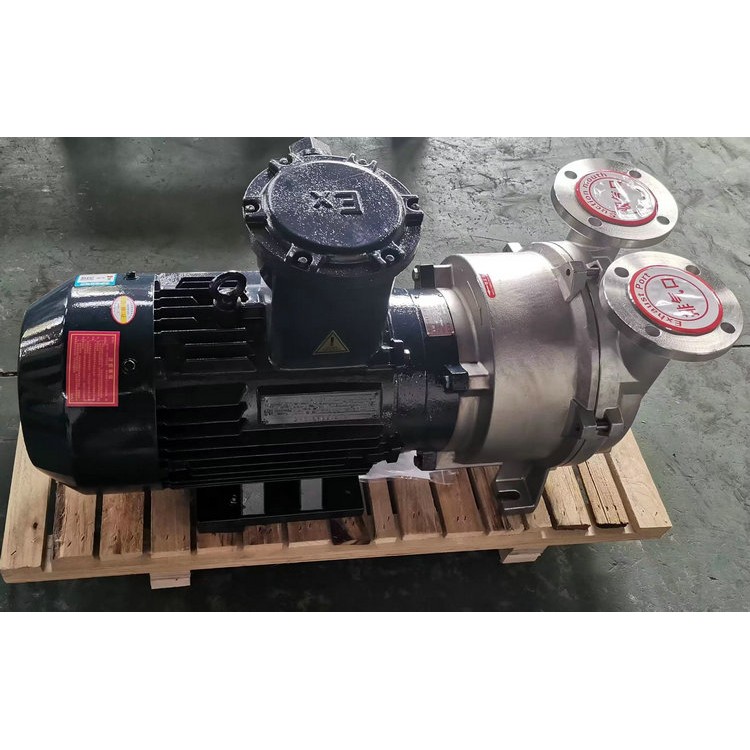
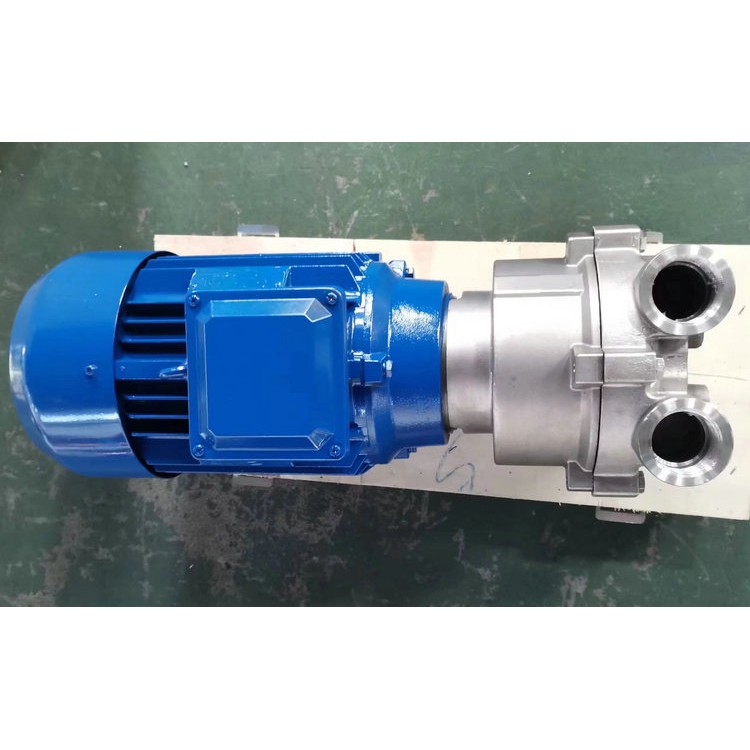
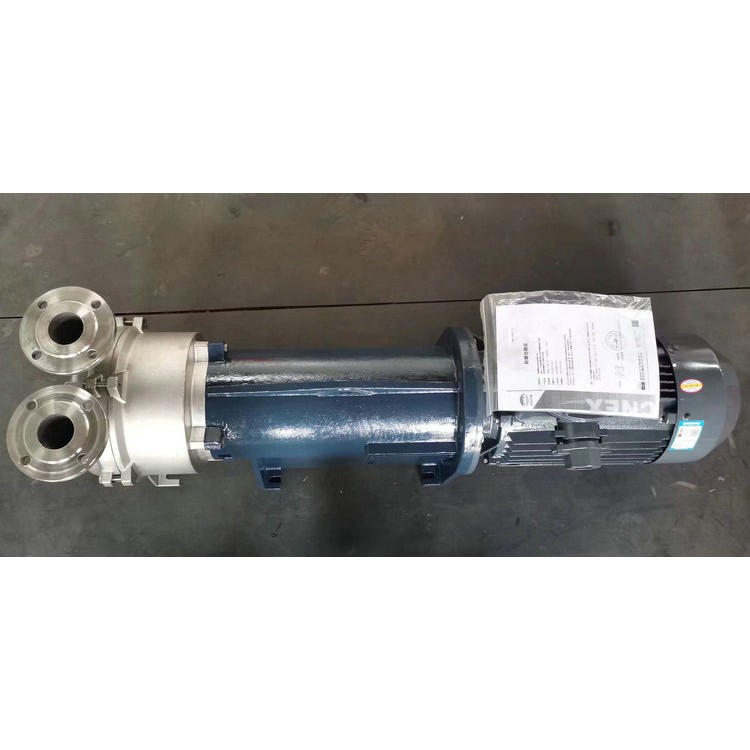












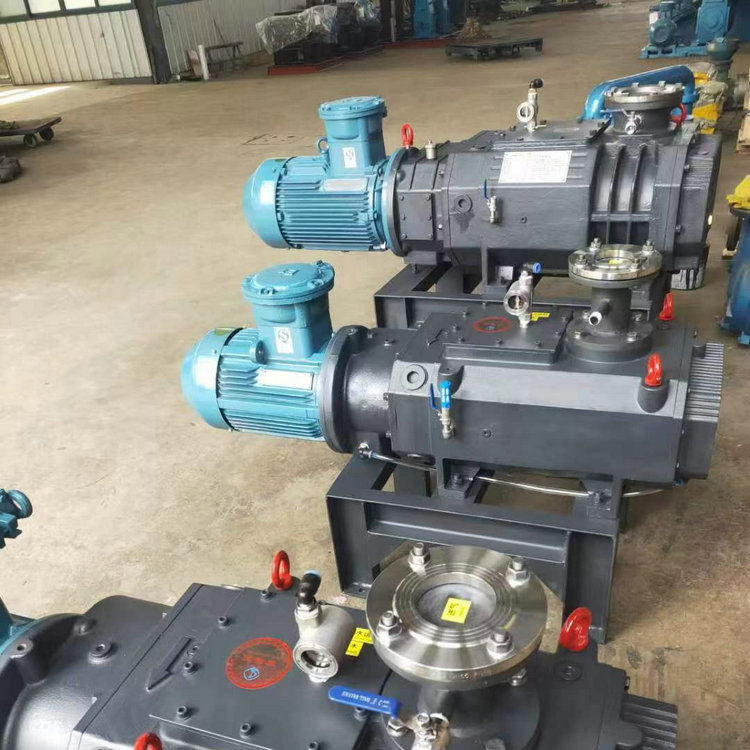
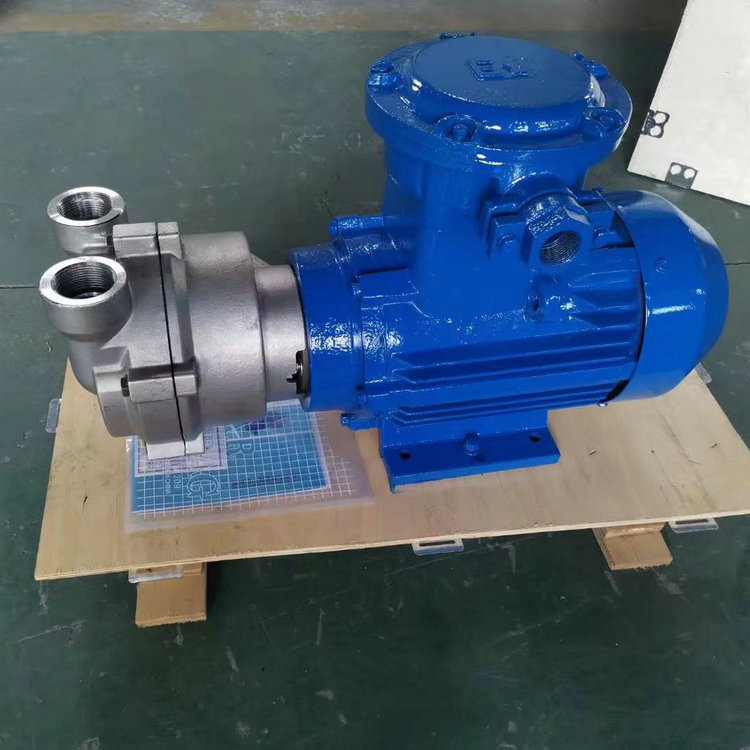
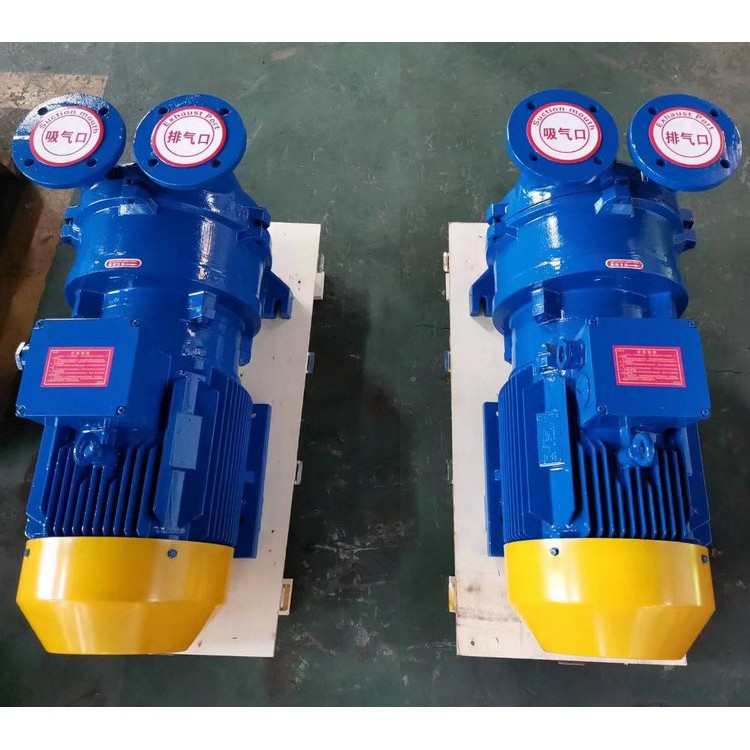
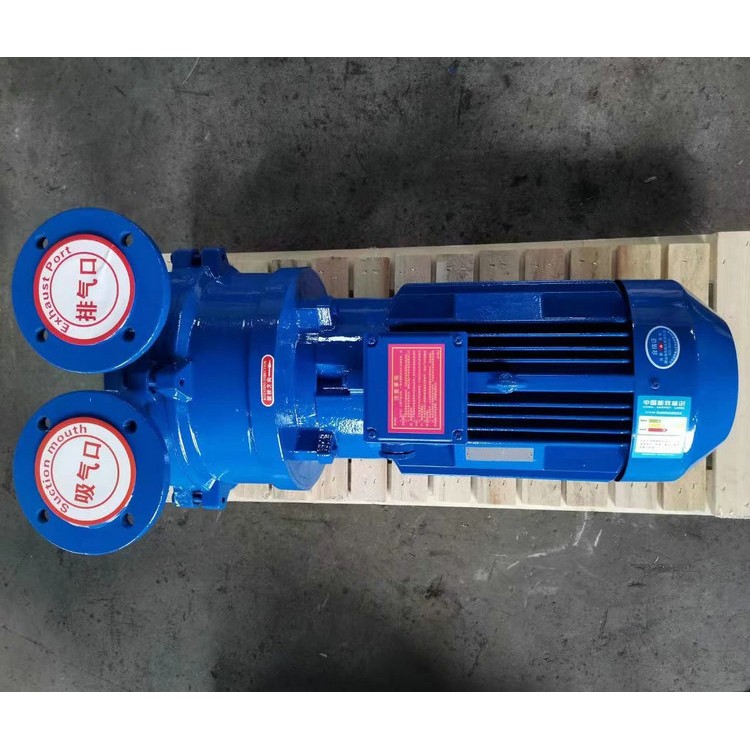
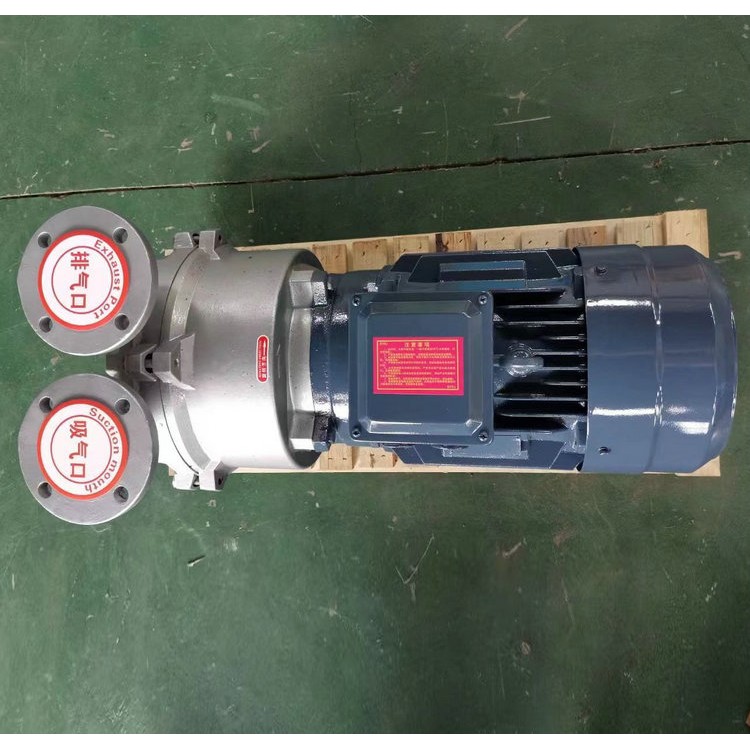
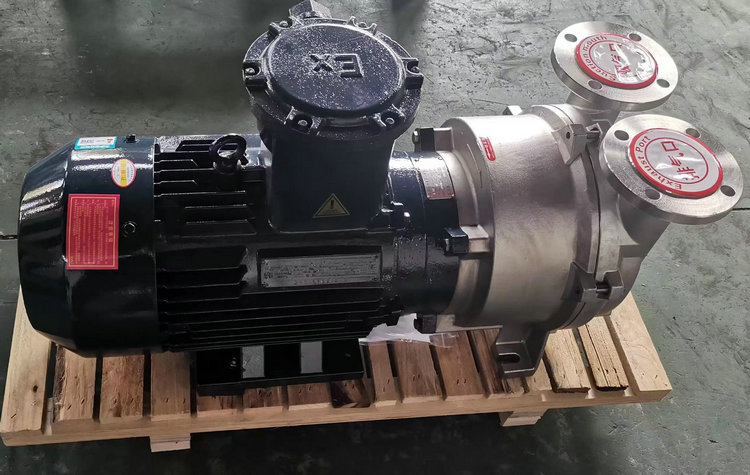
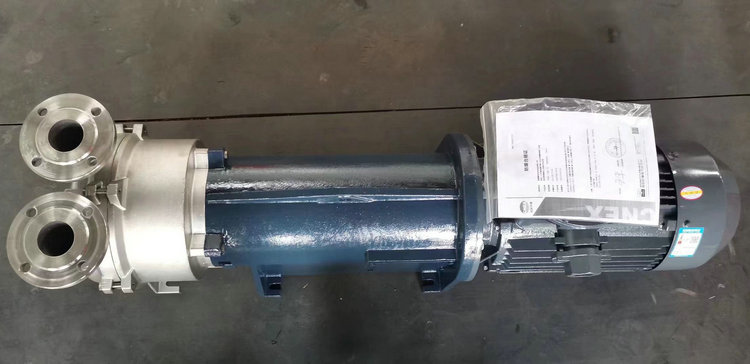
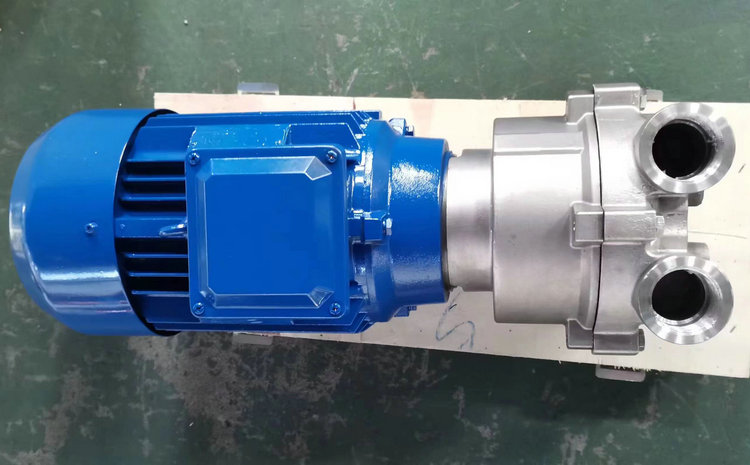
2BV Liquid Ring Vacuum Pump
The extracted gas is removed by the 2BV oil ring pump and discharged into the gas-oil separator. Inside the separator, oil and gas are separated, with the gas exiting through the exhaust port and the oil collected and cooled within the oil tank. The cooled oil is then re-circulated by being吸入 by the oil ring pump through the working fluid inlet. The heating of the pump oil is due to the heat brought by the extracted gas and the heat generated by the oil ring pump itself.
The oil ring vacuum pump can operate under temperatures of ±20-90℃ with minimal performance change (the performance of a water ring pump drastically decreases when the water temperature exceeds 50℃), and due to the higher oil temperature, water vapor is less likely to condense, making the pump oil less prone to emulsification and thus extending the service life of the pump oil.
The 2BV series oil-sealed vacuum pumps are based on the 2BV series water-sealed vacuum pumps, with the working fluid changed from water to transformer oil. The ultimate vacuum is significantly improved due to the lower saturated vapor pressure of the oil, reaching as low as 6.7 mbar absolute pressure, even down to 1.3 mbar. In contrast, water-sealed vacuum pumps can only achieve an absolute pressure of 33 mbar due to the higher saturated vapor pressure of water. For removing larger amounts of polluted gases and in certain special operating conditions, the working fluid of the 2BV series oil-sealed vacuum pumps can also be water or other liquids. As the pump is a closed-loop system, it greatly reduces environmental pollution. The ultimate vacuum is determined by the saturated vapor pressure of the working fluid.