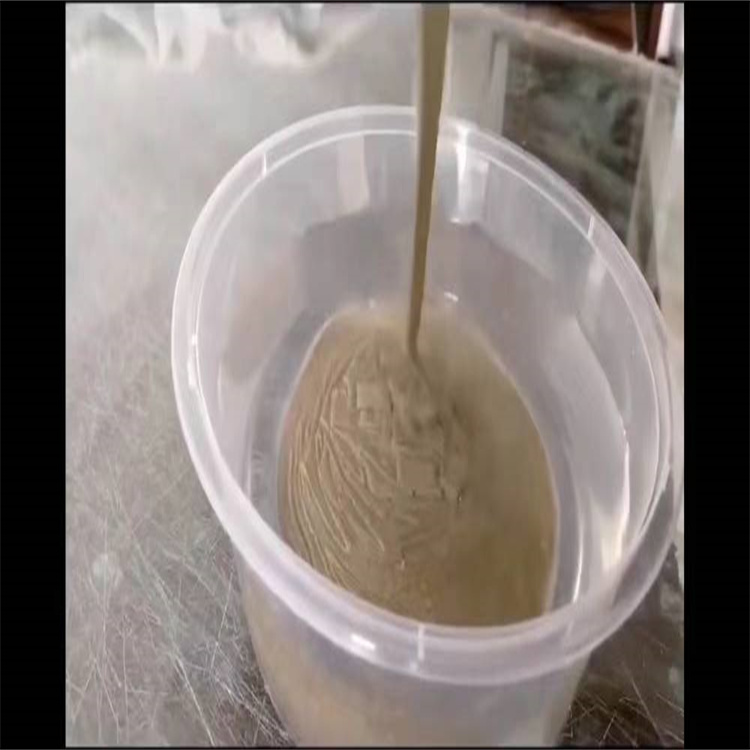
















SJ - Subsea Anti-dispersible Grouting Material
I. Product Features:
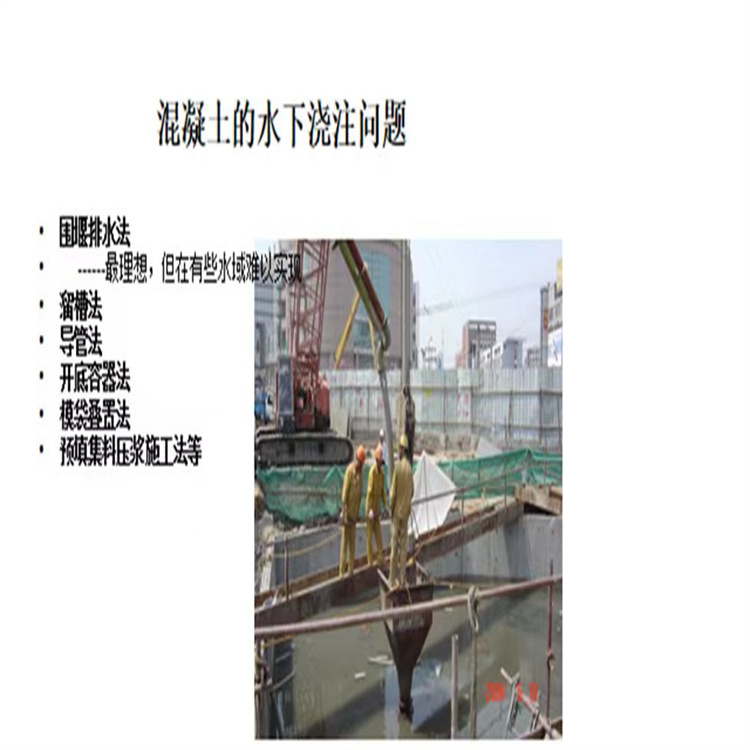
Underwater anti-dispersible grouting material is suitable for various underwater concrete construction projects, including sealing the bottom of caisson, cofferdam, immersed caisson, rock-grouting, continuous wall grouting underwater, leveling and filling of underwater foundations, and large-area underwater works without construction joints such as RC panels. It is also used in large-diameter cast-in-place piles, wharfs, dams, reservoir repairs, waterproofing and reinforcement of bottom slabs at drainage outlets, underwater bases, seawall revetments, slope protection,桩封堵漏, and underwater works that are difficult to construct with ordinary concrete. The SJ-Underwater anti-dispersible grouting material is not restricted by water depth, construction surface, or amount of concrete (has been used in underwater projects as deep as 37.8m and varying from several cubic meters to thousands of cubic meters of concrete. It is also unaffected by tidal influence during concrete construction in tidal sections.
。
II. Performance Specifications:
DL/T 5100-2014 "Technical Code for Concrete Admixtures in Hydropower Engineering"
Inspection ItemsIndicator
Permeability rate, %〈0.5
Gas content, %〉4.5
Settling volume change over time, mm30min 〈30
Anti-dispersibilityTurbidity content, mg/L〈150
pH Level〈12
Setting Time, hInitial setting〉5
Final Condemnation〈24
Waterway strength ratio, %7d〉60
28d〉70
Section 3: Application Scope:
Underwater non-dispersible grouting materials are suitable for various underwater concrete projects. They can be used for cofferdam bottom sealing, temporary cofferdams, caissons, riprap grouting, underwater continuous wall casting, leveling and filling of underwater foundations, RC panels, and more. They provide large areas without construction joints, large-diameter cast-in-situ piles, wharfs, dam repairs, waterproofing and anti-erosion reinforcement of drainage outlets, underwater covers, sea dyke revetments, slope protection, pile foundation blockages, and underwater structures that are difficult to build with ordinary concrete. CGM underwater non-dispersible grouting materials are not limited by water depth, construction surface, or concrete volume (already constructed to a depth of 37.8m, with concrete volumes ranging from a few cubic meters to several thousand cubic meters). Tidal sections are unrestricted and affected by tides.
IV. Construction Technique:
Before grouting, prepare mixers, grouting equipment, molds, and maintenance items.
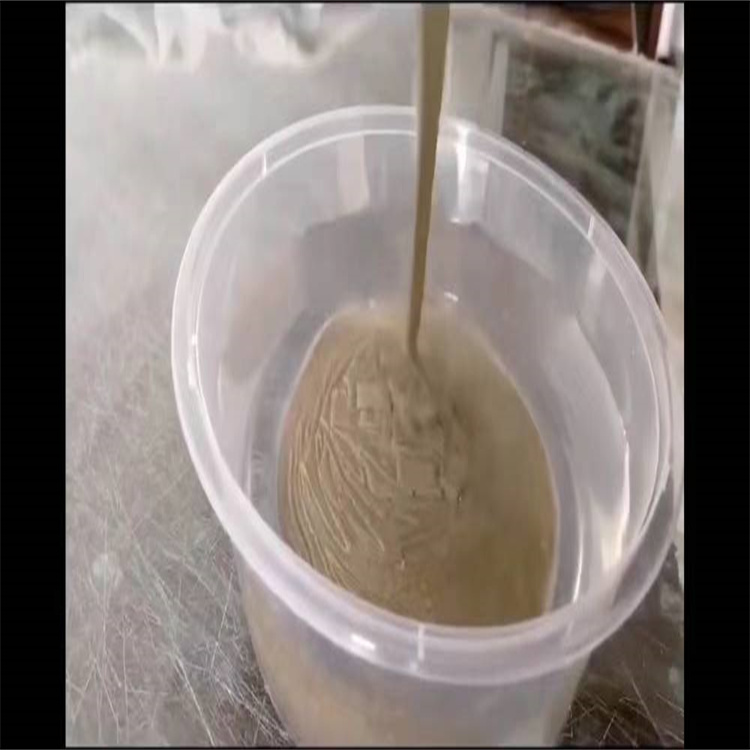
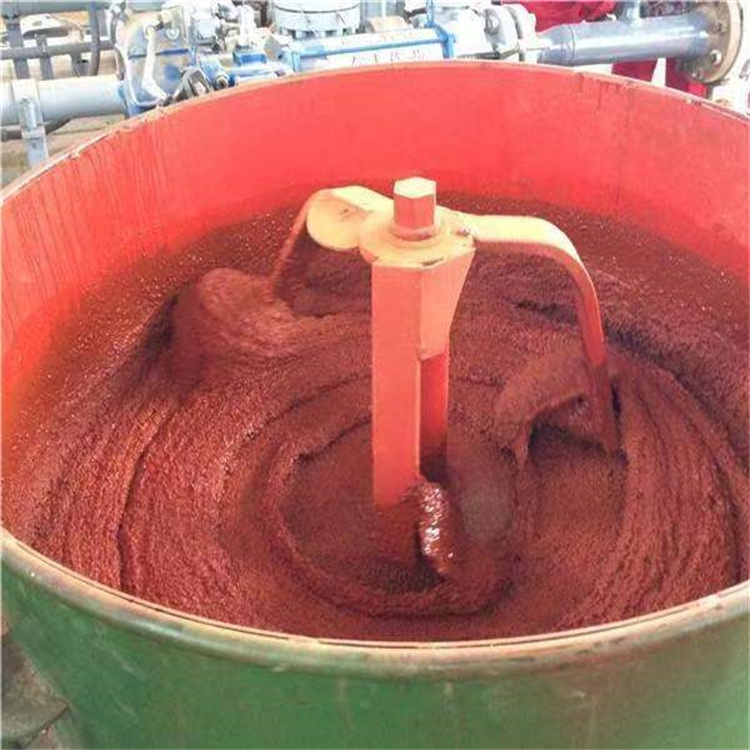
When mixing cement-based grouting materials, the water-to-material ratio should be 13%. It is strictly prohibited to add excess water. Preferably, start by adding 2/3 of the water and mix for about 3 minutes, then add the remaining water and mix until uniform. Mechanical mixing is recommended. The mixing site should be close to the grouting site. The mixed slurry should be used up within 15 minutes.
Data in the inspection report are measured under the national standard environment of (20±1)℃. If the ambient temperature is lower than this, the final setting time and the formation of standard strength will be delayed due to the slower reaction rate.
Underwater concrete structure modification and reinforcement grouting:
The concrete surface in contact with the mud-based grouting material should be thoroughly roughened.
Reinforcement concrete structure defect repair: Remove loose concrete to expose the steel bars, and cut the edges of the repair area into a vertical shape.
Before grouting, all debris, dust, or other foreign matter should be cleared away, and the concrete surface should be moistened.
Supporting formwork: The pouring area is supported by formwork, with the top of the formwork elevated 20cm above the water level, while ensuring the water inside the formwork remains static.
Incorporate the well-mixed anti-dispersing grouting material into the mold and gently tap the mold. During the grouting process, water within the mold will continuously be排出 as the grouting material is poured in, until the grouting is complete, ensuring all excess moisture is expelled.
When the grouting layer thickness exceeds 150mm, appropriate measures should be taken to prevent the formation of temperature cracks.
V. Maintenance Process:
During grouting, the average daily temperature should not be below 5°C. After grouting, the exposed parts should be promptly sprayed with maintenance agent or covered with plastic film, and a wet straw bag should be placed on top to maintain moisture. When using plastic film to cover, the exposed surface of the cementitious grout material should be covered tightly to retain condensation water inside the plastic film. If it is not convenient to water the grout material surface, a maintenance agent can be sprayed.
Six: Packaging and Storage
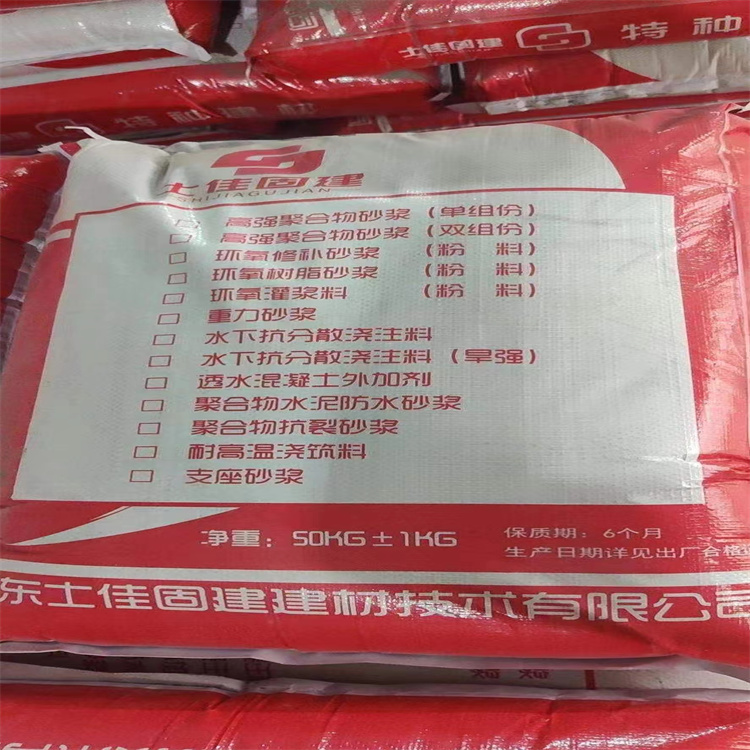
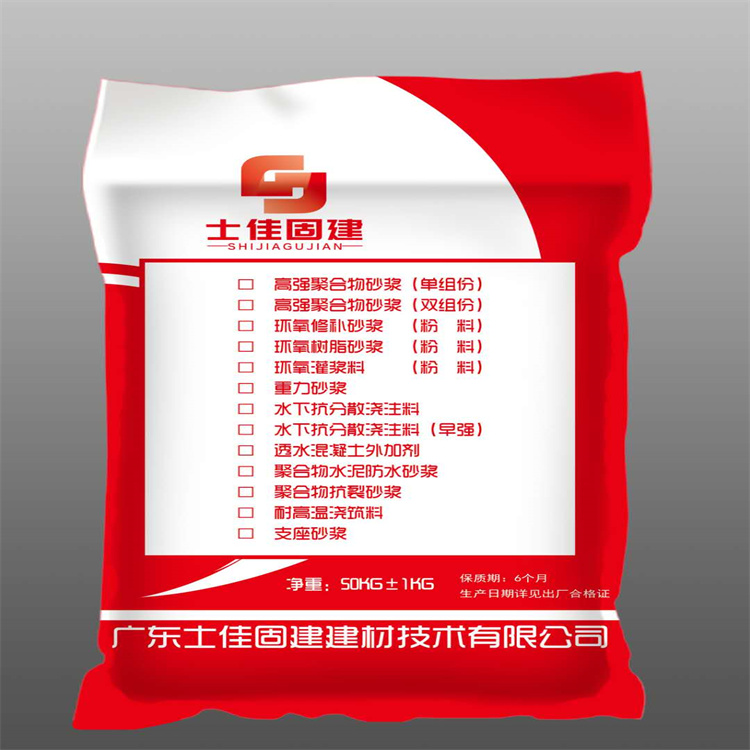
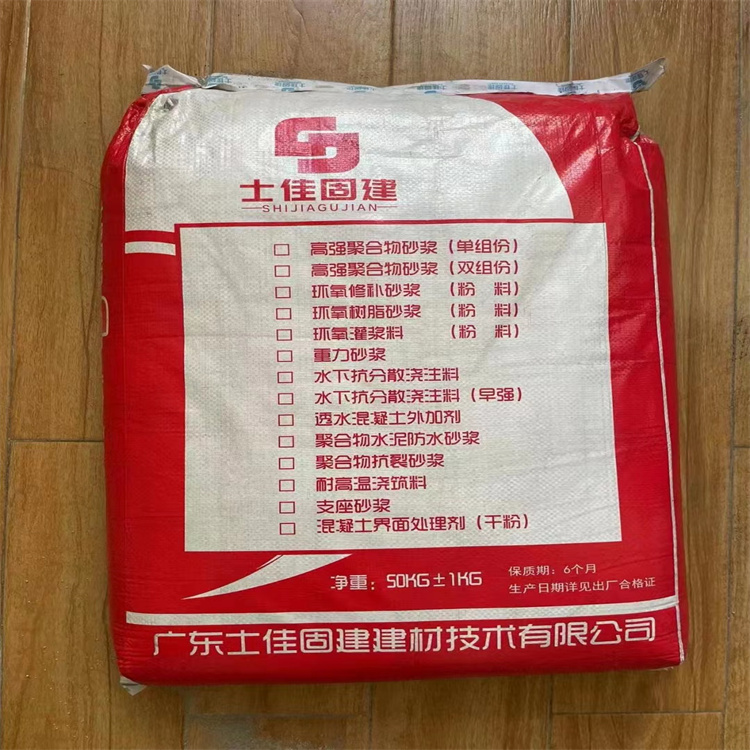
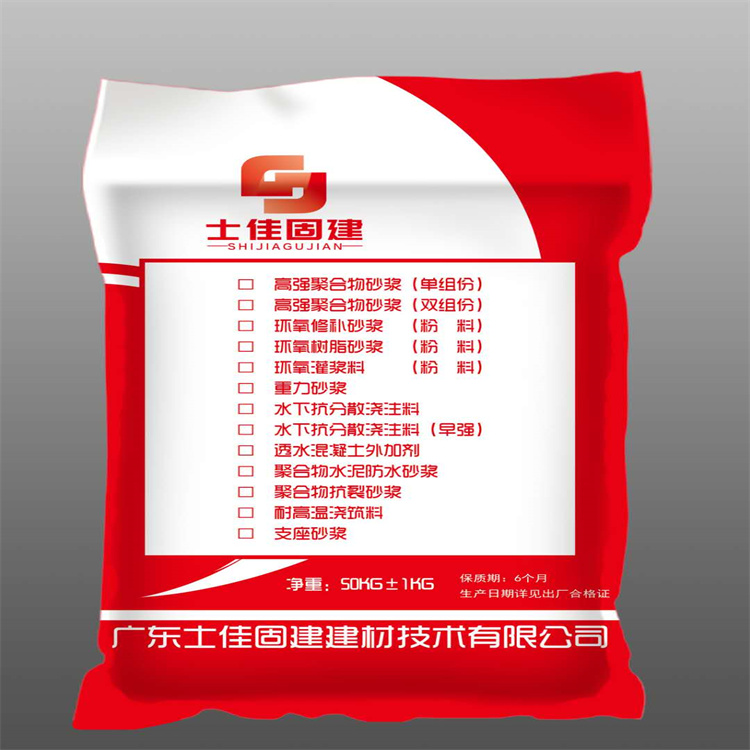
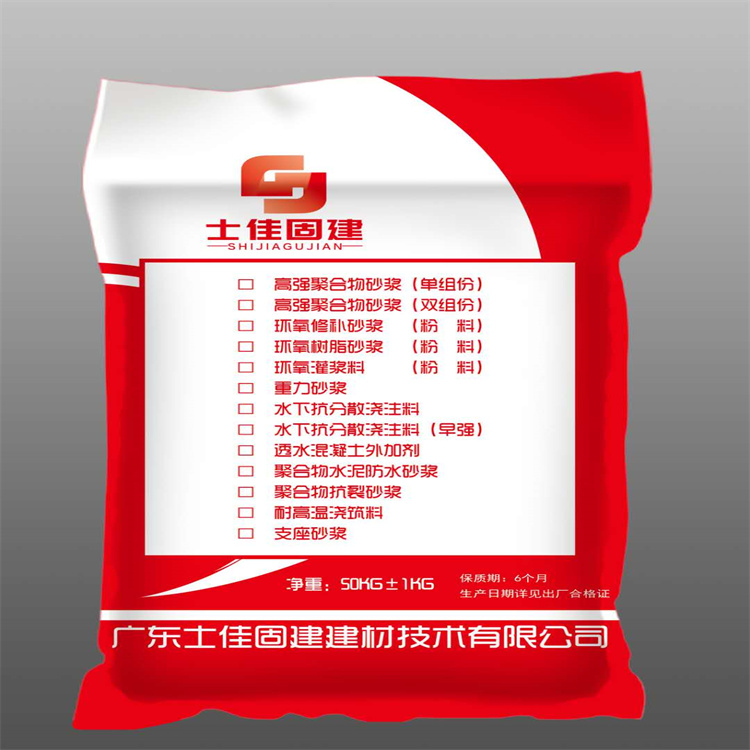
Shelf Life: Effective for 6 months from the date of manufacture.
Store in a cool, dry, and well-ventilated storage room.
Do not expose to direct sunlight, avoid rain, and be cautious of freezing during winter.