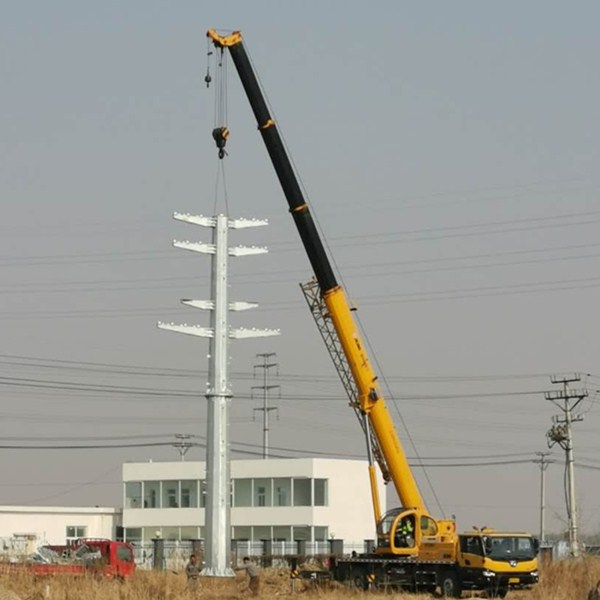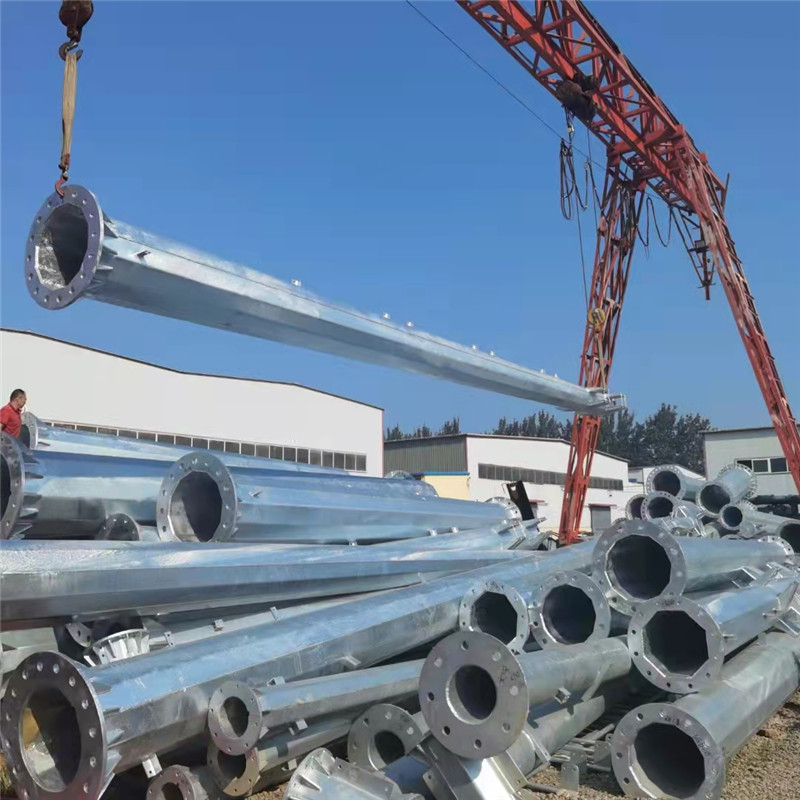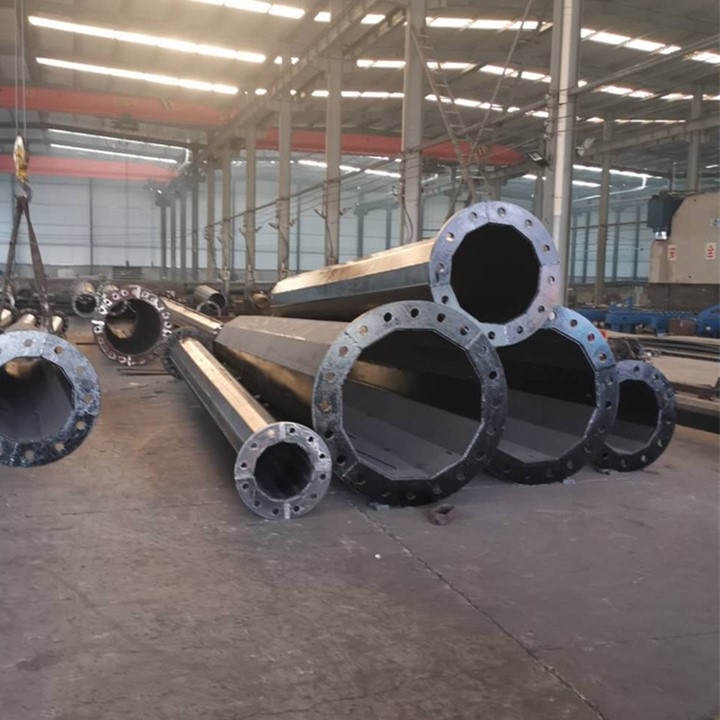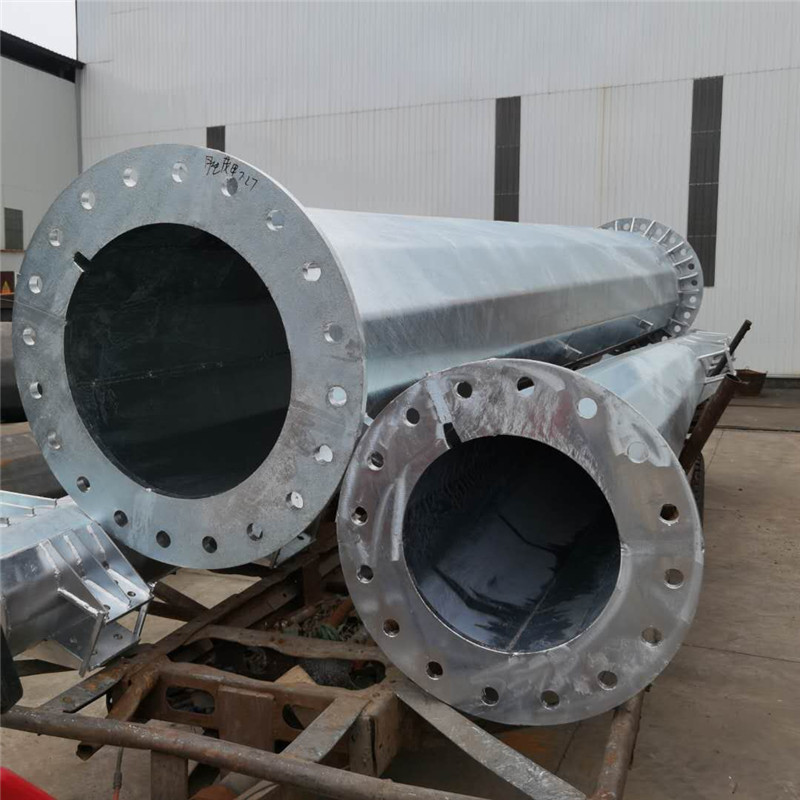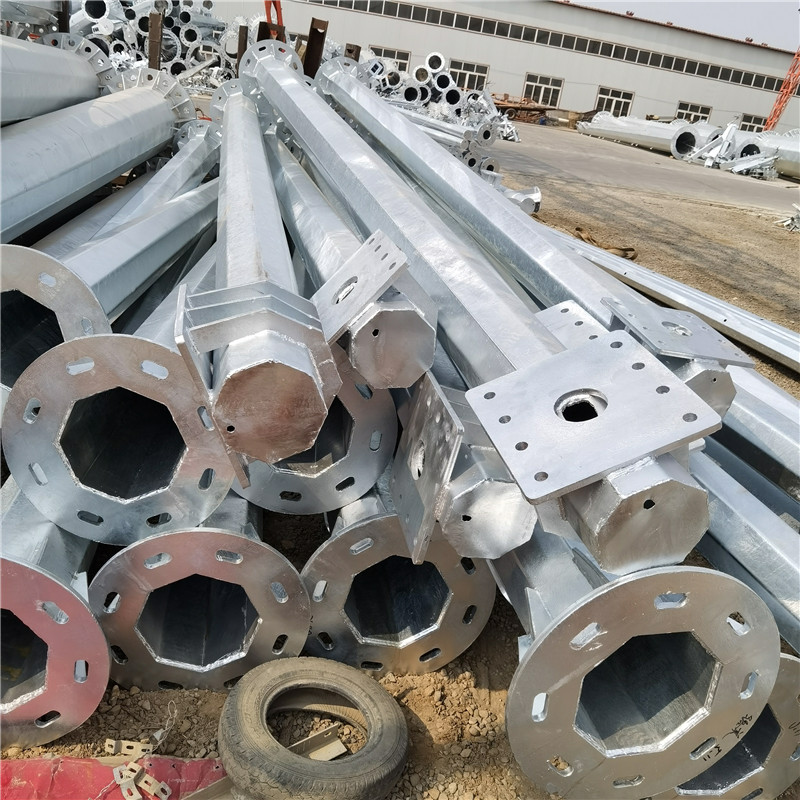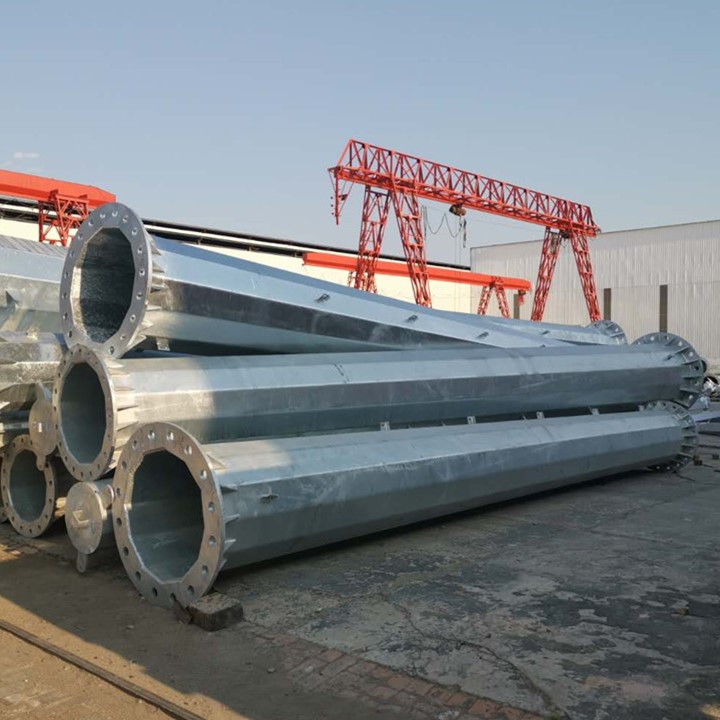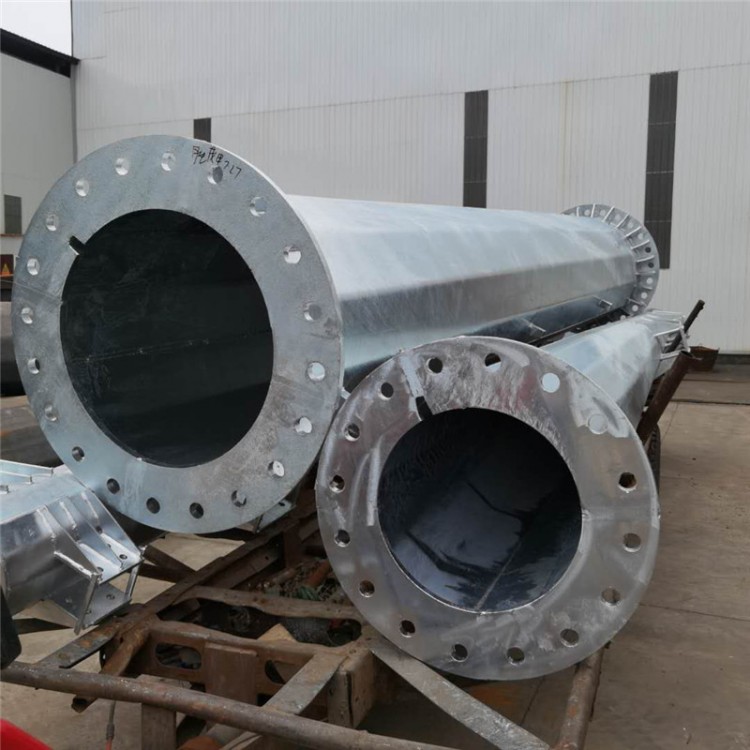


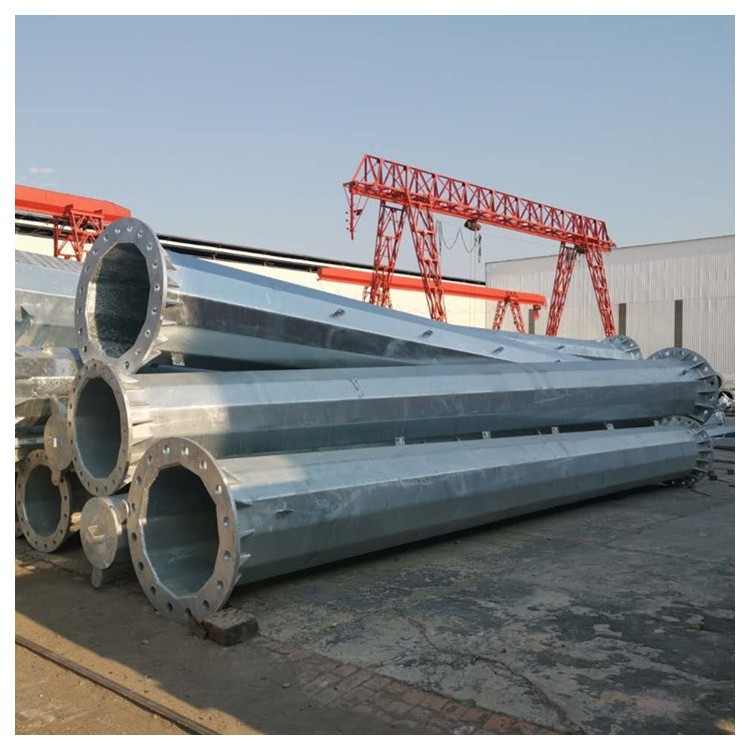













Electric steel pole towers can be divided into four major categories based on their functional use.
Electric steel pole towers can be categorized by their functional use into load-bearing steel pole towers, straight steel pole towers, transposition steel pole towers, and large span steel pole high towers.
Based on the number of transmission lines suspended from the same steel pole tower, they can be further categorized into single-circuit, double-circuit, and multi-circuit steel pole towers.
Load-bearing steel pole towers are crucial structural components of transmission line routes. They are set up in sections, anchoring the tension insulator strings of conductors onto the towers, bearing the tension forces of the conductors and ground wires, as well as the unbalanced tensile forces during accidents. These steel pole towers facilitate section construction and can limit the scope of accidents that may occur during operation.
Load-bearing steel pole towers can be further divided into tension towers, angle towers, and terminal towers.
Straight steel pole towers are commonly used structures on the line. They solely bear the suspension functions of conductors and ground wires, as well as meteorological loads. The technical design data of straight towers is a key factor in determining the economic indicators of the entire line of towers.
A replacement steel pole tower is used to change the position of conductors to balance the transmission line parameters. In China, a complete cycle of replacement is typically set at 60 to 80 kilometers (with some lines up to 200 kilometers without replacement).
The Large Span Steel Pole Tower refers to high towers spanning navigable rivers with a large span. This design avoids the inconvenience associated with installing iron towers in rivers, such as complex design, high foundation construction costs, and long construction periods. Typically, double-circuit crossing lines are designed. There are about 90 large spans over 220 kV and 1000 meters in the world, with 10 in China. China initially adopted the reinforced concrete chimney-type tower design for crossing towers (Wuhan's crossing towers over the Yangtze and Han Rivers), which has a low steel consumption index and is easy to operate and maintain. Later, steel tube towers (Nanjing's crossing tower over the Yangtze, 193.5 meters tall) and guyed steel structure towers (Huangpu's crossing tower over the Pearl River, 190 meters tall) were also used.