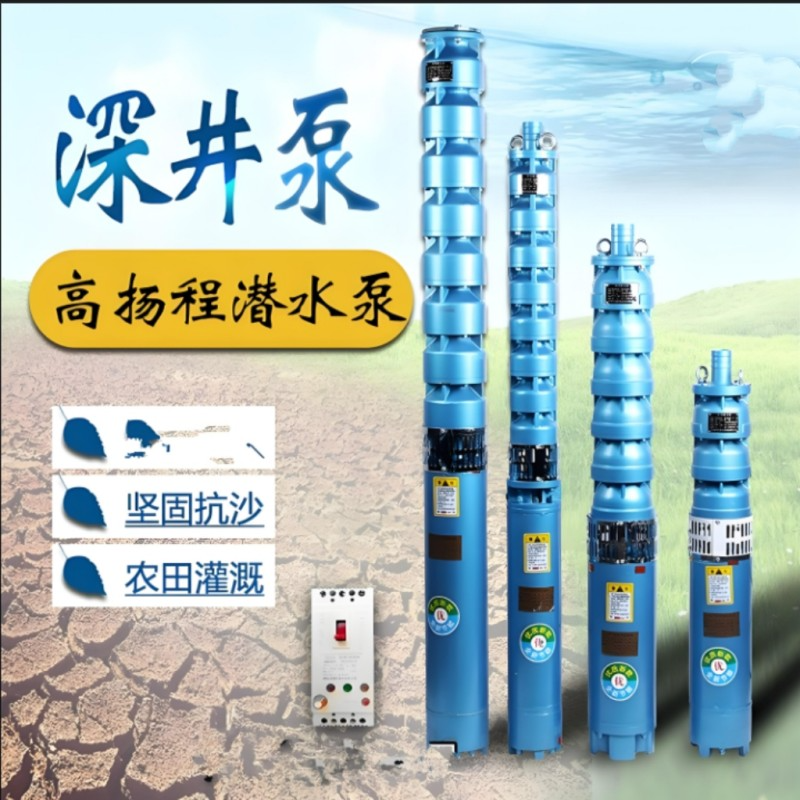
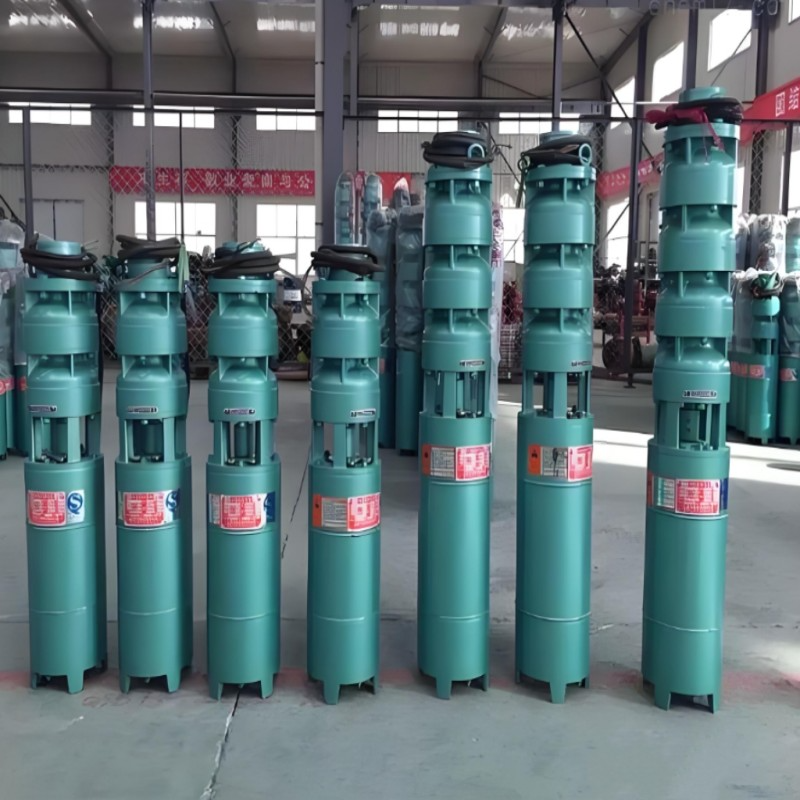







Submersible Pump Application Conditions
The electric pump outlet flow rate must not exceed the rated value (when used within the specified head range).
● Transports lightly polluted water with a solid content (by volume) not exceeding 1%.
● Diving depth not exceeding 5 meters; please declare if over 5 meters when placing an order.
● Water temperature should not exceed 40℃.
● pH range between 5 and 9.
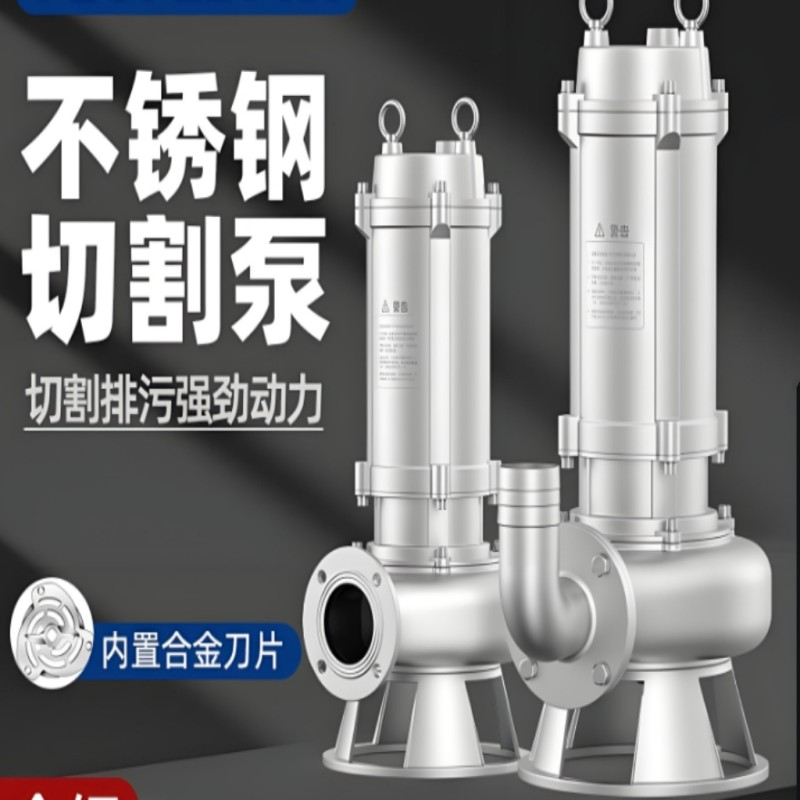
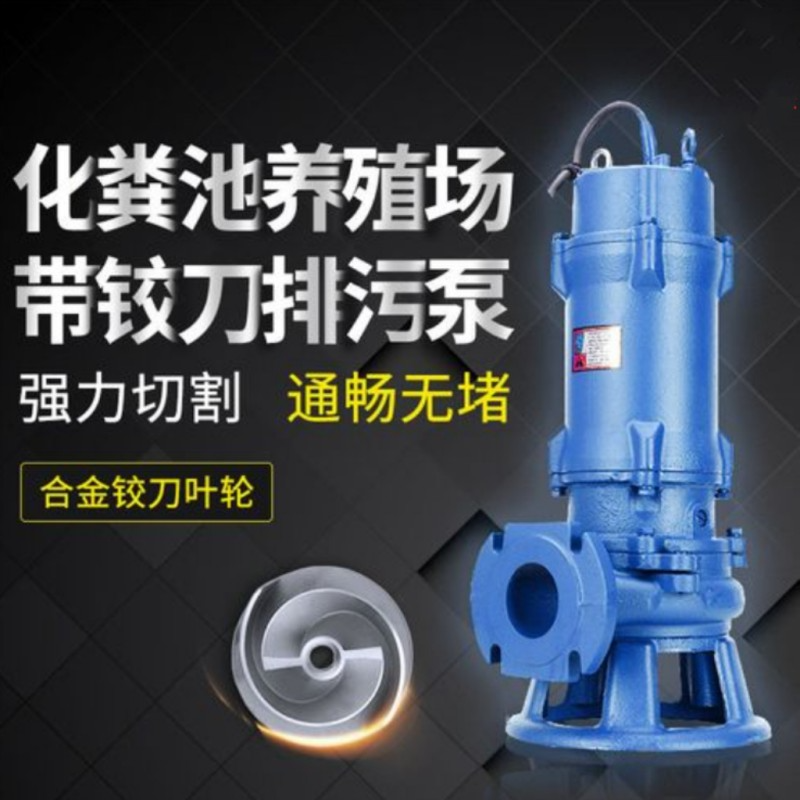
Submersible sludge pumps are primarily used for transporting industrial wastewater and urban domestic sewage, with a significant advantage of being able to discharge pulp, long fibers, and other impurities (hence also known as "clog-free submersible sludge pumps"). They are widely used in urban sewage treatment plants, stormwater basins, pumping stations, flood control, and irrigation systems. In 1956, Sterberg-Flygt in Sweden developed the "submersible sludge pump," which approximately halved the cost of wastewater treatment stations. China introduced and began producing "submersible sludge pumps" from Germany in the late 1980s, mainly including the WQ, QW, and AS series. (Statistics show that around 1995, the annual domestic production of "submersible sludge pumps" was about 50,000 units.)
◆ Specification Selection
Submersible pumps of different specifications have varying application ranges.
The flow rate and head specified on the label of any submersible pump are the rated operating conditions for that pump, which are generally the optimal points for high efficiency use.
In use, as the flow rate and head change, the efficiency of the submersible pump and the motor power also correspondingly change, which has a certain impact on the economic efficiency and reliability of the submersible pump operation.
If the lift height is too low, the motor may overheat, and prolonged operation could even damage the motor; if the lift height is too high, the pump flow rate will decrease, and efficiency will be reduced.
Submersible pumps generally operate normally within a flow range of 0.7 to 1.2 times the rated flow.
Therefore, it is imperative for users to consider the appropriate usage range when selecting and using submersible pumps, especially for high-head submersible pumps. Avoid operating them at excessively low lift points, as this not only wastes electrical energy but may also damage the submersible pump.
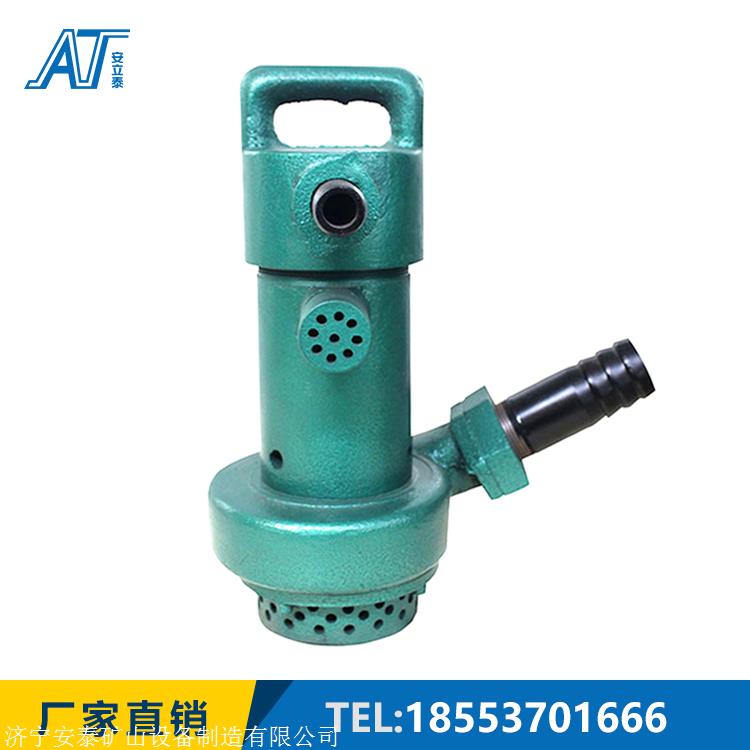
Explosion-proof sewage pumps are strictly designed and manufactured in accordance with the coal industry standard MT/T671-2005 "Submersible Explosion-proof Electric Pumps for Coal Mines" and the national execution standard of the People's Republic of China GB3836-2000 "Electrical Equipment for Explosive Gas Atmospheres."
The explosion-proof sewage pump operates smoothly due to the significant role played by the motor. Let's delve into its performance features below!
The motor utilizes a Y-type dry-type explosion-proof three-phase asynchronous motor, featuring high starting torque, excellent operational performance, low noise, compact size, light weight, and easy maintenance. It also boasts superior explosion-proof structural performance and a high protection grade, making it suitable for use in environments with explosive gases such as methane or coal dust, including underground mining faces and tunnels with explosion risks, in conjunction with water pumps.
Explosion-proof effluent pumps are integrated power drainage equipment consisting of a pump and motor. They are aesthetically pleasing, with a simple structure, excellent sealing performance, stable performance, long lifespan, and easy installation and use. They can operate continuously underwater for long periods and are widely used for automated drainage in coal mine vertical shafts, inclined shafts, and scattered coal slurry at the bottom of wells. The internal-type electric pump allows water to flow through the motor's interspace, effectively extending the pump's lifespan. The external-type electric pump features a double-channel large flow impeller, ensuring smooth operation, strong effluent removal capability, anti-entanglement, and no clogging. Additionally, they are characterized by their small size, light weight, and ease of portability.
Daily maintenance of submersible pumps. Check for any damage to the power cord daily and prohibit submersible pumps from being used underwater if there's a risk of leakage. Inspect the pump body for damage daily to ensure the motor does not leak electricity during operation. After operation, promptly clean off debris attached to the pump and rinse it clean. To ensure the normal operation of submersible electric pumps, it is mandatory to follow the following requirements. Before using the submersible electric pump, check the motor's insulation resistance with a megohmmeter, and the value should not be less than 50MΩ.
Difference between explosion-proof submersible pumps and ordinary submersible pumps
Due to the need for explosion-proof standards in the on-site operation of electrical products in many environments, such as chemical factories, gas stations, etc., it is mandatory to meet these standards. The same requirement applies when using submersible pumps.
Features of explosion-proof submersible pumps: Based on the standard submersible sewage pump, the ordinary motor is replaced with an explosion-proof motor. An additional explosion-proof head is added to the pump body to prevent sparks from the motor and wiring, thereby avoiding fire and explosion accidents. The cables of the explosion-proof submersible pump are also upgraded from the standard submersible cable used in regular submersible pumps to explosion-proof submersible cables, meeting explosion-proof standards. The main feature is that they are prohibited for use in transferring flammable and explosive liquids, as the entire motor is submerged in liquid. Cable damage or electric leakage from the pump can potentially cause sparks and lead to hazardous accidents; they are only suitable for environments requiring explosion-proof conditions.
There are several types of submersible pumps, with motor winding packages available in oil-immersed, water-immersed, and dry types.
Before use, please read the instructions carefully. Do not mix up. If not used for a long time, the impeller must be rotated before use to prevent it from seizing and overheating due to long-term inactivity. Before starting the pump, ensure the suction pipe and pump are filled with liquid. Once the pump is running, the impeller rotates at high speed, with the liquid rotating along with the blades. Under the force of centrifugal force, the liquid is propelled away from the impeller. As it exits, the liquid slows down and pressure increases in the diffuser chamber of the pump housing, then it is discharged through the outlet pipe. At this point, a vacuum low-pressure area without air or liquid is formed at the center of the blades due to the liquid being thrown outward. Under the atmospheric pressure at the surface of the liquid pool, the liquid enters the pump through the suction pipe. This process continues as the liquid is continuously drawn from the pool and discharged through the outlet pipe.