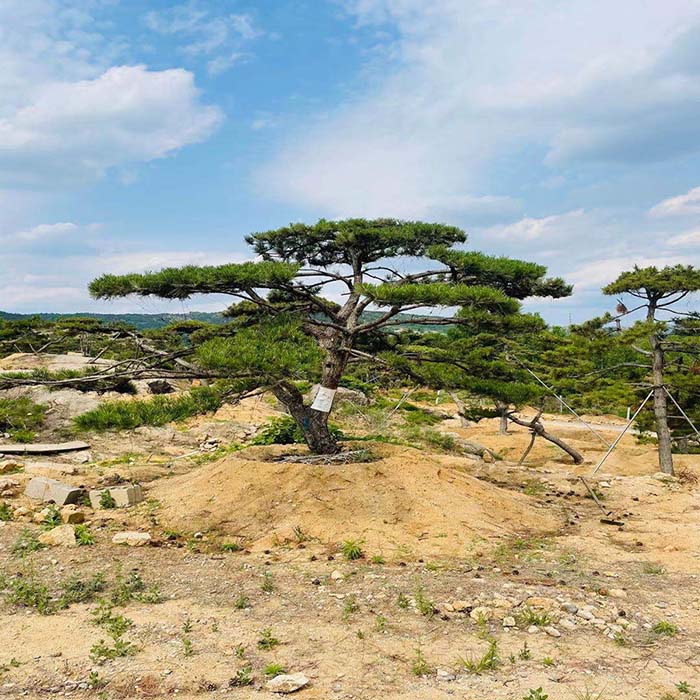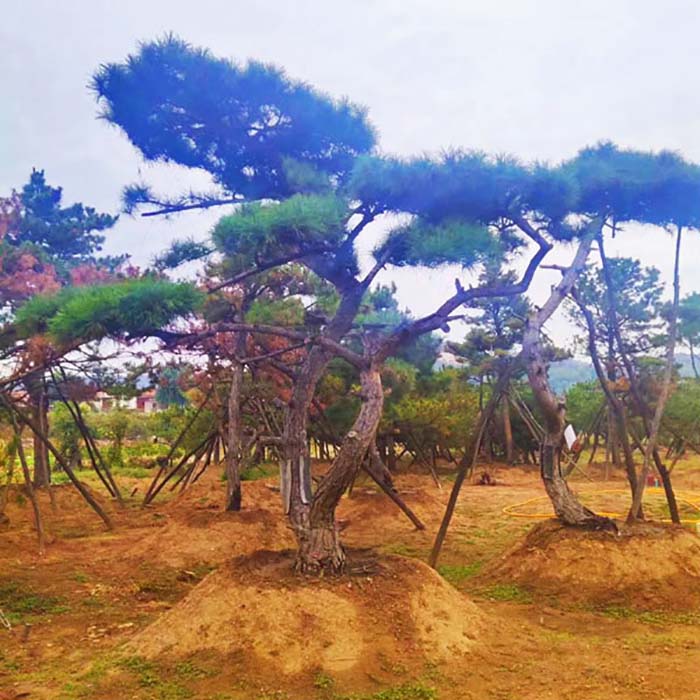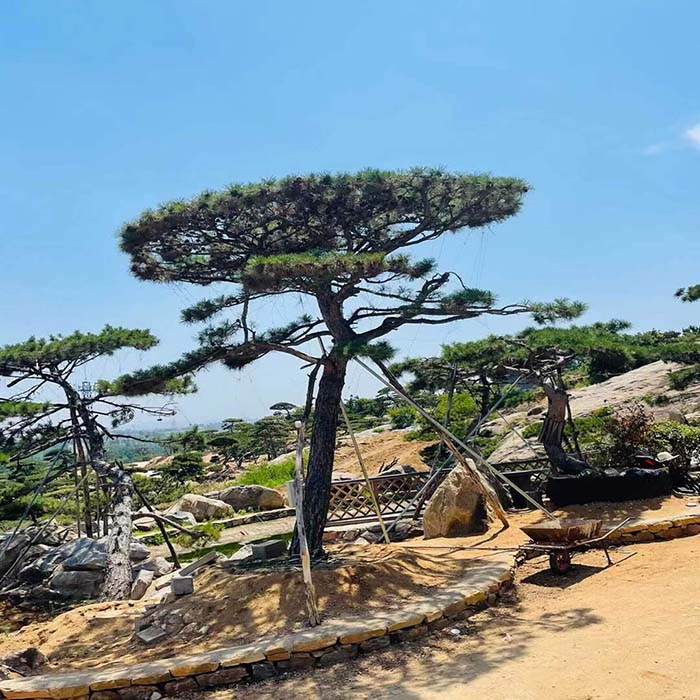








Characteristics of ornamental pine: Evergreen tree. Bark is grayish-brown, with irregular scaly exfoliation on the old trunk, inner bark is reddish-brown. One-year-old branches are light brown, densely covered with pale yellow soft hairs. Winter buds are elongated, yellowish-brown. Leaves are short, in clusters of five. Both sides have white stomatal lines. Flowering in May, solitary, monoecious, male cones are aggregated at the lower part of new branches, female cones at the tips of new branches. Cones are ovate. Seeds mature in October to November of the following year, they are inversely ovate with triangular seed wings, light brown.
Grafted Landscape Pines Growth Habits: Approximately 30-40 varieties. Adores sunlight, slightly shade-tolerant, but dislikes excessive shade. Cold-resistant, but fears extreme heat. Grafted Landscape Pines prefer deep, dry, well-drained acidic soil, and detest waterlogging. Overly wet soil or poor ventilation can hinder growth, even leading to death.
Grafted Landscape Pine Propagation: Propagated through seeds, grafting, or cuttings. There are approximately 8,400 seeds per kilogram, with sowing methods similar to other pine species. For grafting propagation, the cleft grafting method is commonly used, with the stock being a 3-year-old black pine seedling; using Japanese red pine as the stock may lead to poor growth. For cutting propagation, select one-year-old branches with a small portion of old wood in late March, and insert them in a semi-shaded, windless area; regularly spray the leaves. After 30 days, if the leaves do not wither, the roots may have taken hold. Gradually expose them to sunlight, and new buds can be expected the same year.