








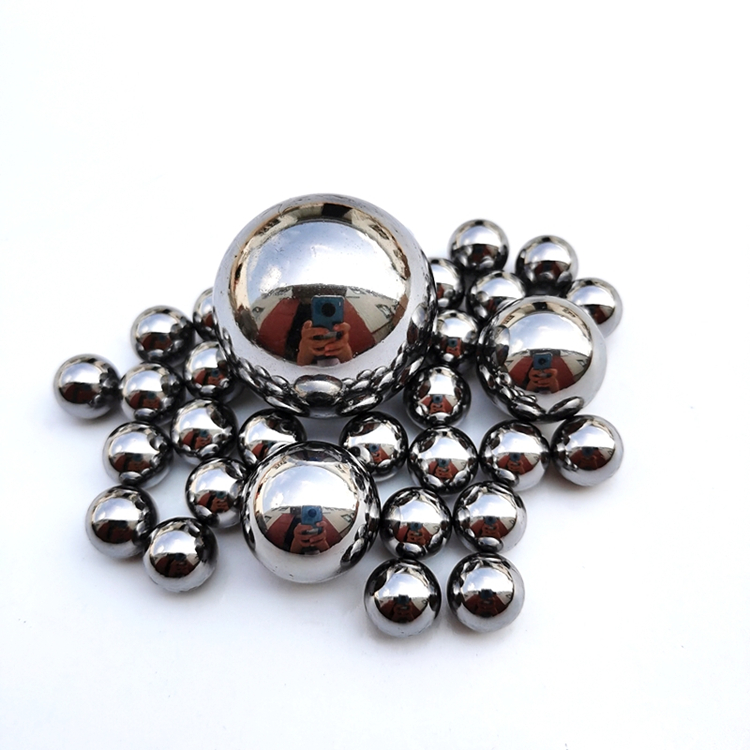


Huaxin Ball Manufacturing: In Stock Supply of Rust and Corrosion-Resistant, Acid and Alkali-Resistant Stainless Steel Balls
SUS304Excellent corrosion and heat resistance, low-temperature strength, and mechanical properties; good hot processing capabilities such as stamping and bending; no hardening after heat treatment; non-magnetic. Widely used in household goods (tableware of categories 1 and 2), cabinets, indoor pipelines, water heaters, boilers, bathtubs, automotive parts, construction materials, chemicals, food industry, agriculture, and ship components.
SUS316Excellent corrosion resistance and high-temperature strength, suitable for use under harsh conditions; good work-hardening properties, non-magnetic. Ideal for equipment used in seawater, chemicals, dyes, papermaking, oxalic acid, fertilizer production, photography, food industry, coastal facilities.
SUS316LAlloyed with Mo (2-3%), the steel exhibits excellent corrosion resistance and high-temperature strength; the carbon content in SUS316L is lower than that in SUS316, hence it offers superior intergranular corrosion resistance; and it boasts high creep strength at elevated temperatures. Suitable for use under severe conditions, it has good work hardening properties and is non-magnetic. Ideal for equipment used in marine environments, chemicals, dyes, papermaking, oxalic acid, fertilizer production, photography, food industry, and coastal facilities.
420— "Tool steel grade" martensitic stainless steel, similar to high-chromium BHN steel. Also used in surgical instruments, which can be made extremely shiny.
440—High-strength tool steel with slightly higher carbon content, after proper heat treatment, can achieve higher yield strength and hardness up to 58HRC. Common applications include "razor blades." There are three common types: 440A, 440B, and 440C, with an additional 440F (easier to machine).

1.Spooling (Winding)Draw the wire material through a drawing machine to achieve the required wire diameter.
2.Cold Heading (Forging):The drawn wire is placed into a steel ball cold heading machine, where it is formed into ball blanks by the steel mold inside.
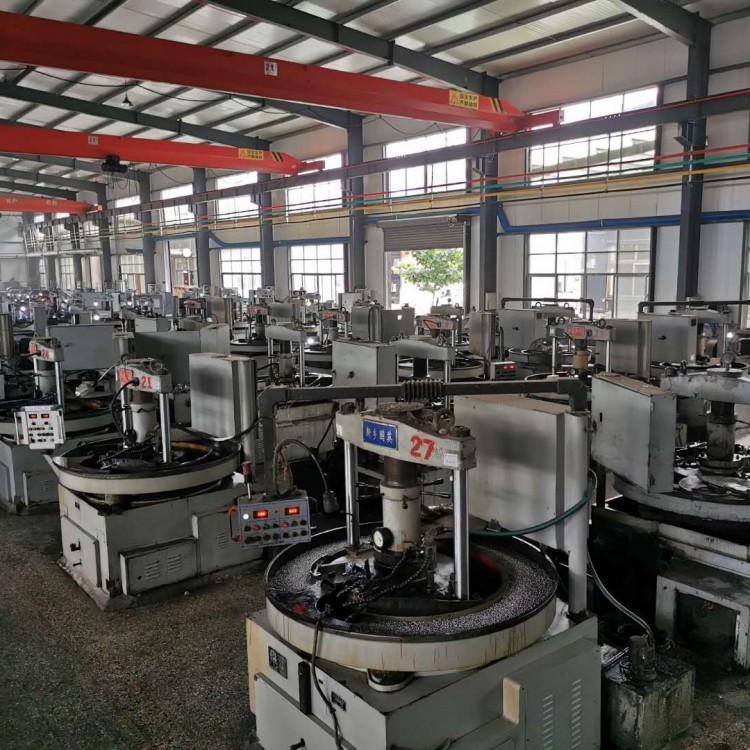
3.Globular Light SourceThe two cast iron grinding balls in the light ball machine apply pressure to the cold upsetting ball blank, filing off the outer ring and the two poles of the blank.
4Soft Ball:The two cast iron grinding ball plates inside the soft ball machine grind the spherical blanks to achieve the required ball diameter and surface roughness.
5.Heat treatment:The balls are loaded into a heat treatment furnace, carbonized, quenched, and then tempered to achieve a certain carbonized layer, hardness, toughness, and crush load.
6Hard honing.The abrasive disc within the grinder applies pressure to grind the heat-treated ball blanks, removing the black oxide layer on the ball surface and correcting the ball's precision.
7.Polishing and Cleaning:RefinedThe grinding ball blanks are finely ground in the precision grinder to achieve the required precision and smoothness for the finished product.
Polished CleaningPour the balls into the polishing drum, rotate it, and clean the surface with polishing cleaner mixed with water to achieve a clean and glossy finish.
8.Appearance selection:Manually inspect the steel ball surface for any defects, measure the true roundness with a micrometer, check the batch diameter variation, and use a surface roughness meter to determine the surface roughness as the final inspection.
9.Packaging:TranslateSteel Balls/ Stainless Steel Balls/ Bearing Steel BallsApply anti-rust oil, then pack into boxes or woven bags before sealing.

Magnetic
All Austenitic stainless steel balls are typically non-magnetic; after cold working, some magnetism may be noticeable. Standard: ISO 3506, GB/T 3098.6. The magnetic permeability characteristics of various materials, also applicable to stainless steel. Only under vacuum conditions can a material be completely non-magnetic. The measurement of the magnetic permeability of a material in a magnetic field is relative to the material's magnetic permeability μr in a vacuum. If μr is close to 1, the material has low magnetic permeability.
In everyday life, we often encounterIs using a magnet to determine if it's stainless steel actually very wrong?。
Stainless steel is categorized intoAustenitic stainless steel and Martensitic stainless steel201, 304, 316, and 316L represent austenitic stainless steels, which are non-magnetic; while 420, 430, 440, and 440C represent martensitic stainless steels, commonly known as "rust-proof iron" in our country. The name comes from their magnetic property. However, not all magnetic rust-proof capabilities are poor, let alone that magnetic means it's iron. 440 and 440C are top performers among stainless steels, known as special steel due to their excellent rust and corrosion resistance, high hardness, and are referred to as stainless steel bearing steel, widely used in high-precision manufacturing industries.
Therefore, we cannot simply determine if something is stainless steel based on whether it is attracted or not by a magnet. So 440 stainless steel ballOf course, it's made of stainless steel, and it's high-quality stainless steel, too.


We've got all your concerns and questions addressed here:
How to choose steel balls?
(1). If you're looking for high hardness and wear resistance, opt for bearing steel balls, followed by carbon steel balls that have been heat-treated.
(2). If you want to weld something with low hardness, you should use carbon steel balls without heat treatment, commonly known as iron balls.
(3). For superior rust prevention, opt for stainless steel balls, available in grades 304, 316, and 316L, with increasing rust resistance.
(4). For excellent rust prevention and high hardness, choose 440 stainless steel balls.
(5). For high precision, choose a higher grade; the smaller the number, the higher the grade, the better the precision.
If the above does not answer your questions or you're still unsure about the type of steel ball you need, feel free to contact our customer service. Clearly explain your application, and our professional staff will provide you with a specialized solution to ensure your satisfaction!
2. Quality Assurance
Raw Material Assurance: Sourcing steel billets from major steel mills.
(2). Production Equipment Assurance: Introduction of production equipment and testing instruments.
(3). Technical Staff Support: Over a decade of technical staff are on 24/7 rotating duty to ensure production control.
(4). Strictly enforced production management system with scientific rigor: stringent oversight, adherence to production protocols, and traceable responsibility reversal.
(5). A sealed and clean dust-free workshop: Ensuring high precision production of precision steel balls.
3. Shipping Information
(1). Samples via SF Express: A limited number of samples are available free of charge, with shipping charges to be paid by the recipient.
(2) For shipments under 300 kg, we use express services such as Yousu Express, Best Express, Debang Logistics, Jiayi Logistics, and Shangqiao Logistics, etc.
(3). Shipments over 300 kg use dedicated logistics, generally picked up at city logistics centers. If pickup is required at the county/district level, please specify; additional delivery fees will apply.
4. Packaging
We offer various packaging options, including woven bags, cardboard boxes, pallets, steel drums, bottled, and ton bags, and can customize packaging to meet customer requirements.
5. Where is the shipment from?
Due to our factory being located in the countryside, logistics and express delivery are not convenient. Therefore, we lease a large warehouse in the Liaocheng city's major logistics park to store goods and ship them to our customers.
6. Return and Exchange Policy
If it's our responsibility and the quality does not meet the standards, we will cover the round-trip shipping costs for returns and exchanges. If it's the buyer's responsibility, returns and exchanges are possible as long as it doesn't affect resale, with the buyer covering the shipping costs both ways.













