











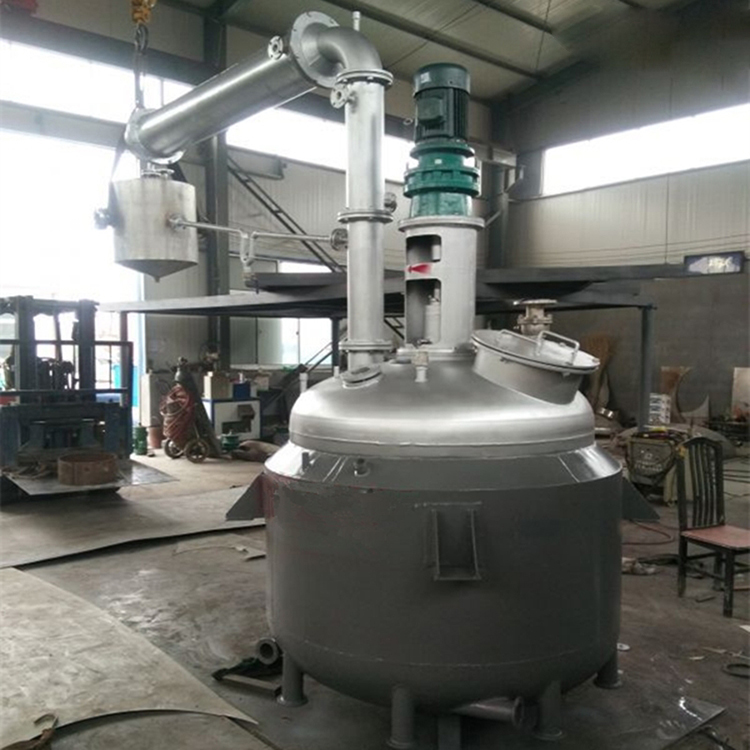
Stainless Steel Plow Blade Blender Working Principle:
Once the mixer is started, the blades rotate around the blade shaft, moving the material radially along the cylinder. Simultaneously, the material is ejected outward perpendicular to the sides of the blades. As the ejected and circumferentially turbulent material flows past the flying knives, it is rapidly and forcefully scattered by the high-speed rotating knives. Under the combined action of the blades and flying knives, the material continuously changes and diffuses, achieving uniform mixing in a short period with high mixing accuracy.
Stainless Steel Plow Blade Blender Performance Features:
High mixing accuracy, especially suitable for materials that tend to clump during mixing. Atomized liquid, with adjustable nozzle. Material discharge is via pneumatic or manual operation, simple to handle.
Widespread Application:
Dry powder mortar, chemical raw materials, materials, building materials, plastics, adhesive raw materials, food raw materials, powder metallurgy, mining materials, petroleum raw materials, etc., involving solid-solid (powders and liquids), solid-liquid (powders and paste-like liquids), and solid-viscous mixing of materials with significant density differences.
Structural Composition:
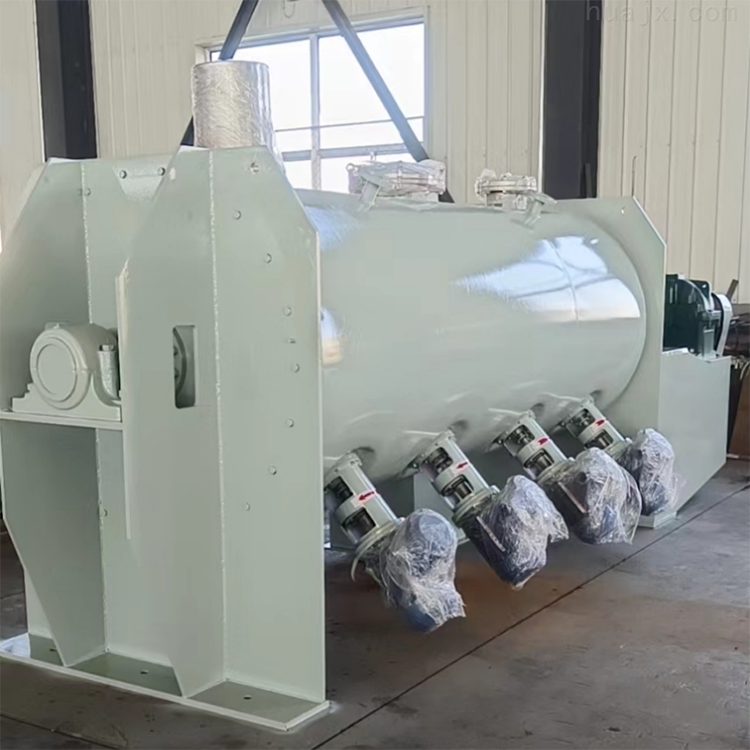
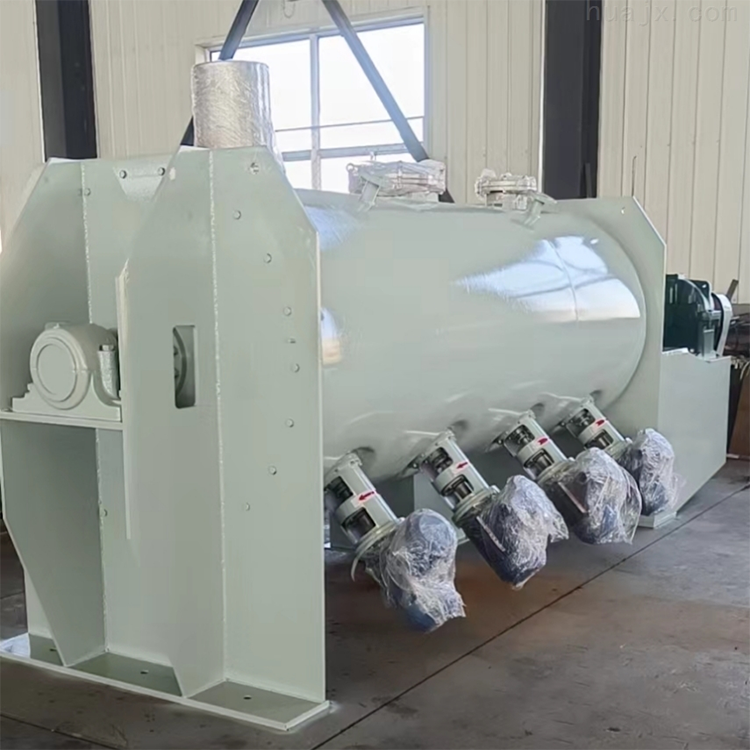
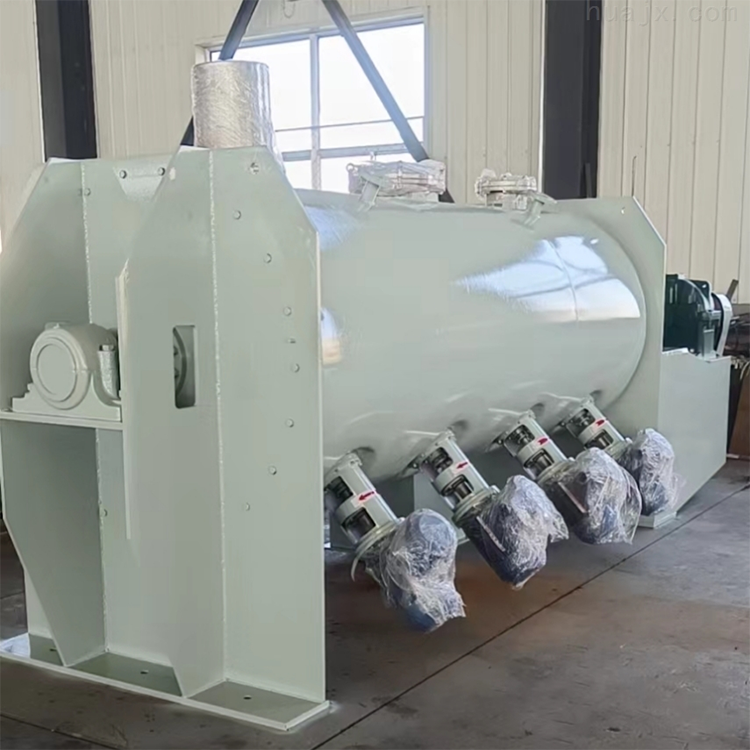
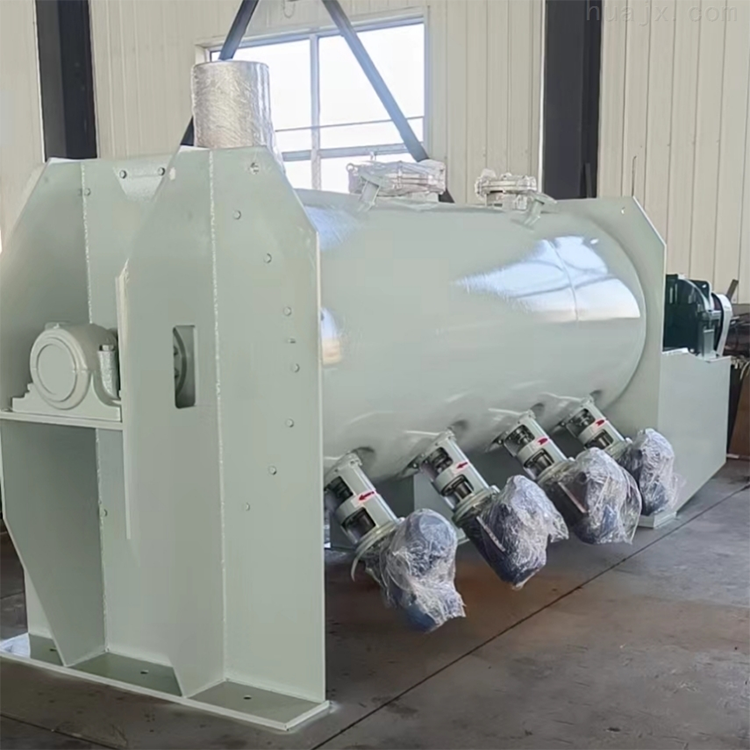
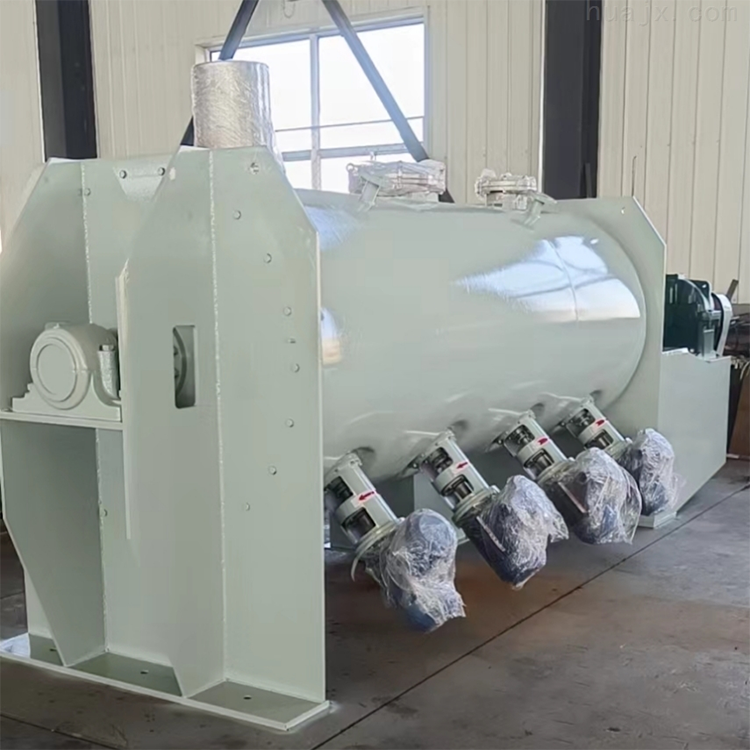
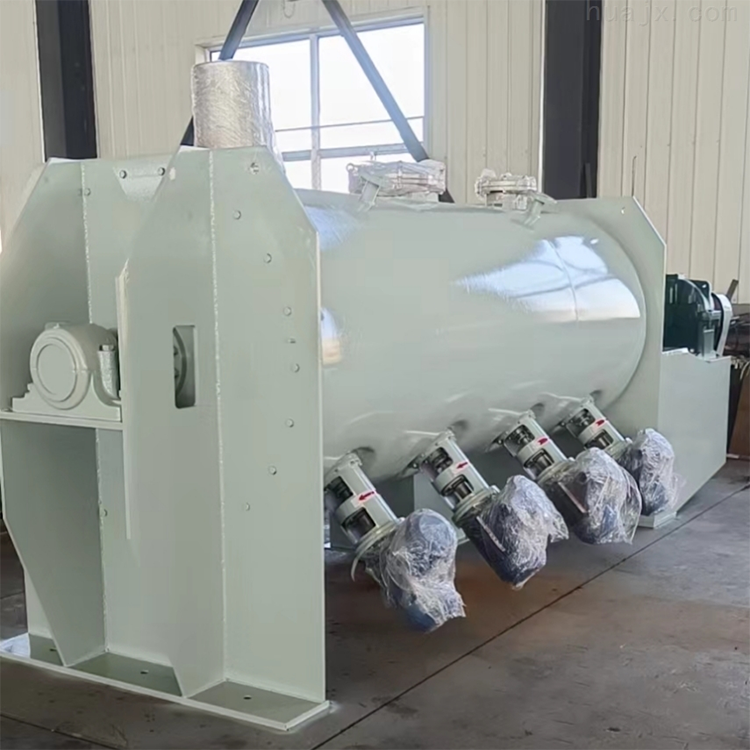
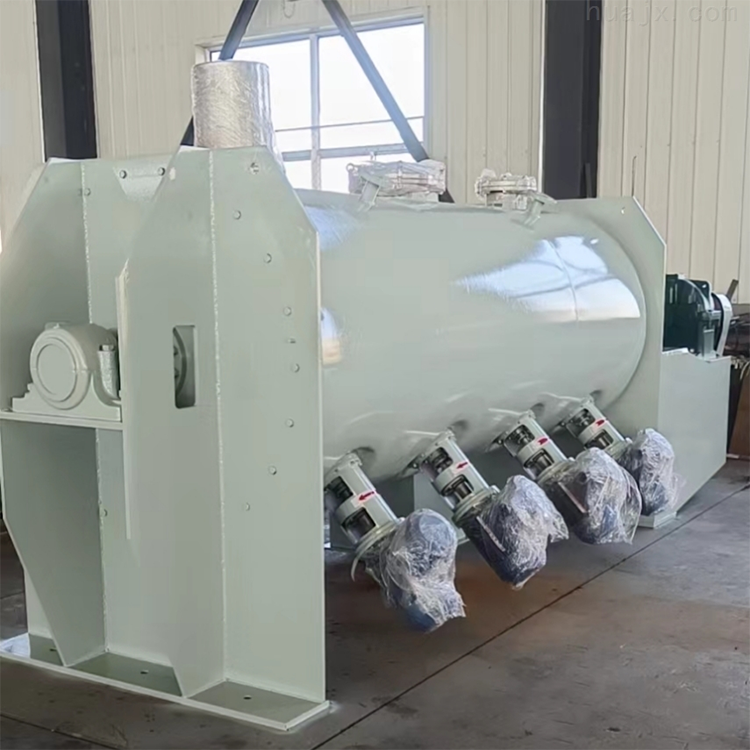
The mixer structure primarily consists of the transmission part, horizontal cylinder, plow blade assembly shaft, flying knife assembly, discharge valve, and spray unit, etc.
The drive section of the mixer includes a motorized bevel gear reducer, a coupling, primarily converting the motor's motion into the required speed and torque for the complex cutter shaft.
The horizontal cylinder is made from steel sheets, used for containing materials. The cylinder features several holes for material intake and discharge, as well as observation. The plow blade shaft support is mounted on the covers at both ends of the cylinder.
The plow blade assembly consists of the plow blade, blade arm, and main shaft. The plow blade is mounted on the main shaft using the blade arm and serves as a hinged structure for easy disassembly.
The flying knife assembly consists of multiple knives, directly driven by a motor, mounted on the cylinder side. To prevent dust from entering the bearings, the flying knife shaft is equipped with multiple sealing structures.
The discharge valve is mounted at the bottom of the cylinder (except for continuous discharge), used for closing and releasing materials. Its operation is achieved through a handle and a four-bar linkage mechanism.