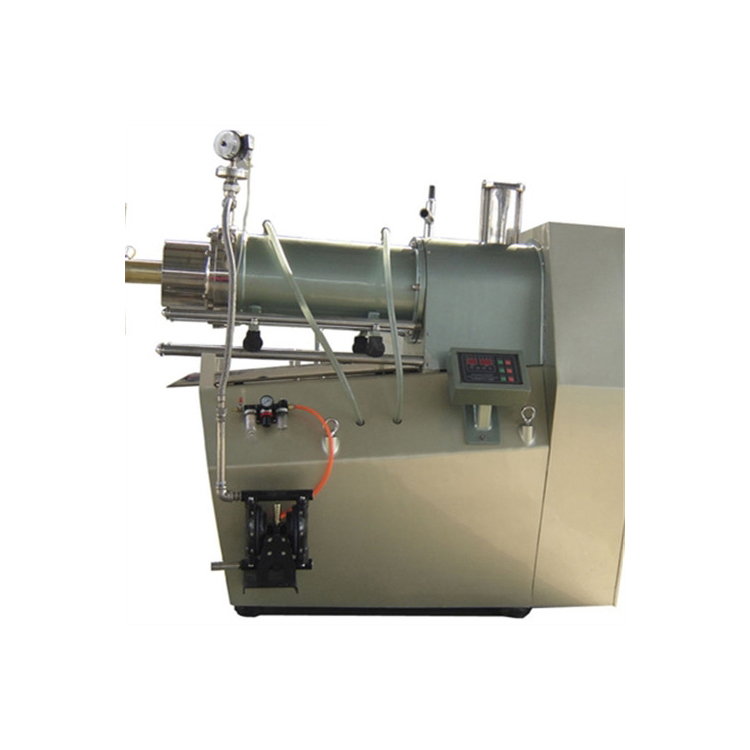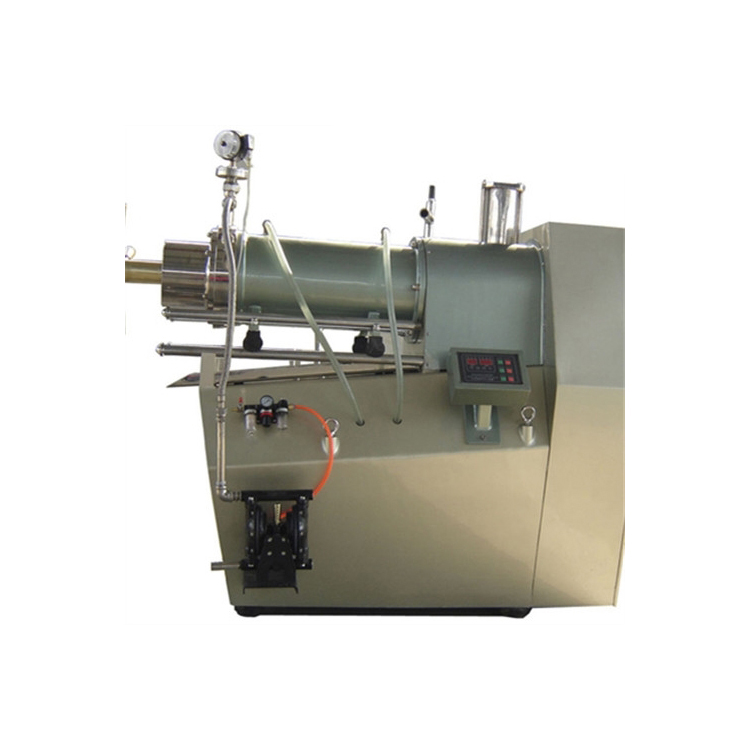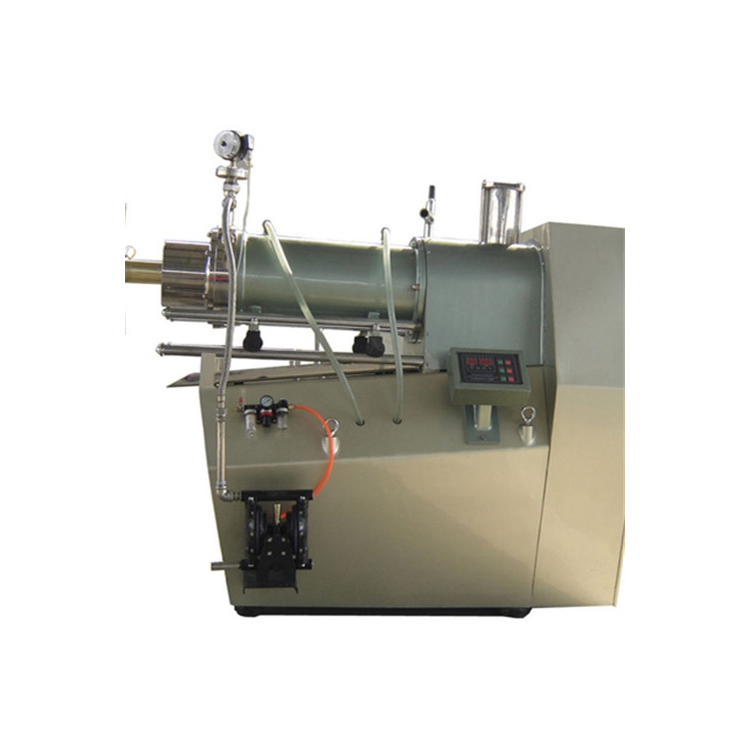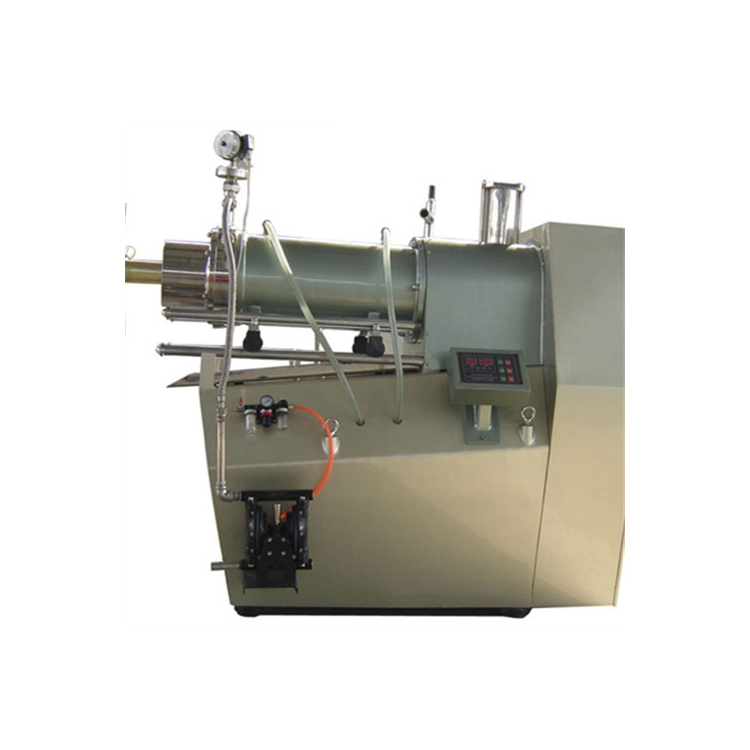

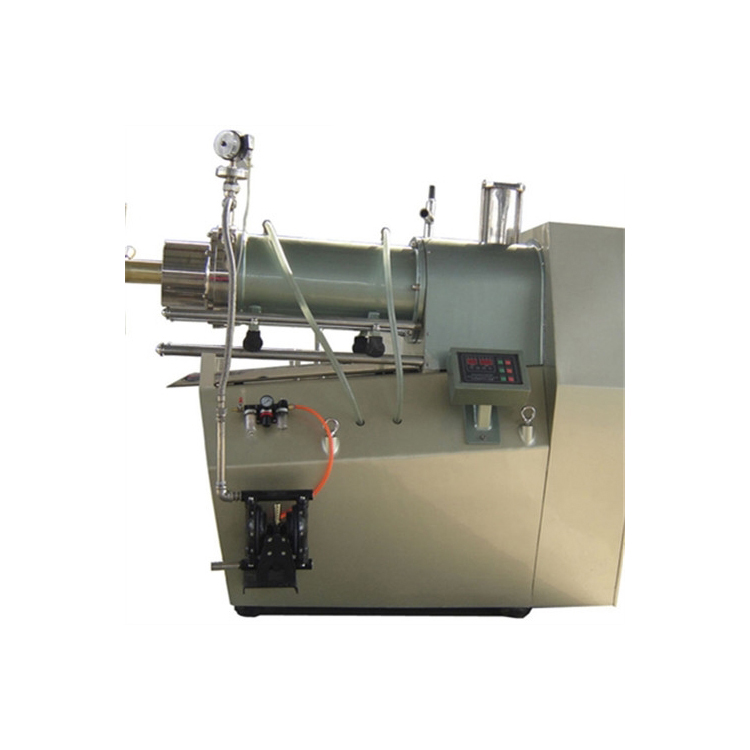











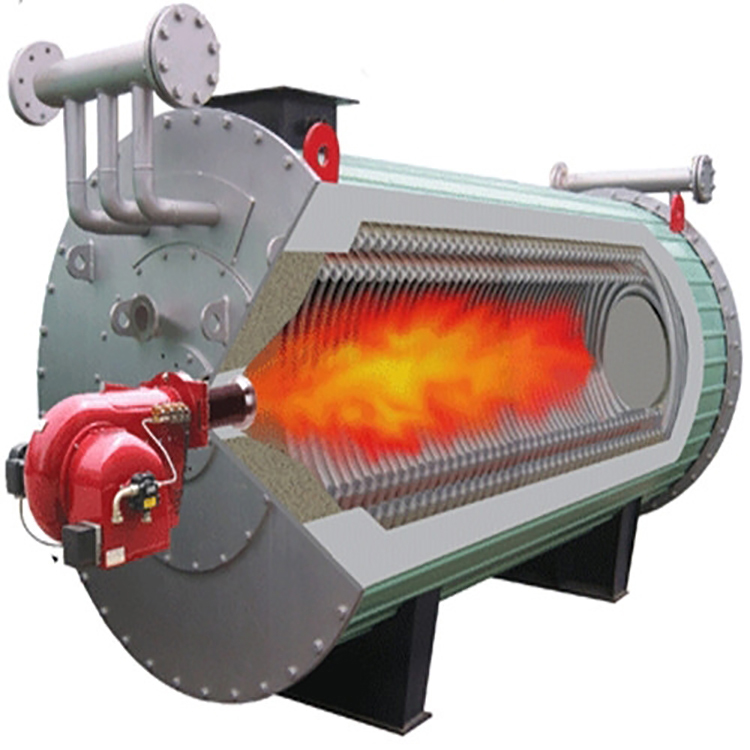
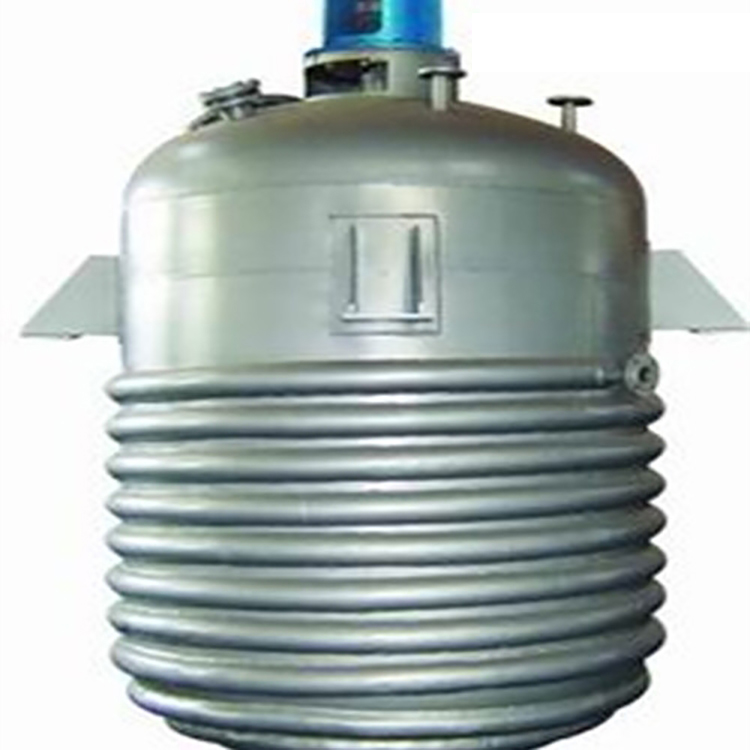
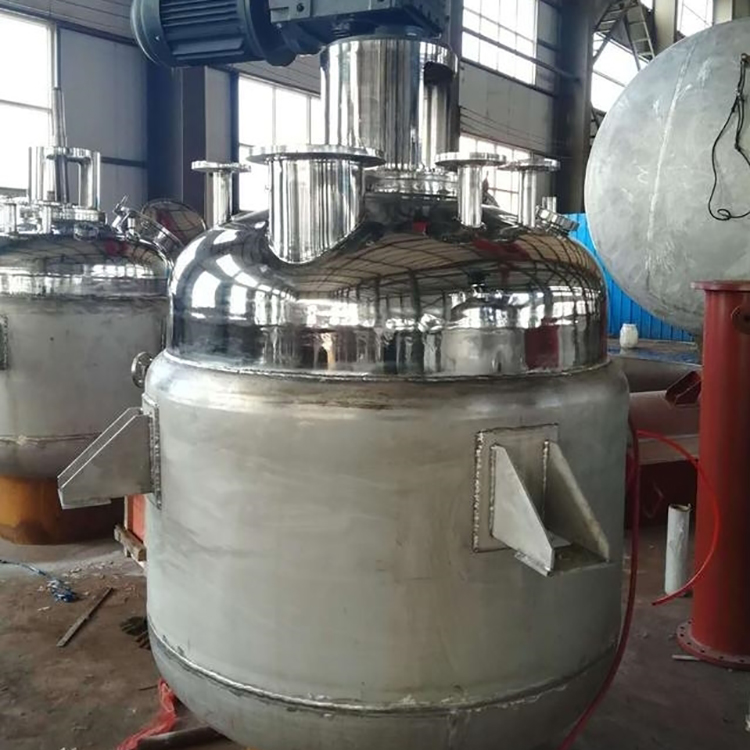
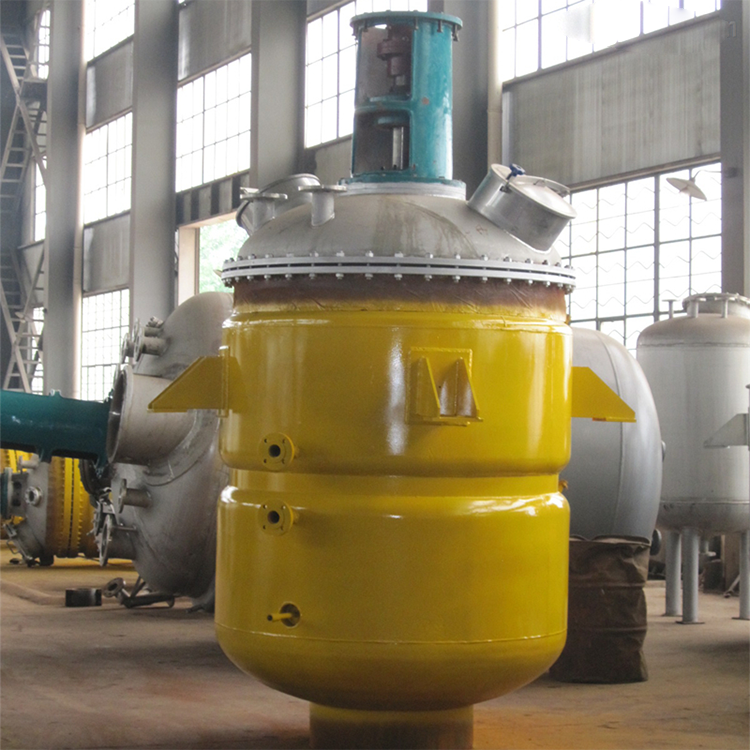
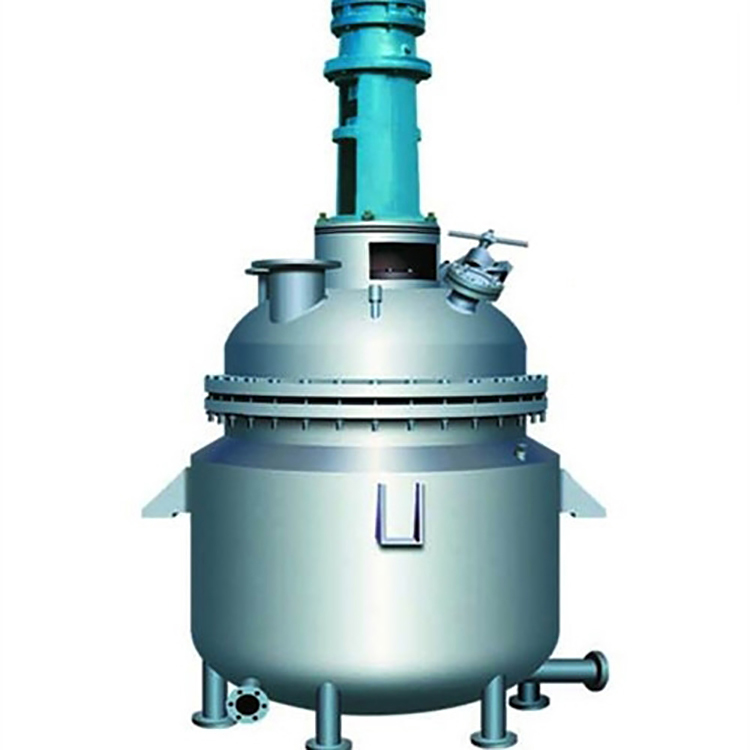
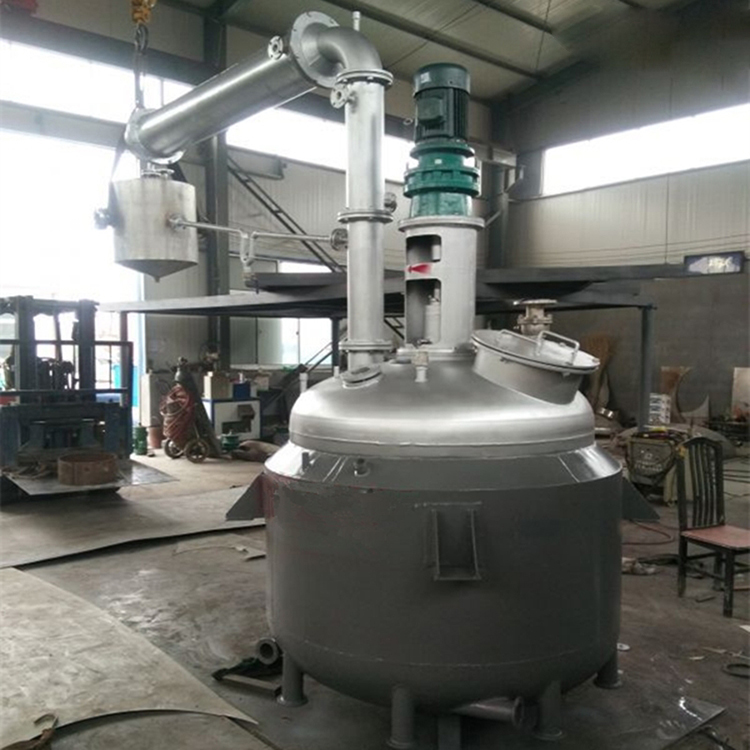

Horizontal sand mills are widely used in the wet ultra-fine grinding and dispersion of non-metallic mineral industries such as coatings, dyes, paints, inks, magnetic powders, ferrites, photoresists, and paper-making. Horizontal sand mills can be categorized by structure into common horizontal sand mills, roller shaft horizontal sand mills, gear disk horizontal sand mills, and turbine horizontal sand mills.
The horizontal sand mill integrates the essence of domestic and international models, featuring high efficiency, strong continuous operation, low pollution, reliable self-control, and more. It also boasts low cost, compact structure, stylish design, and ease of use and maintenance. Particularly, it has a strong practicality.
1. The horizontal sand grinding machines are categorized by the effective volume of the working drum into five models: WS-15, WS-20, WS-25, WS-30, and WS-45.
2. Divided into carbon steel and stainless steel based on the material in contact.
3. We offer a total of twenty models, divided into explosion-proof and standard motors, catering to specific usage conditions and requirements.
Shandong Horizontal Sealed Conical Sand Mill Performance Features: High efficiency, strong continuous operation, low pollution, reliable self-control, and more. The system has good sealing, low wear, and good heat dissipation. It effectively prevents material drying and scaling, as well as solvent volatilization, suitable for grinding products with high viscosity and fine particle size requirements. The Shandong Horizontal Sealed Conical Sand Mill is highly practical, does not require a special installation foundation, and can be changed to the desired installation location at any time. Explosion-proof options are available. Feed pumps include oil gear pumps or pneumatic diaphragm pumps.
The equipment is widely used in:
1. Food Industry: Cocoa, chocolate, nut butters, mayonnaise, seasonings, etc.
2. Paint Industry: inks, pigments, paste, fillers, dyes, carbon black
3. Chemical Industry: Plant Protectants, Detergents
4. Mining Industry: Kaolin (porcelain clay), ceramic slurry, refractory clay.
The filling amount of the grinding beads is 60%-80% of the grinding machine's working volume.
The sanding machine's production capacity depends on the hardness of the material being ground and the fineness of the grind, with grinding balls available in glass, ceramic, sintered materials, or steel. The grinding result is directly affected by the diameter of the grinding balls.