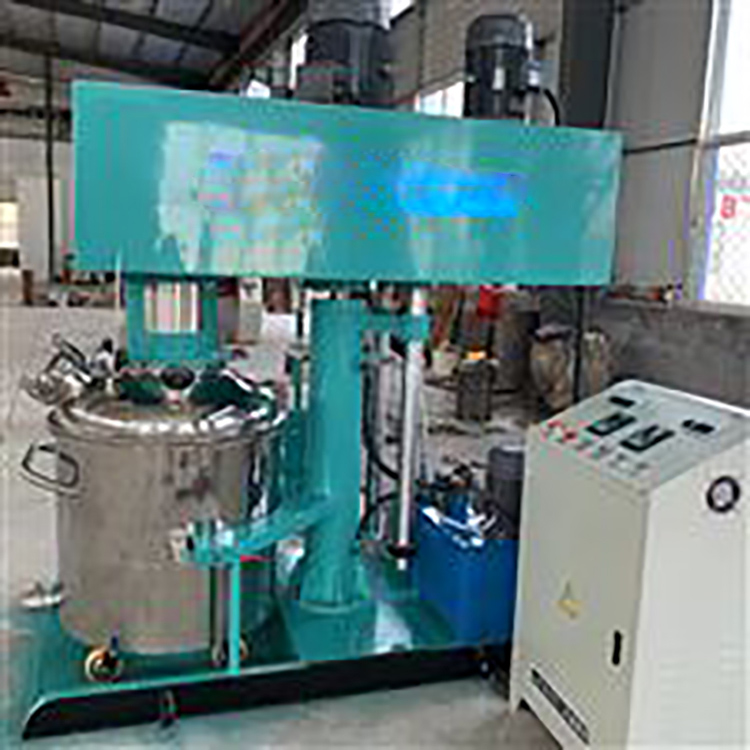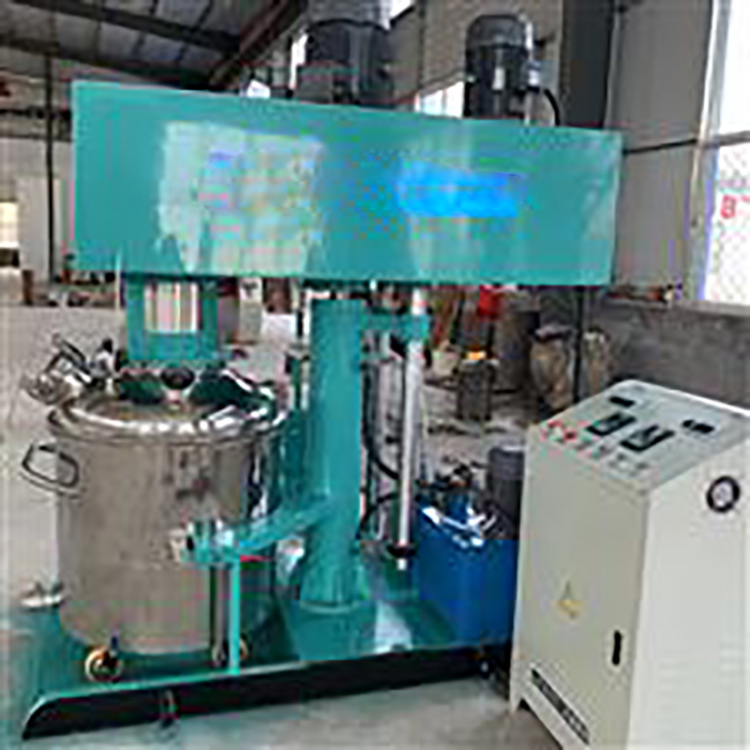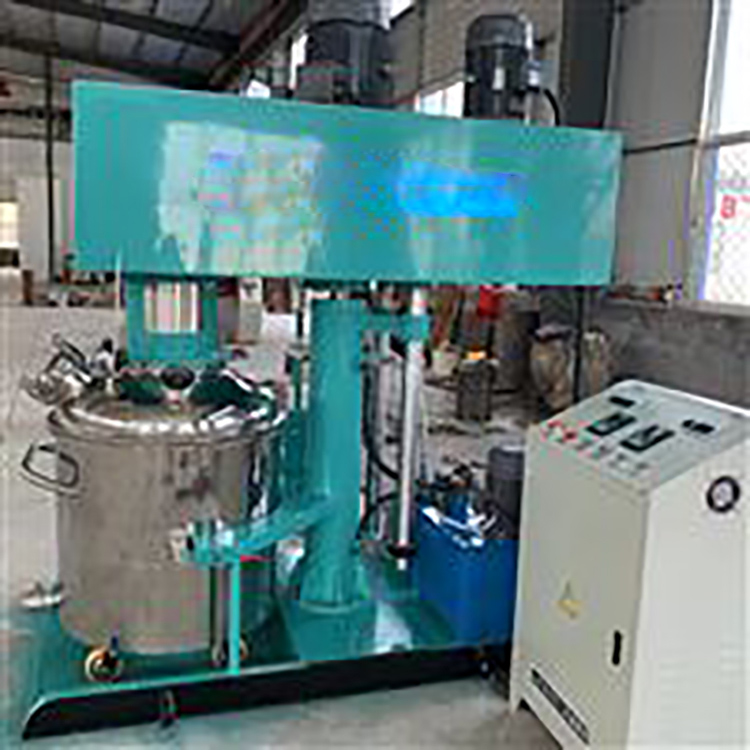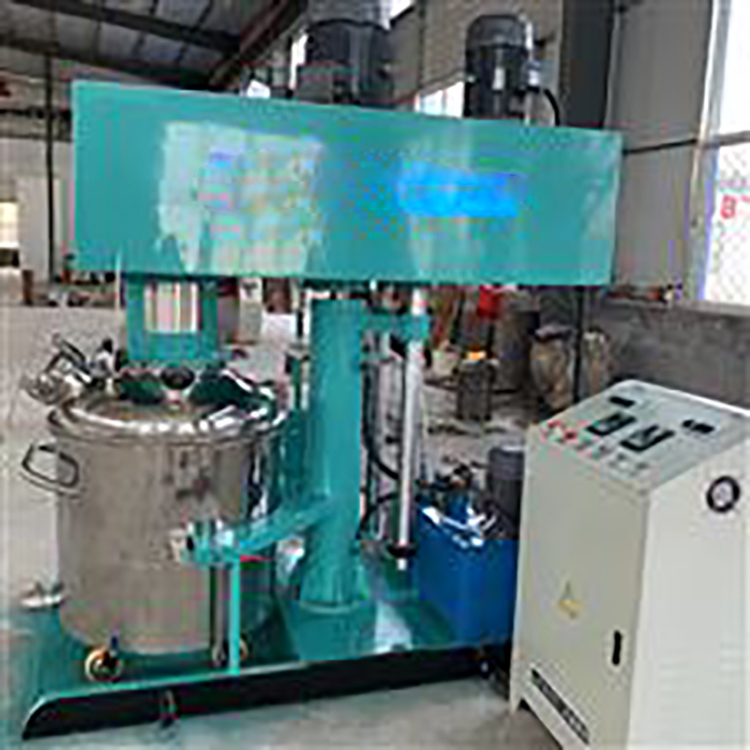


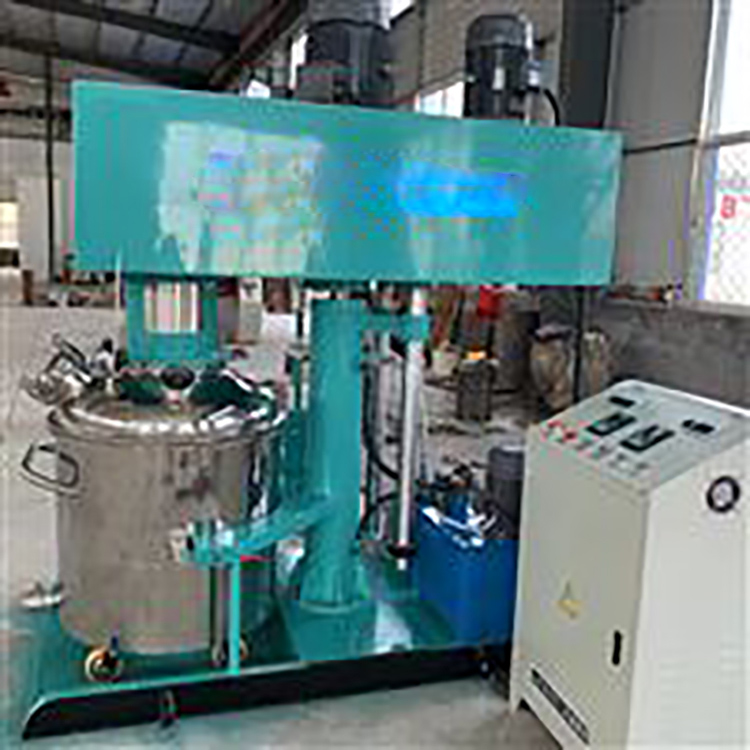











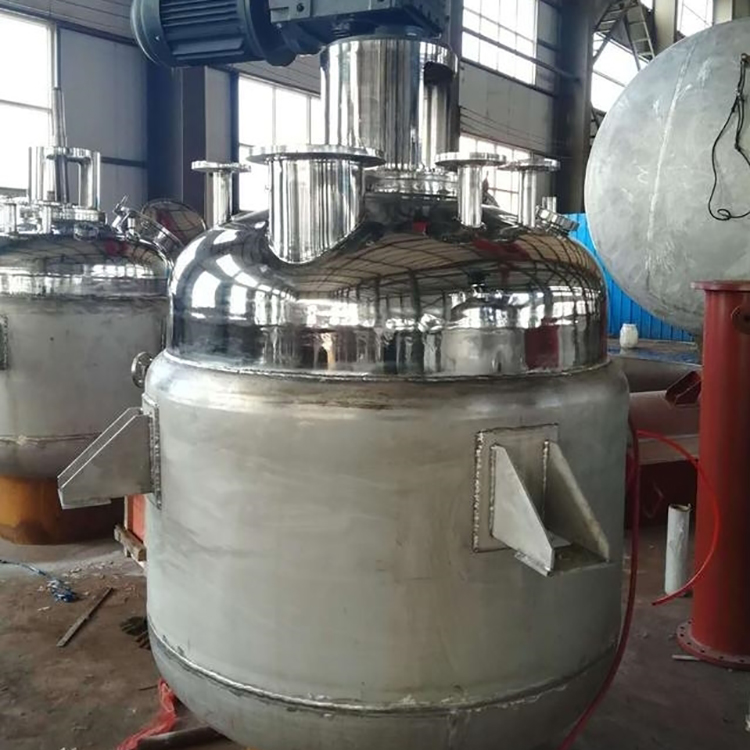
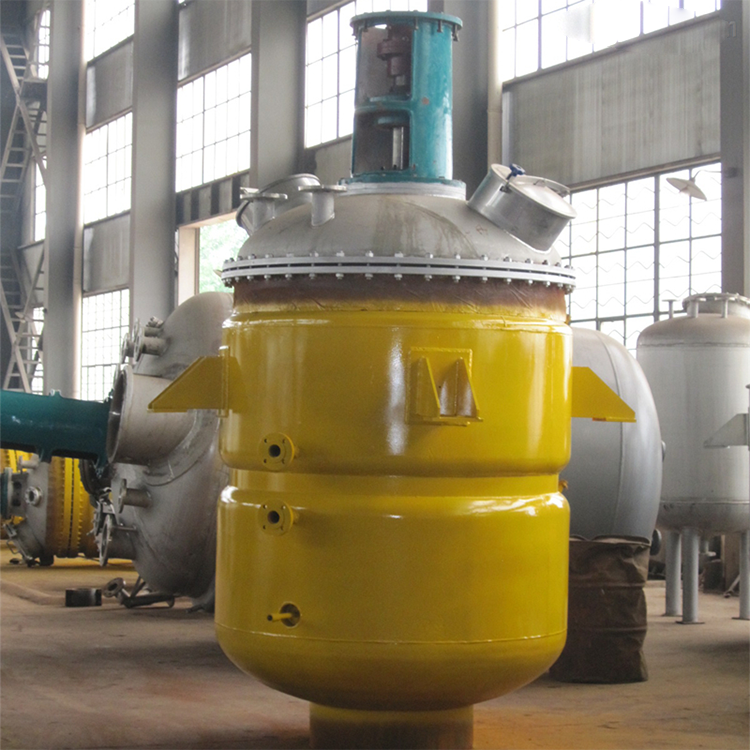
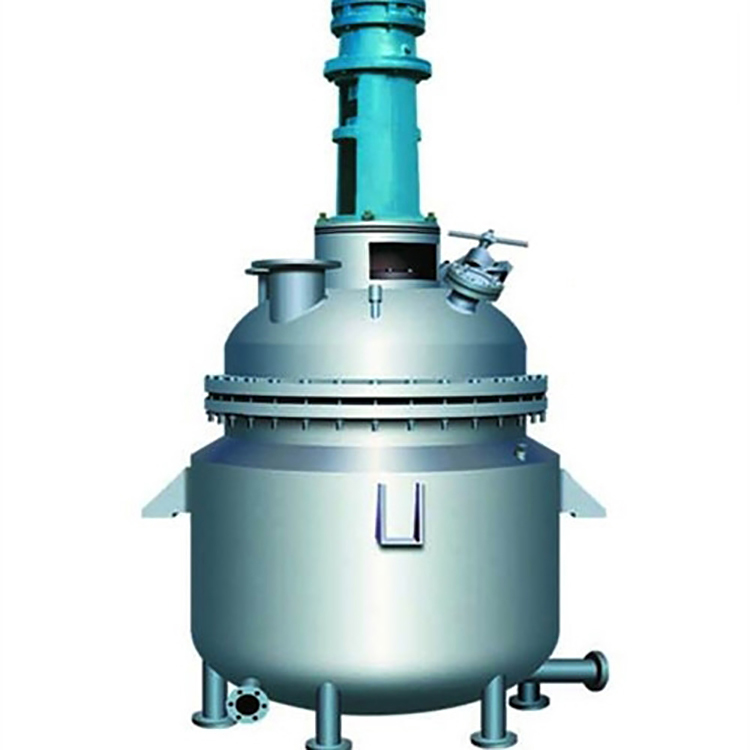
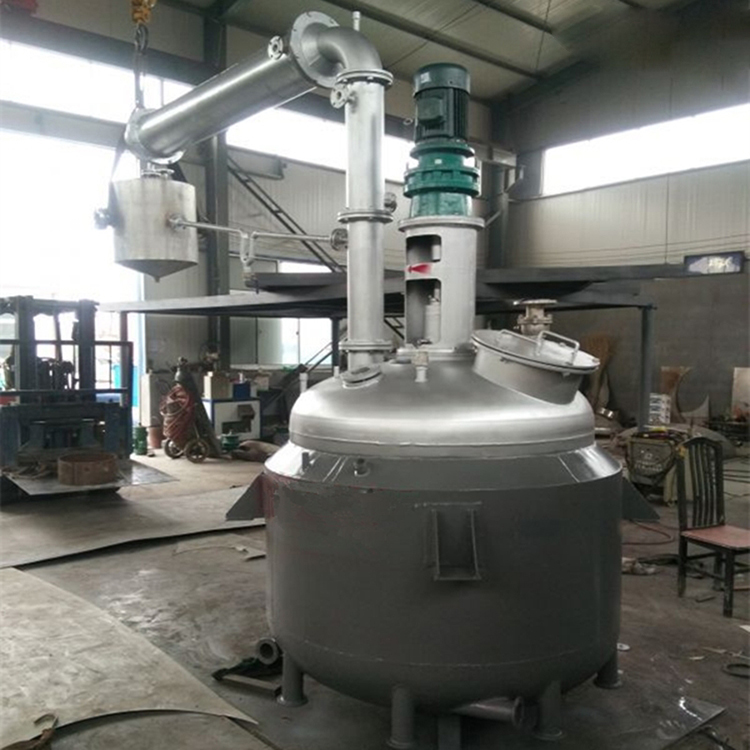
The Converging Double-Axis Stirrer is a new type of non-blind spot mixing stirrer featuring innovative mixing methods. It contains two or three multi-layered paddle stirrers and 1-2 automatic scrapers inside the kettle. As the stirrers revolve around the kettle's axis, they also spin at different speeds around their own axes, causing the material to move complexly within the kettle and undergo intense shearing and kneading. Typically, its efficiency is several times that of a conventional stirrer.
Commonly available planetary mixers typically consist of two low-speed planetary mixing blades (usually multi-angled, helical, or box-type), one or two high-speed planetary mixing blades (dispersion disks), and a scraping blade.
Co-axial twin shaft mixer performance features:
The main unit employs a planetary gear reducer design, featuring low noise, high mechanical efficiency, and the ability to save energy consumption and reduce equipment space. This machine is suitable for various processes involving multi-component solid-solid, solid-liquid, and liquid-liquid phase materials in industries such as chemicals, light industry, food, batteries, and building materials, including mixing, reaction, dispersion, dissolution, and conditioning. It is used in the preparation of high-viscosity materials like inks, pigments, adhesives, sealants, encapsulating adhesives, paste materials, lubricants, paints, pastes, and additives. The viscosity range is approximately 10,000 to 1,000,000 CP. The type of stirrer can be multi-blade, box, butterfly, or outer wheel, depending on the material requirements.

Advantages
Its mixing principle determines its superior mixing efficiency compared to conventional mixers.
2. Broad application range; studies indicate that planetary mixers are suitable for most materials with viscosity up to 1 million pcs and solid content below 90%. When paired with various mixers and auxiliary equipment*, they can replace the majority of standard mixers on the market.