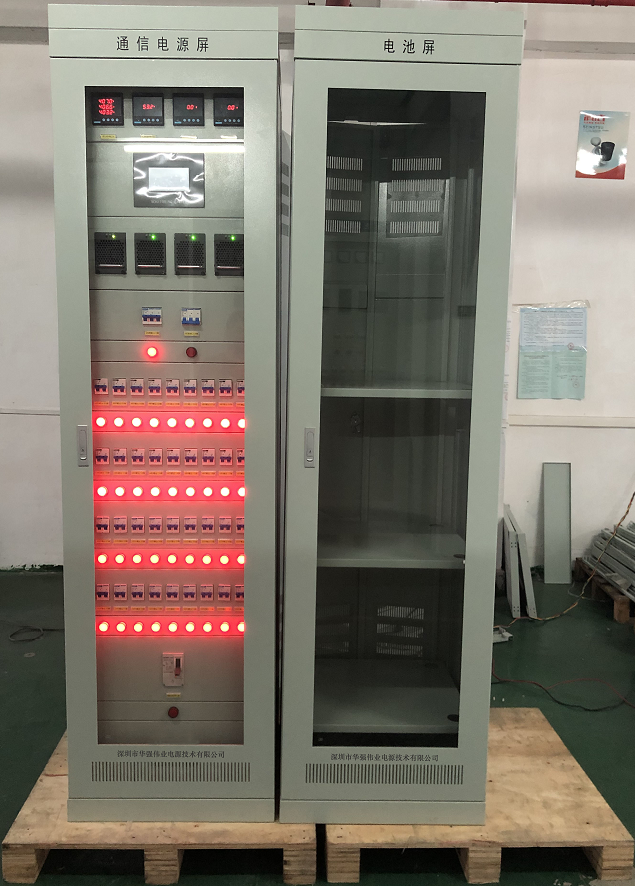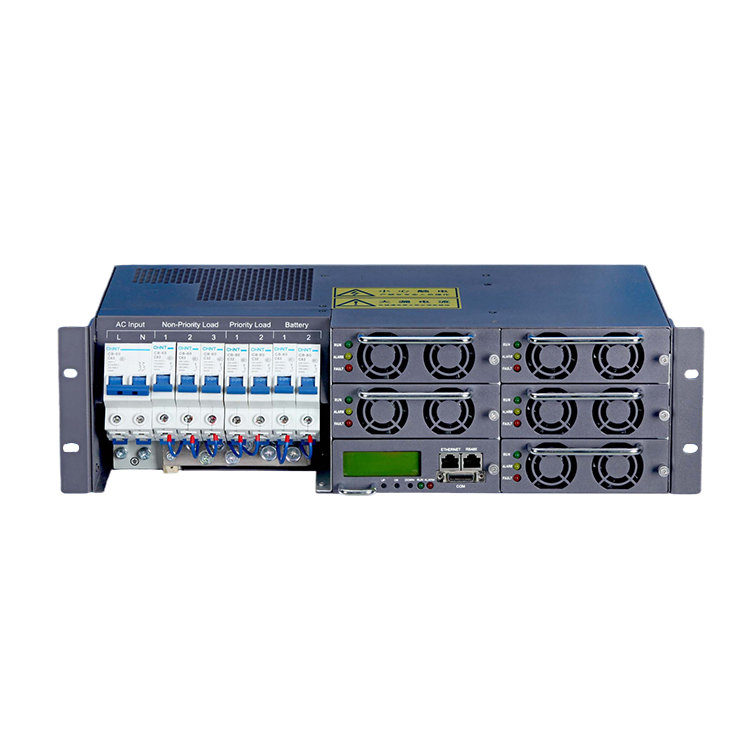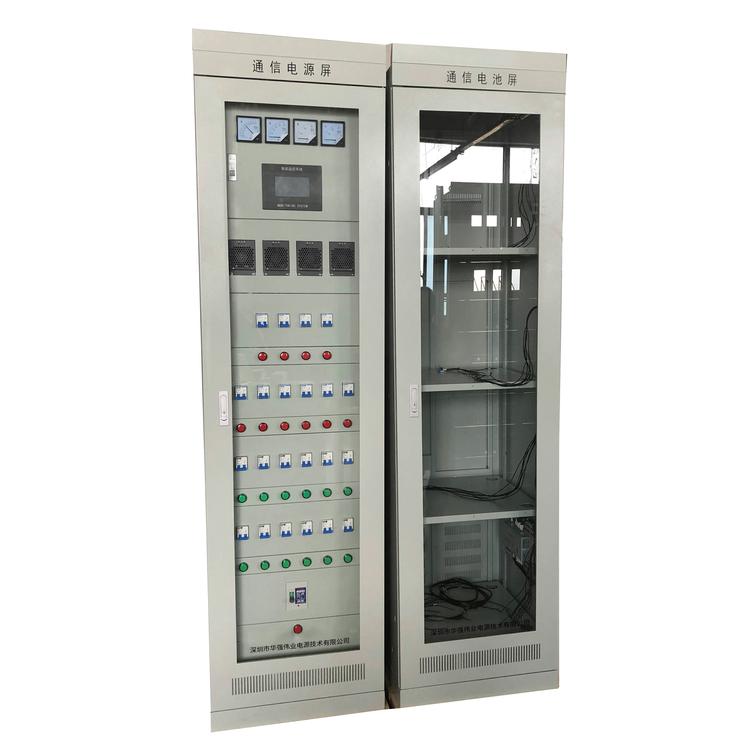







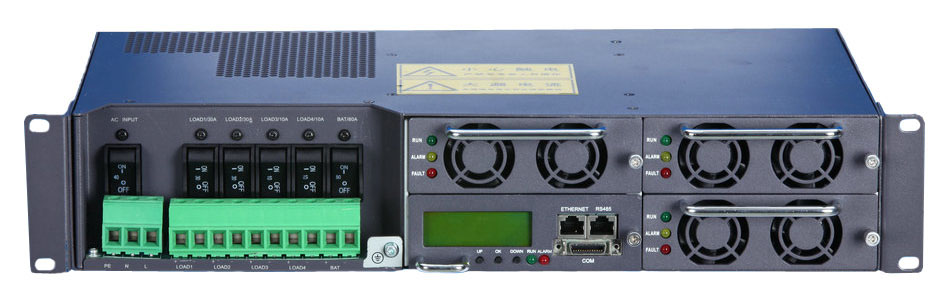
To install communication power supply, first understand the direction of the power supply:
1. The high voltage enters the high and low voltage distribution room (substation) through the line and first enters the high voltage distribution cabinet;
2. Behind the high-voltage distribution cabinet is the transformer, which transforms the high voltage into 380V/220V;
3. The transformer is connected to a low-voltage distribution cabinet, which is different from other low-voltage distribution cabinets in that it is powered by an oil engine and plays a role in switching between mains and oil engines;
4. Connect the low-voltage distribution cabinet and use an AC busbar to distribute electrical energy to each individual building;
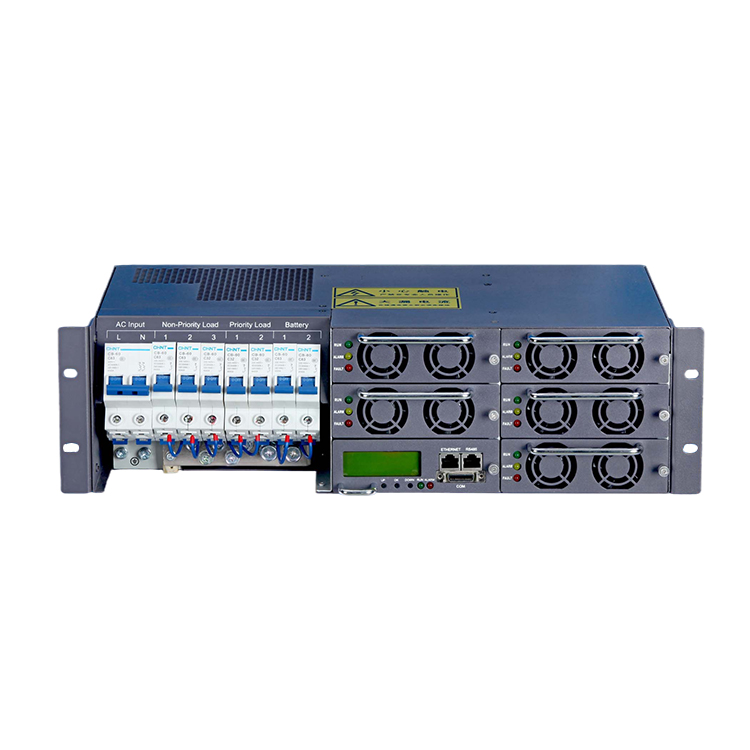
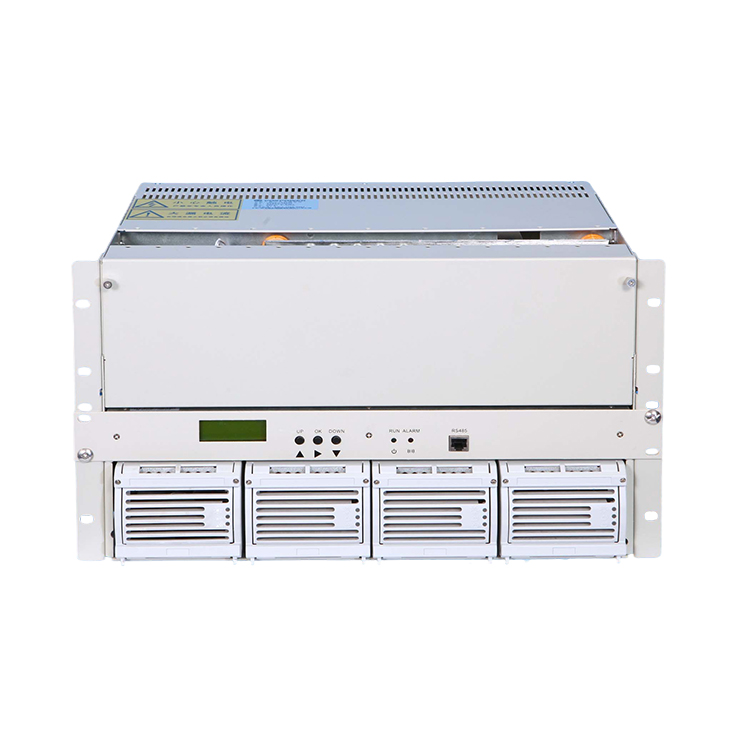
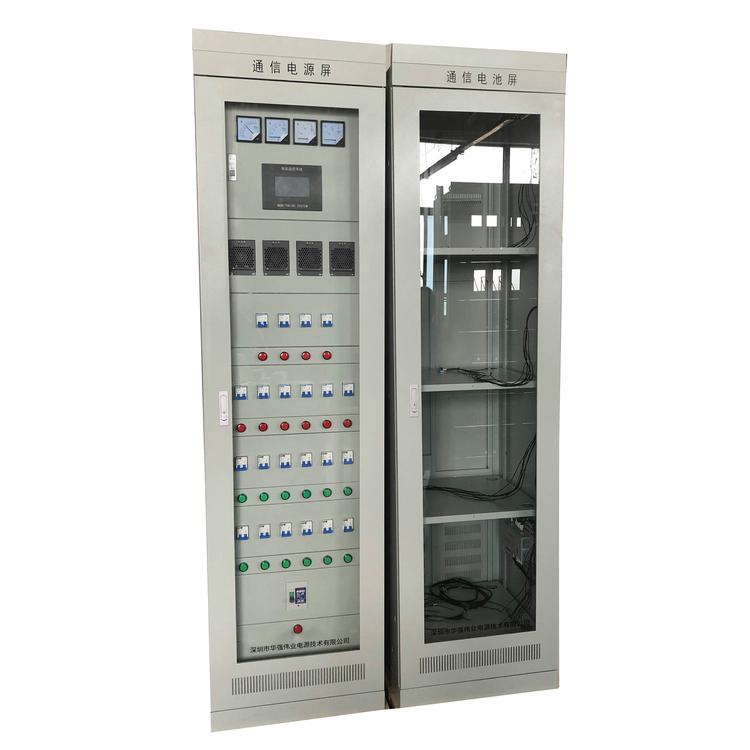
5. If electricity is delivered to the communication room, it will involve UPS, switch mode power supply, and of course, matching battery packs. UPS mainly ensures uninterrupted AC power supply, while switch mode power supply is
Ensure uninterrupted DC power supply. To ensure uninterrupted power supply, both UPS and switch mode power supply should be used in conjunction with batteries.

What are the precautions for using communication power supply
1. The high-frequency switching power supply system does not have high temperature requirements for the environment, and can work normally from minus 5 degrees to 40 degrees. However, it must be clean and dust-free indoors, otherwise the dust will add moisture
It can cause the host to malfunction. The temperature requirements for batteries are relatively high, with a standard operating temperature of 25 degrees Celsius, which should not exceed 15 to 30 degrees Celsius during normal use. If the temperature is too low, it will cause
The capacity of the battery decreases, and for every 1 degree drop in temperature, its capacity also decreases by 1%;
2. According to the usage requirements of the power system and the size of the power margin, it is necessary to avoid adding high-power additional equipment arbitrarily during use, and long-term operation under full load is not allowed.
The nature of work determines the power system, which operates almost continuously. Increasing high-power loads or working at basic full load can cause faults in the rectifier module,
In severe cases, it may damage the transformer;
3. Due to the high output current of the combined battery pack, there is a risk of electric shock. Therefore, special attention should be paid to safety during loading and unloading, output lines, and connecting conductive strips. Insulation measures should be taken for all tools,
Especially the output contacts should have anti touch measures. To protect the safety of individuals and equipment;
4. Whether in float charging operation or discharge maintenance testing, it is necessary to ensure that the voltage, current, etc. meet the specified requirements. High voltage or current is likely to cause damage to the battery
Thermal runaway, water loss, and insufficient voltage and current can cause battery depletion, which can affect the entire lifespan of the battery, with the former having a greater impact;
5. Batteries should avoid high current charging and discharging. In theory, high current can be accepted during charging, but in practical operation, it should be avoided as much as possible, otherwise it will cause expansion and deformation of the battery plates, resulting in
The active material on the electrode plate may detach, causing an increase in internal resistance and temperature of the battery. In severe cases, it can directly lead to a decrease in capacity and premature termination of the service life.

Maintenance of communication power supply equipment:
1. If the power system cannot output the specified current, the voltage exceeds the allowable fluctuation range, and the noise voltage is higher than the allowable value for more than 10 seconds, it is judged as a system fault. Voltage in the original communication system
If the frequency or waveform distortion exceeds the specified range and lasts for more than 60 seconds, it is judged as a fault. To ensure the reliability of the communication power system, communication departments with conditions should try their best to use two different power sources
Introduce 2 municipal power inputs locally and install 2 municipal power automatic switching devices; The equipment used should be high-frequency switch rectifier equipment with high reliability, adopting a modular and hot swappable structure for easy replacement,
And reasonably configure backup devices. No new technology or equipment shall enter the power supply system without sufficient verification and trial operation. We should vigorously promote decentralized power supply and use the same DC voltage for power supply
Communication equipment adopts two or more independent power supply systems, which is also a new requirement for the continuous expansion of communication network capacity and scale, as well as the introduction of various new industries in the future. In order to minimize the average time to repair equipment failures,
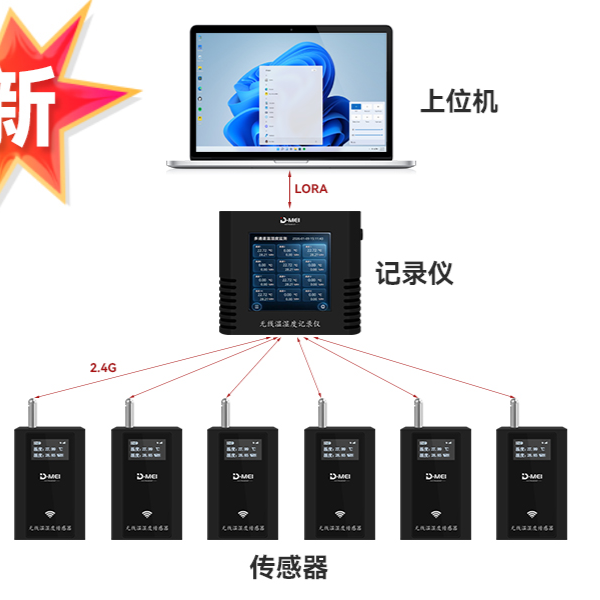
Regularly analyze operating parameters, predict the time of fault occurrence, and promptly troubleshoot. We also need to improve our technical maintenance level by adopting centralized maintenance, remote signaling, and telemetry maintenance;
2. Implementing centralized monitoring and management is an inevitable trend in the development of network technology, a requirement of modern communication networks, and an effective measure for reducing staff and increasing efficiency in enterprises. Various power equipment should be intelligent, standardized, and comply with
Open communication protocol. In the implementation process, the setting of the three remote points should be reasonable, not the more the better. Reliability and practicality should be the basic principles, and simplicity should be avoided. In this regard, I stand by
The remote signaling, telemetry, remote centralized maintenance and other functions of the power system automatically send paging information to maintenance personnel when the power system encounters obstacles, achieving unmanned power supply.