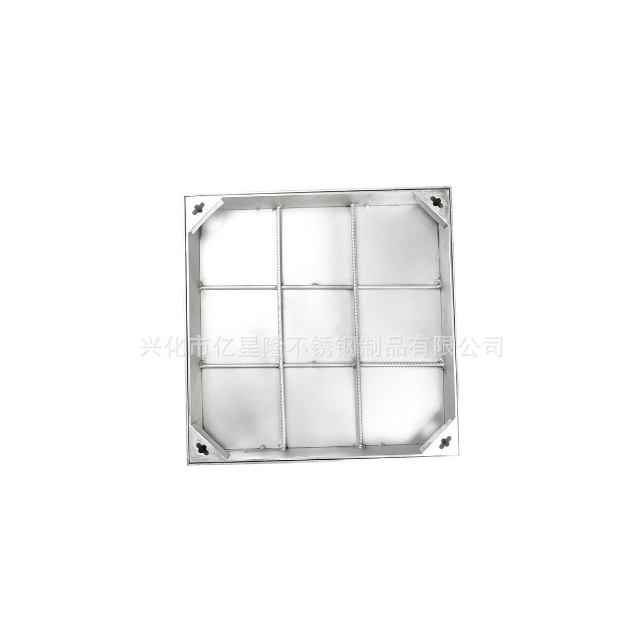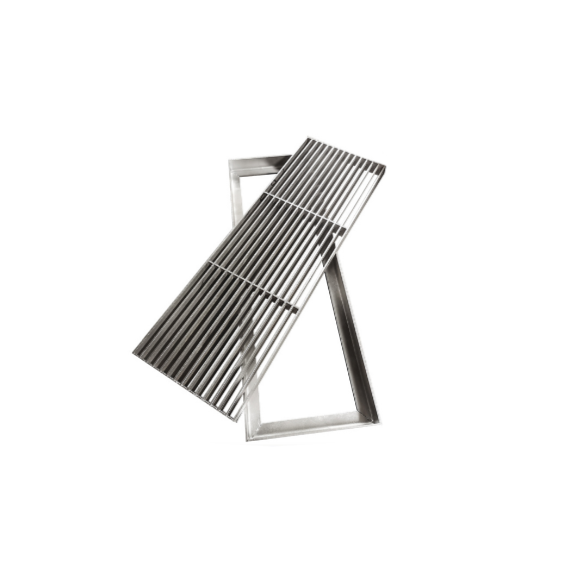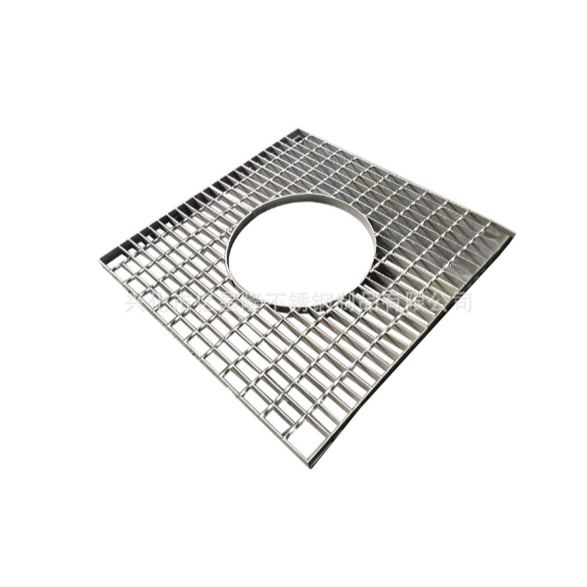



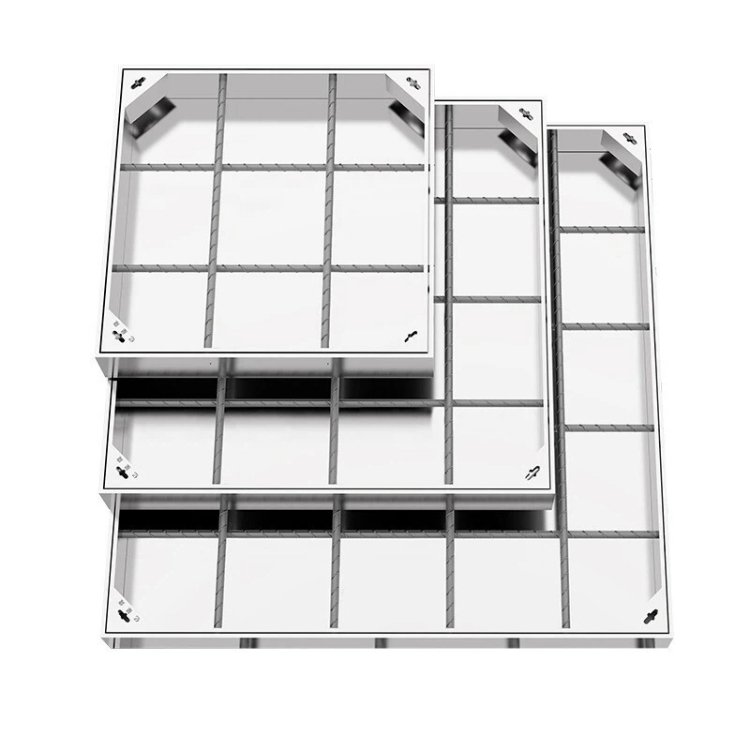
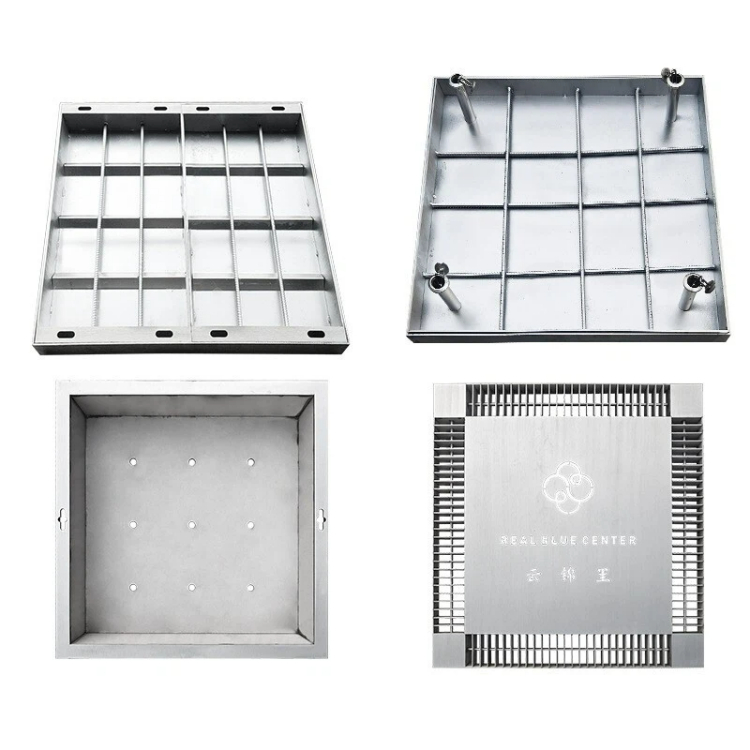
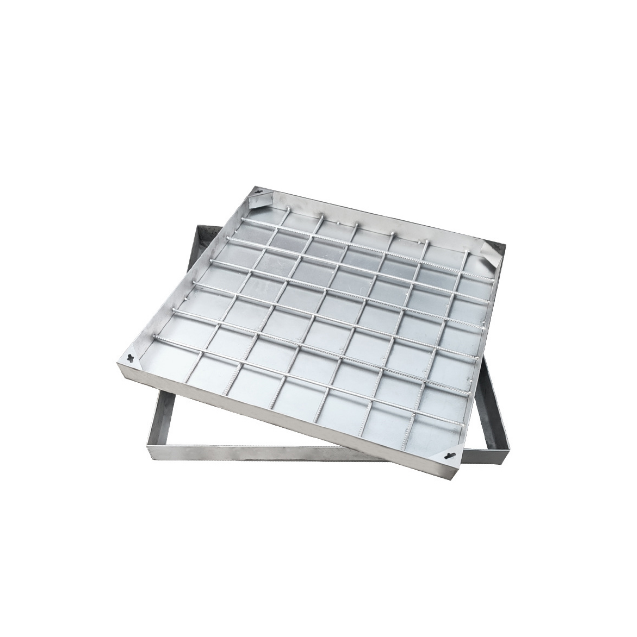
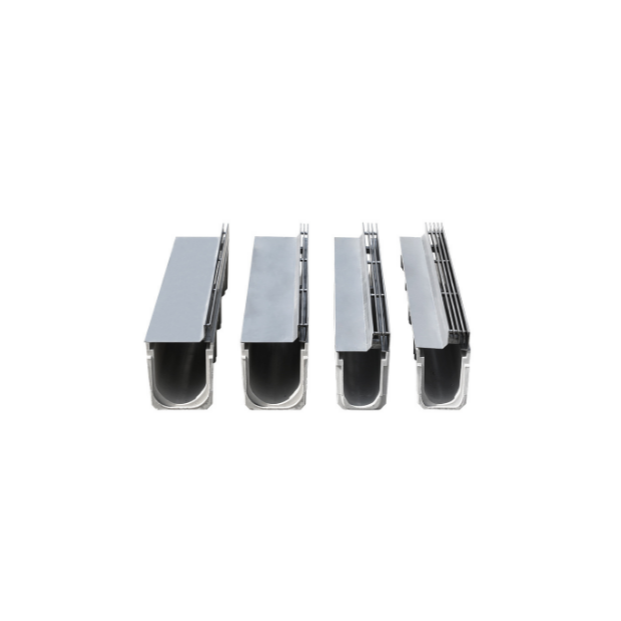
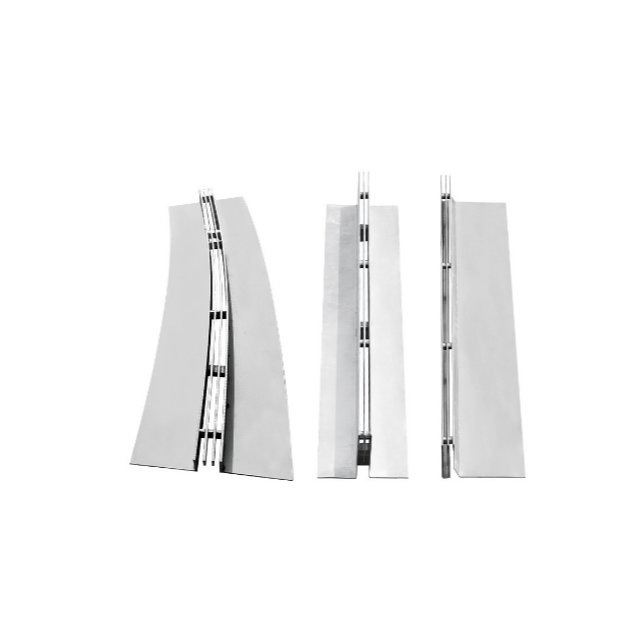





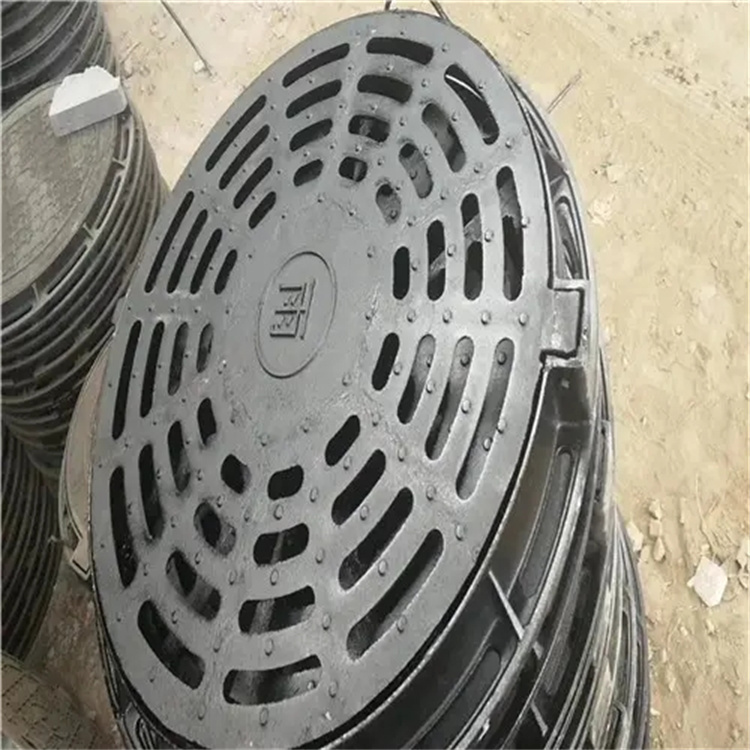
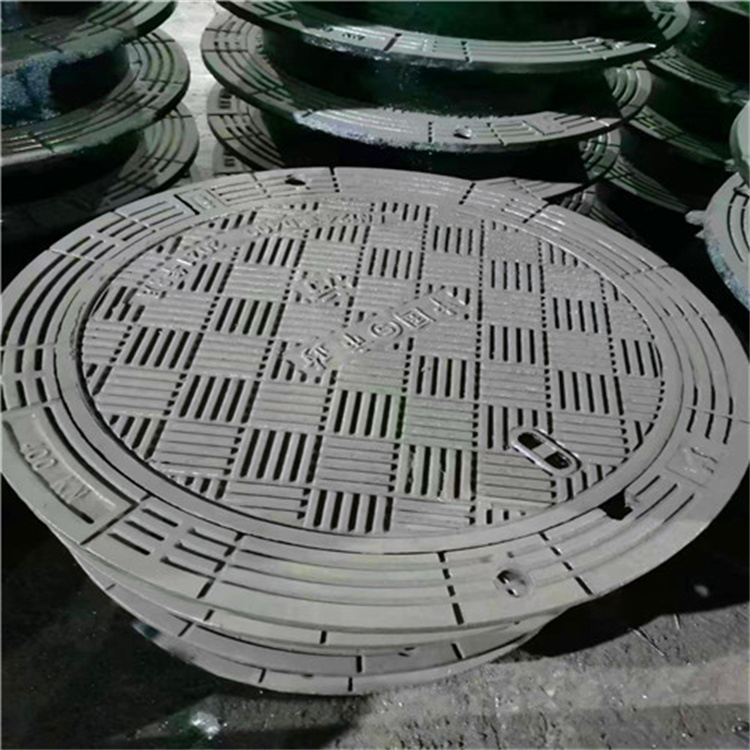
 1. Appearance: The composite manhole cover series features a smooth and aesthetically pleasing appearance. Coloring and design patterns can be customized according to design specifications.
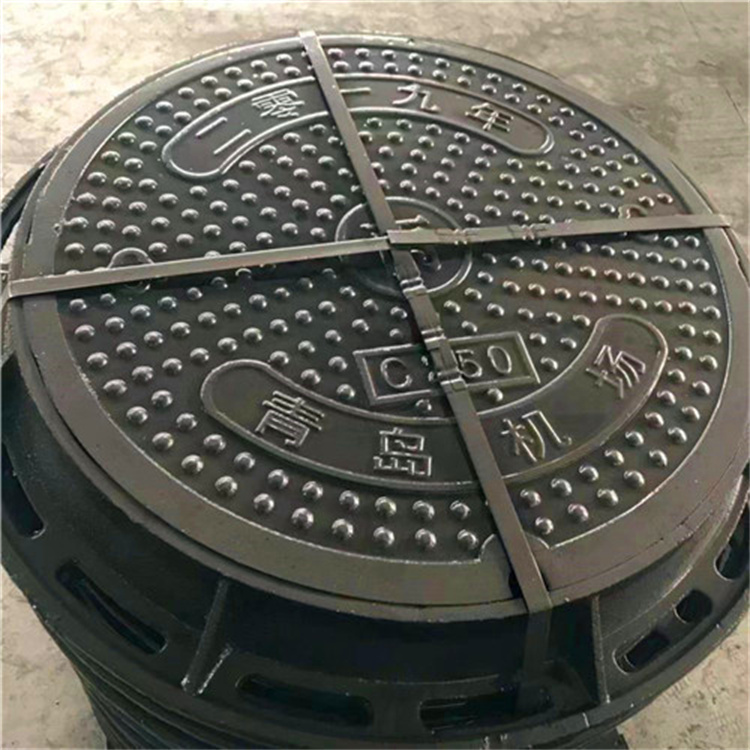
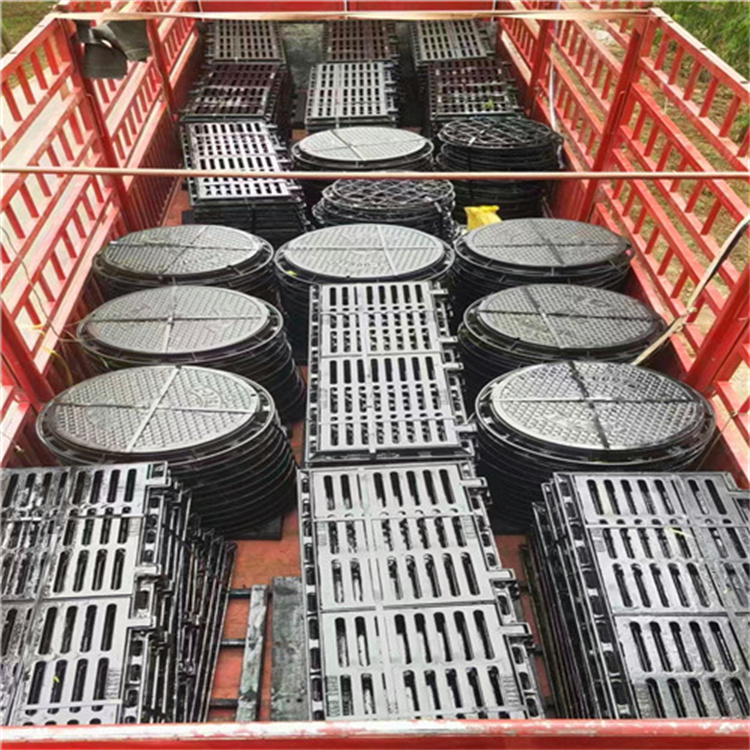
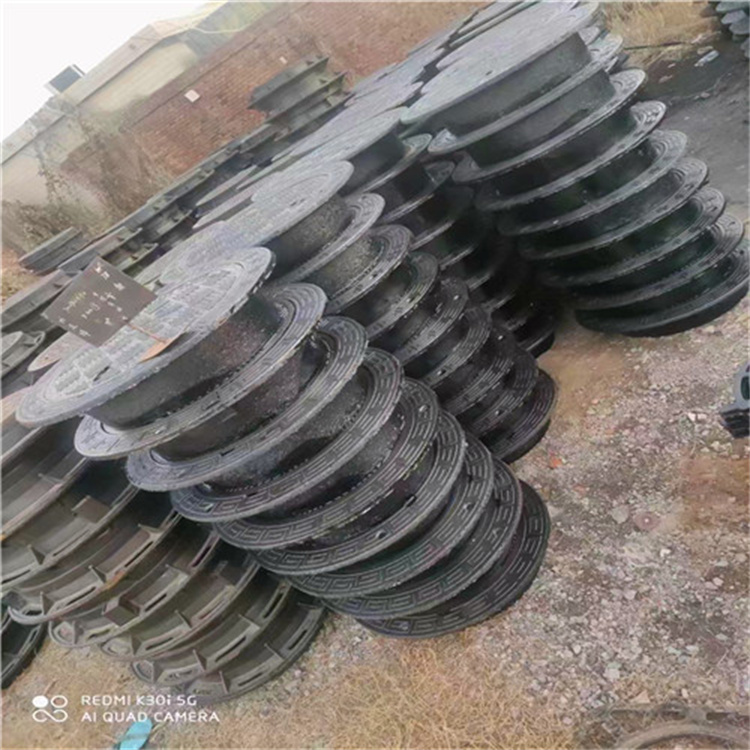
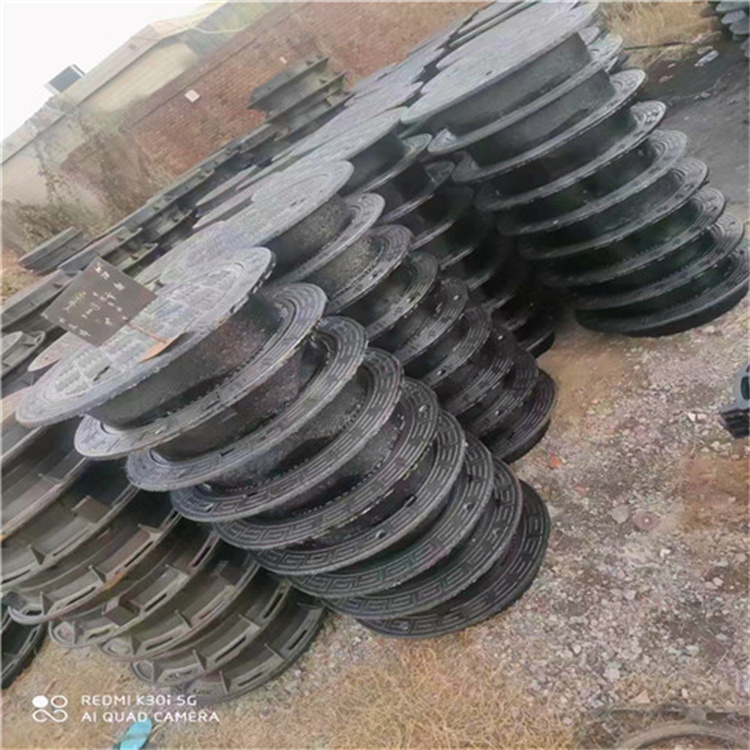
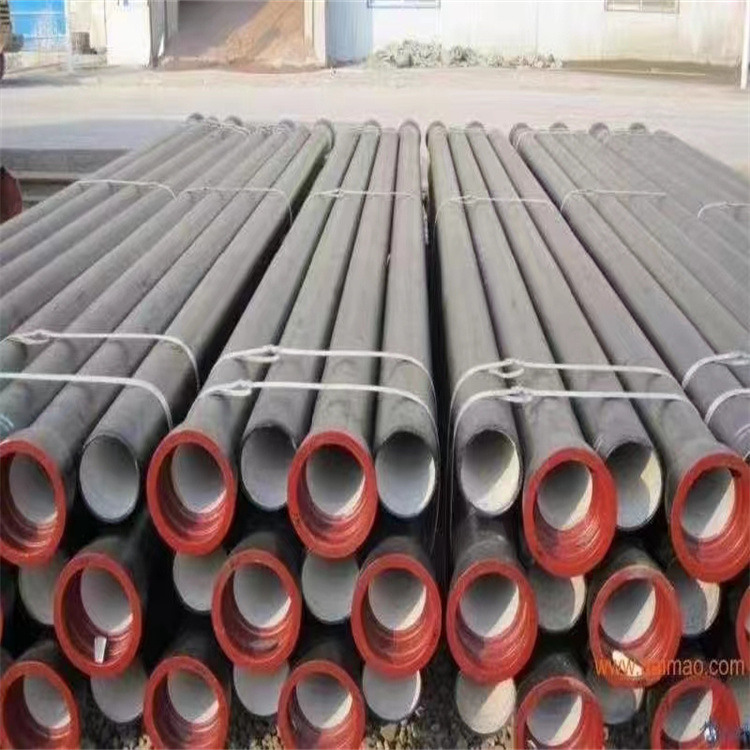
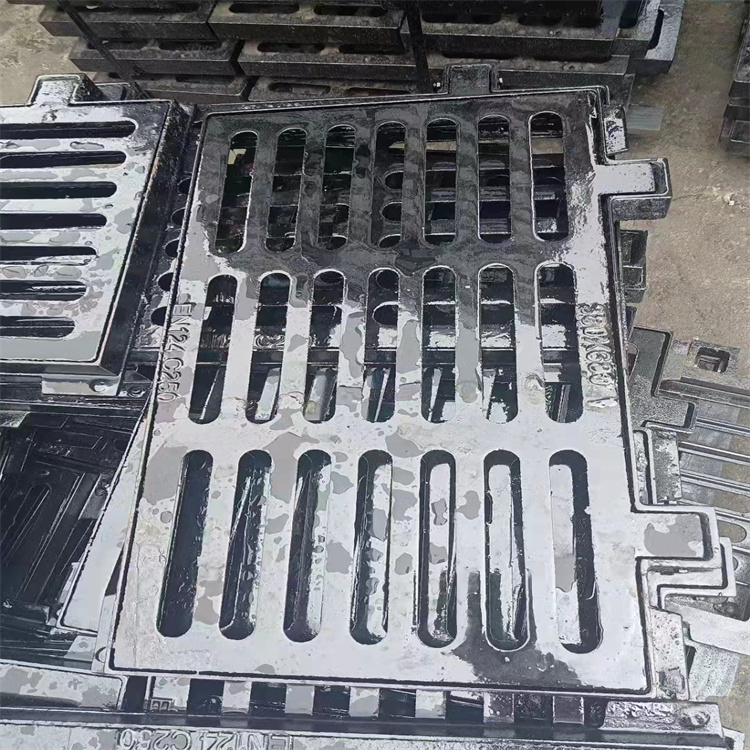
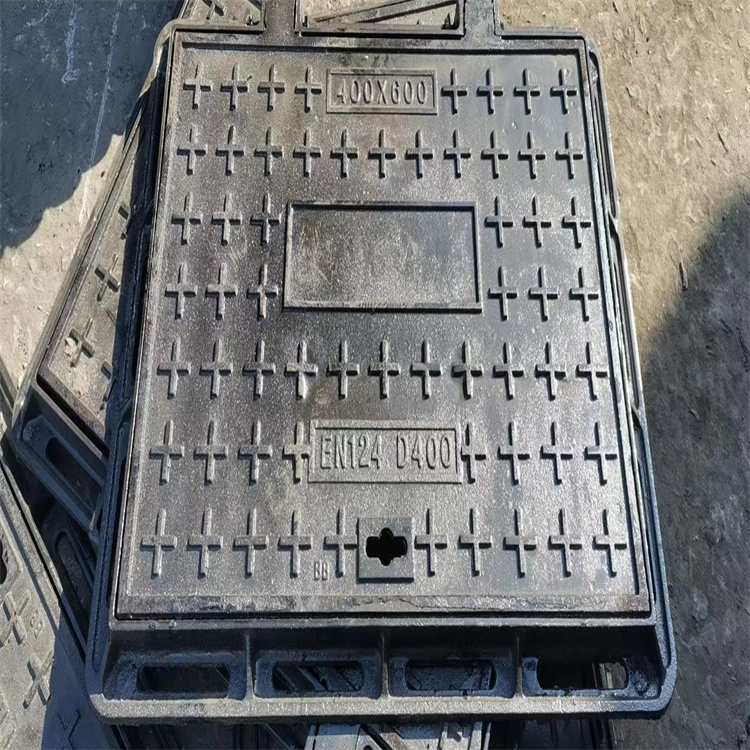
Ductile iron cover series are prone to rust, corrosion, and have poor aesthetic appearance.
The surface of the cement manhole cover series is uneven, making coloring difficult.
2. Weight: The composite manhole cover series is lightweight, approximately one-third the weight of cast iron and cement counterparts.
3. Tensile Strength: The composite manhole cover series features excellent toughness and is resistant to cracking.
Cast iron manhole cover series products have high rigidity, low toughness, and are prone to cracking.
The cement manhole cover series products have strong strength but lack flexibility and rigidity, making them prone to cracking.
4. Vehicle Operation: The composite manhole cover series has a tight-fitting base, ensuring balanced performance without any tilting or bouncing phenomena.
Cast iron manhole cover series, the cover seats are not tightly fitted, causing them to bounce easily during vehicle travel and produce excessive noise.
The cement manhole cover series products have loose seating, which causes them to bounce easily during vehicle travel and are prone to damage.
5. Maintenance Status: The composite manhole cover series, featuring corrosion resistance, light weight, colorability, and good sealing properties, is easy to identify and maintain on a daily basis, effectively reducing labor costs and expenses for replacements.
Cast iron manhole cover series are heavier, prone to rust and corrosion, and easily lost, which increases maintenance difficulties and replacement costs.
The cement manhole cover series is quite heavy, which increases the maintenance difficulty.
6. Unit Cost: The unit cost of the composite manhole cover series is 40% lower than that of the cast iron manhole cover series, and 20% higher than that of the cement manhole cover series.