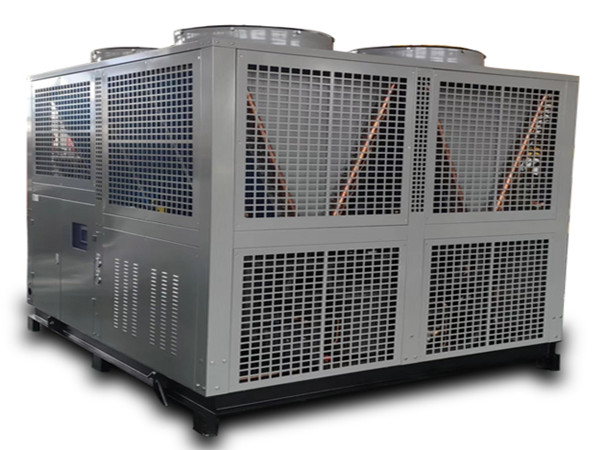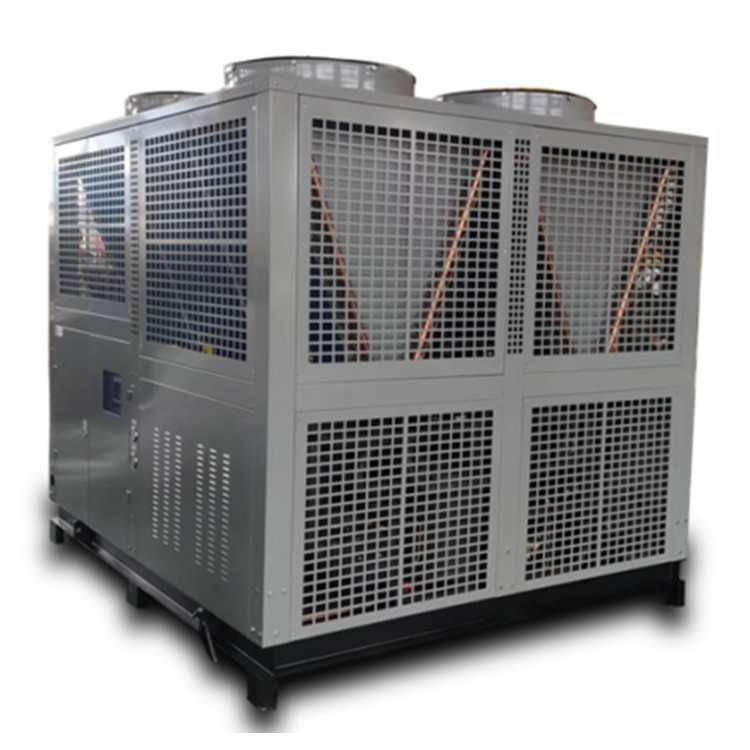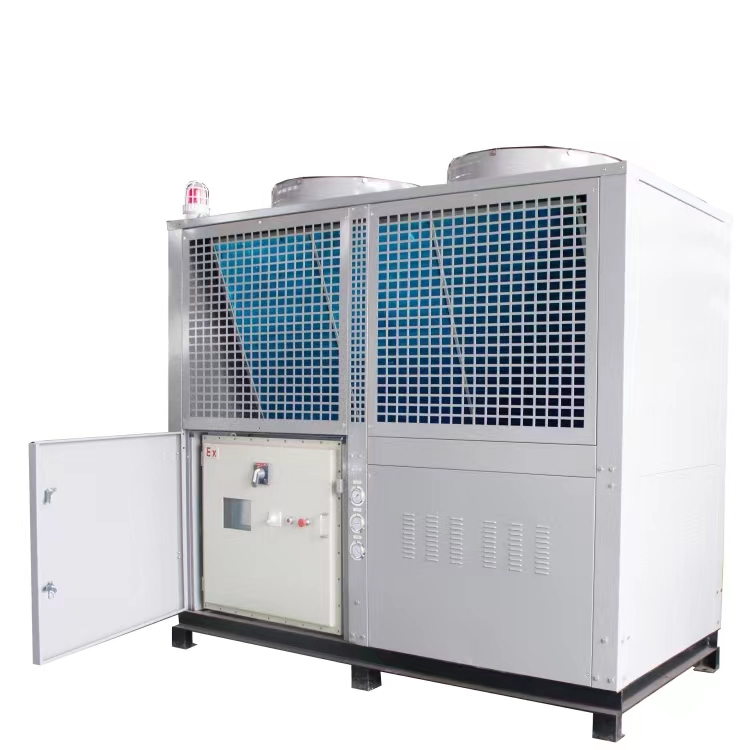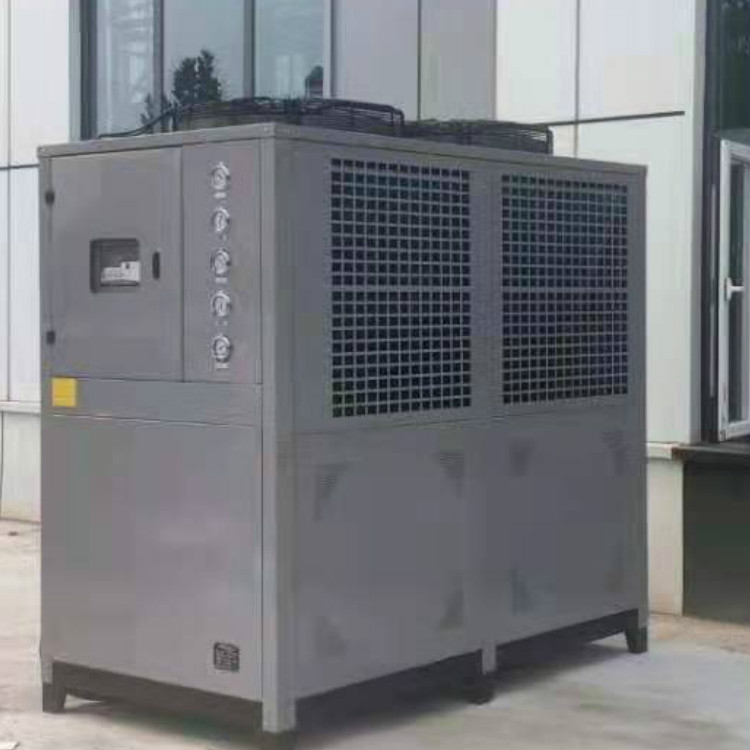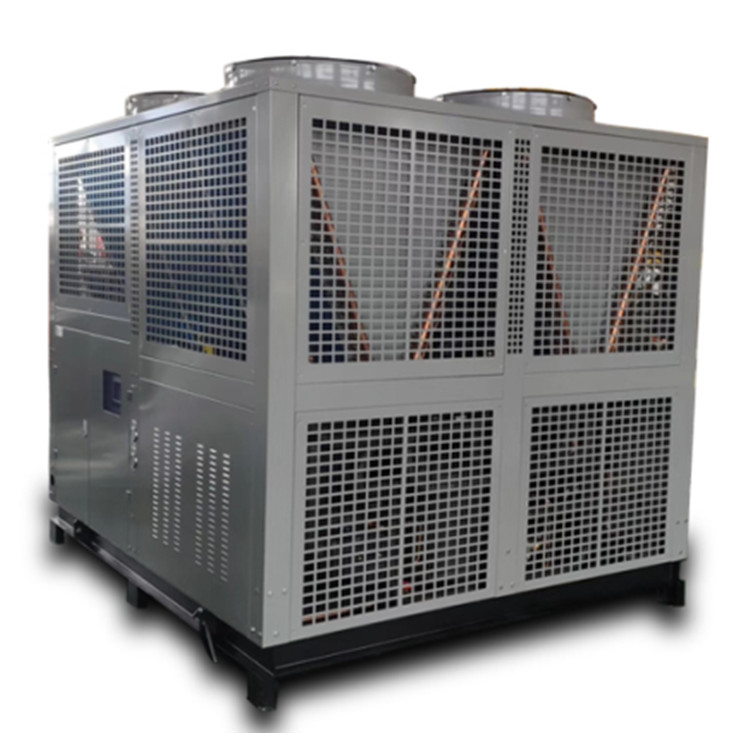
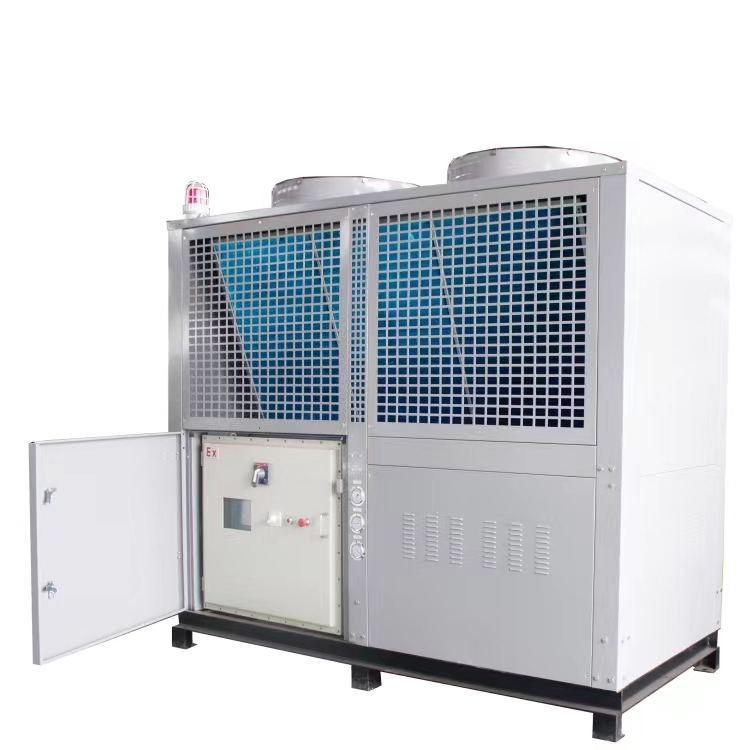
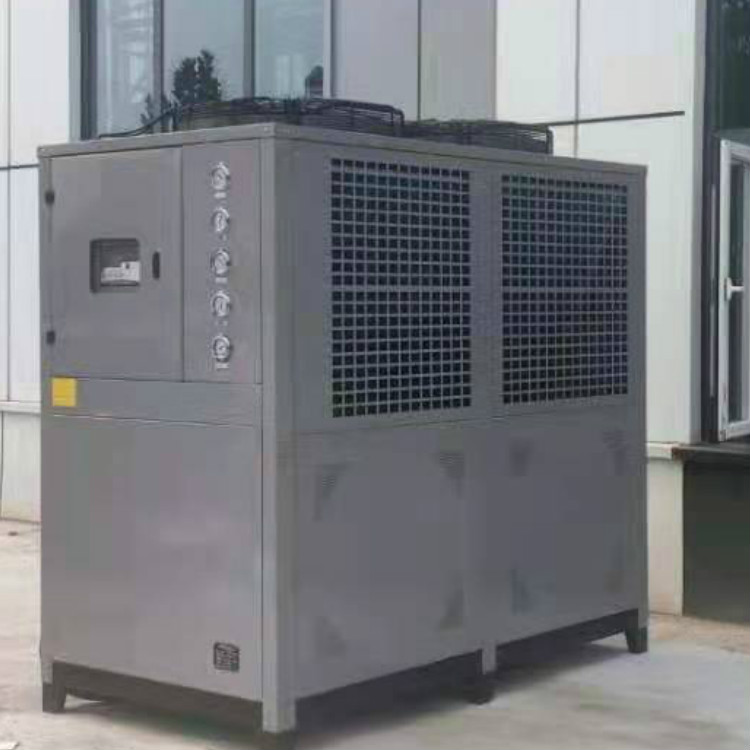







Air-cooled chillers are characterized by low operating costs, easy installation, and excellent cooling performance. Moreover, as people increasingly emphasize environmental and water resource issues, it is believed that the application of air-cooled chillers will become more and more widespread.
Air-cooled and water-cooled chillers can both be used in small systems, with the majority of large units being water-cooled. Initially, the capital investment for the main unit is slightly less for air-cooled chillers, but when you add the cooling tower, machine room, electronic water treatment equipment, etc., the difference is negligible! Moreover, over the long term, the cooling efficiency of water-cooled chillers tends to decline, whereas that of air-cooled chillers does not. Air-cooled chillers use air cooling, eliminating the need for a cooling tower, cooling pump, and piping system that are essential for water-cooled systems, thus preventing issues like scale buildup in the condenser and pipe blockages in poor water quality areas. They also save on water resources and are among the most economical and simple to maintain and repair in refrigeration equipment. While the initial investment for air-cooled chillers is slightly higher than for water-cooled chillers, the annual operating costs are lower, and the building costs for the machine room are minimal compared to various air conditioning and heating systems. Maintenance and repair costs are approximately half of those for water-cooled or boiler systems. Air-cooled chillers are louder and larger than water-cooled chillers, making them suitable for outdoor installation or areas with good ventilation. Water-cooled chillers are mostly installed in underground rooms.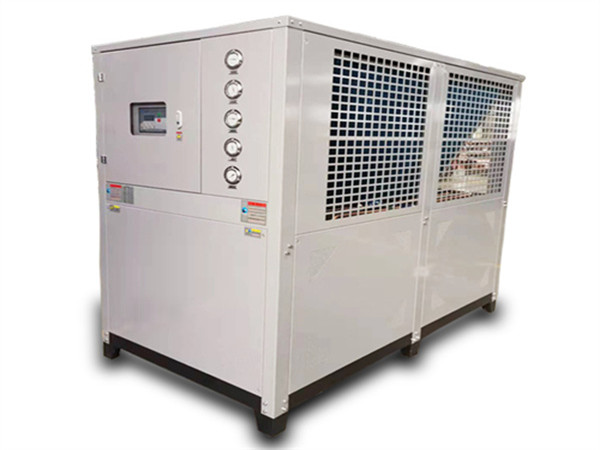
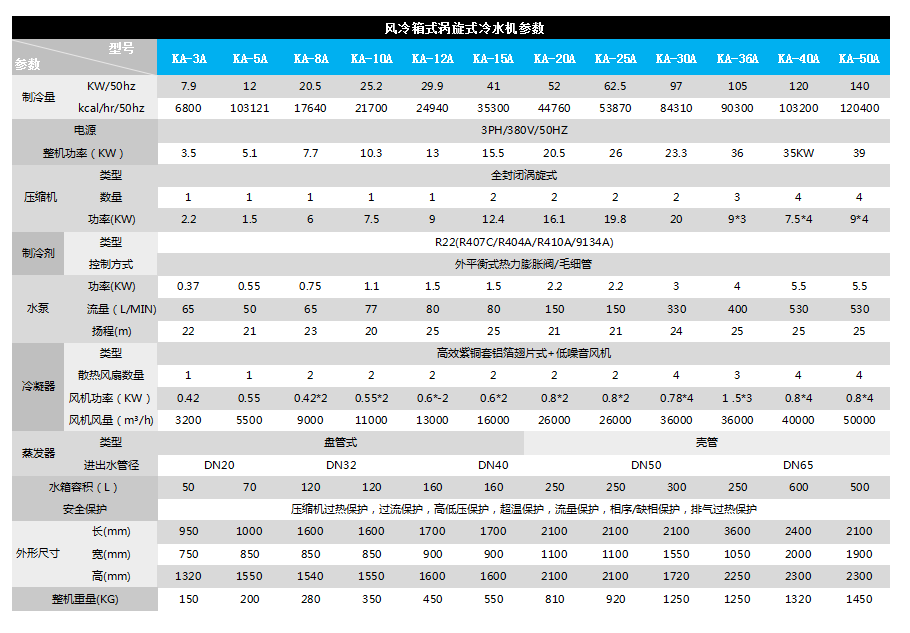
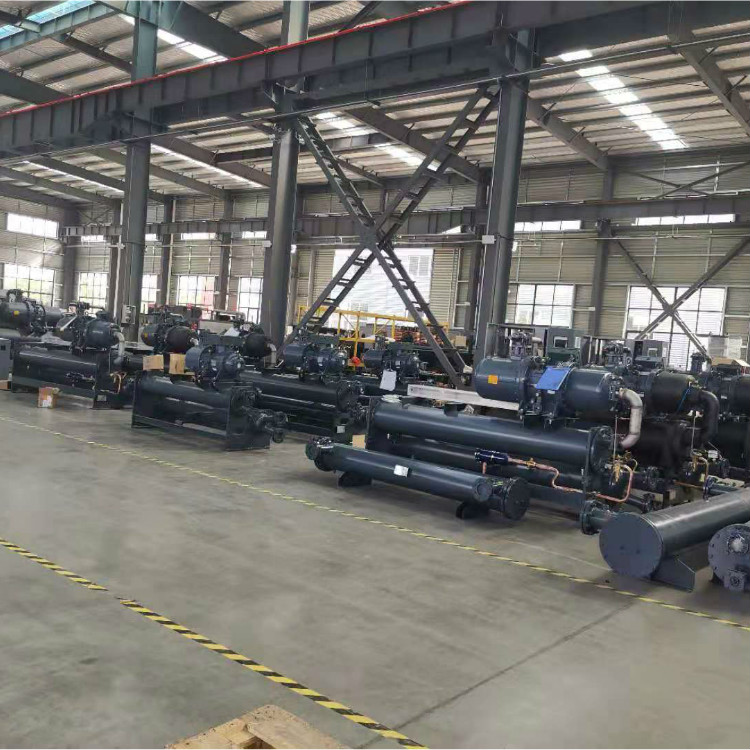
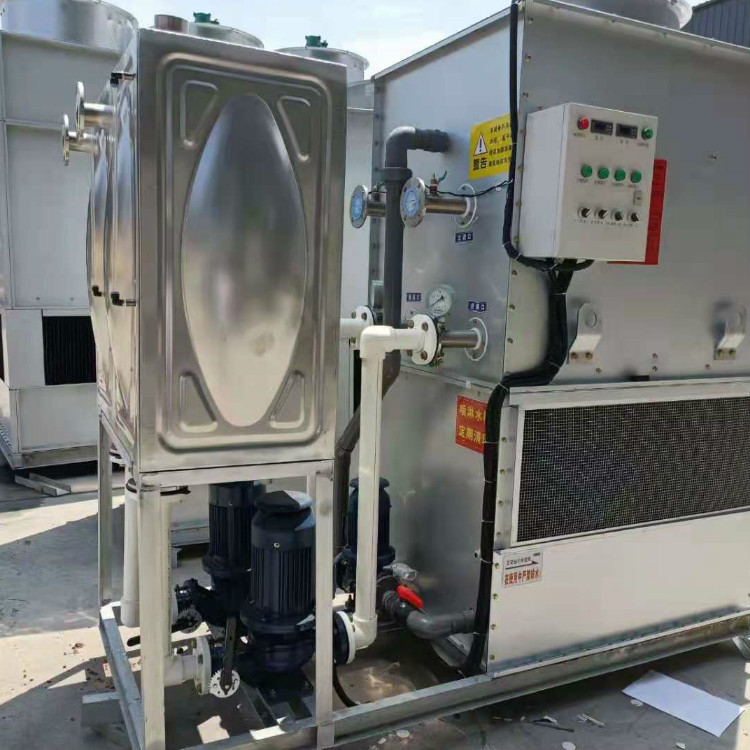
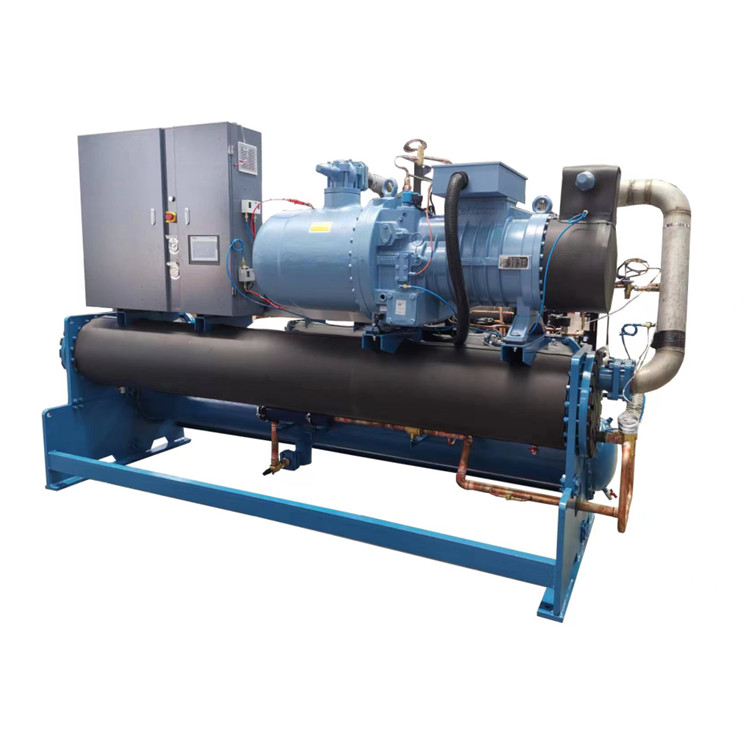
The unit compressor is equipped with a scroll-type fully enclosed compressor or a screw compressor, along with electrical control components; it's fitted with a condenser and evaporator made from high-quality copper tubes for efficient heat exchange; it comes with various protective devices, ensuring stable performance, low noise, long service life, and simple operation; it features a liquid crystal display human-machine interface for easy and convenient operation, with the operating status clearly visible; the models are available with single or multi-compressor refrigeration systems; the compressors can automatically alternate operation based on load changes, balancing the running hours of each compressor to save energy and extend the service life of the chilled water unit; it facilitates energy regulation, leading to greater energy savings during part-load conditions; the entire unit has a compact, box-type structure with an aesthetically pleasing appearance, allowing for easy inspection of the unit's operating status at any time; the unit can be equipped with a self-contained water tank and circulating pump for cooling capacity, eliminating the need for a cooling tower and cooling pump, making installation and maintenance simple and convenient.
The unit boasts the following advantages: 1. Compact size with high cooling capacity; 2. High compression ratio and high EER value; 3. Compact structure, smooth circular motion, low noise, and minimal vibration; 4. Easy to adjust, allowing for capacity regulation within a range, excellent energy-saving performance, and high efficiency under part-load conditions; 5. Few moving parts, less than 10% of the vulnerable parts compared to piston-style, low failure rate, and long service life.