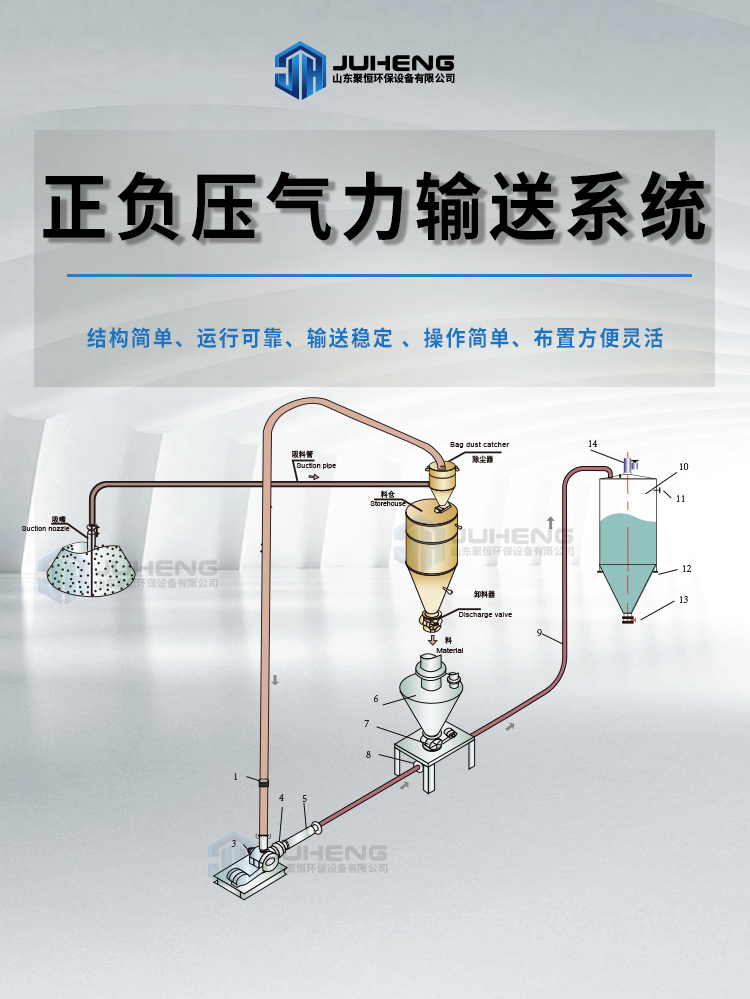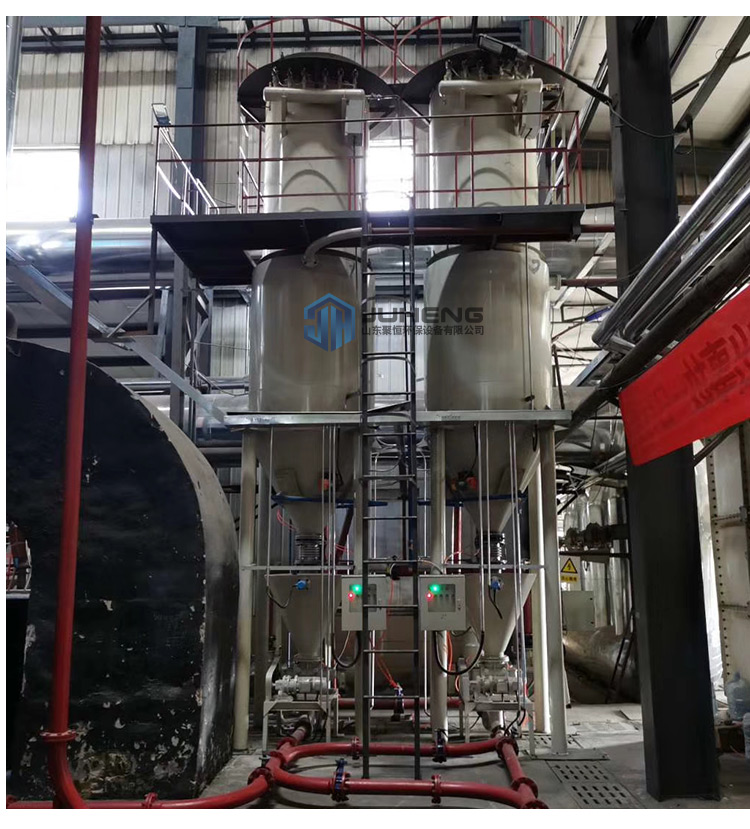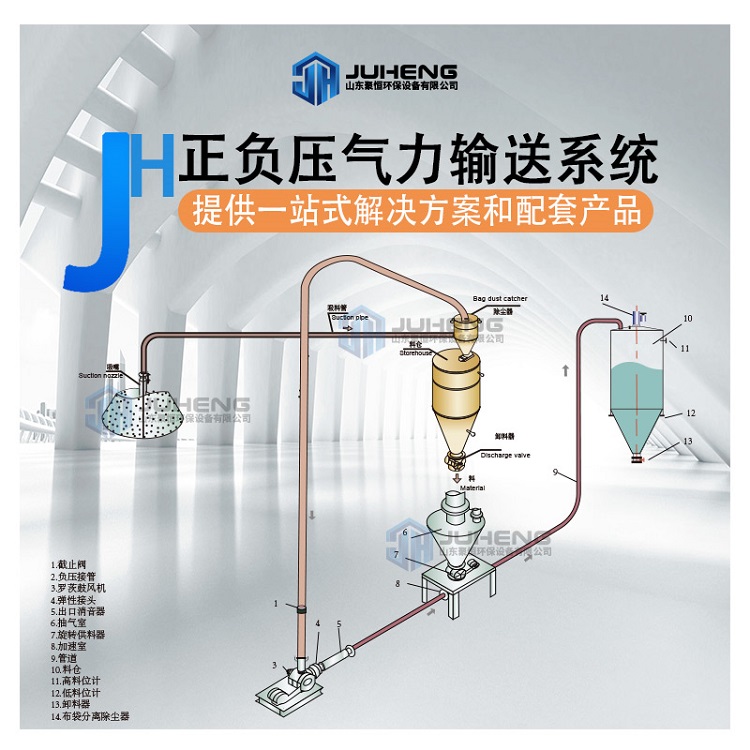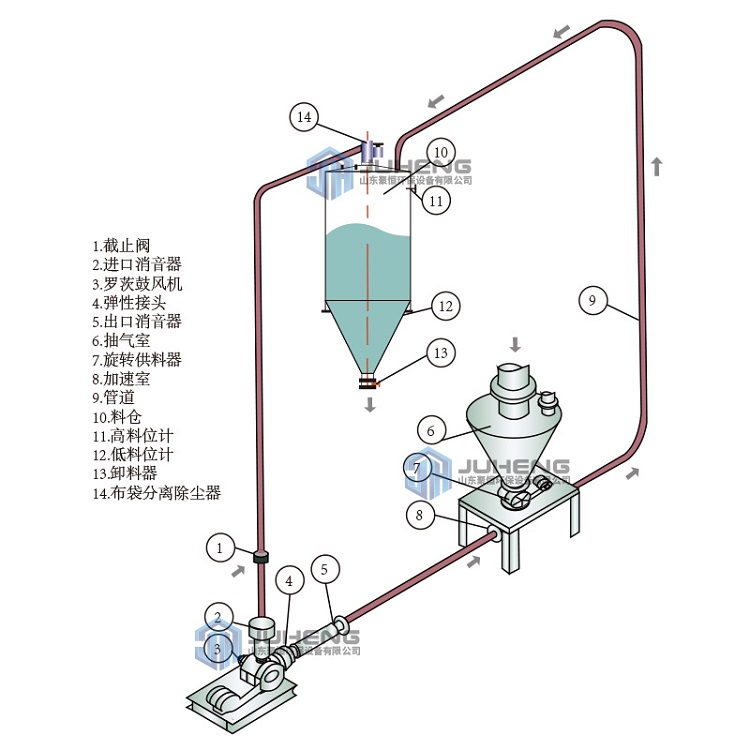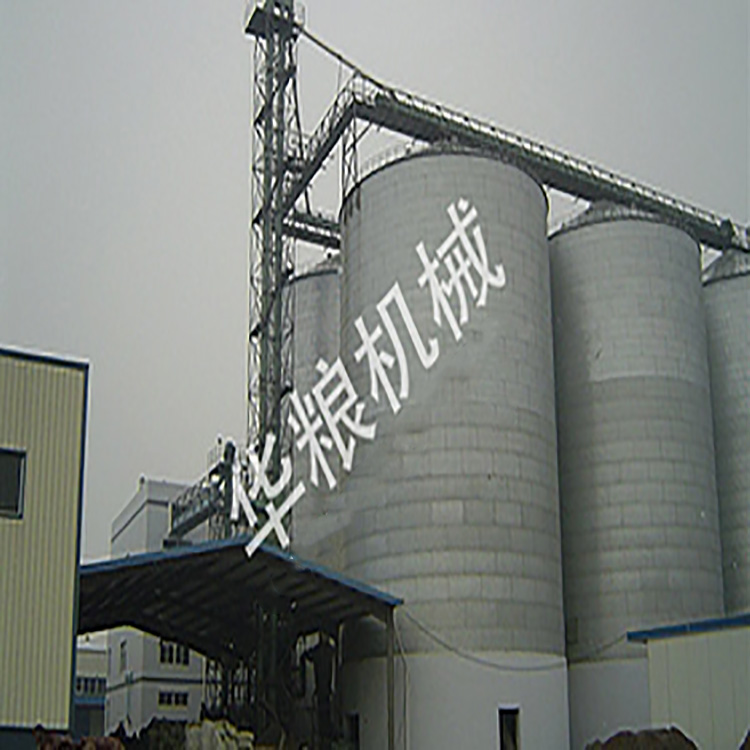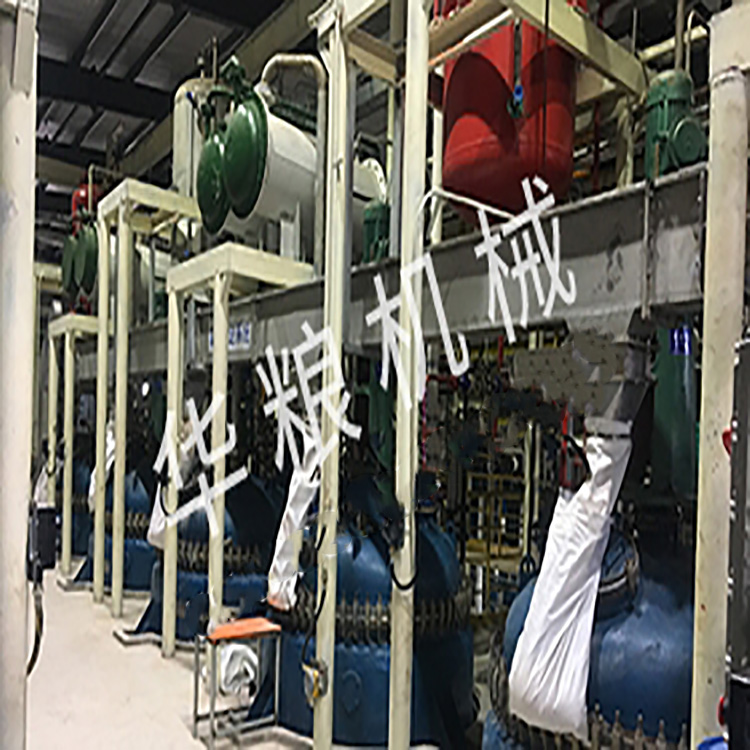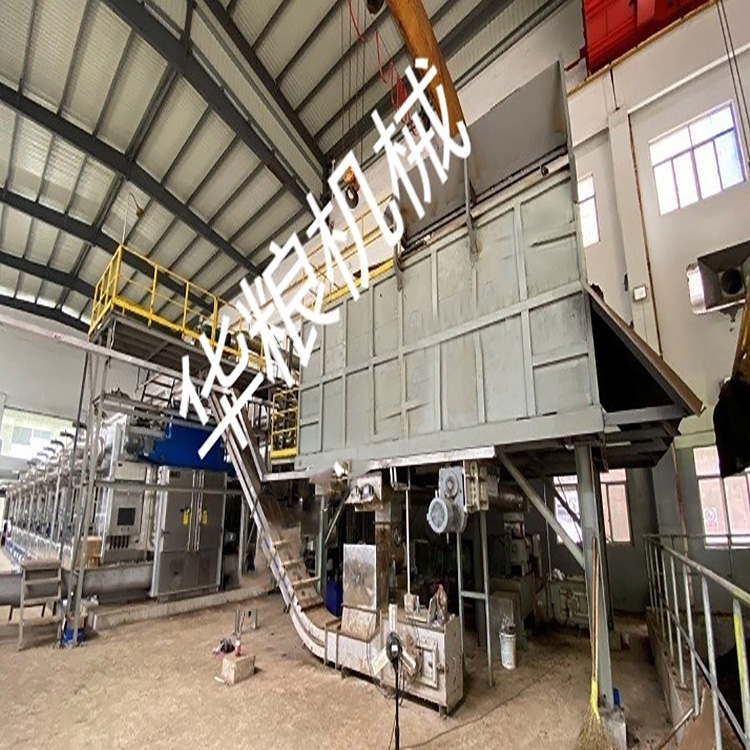

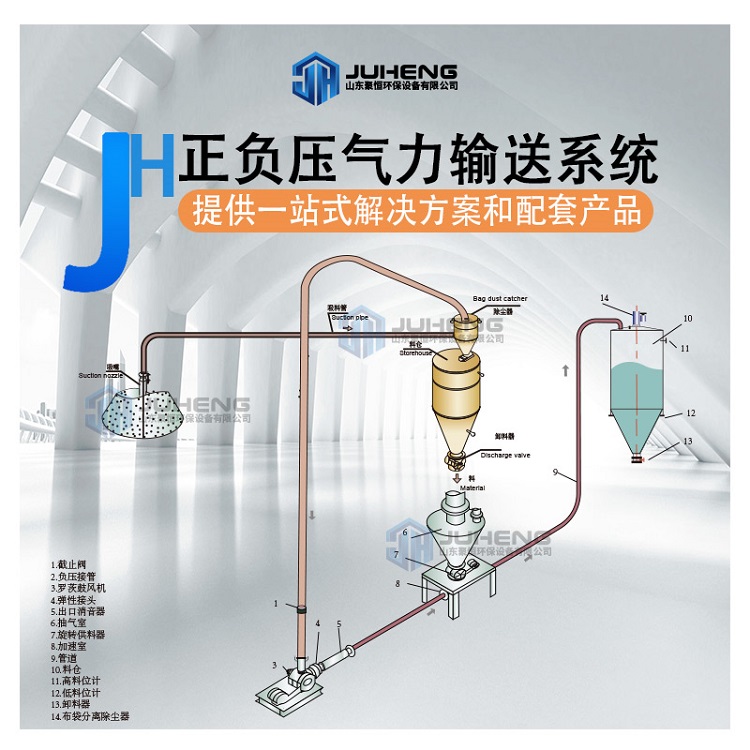


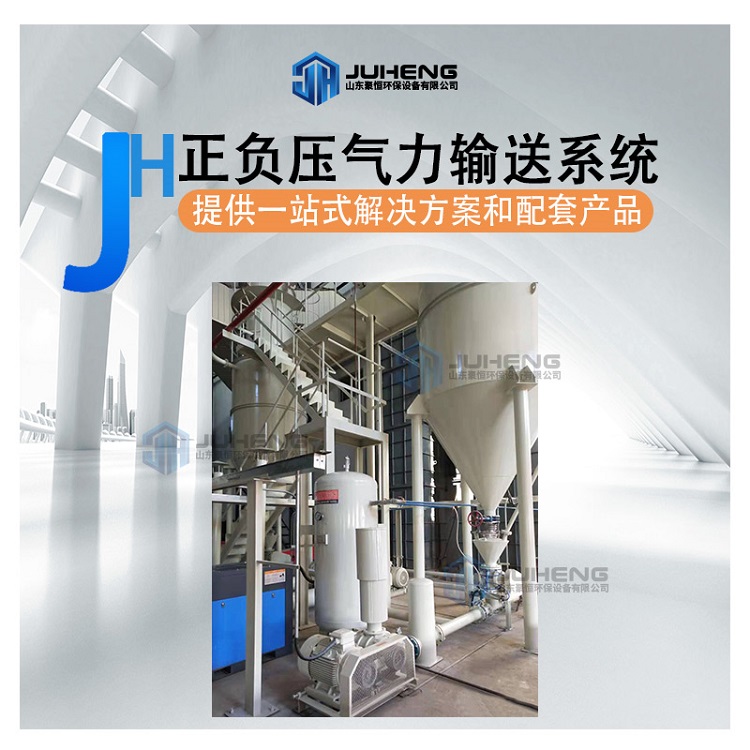









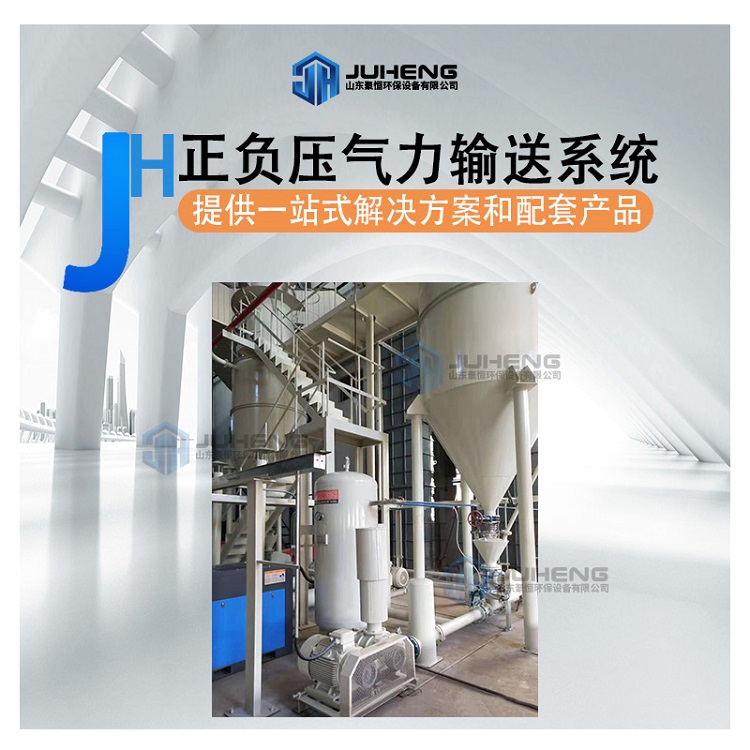
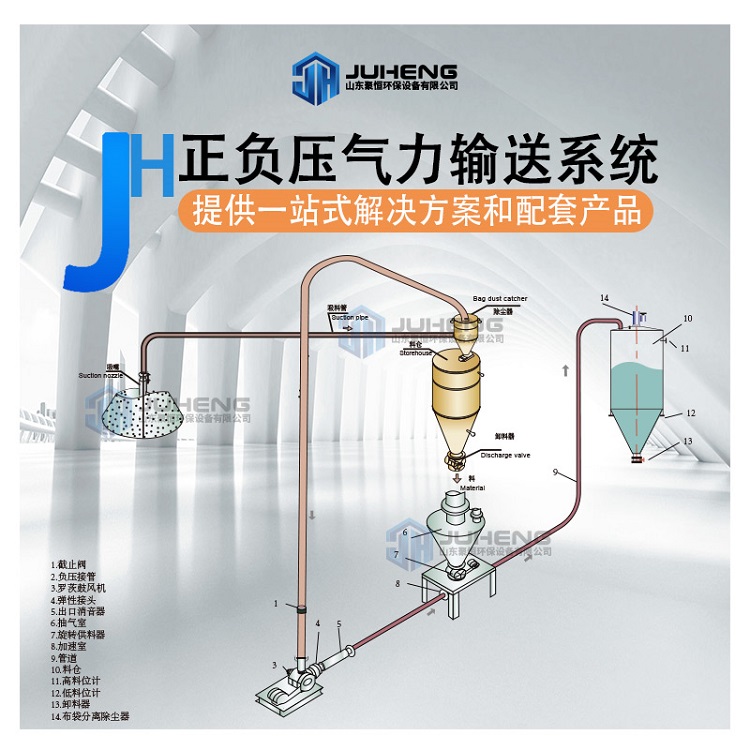
A dilute phase conveying system uses a gas flow of a certain velocity to suspend solid powder in the conveying pipeline, transporting the material to the receiving point through the movement of the gas. The material moves in a suspended state within the pipeline and is separated from the gas by a dust collector.
The dilute phase conveying rate is generally greater than 18 m/s, with a solid-gas ratio less than 10:1. Dilute phase conveying is typically used for light industries such as resins, sugar, flour, PVC, wood chips, food, and other materials. The conveying distance can reach approximately 300 meters, and the conveying capacity can reach up to 100 tons per hour.
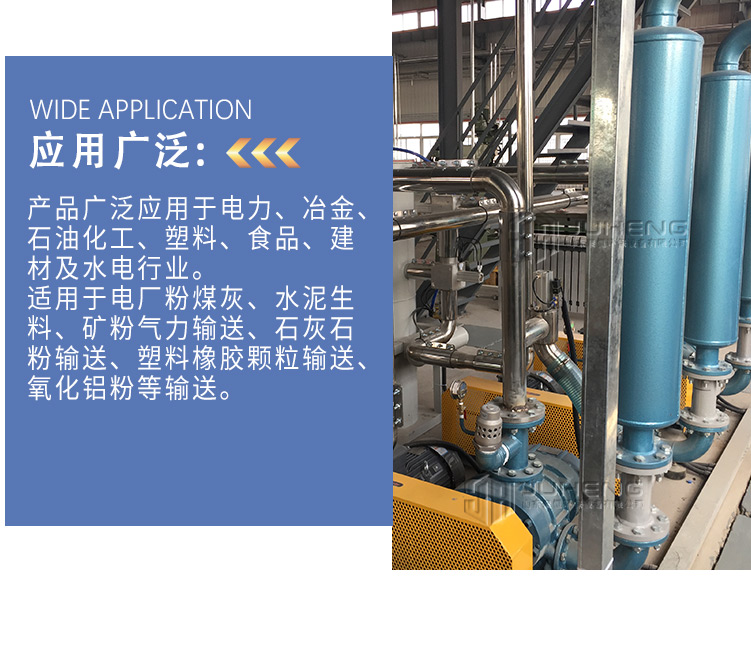
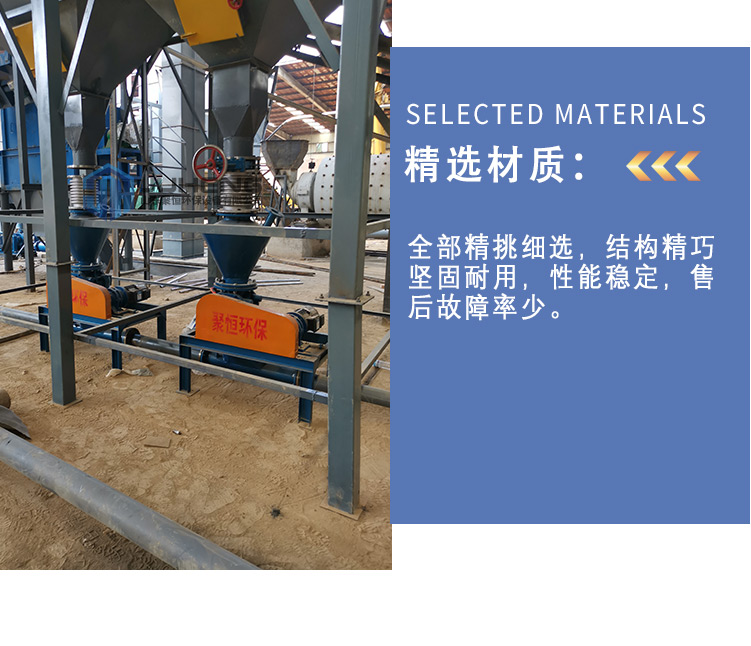
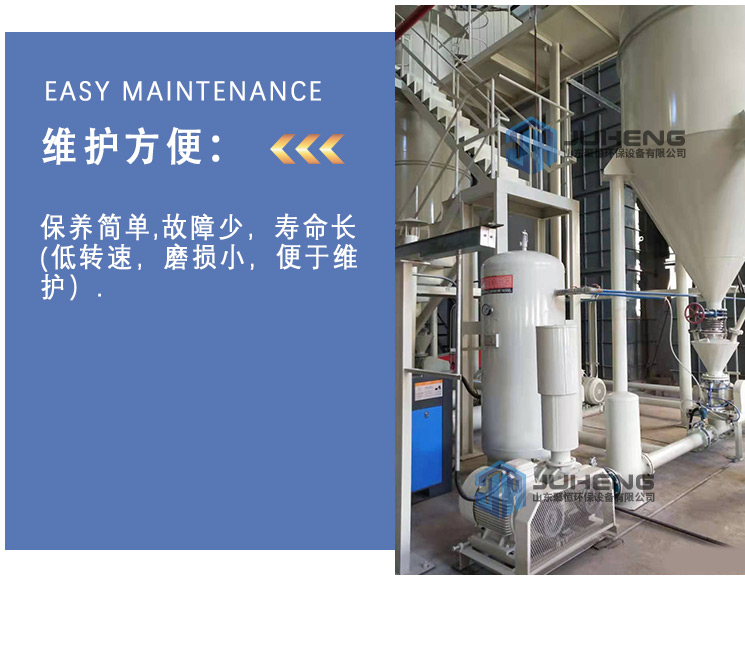
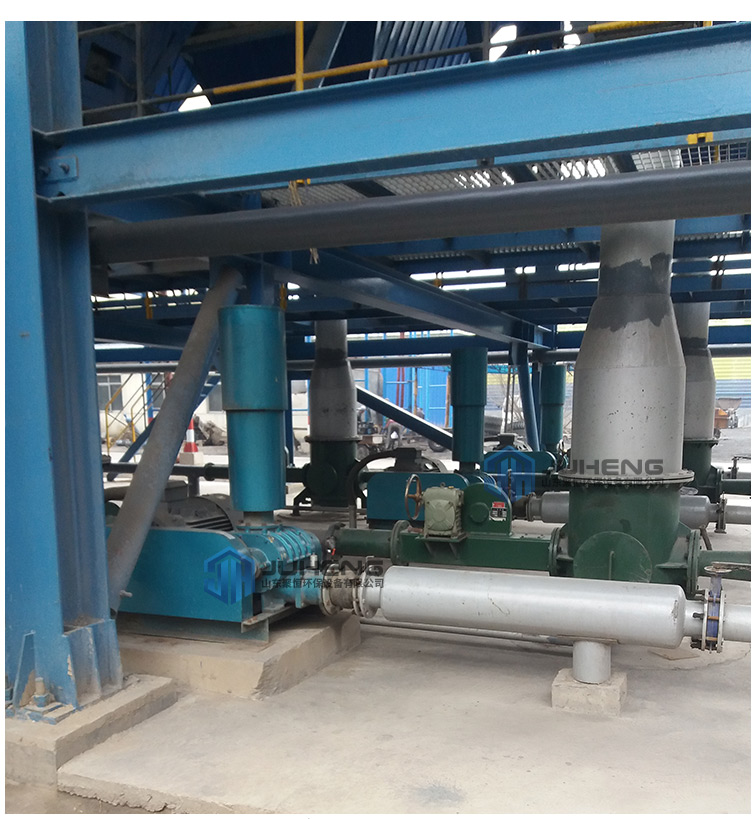
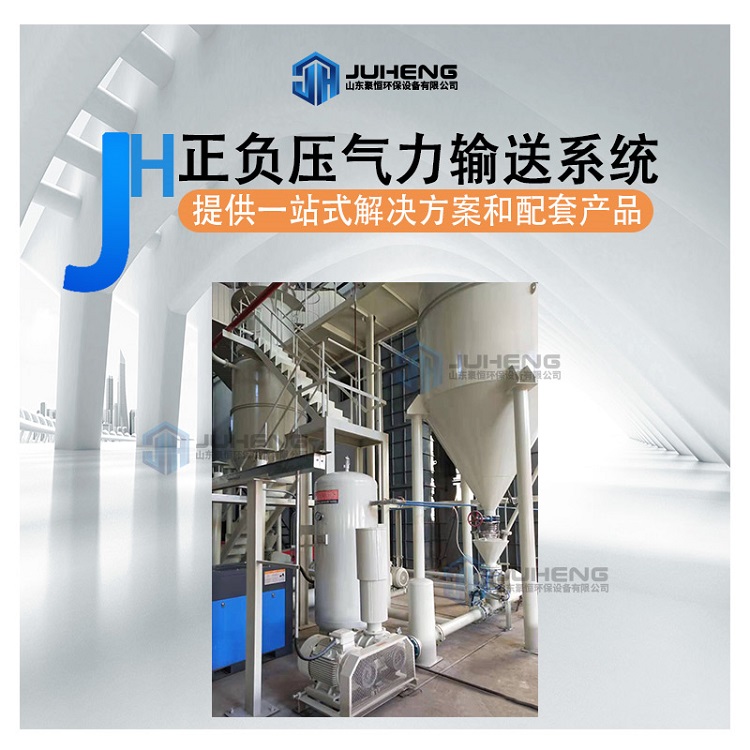
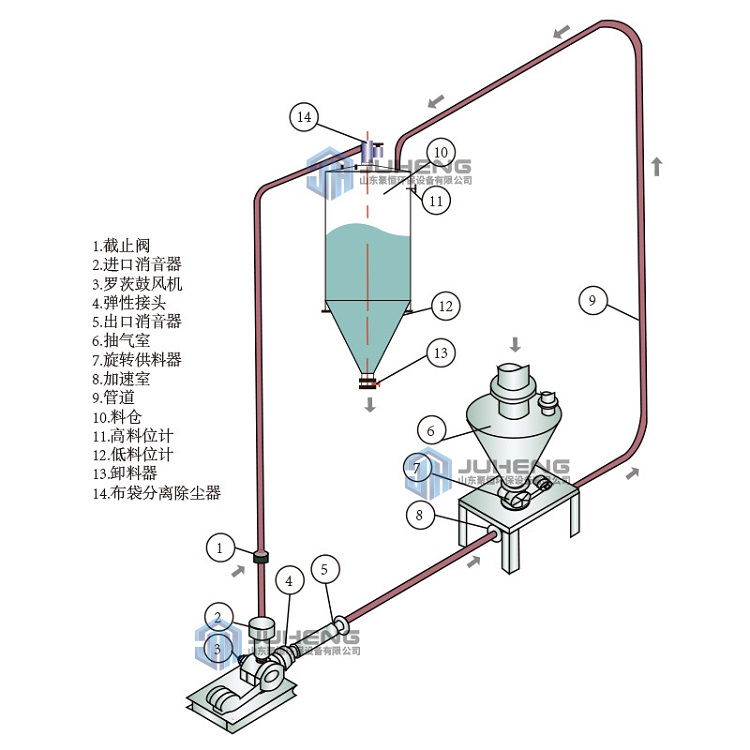
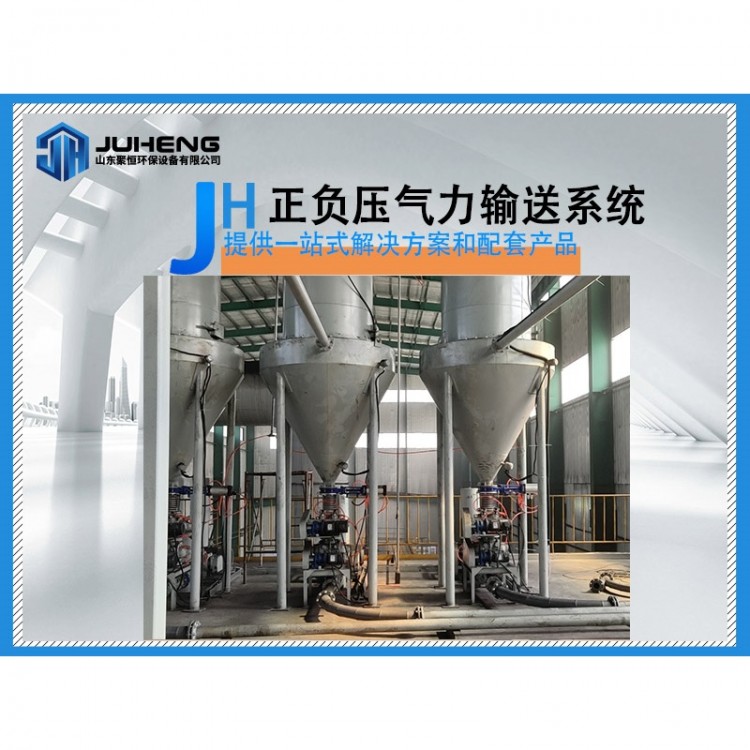
The dilute phase conveying system can be divided into two main categories: positive pressure dilute phase conveying system and negative pressure conveying system. The positive pressure system typically uses a Roots blower as the power gas source and a rotary valve as the feeding device. The rotary valve transports the material from the upstream equipment to the pipeline, where the material and conveying gas mix and are transported to the target point.