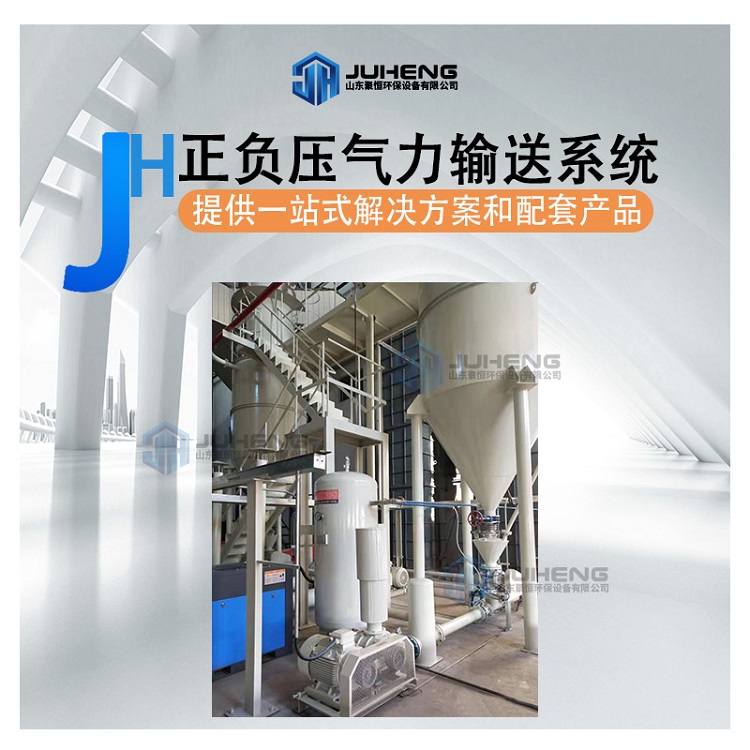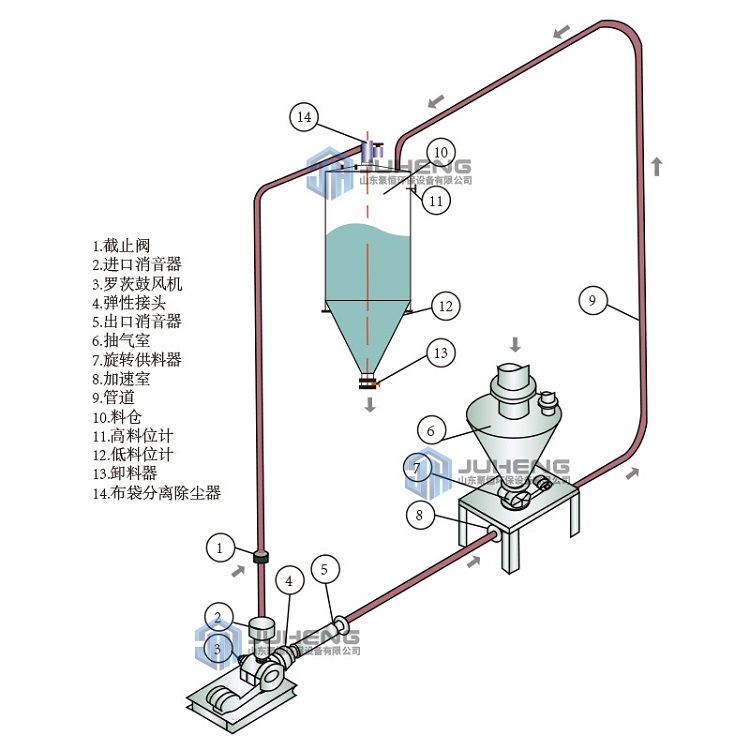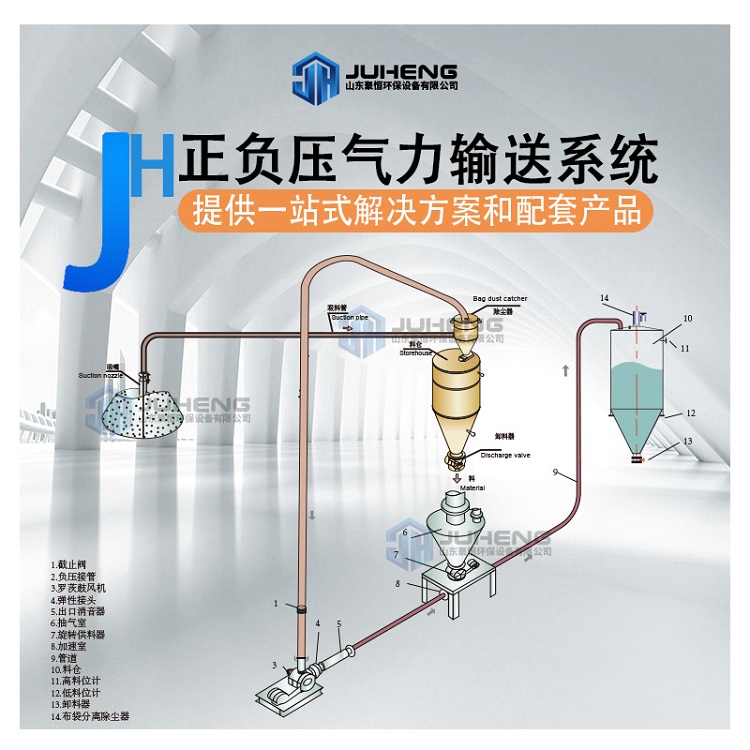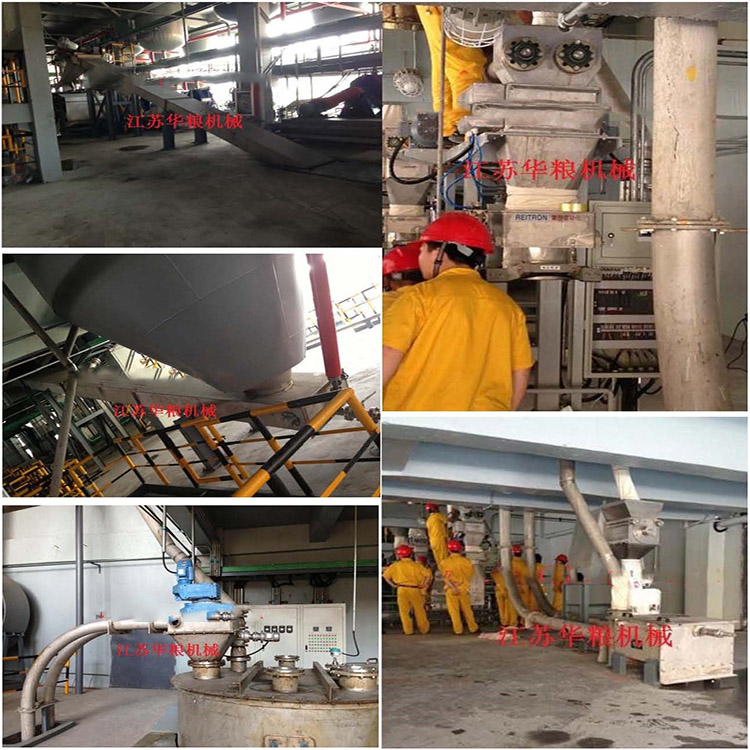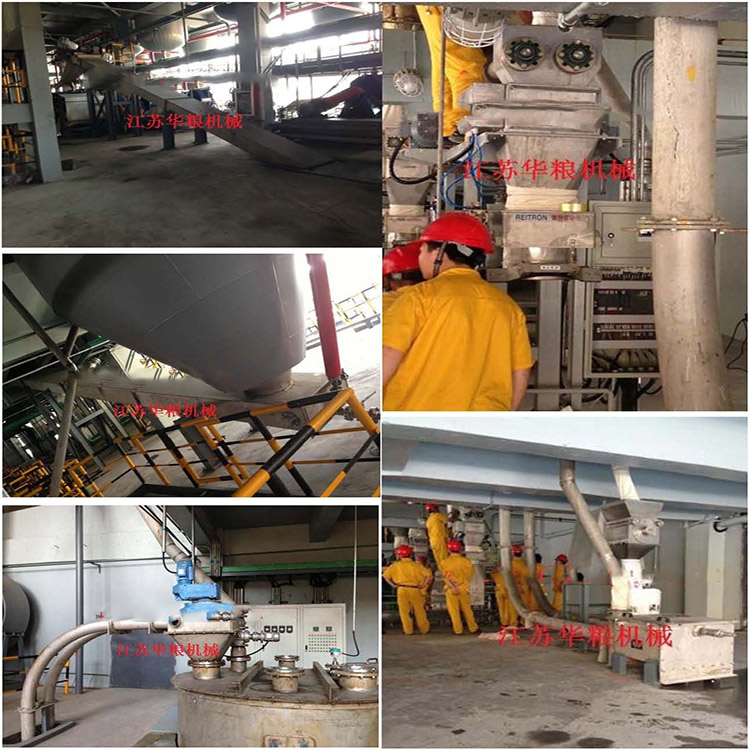

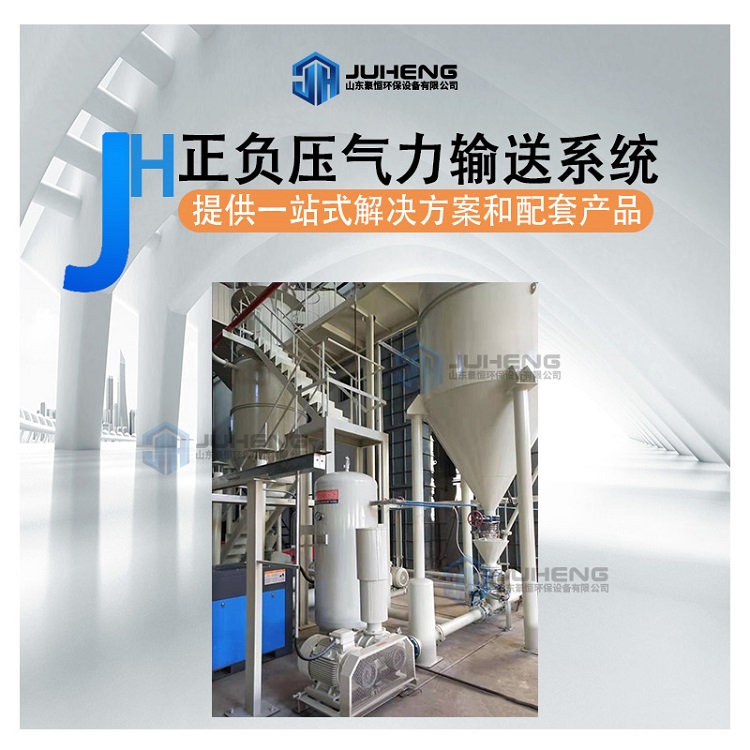

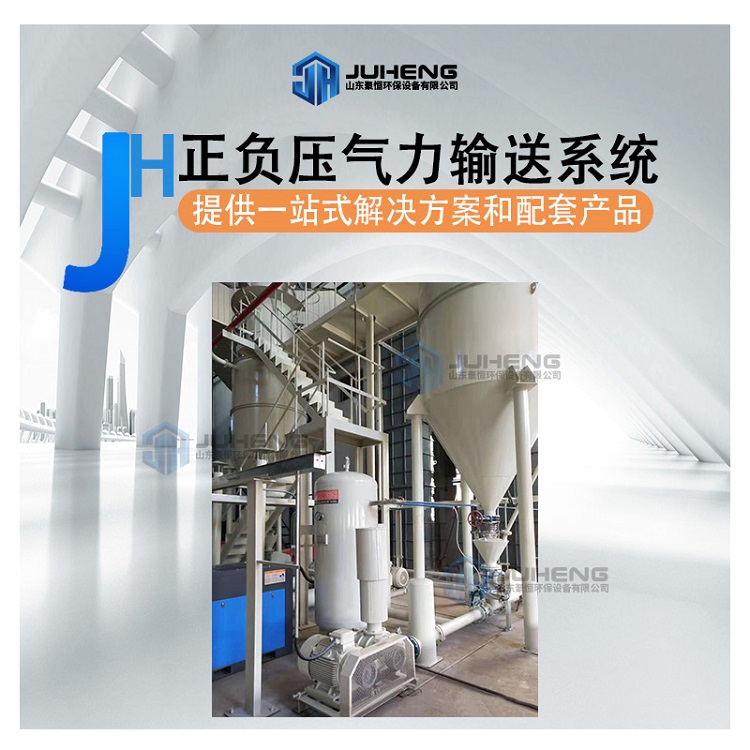









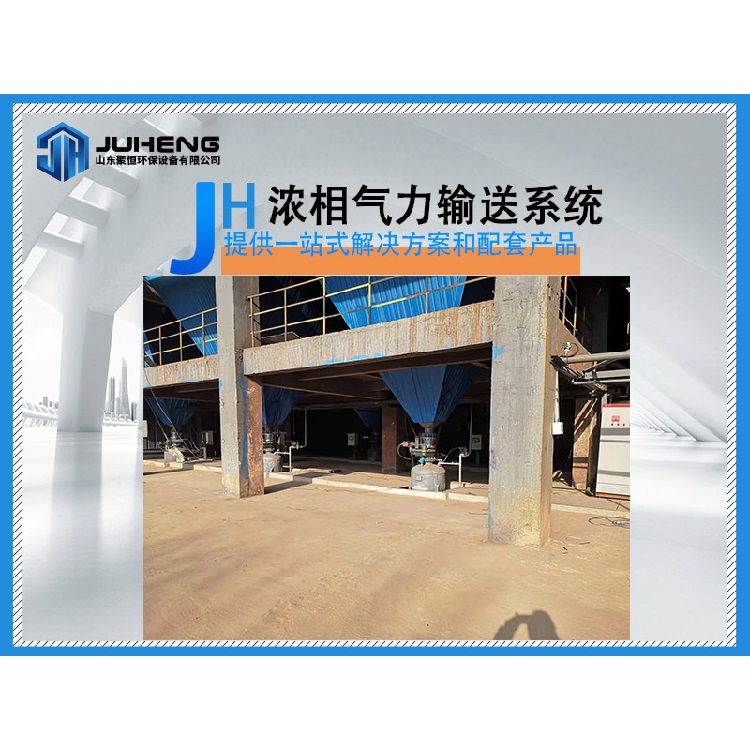
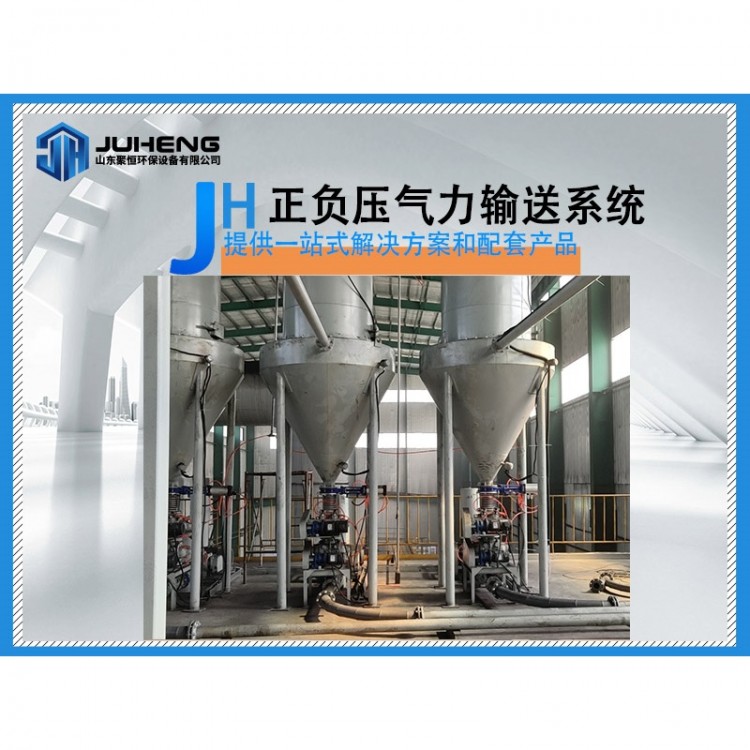

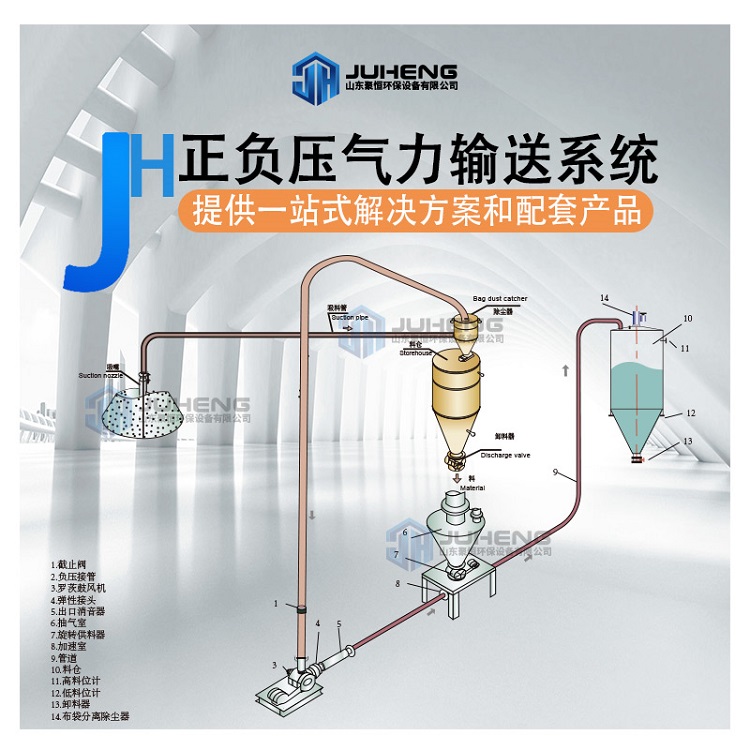
Air-powered conveying systems include low-pressure dilute-phase and high-pressure dense-phase conveying, all of which utilize the principles of air pneumatics, the energy of airflow, to transport powdered and granular materials along the direction of the airflow within sealed pipes. This is a specific application of fluidization technology.
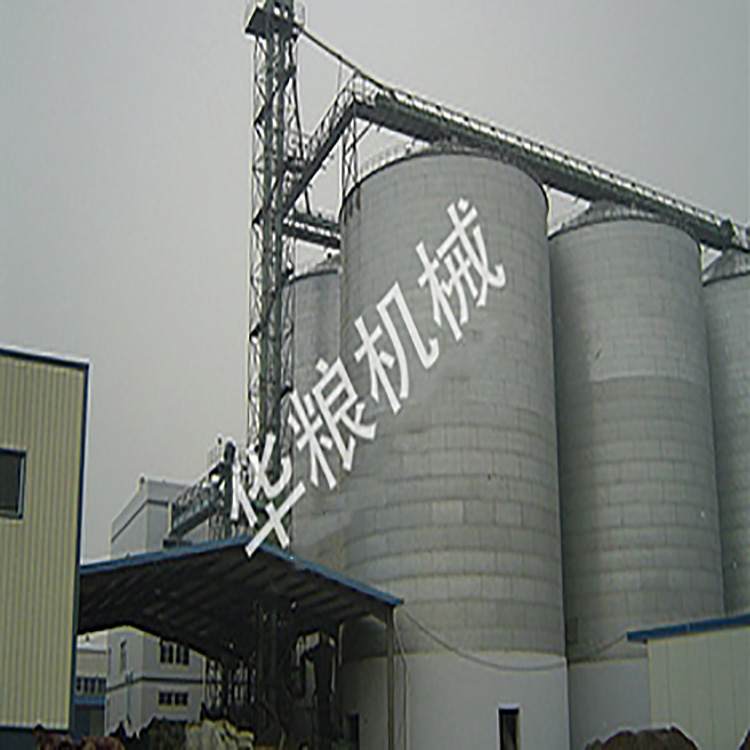
This system employs pneumatic conveying to transport powdered materials, and its products are widely used in the power, metallurgy, petrochemical, plastic, food, construction materials, and hydropower industries. The conveying pipelines can be arranged according to specific terrain, enabling centralized, decentralized, high-altitude, and long-distance transportation. The conveying process is unaffected by weather conditions, ensuring that the materials remain dry, which is beneficial for production and environmental protection. It is suitable for conveying fly ash from power plants, cement raw materials, mineral powder, limestone powder, plastic and rubber granules, and alumina powder, etc. The conveying system operates based on the principle of positive pressure pneumatic conveying.
Positive pressure pneumatic conveying system, a combination of the principle of gas pressure difference with jet flow technology and fluidization technology, fully absorbs the theory of two-phase flow in modern pneumatic conveying. After years of operation and practice, it is a device developed to meet the characteristics of large amounts of continuous conveying at medium and short distances in the powder pneumatic conveying process. It is applied in systems such as ash removal in power plants, cement, metallurgy, chemical industry, and ports. The conveying pump in the pneumatic conveying system consists of parts such as the diffuser chamber, mixing chamber, movable air duct, and actuator. Low-pressure air enters the diffuser chamber through the inlet duct, mixing chamber, and then into the diffuser. The high-speed airflow vaporizes the material around the nozzle through the mixing chamber, and the airflow entering the diffuser chamber after passing through the nozzle creates a local vacuum between the nozzle and the diffuser, drawing the vaporized material into the conveying pipe, which is then lifted by the high-speed airflow to the unloading point.